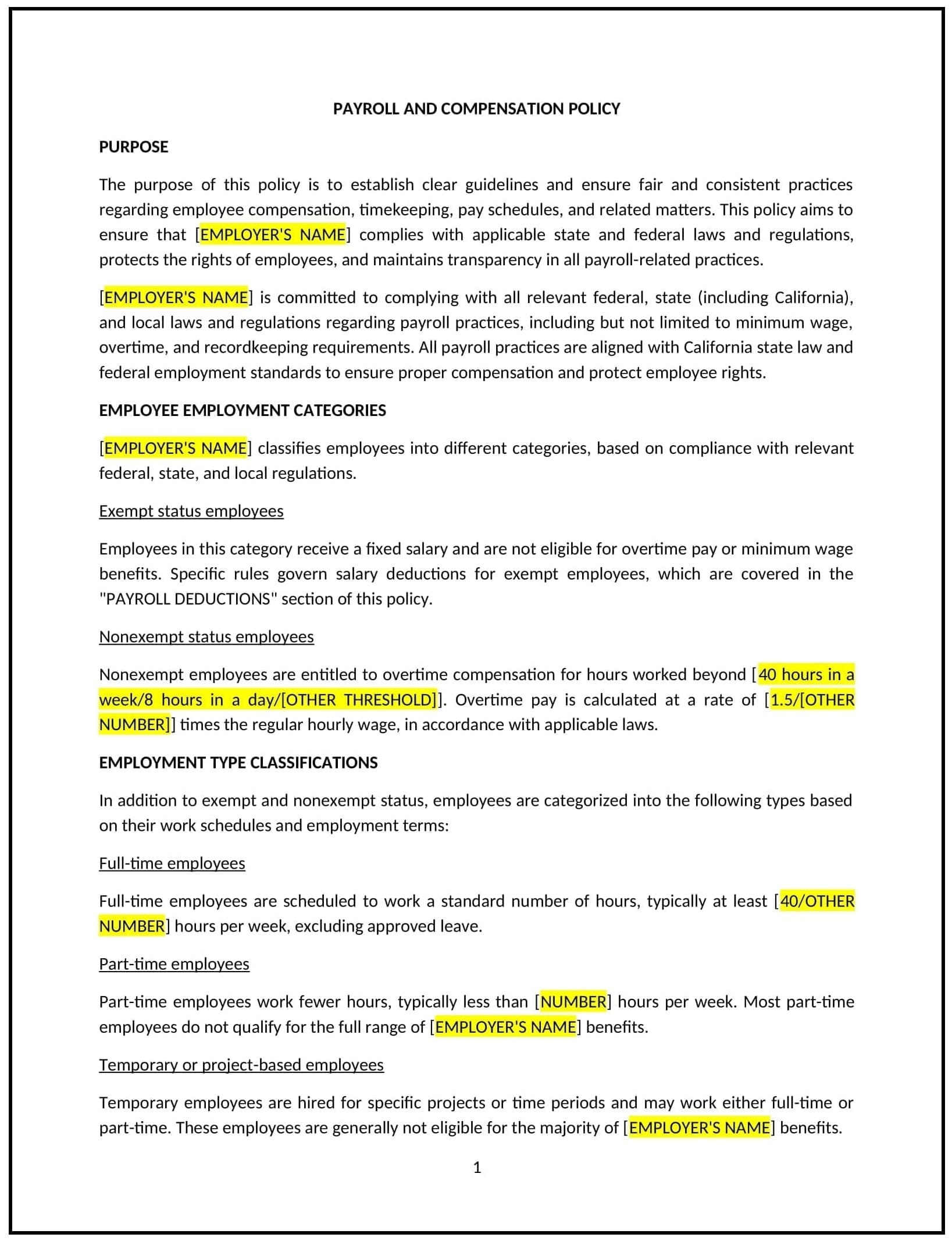
Payroll and compensation policy (California): Free template
Outlines wage calculation, pay frequency, overtime, and deductions, ensuring adherence to California compensation rules.
- Policies
- California
Payroll and compensation policy (California)
In California, a payroll and compensation policy provides businesses with guidelines for managing employee pay, ensuring accurate and timely wage payments, and supporting compliance with California labor laws, such as the California Labor Code and Wage Orders. This policy outlines procedures for wage calculations, payroll processing, and addressing employee concerns about compensation.
By implementing this policy, California businesses can foster transparency, maintain trust, and mitigate risks related to payroll and compensation practices.
How to use this payroll and compensation policy (California)
- Define pay structures: Clearly outline how wages, salaries, and bonuses are determined, ensuring they align with California minimum wage and overtime laws.
- Establish payroll schedules: Specify pay frequency, such as weekly, biweekly, or semimonthly, as required under California law.
- Communicate deductions: Provide transparency about lawful deductions, such as taxes, benefits, and garnishments, in compliance with state regulations.
- Address wage disputes: Outline procedures for employees to report and resolve concerns about pay discrepancies or errors.
- Ensure accurate records: Maintain detailed payroll records, including hours worked, wages paid, and deductions, as required by California law.
Benefits of using this payroll and compensation policy (California)
This policy offers several advantages for California businesses:
- Supports compliance: Reflects California labor laws governing wages, overtime, and payroll recordkeeping.
- Promotes transparency: Ensures employees understand their compensation and how payroll is managed.
- Reduces risks: Minimizes potential disputes and penalties by adhering to state wage and hour regulations.
- Enhances trust: Demonstrates the business’s commitment to fair and accurate compensation practices.
- Improves efficiency: Streamlines payroll management through clear processes and guidelines.
Tips for using this payroll and compensation policy (California)
- Reflect California-specific laws: Address state requirements, such as minimum wage increases, overtime rules, and final pay timelines for departing employees.
- Train payroll staff: Provide training on California labor laws and best practices for managing payroll and compensation.
- Use reliable systems: Implement payroll software to ensure accurate calculations and compliance with reporting requirements.
- Conduct regular audits: Periodically review payroll practices to identify and address discrepancies or non-compliance.
- Review regularly: Update the policy to reflect changes in California laws, wage orders, or business practices.
Frequently asked questions (FAQs)
Similar templates

Where deals go from offer to paid
