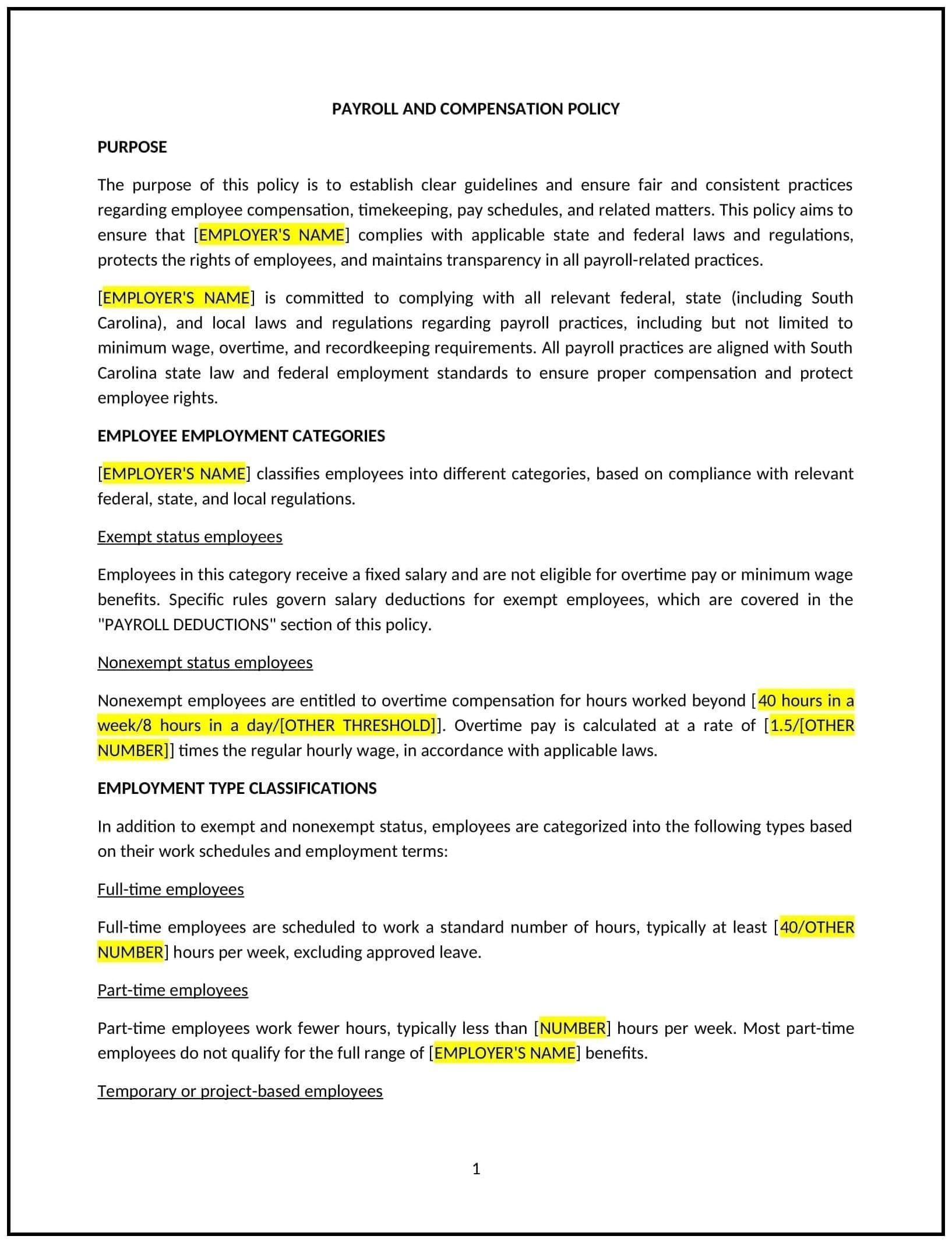
Payroll and compensation policy (South Carolina): Free template
Covers pay structures, wage processing, and compliance with wage and hour regulations.
- Policies
- South Carolina
Payroll and compensation policy (South Carolina)
This payroll and compensation policy is designed to help South Carolina businesses establish guidelines for managing employee pay, benefits, and compensation structures. It outlines procedures for payroll processing, salary adjustments, bonuses, and compliance with state and federal wage laws.
By adopting this policy, businesses can ensure fair and consistent compensation practices, maintain compliance with legal standards, and foster employee satisfaction.
How to use this payroll and compensation policy (South Carolina)
- Define compensation components: Explain what constitutes employee compensation, such as base salary, bonuses, overtime, and benefits.
- Establish payroll procedures: Outline steps for processing payroll, including pay schedules, tax withholdings, and direct deposit options.
- Address salary adjustments: Provide guidelines for salary increases, promotions, and performance-based bonuses.
- Set overtime rules: Specify how overtime is calculated and paid in compliance with state and federal laws.
- Train HR and managers: Educate HR teams and supervisors on payroll processes, compensation structures, and legal requirements.
- Review and update: Assess the policy annually to ensure it aligns with evolving business needs and legal standards.
Benefits of using this payroll and compensation policy (South Carolina)
This policy offers several advantages for South Carolina businesses:
- Ensures fairness: Provides a transparent and consistent approach to employee compensation.
- Aligns with legal standards: Helps businesses comply with state and federal wage laws, such as the Fair Labor Standards Act (FLSA).
- Enhances employee satisfaction: Demonstrates a commitment to fair pay and benefits, boosting morale and retention.
- Reduces risks: Minimizes the potential for payroll errors, disputes, or legal penalties.
- Supports efficiency: Streamlines payroll processes and compensation management.
Tips for using this payroll and compensation policy (South Carolina)
- Communicate the policy: Share the policy with employees and include it in the employee handbook.
- Provide training: Educate HR teams and managers on payroll processes, compensation structures, and legal requirements.
- Monitor adherence: Regularly review payroll and compensation practices to ensure compliance with the policy.
- Address issues promptly: Take corrective action if payroll errors or compensation disputes occur.
- Update regularly: Assess the policy annually to ensure it aligns with evolving business needs and legal standards.
Frequently asked questions (FAQs)
Similar templates
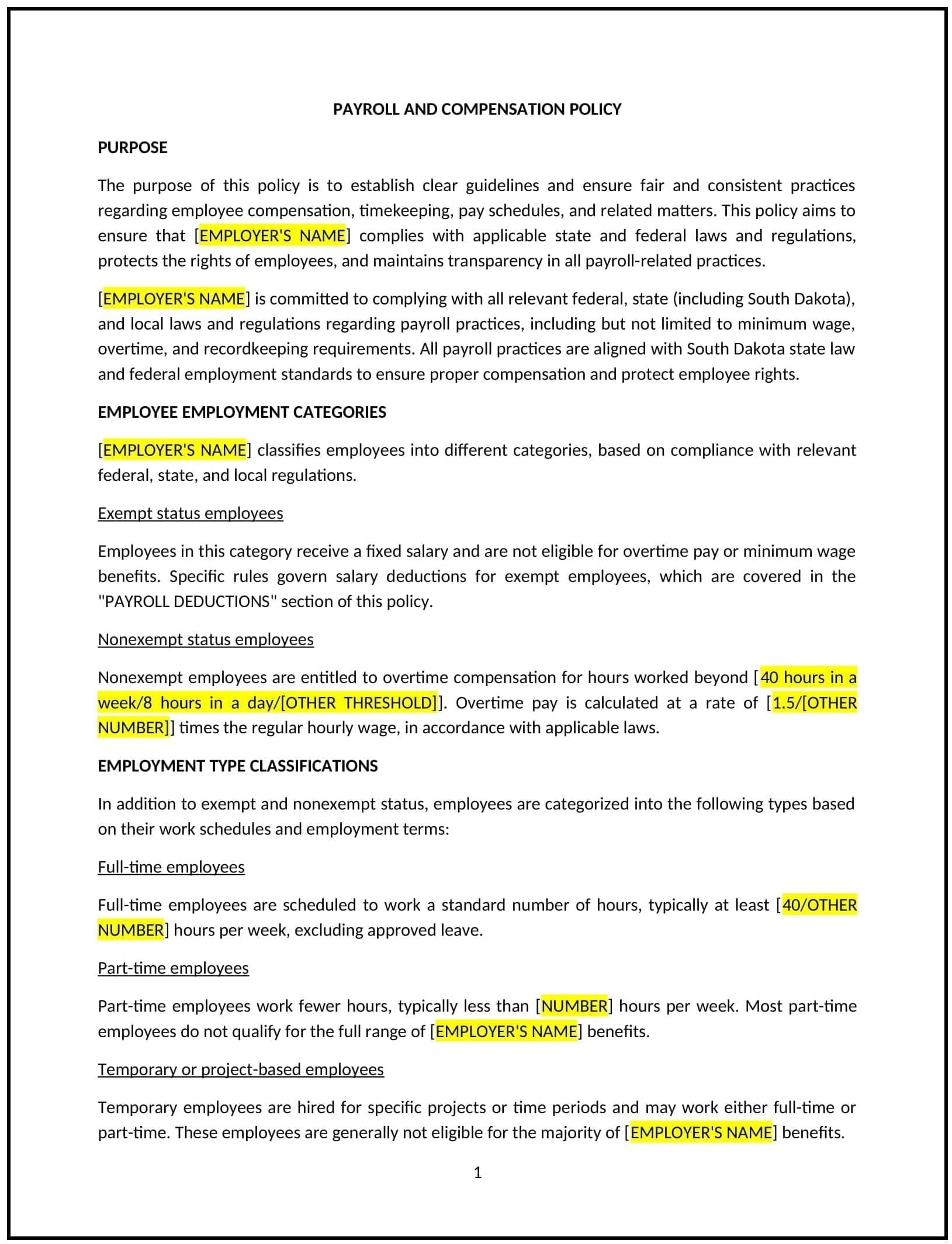
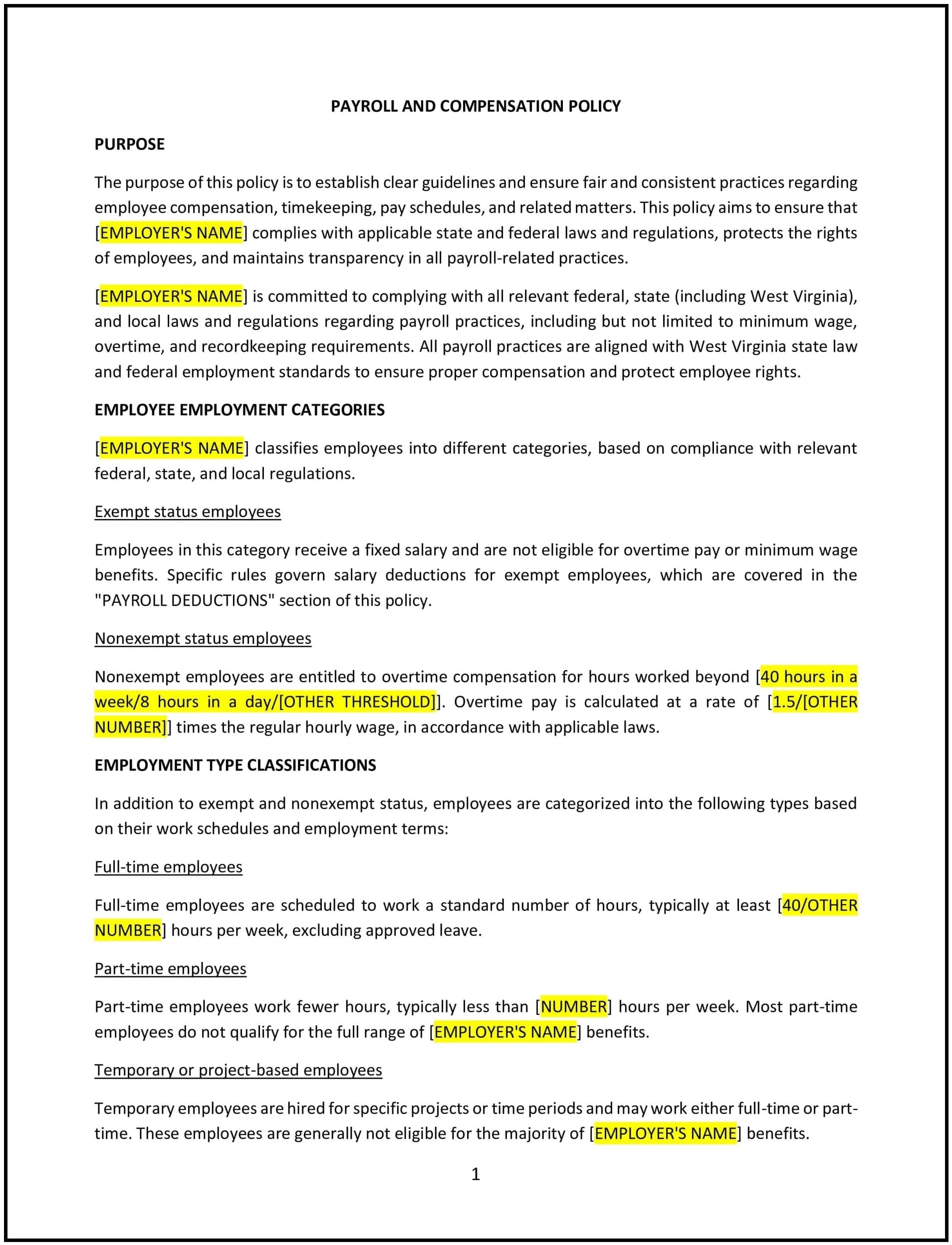
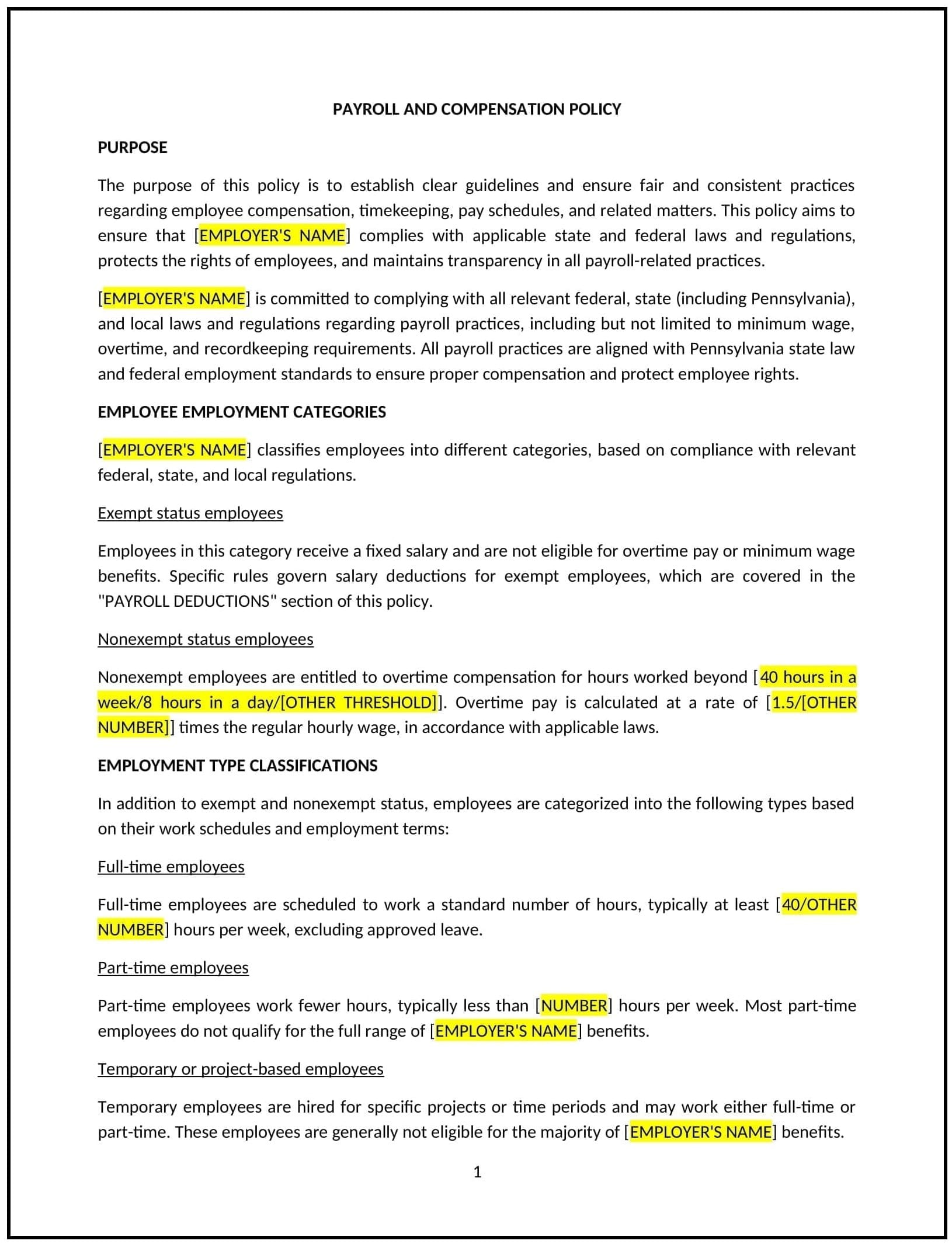
Where deals go from offer to paid
