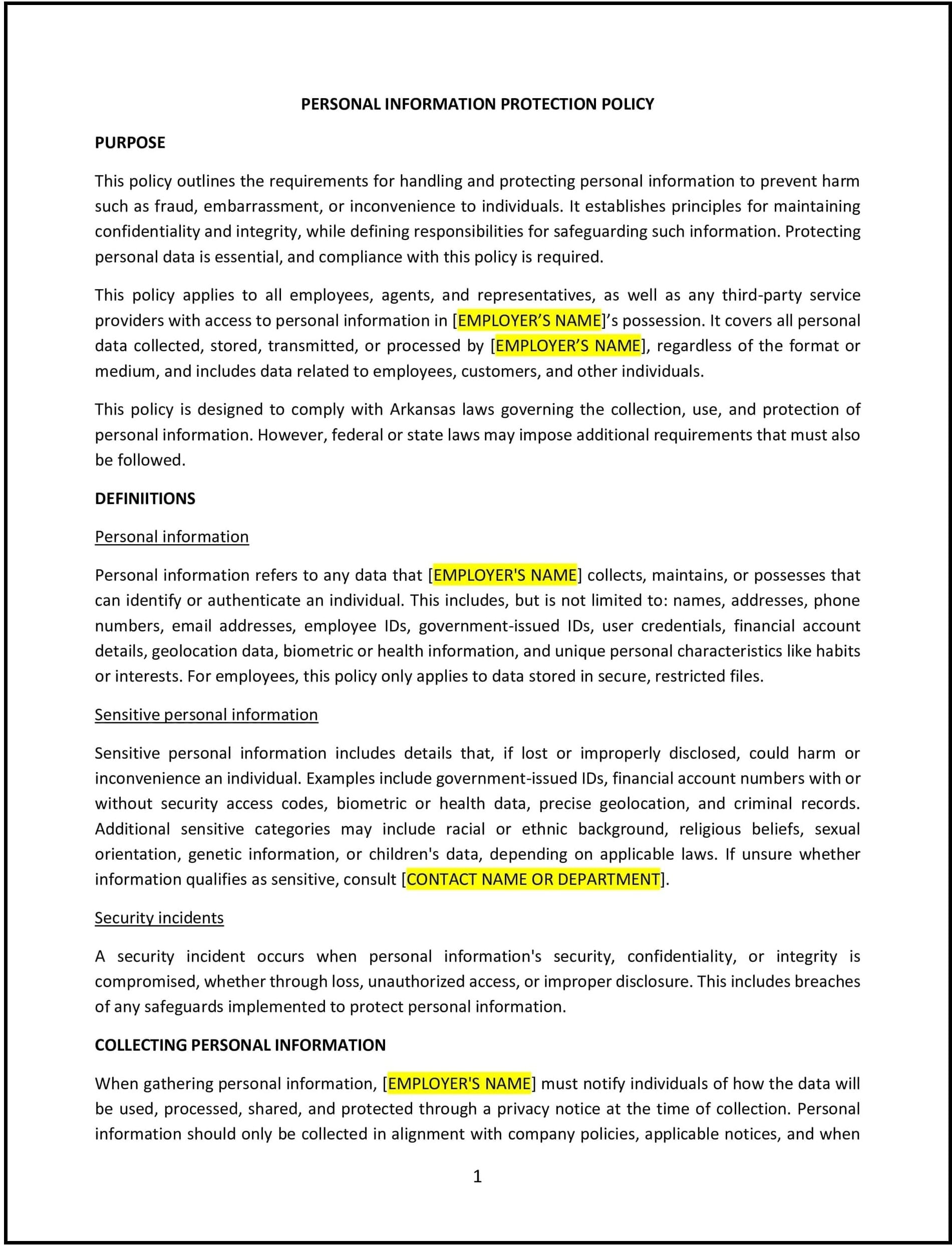
Personal information protection policy (Arkansas): Free template
Defines procedures for collecting, securing, and disposing personal data in accordance with Arkansas privacy law.
- Policies
- Arkansas
Personal information protection policy (Arkansas)
In Arkansas, a personal information protection policy provides businesses with guidelines for safeguarding sensitive personal data belonging to employees, customers, and other stakeholders. This policy establishes processes for data collection, storage, access, and disposal to mitigate risks of unauthorized access, breaches, or misuse.
This policy outlines data protection measures, employee responsibilities, and breach response protocols. By implementing this policy, Arkansas businesses can enhance trust, protect sensitive information, and support compliance with state and federal data protection laws.
How to use this personal information protection policy (Arkansas)
- Define protected information: Specify the types of personal data covered under the policy, such as Social Security numbers, financial records, or health information.
- Establish access controls: Implement measures to restrict access to personal information, ensuring only authorized personnel can view or use it.
- Outline data handling practices: Provide guidelines for securely collecting, storing, and transferring sensitive information.
- Address breach response: Include steps for identifying, reporting, and mitigating data breaches, as well as notifying affected parties.
- Train employees: Educate staff on best practices for protecting personal information and complying with the policy.
Benefits of using this personal information protection policy (Arkansas)
This policy offers several advantages for Arkansas businesses:
- Protects business reputation: Demonstrates the business’s commitment to safeguarding personal information, fostering trust among stakeholders.
- Reduces legal risks: Mitigates the potential for liability related to data breaches or unauthorized access to sensitive information.
- Supports compliance: Aligns with Arkansas and federal data protection regulations, minimizing risks of non-compliance.
- Enhances security: Establishes clear protocols to prevent unauthorized access or misuse of personal information.
- Builds accountability: Clarifies employee roles and responsibilities in protecting sensitive data.
Tips for using this personal information protection policy (Arkansas)
- Address Arkansas-specific considerations: Incorporate state-level data protection laws, such as breach notification requirements, into the policy.
- Use encryption: Ensure personal information is encrypted during storage and transmission to reduce risks of unauthorized access.
- Conduct regular audits: Periodically review data protection practices to identify vulnerabilities and maintain compliance.
- Maintain transparency: Clearly communicate how personal information is collected, stored, and used to employees and stakeholders.
- Update regularly: Revise the policy to reflect changes in data protection laws, technology, or business practices.
Frequently asked questions (FAQs)
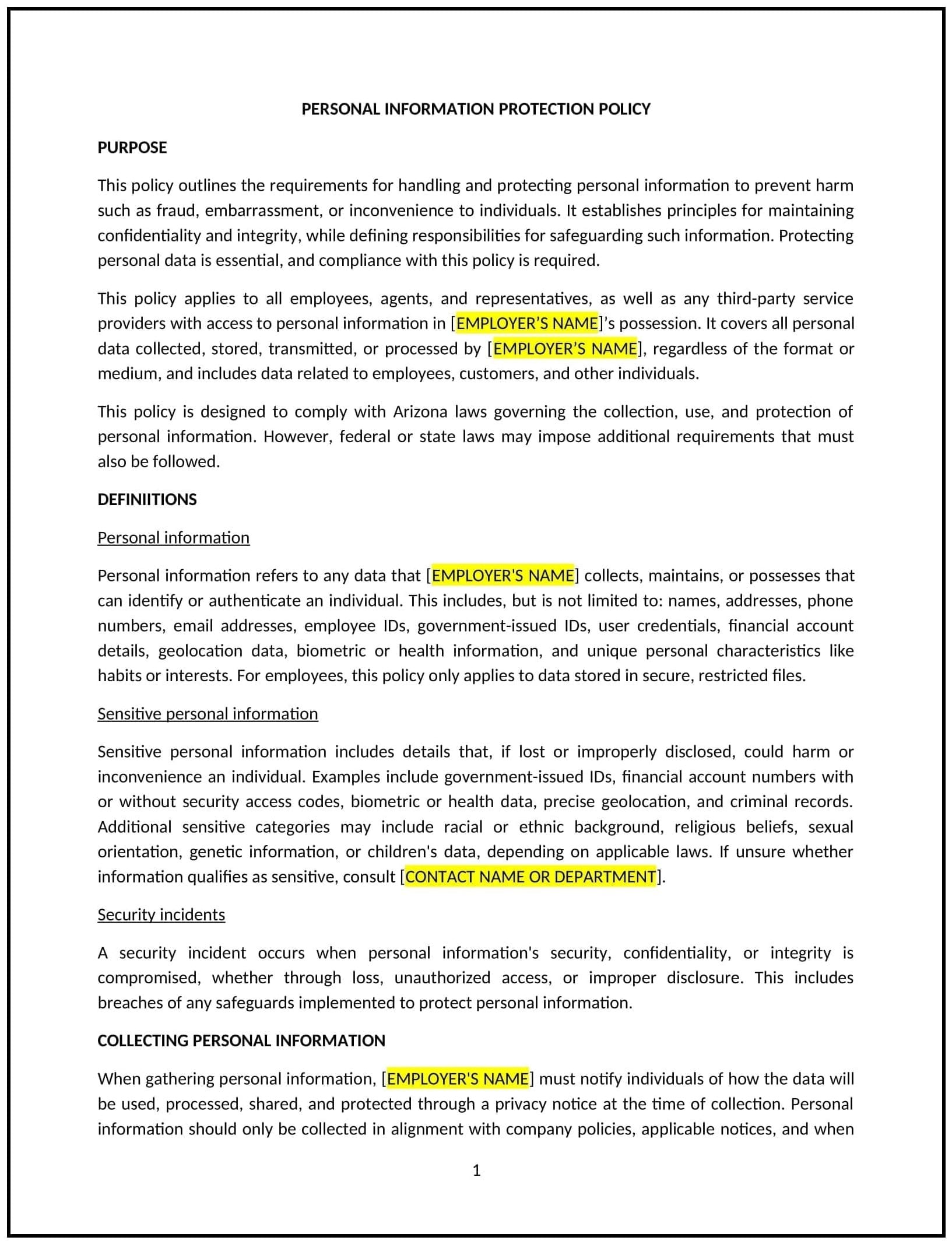
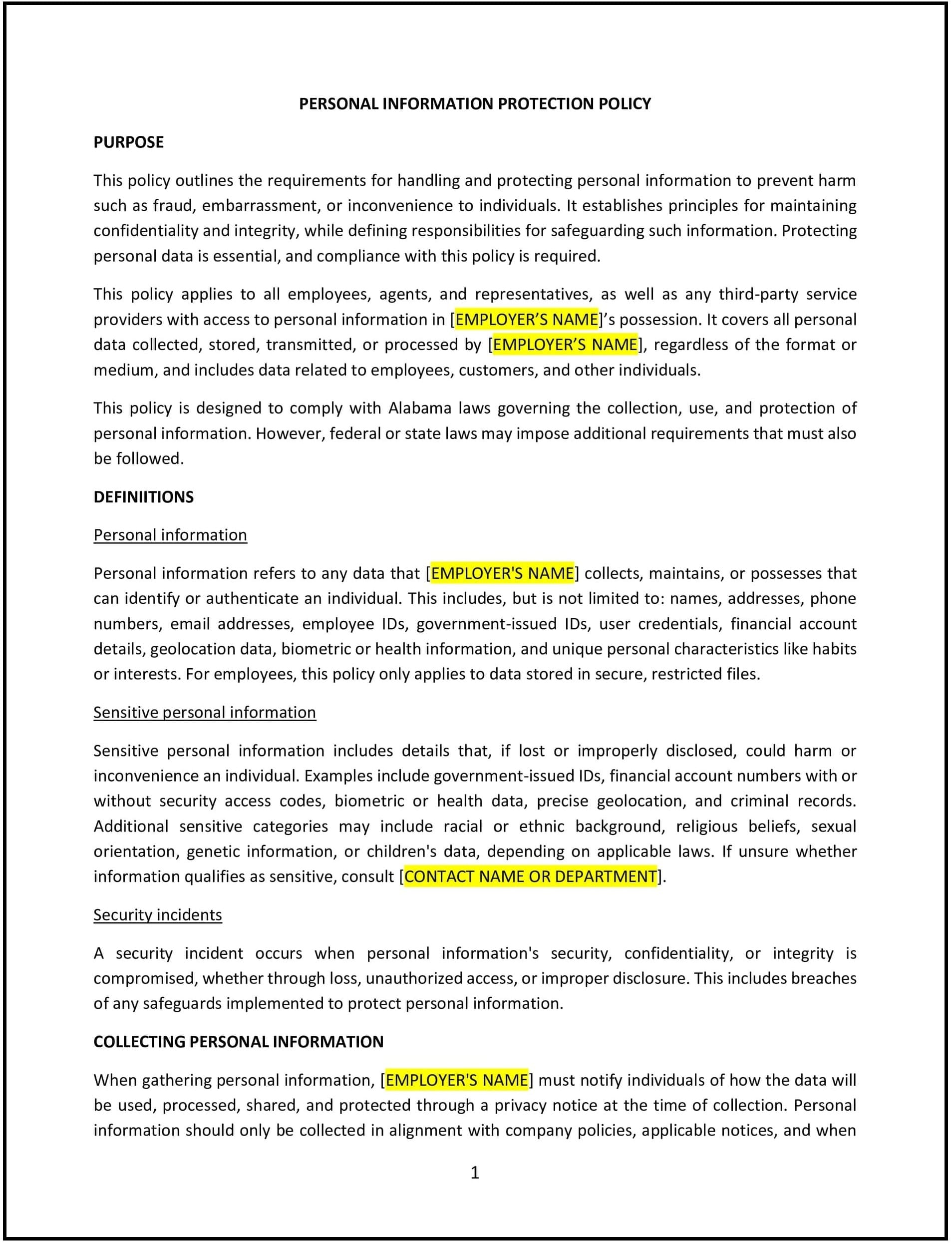
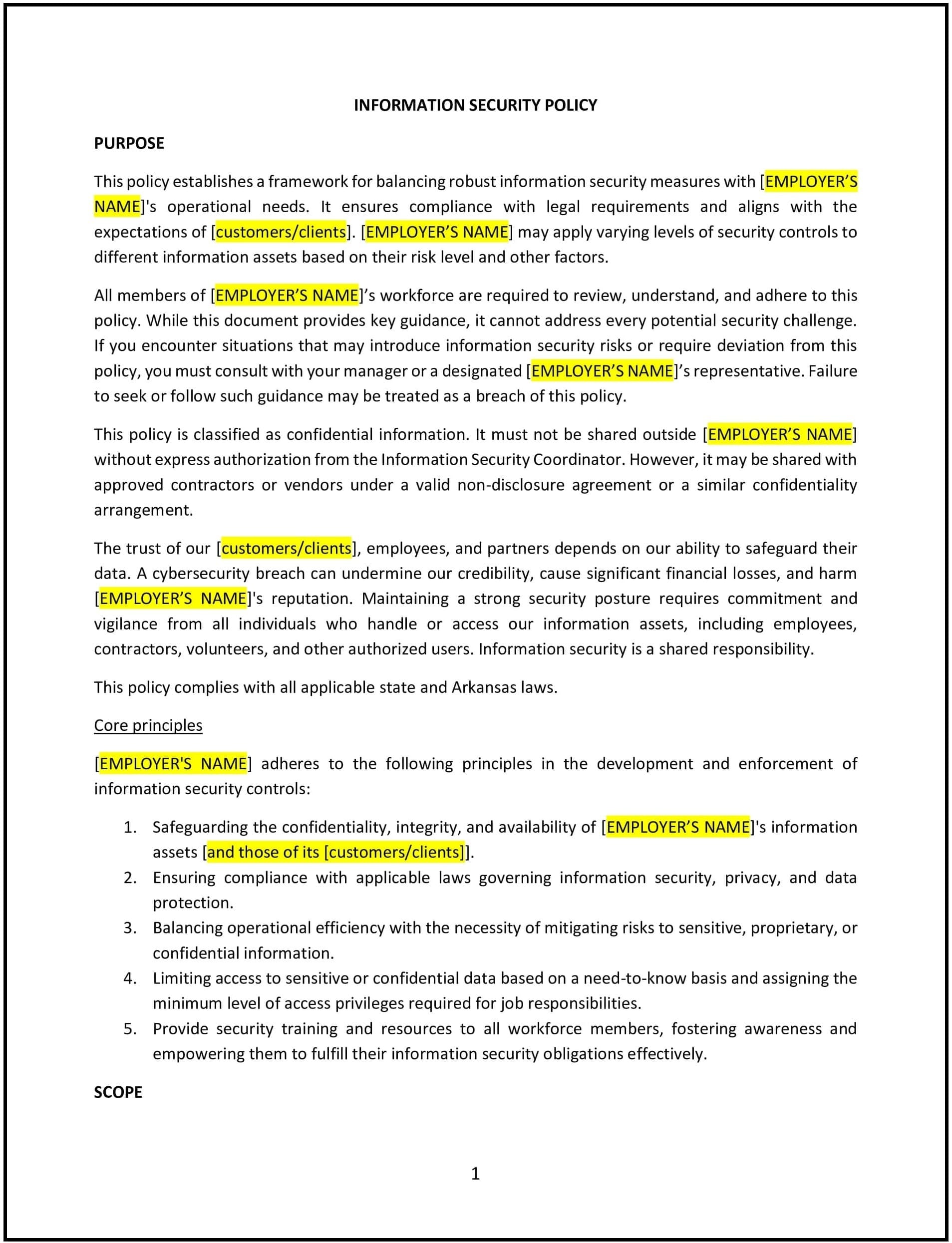
Similar templates
Where deals go from offer to paid
