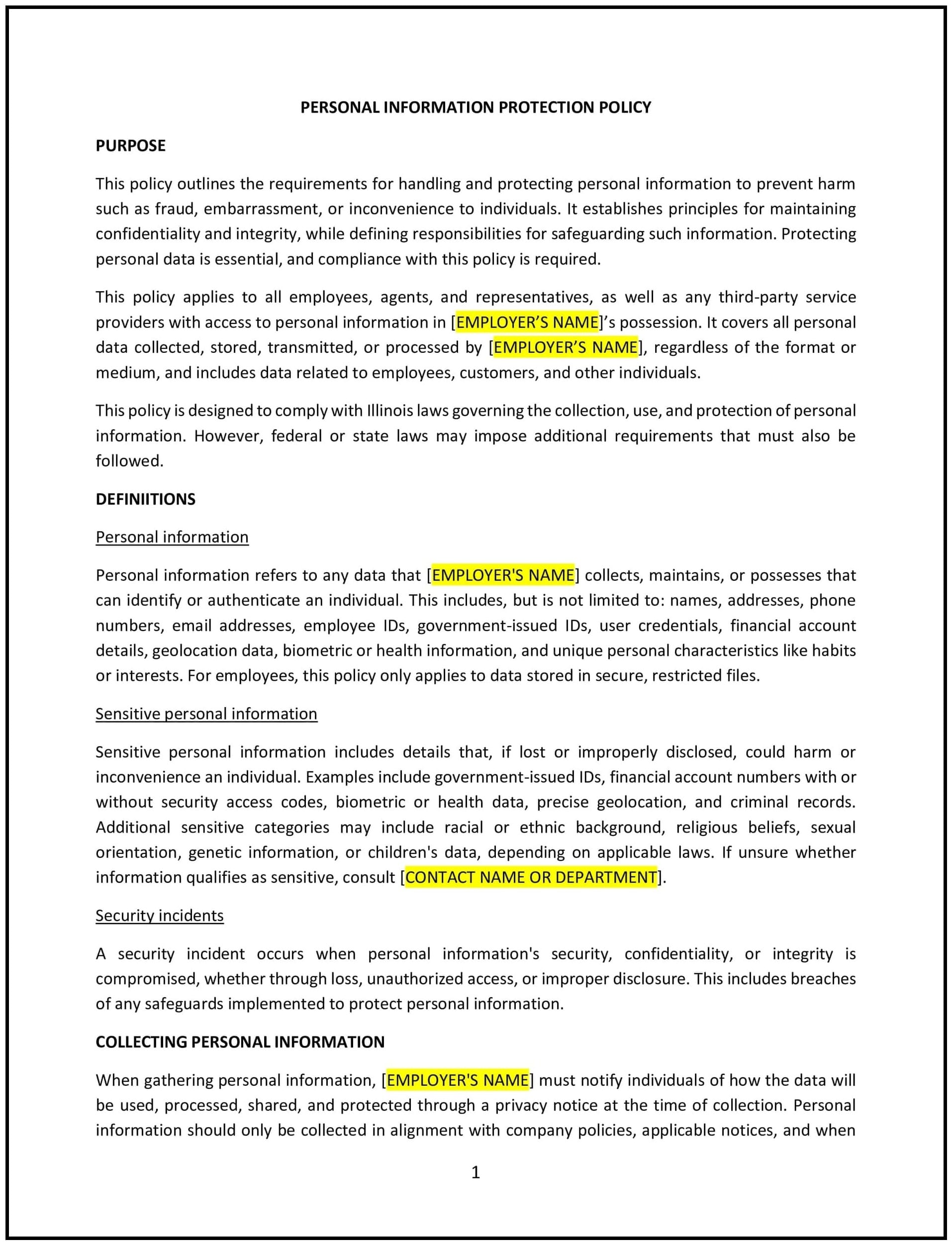
Personal information protection policy (Illinois): Free template
Protects employee data in Illinois by outlining how personal information is collected, used, stored, and disclosed in compliance with privacy laws.
- Policies
- Illinois
Personal information protection policy (Illinois)
This personal information protection policy is designed to help Illinois businesses safeguard sensitive personal data collected from employees, customers, and third parties. It outlines procedures for data collection, storage, access, and disposal, promoting compliance with Illinois laws, such as the Personal Information Protection Act (PIPA).
By adopting this policy, businesses can protect sensitive information, mitigate risks, and maintain customer and employee trust.
How to use this personal information protection policy (Illinois)
- Define personal information: Clearly specify the types of personal information covered, such as Social Security numbers, financial data, or medical records.
- Outline data collection procedures: Include guidelines for collecting only the necessary data and obtaining consent where applicable.
- Address storage and access: Specify secure storage methods, such as encryption, and restrict access to authorized personnel only.
- Establish data usage protocols: Ensure personal information is used solely for its intended purpose and in compliance with Illinois laws.
- Include breach response procedures: Detail steps for identifying, reporting, and mitigating data breaches, including notifying affected individuals and regulatory authorities.
- Provide retention and disposal guidelines: Establish timeframes for retaining personal data and secure methods for disposal when it is no longer needed.
- Offer employee training: Provide regular training on data protection best practices, including recognizing and preventing breaches.
- Monitor compliance: Conduct periodic audits to ensure adherence to this policy and Illinois data protection laws.
Benefits of using this personal information protection policy (Illinois)
This policy provides several benefits for Illinois businesses:
- Protects sensitive data: Reduces the risk of data breaches and unauthorized access to personal information.
- Enhances compliance: Aligns with Illinois data protection laws, such as PIPA, to avoid legal and financial penalties.
- Builds trust: Demonstrates the company’s commitment to safeguarding customer and employee information.
- Reduces risks: Mitigates potential legal, financial, and reputational harm caused by data misuse or breaches.
- Encourages accountability: Establishes clear roles and responsibilities for data protection.
Tips for using this personal information protection policy (Illinois)
- Communicate the policy: Share the policy with employees during onboarding and make it accessible in the employee handbook.
- Use secure technology: Implement encryption, firewalls, and other security measures to protect sensitive data.
- Encourage reporting: Create a culture where employees feel comfortable reporting potential data breaches or security concerns.
- Review vendor practices: Ensure third-party vendors handling personal data adhere to data protection standards.
- Update regularly: Revise the policy to reflect changes in Illinois laws, technology, or data protection practices.
Frequently asked questions (FAQs)
Similar templates
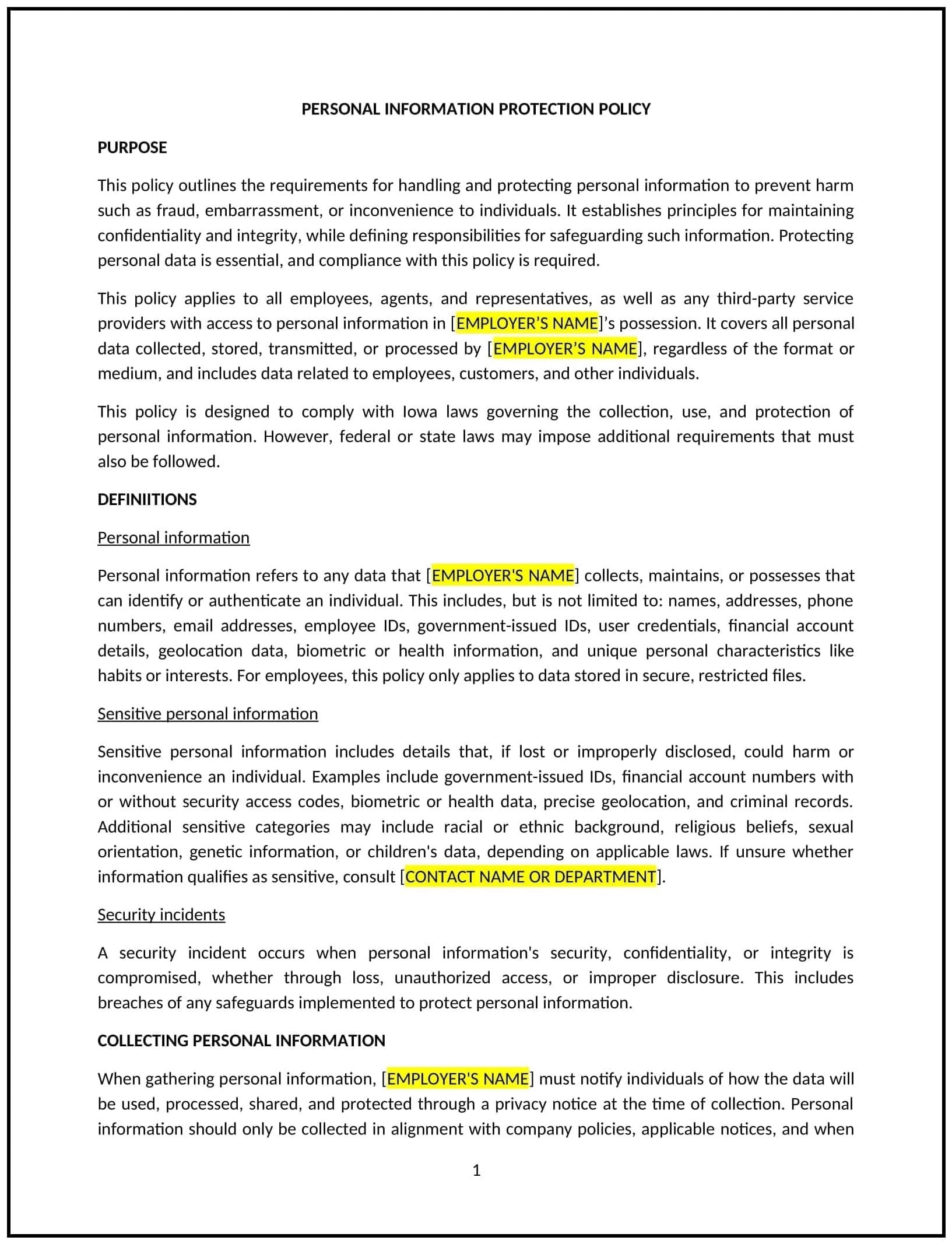
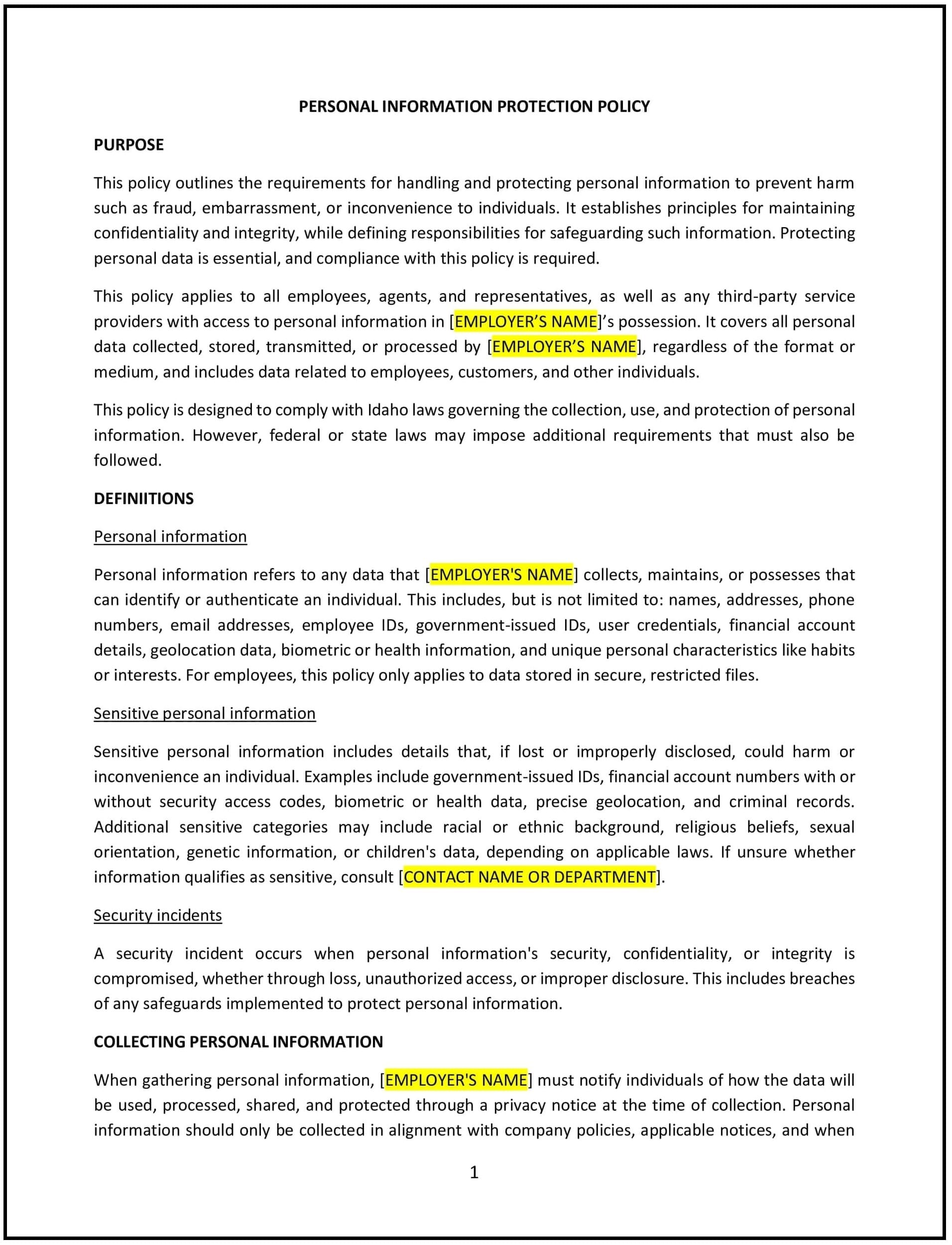
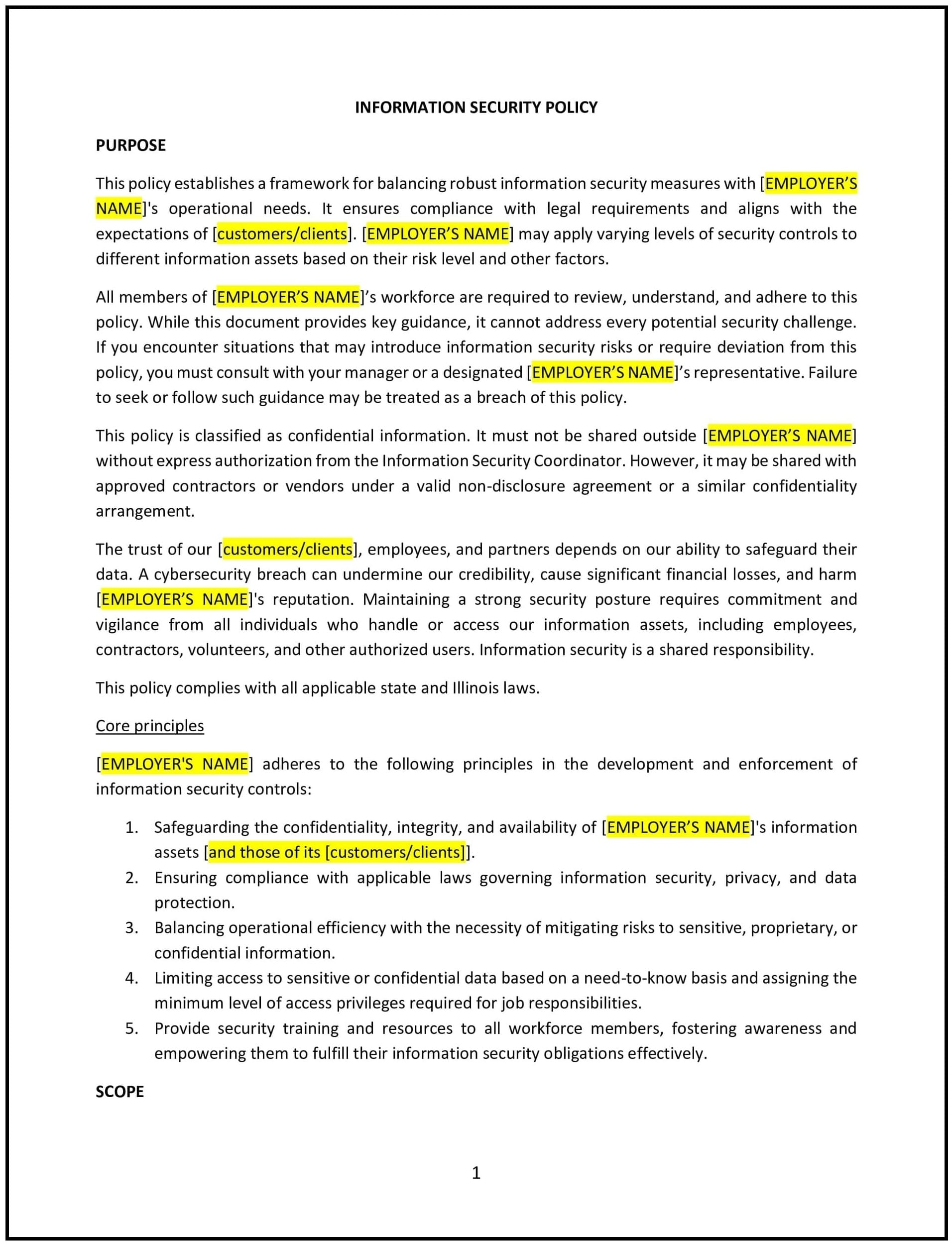
Where deals go from offer to paid
