Personal information protection policy (Vermont): Free template
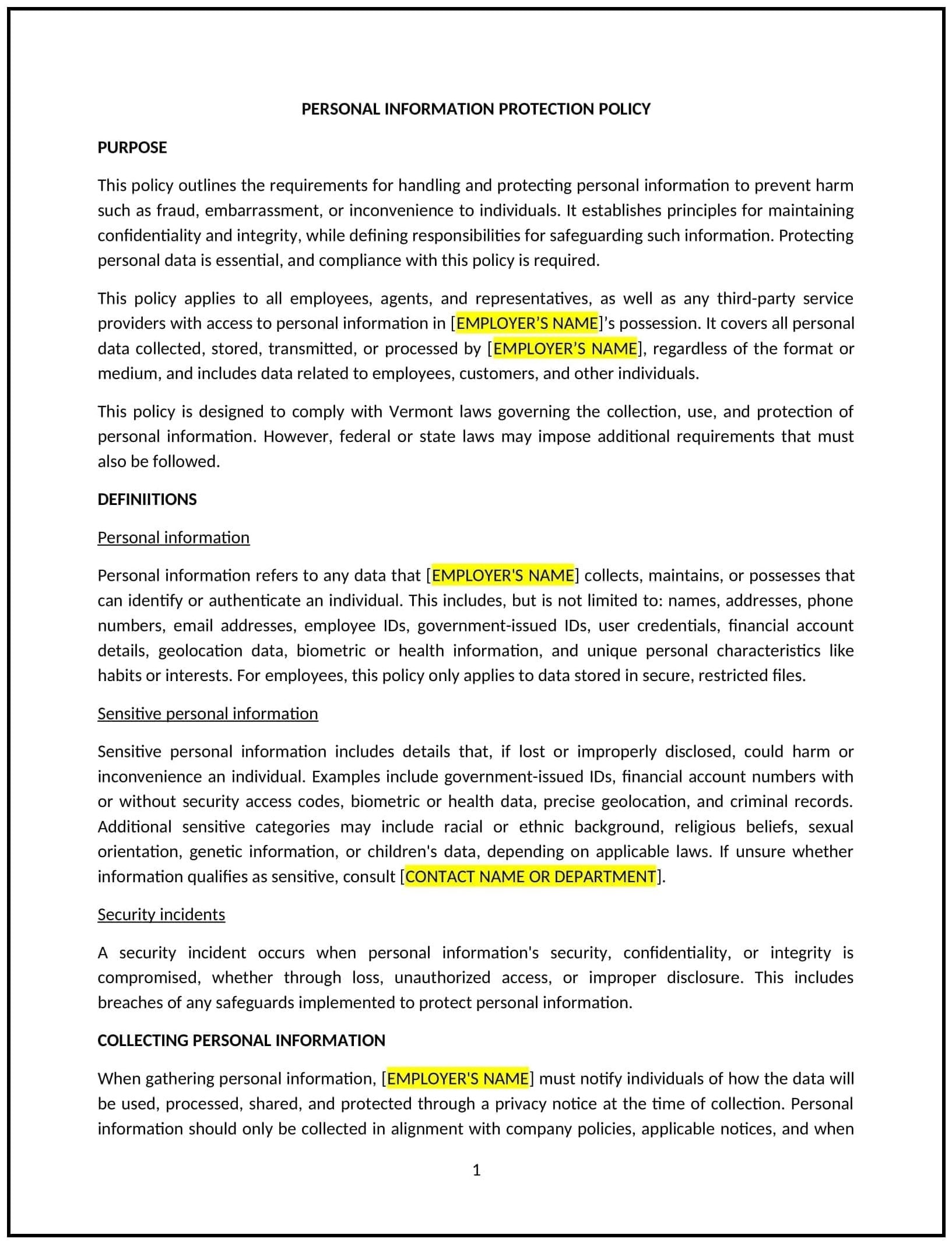
Protects personal data by setting handling, storage, and access requirements under Vermont privacy regulations.
- Policies
- Vermont
Personal information protection policy (Vermont)
This personal information protection policy is designed to help Vermont businesses safeguard sensitive personal data belonging to employees, customers, and other stakeholders. It outlines guidelines for collecting, storing, and processing personal information to strengthen compliance with Vermont laws and enhance data security practices.
By adopting this policy, businesses can protect personal data, reduce risks, and build trust with stakeholders.
How to use this personal information protection policy (Vermont)
- Define personal information: Specify the types of personal data covered by the policy, such as names, addresses, Social Security numbers, financial information, or health records.
- Include data collection practices: Outline acceptable methods for collecting personal information and ensure it is limited to what is necessary for business purposes.
- Address data storage and security: Provide guidelines for securely storing personal information, such as encryption, access controls, and regular backups.
- Detail data sharing rules: Specify when and with whom personal information can be shared, such as third-party vendors or regulatory authorities, and ensure proper agreements are in place.
- Include employee training: Offer regular training on best practices for handling personal information and recognizing potential security threats.
- Establish breach response protocols: Provide steps for identifying, reporting, and mitigating data breaches to minimize impact.
- Monitor compliance: Regularly review data protection practices to align with Vermont laws and industry standards.
Benefits of using this personal information protection policy (Vermont)
This policy provides several benefits for Vermont businesses:
- Enhances compliance: Aligns with Vermont privacy laws and federal regulations, reducing legal risks.
- Protects data: Safeguards sensitive information from unauthorized access, breaches, or misuse.
- Builds trust: Demonstrates the company’s commitment to protecting stakeholder information.
- Reduces risks: Minimizes the potential for data breaches or regulatory penalties.
- Improves accountability: Establishes clear responsibilities for employees and management in protecting personal data.
Tips for using this personal information protection policy (Vermont)
- Communicate the policy: Share the policy with employees during onboarding and include it in internal resources, such as the employee handbook.
- Provide regular training: Ensure employees are informed about data protection practices and security protocols.
- Use technology: Implement tools to monitor and secure personal data, such as firewalls, antivirus software, and encryption.
- Conduct audits: Perform regular data protection audits to identify vulnerabilities and areas for improvement.
- Update regularly: Revise the policy to reflect changes in Vermont laws, company practices, or technological advancements.
Frequently asked questions (FAQs)
Similar templates
Where deals go from offer to paid
