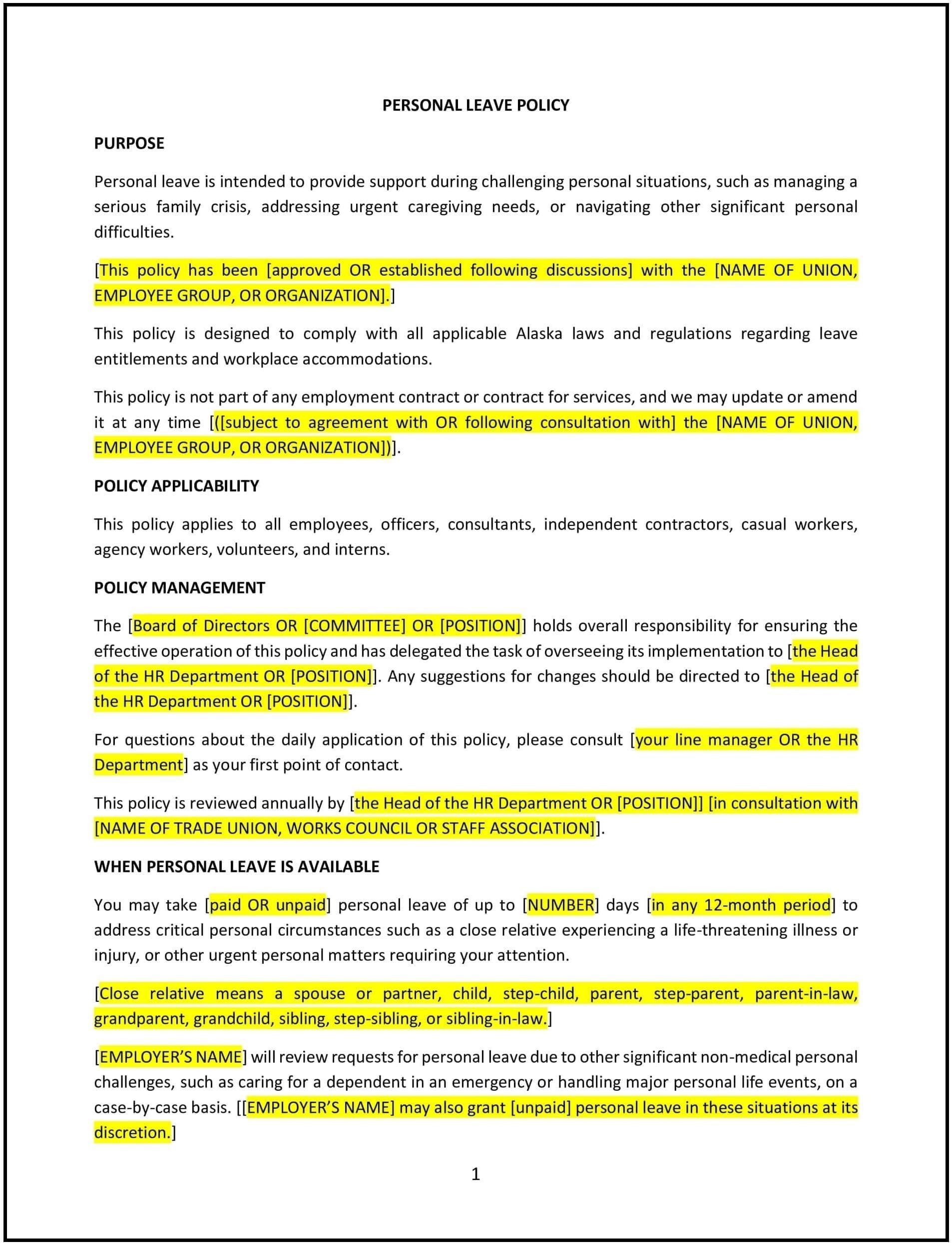
Personal leave policy (Alaska): Free template
Allows employees to take unpaid time off for personal reasons, following Alaska employer-specific guidelines.
- Policies
- Alaska
Personal leave policy (Alaska)
In Alaska, a personal leave policy provides guidelines for employees to request time off for personal reasons, such as attending to family matters, addressing personal health issues, or handling other non-work-related commitments. This policy ensures employees understand the process for requesting leave and the company’s expectations during their absence. By implementing this policy, businesses can support employee well-being while maintaining operational continuity.
How to use this personal leave policy (Alaska)
- Define eligibility: Specify which employees are eligible for personal leave, such as full-time, part-time, or temporary workers, and any conditions that may apply.
- Outline leave duration: Set limits for the duration of personal leave, including whether it is paid, unpaid, or requires using accrued paid time off.
- Include request procedures: Provide a clear process for employees to request personal leave, including advance notice and required documentation.
- Address coverage during leave: Specify how workloads will be managed in the employee’s absence, such as reassigning duties or hiring temporary staff.
- Communicate return-to-work expectations: Include guidelines for employees to inform their managers about their readiness to return and any updates needed.
Benefits of using a personal leave policy (Alaska)
A personal leave policy offers significant advantages for businesses in Alaska. Here’s how it helps:
- Enhances employee well-being: Supports employees in managing personal responsibilities, fostering loyalty and job satisfaction.
- Promotes transparency: Provides clear guidelines for requesting leave, reducing misunderstandings and ensuring fairness.
- Supports operational planning: Helps managers plan for absences and ensure workloads are covered during an employee’s leave.
- Encourages work-life balance: Demonstrates the company’s commitment to supporting employees’ personal and professional needs.
- Reduces disputes: Minimizes conflicts by establishing a structured and consistent approach to personal leave requests.
Tips for using a personal leave policy (Alaska)
- Tailor to workforce needs: Consider the unique needs of your workforce, such as seasonal or remote employees, when defining leave policies.
- Align with other policies: Ensure consistency with related policies, such as vacation, sick leave, or FMLA-related leave.
- Provide flexibility: Where feasible, allow employees to use personal leave for a wide range of reasons to support their individual circumstances.
- Train managers: Equip managers with the tools and knowledge to handle leave requests fairly and effectively.
- Update regularly: Review the policy periodically to reflect changes in workforce needs, company practices, or legal requirements.
Frequently asked questions (FAQs)
Similar templates
Where deals go from offer to paid
