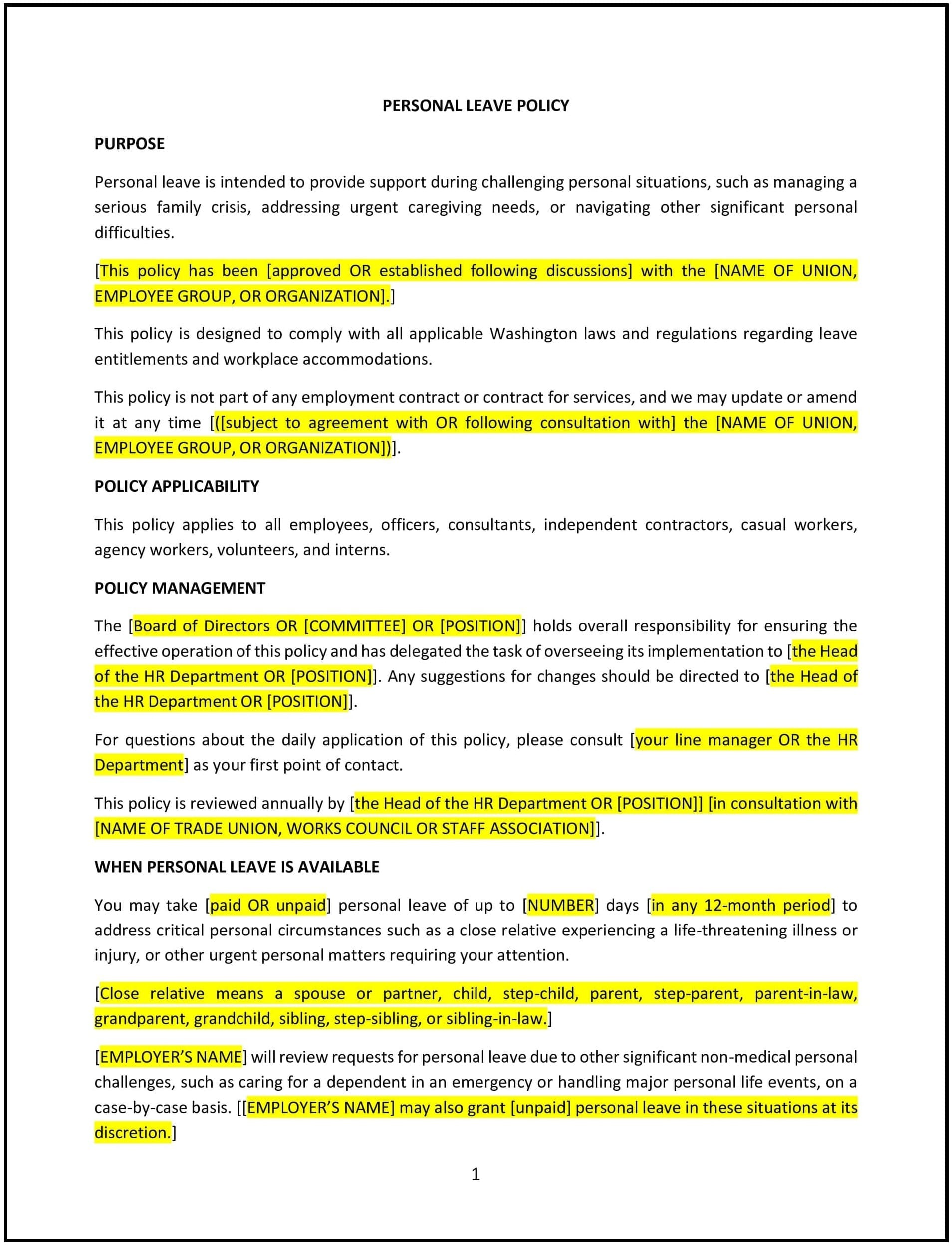
Personal leave policy (Washington): Free template
Details the process for requesting unpaid time off for personal matters not covered by other leave policies.
- Policies
- Washington
This personal leave policy is designed to help Washington businesses manage employee requests for personal leave. The policy outlines how personal leave can be taken, the conditions under which it is granted, and the responsibilities of both the employer and employee. It ensures that businesses comply with Washington state laws, while providing employees with flexibility to handle personal matters without negatively affecting their job performance.
By adopting this policy, businesses can provide a supportive environment for employees, maintain clear communication about personal leave, and ensure fair and consistent practices across the organization.
How to use this personal leave policy (Washington)
- Define eligibility for personal leave: The policy should specify which employees are eligible for personal leave, including any minimum employment requirements (e.g., length of service, full-time status). It should also outline any conditions under which personal leave can be requested.
- Specify the types of personal leave: The policy should clarify the types of personal leave that can be requested, including for reasons such as personal illness, family responsibilities, or unforeseen emergencies. It should also address whether personal leave is paid or unpaid.
- Outline the procedure for requesting leave: The policy should explain how employees can request personal leave, including the notice period required, any documentation needed (such as a doctor's note or a family emergency statement), and how employees should notify their manager or HR.
- Set limits on the duration of leave: The policy should specify how much personal leave employees are entitled to and any limits on the duration of leave. It should also detail any provisions for extending leave if necessary and the process for doing so.
- Address the continuation of benefits: The policy should clarify whether benefits such as health insurance and retirement contributions will continue during the personal leave period. It should specify the responsibilities of the employee and employer regarding payment of benefits.
- Ensure job protection: The policy should specify whether employees can return to their previous job or an equivalent position after taking personal leave. This ensures job security for employees while on leave.
- Ensure compliance with Washington and federal laws: The policy should comply with Washington state laws and federal regulations regarding leave, including any applicable protections for employees, such as those related to family leave or disability accommodations.
- Review and update regularly: Periodically review and update the policy to ensure it remains compliant with Washington state laws, federal regulations, and any changes in company operations. Regular updates will help ensure the policy stays relevant and effective.
Benefits of using this personal leave policy (Washington)
This policy offers several benefits for Washington businesses:
- Supports employee well-being: Personal leave allows employees to attend to personal matters without fear of losing their job or income, promoting work-life balance and overall well-being.
- Reduces absenteeism: When employees have access to personal leave, they are less likely to take unscheduled time off, which can improve workforce productivity and reduce disruption in business operations.
- Enhances employee retention: Providing personal leave demonstrates that the company values its employees' personal lives, which can increase employee satisfaction, loyalty, and retention.
- Promotes fairness and consistency: The policy ensures that all employees have equal access to personal leave under the same terms, preventing favoritism and promoting a fair workplace.
- Complies with legal requirements: The policy enhances compliance with Washington state and federal laws regarding leave, reducing the risk of legal disputes or penalties.
- Supports business continuity: By allowing employees to take personal leave as needed, the business can maintain a flexible workforce while still ensuring that operations continue smoothly.
Tips for using this personal leave policy (Washington)
- Communicate the policy clearly: Ensure that all employees understand the personal leave policy, including how and when they can request leave and the conditions for approval. Include the policy in the employee handbook, review it during onboarding, and provide periodic reminders.
- Monitor leave requests: Keep track of employees' personal leave requests to ensure that the policy is applied consistently and fairly across the organization. Implement a system for managing leave requests and ensuring that employees comply with the notice period.
- Manage coverage during leave: Ensure that work responsibilities are covered when an employee is on personal leave. This may involve adjusting workloads, reallocating tasks, or temporarily reassigning responsibilities.
- Address leave extensions promptly: If an employee needs to extend their personal leave, the policy should provide a clear process for requesting and approving extensions. Ensure that employees understand how to request additional leave and what documentation is required.
- Review benefits during leave: Clearly communicate how benefits will be handled during personal leave, including whether employees will be responsible for continuing their contributions to health insurance or retirement plans during their time off.
- Review and update regularly: Periodically review the policy to ensure it remains compliant with Washington state laws, federal regulations, and any changes in company operations. Regular updates will help keep the policy relevant and effective.
Frequently asked questions (FAQs)
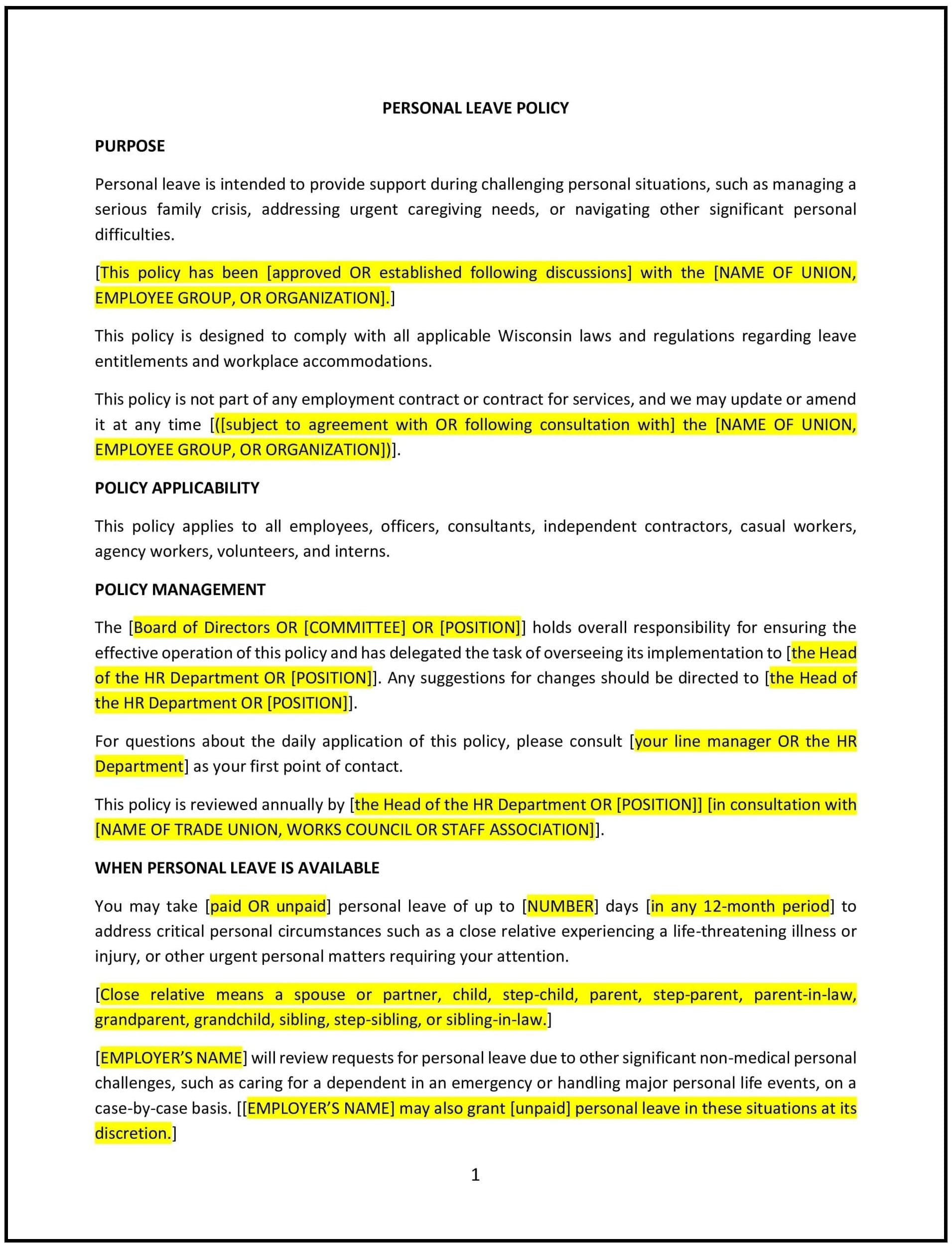
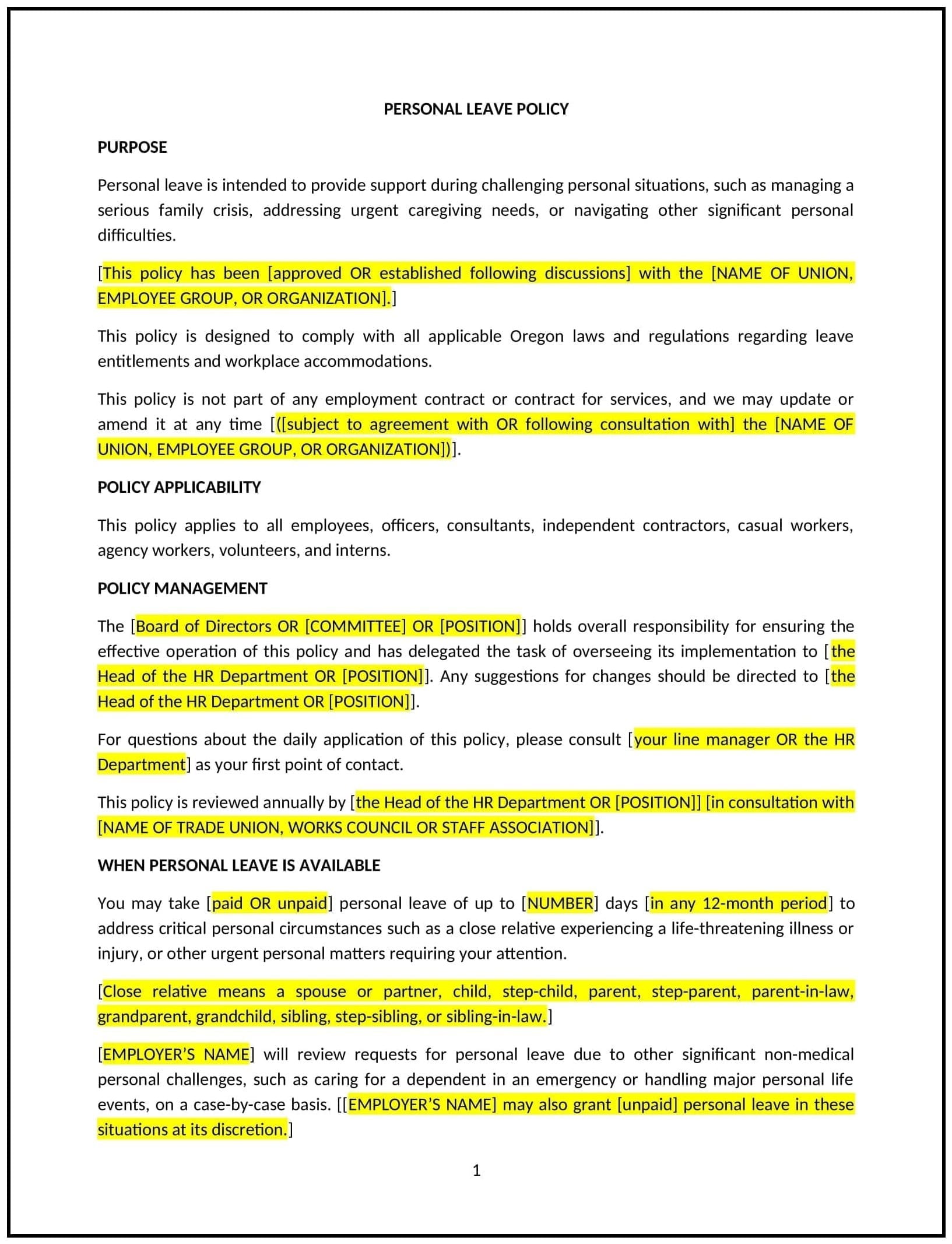
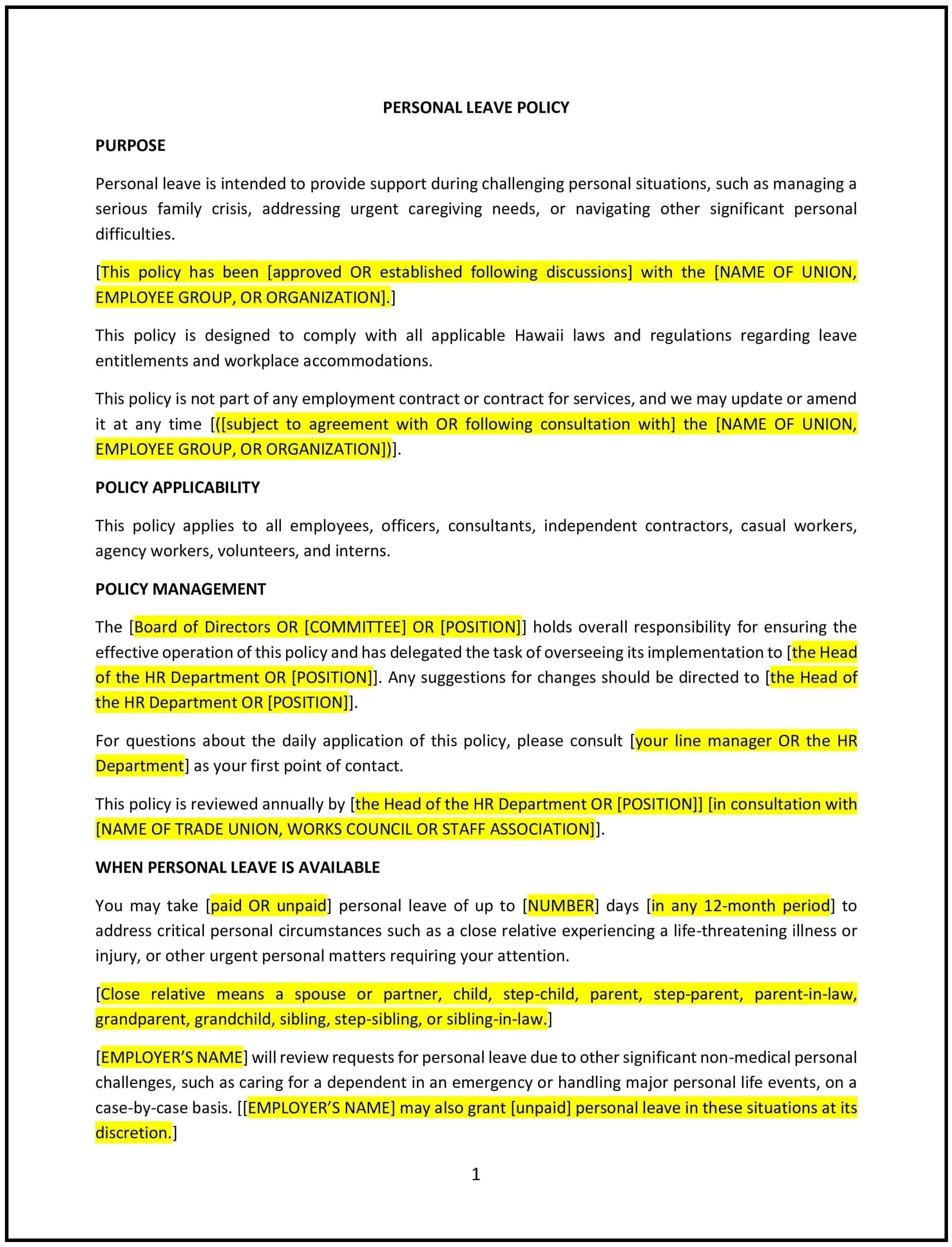
Similar templates
Where deals go from offer to paid
