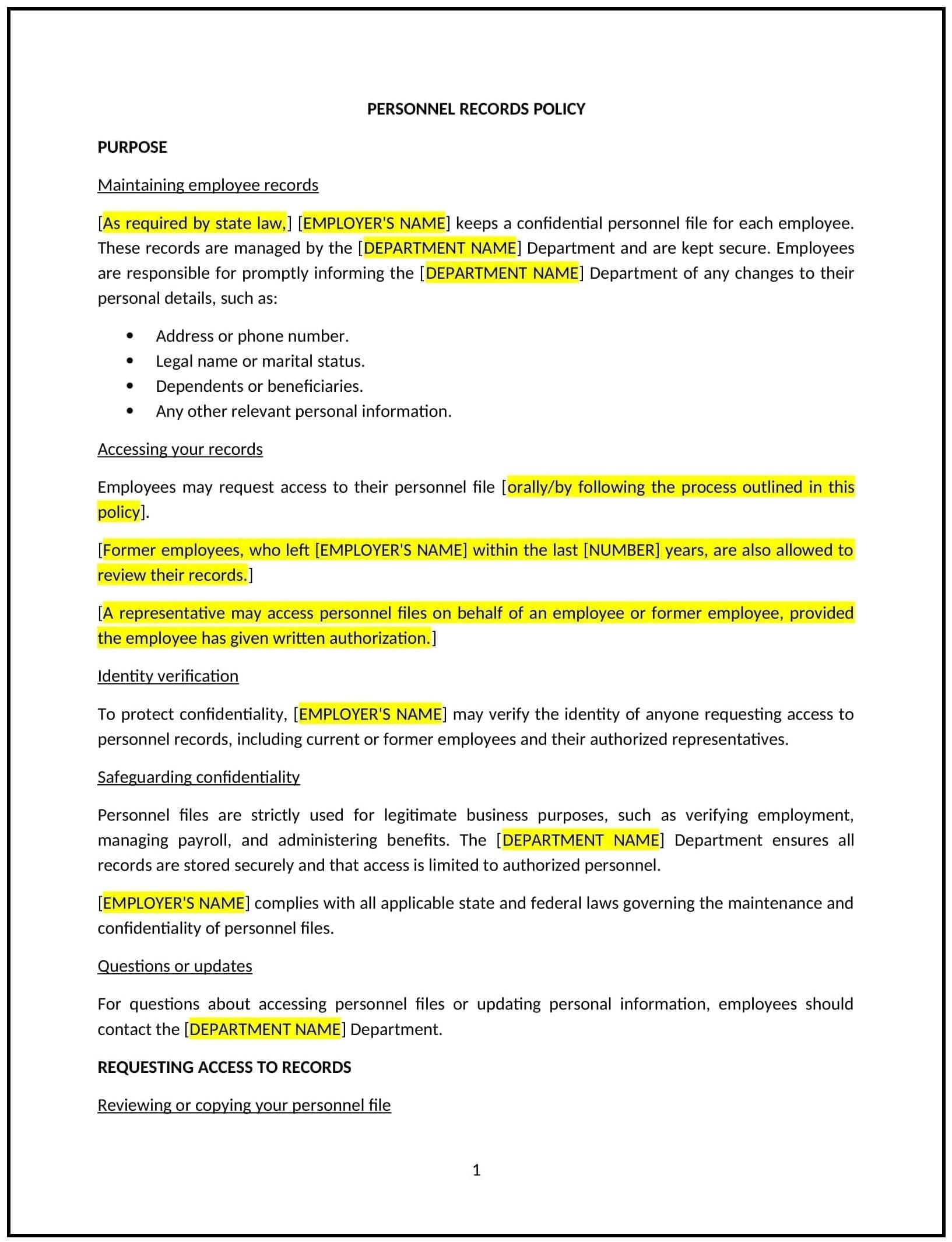
Personnel records policy (South Carolina): Free template
Explains how employee records are maintained, accessed, and protected in accordance with privacy laws.
- Policies
- South Carolina
Personnel records policy (South Carolina)
This personnel records policy is designed to help South Carolina businesses establish guidelines for managing employee records, such as employment history, performance evaluations, and payroll information. It outlines procedures for maintaining, accessing, and protecting personnel records to support transparency and data security.
By adopting this policy, businesses can organize employee information effectively, protect sensitive data, and align with general best practices for recordkeeping.
How to use this personnel records policy (South Carolina)
- Define personnel records: Explain what constitutes personnel records, such as employment contracts, performance reviews, payroll details, and disciplinary actions.
- Establish storage procedures: Provide guidelines for securely storing personnel records, whether in physical or digital formats.
- Address access controls: Specify who can access personnel records and under what circumstances, such as HR staff or authorized managers.
- Set retention periods: Outline how long different types of records should be retained before being securely disposed of.
- Train employees: Educate HR teams and managers on their responsibilities for maintaining and protecting personnel records.
- Review and update: Assess the policy annually to ensure it aligns with evolving business needs and recordkeeping standards.
Benefits of using this personnel records policy (South Carolina)
This policy offers several advantages for South Carolina businesses:
- Organizes employee information: Ensures personnel records are maintained in a structured and accessible manner.
- Protects sensitive data: Reduces the risk of unauthorized access or misuse of employee information.
- Aligns with best practices: Provides a structured approach to managing personnel records.
- Enhances transparency: Demonstrates a commitment to maintaining accurate and secure employee records.
- Reduces risks: Minimizes the potential for errors, disputes, or data breaches related to personnel records.
Tips for using this personnel records policy (South Carolina)
- Communicate the policy: Share the policy with employees and include it in the employee handbook.
- Provide training: Educate HR teams and managers on their responsibilities for maintaining and protecting personnel records.
- Monitor adherence: Regularly review recordkeeping practices to ensure compliance with the policy.
- Address issues promptly: Take corrective action if personnel records are mishandled or if a data breach occurs.
- Update regularly: Assess the policy annually to ensure it aligns with evolving business needs and recordkeeping standards.
Frequently asked questions (FAQs)
Similar templates
Where deals go from offer to paid
