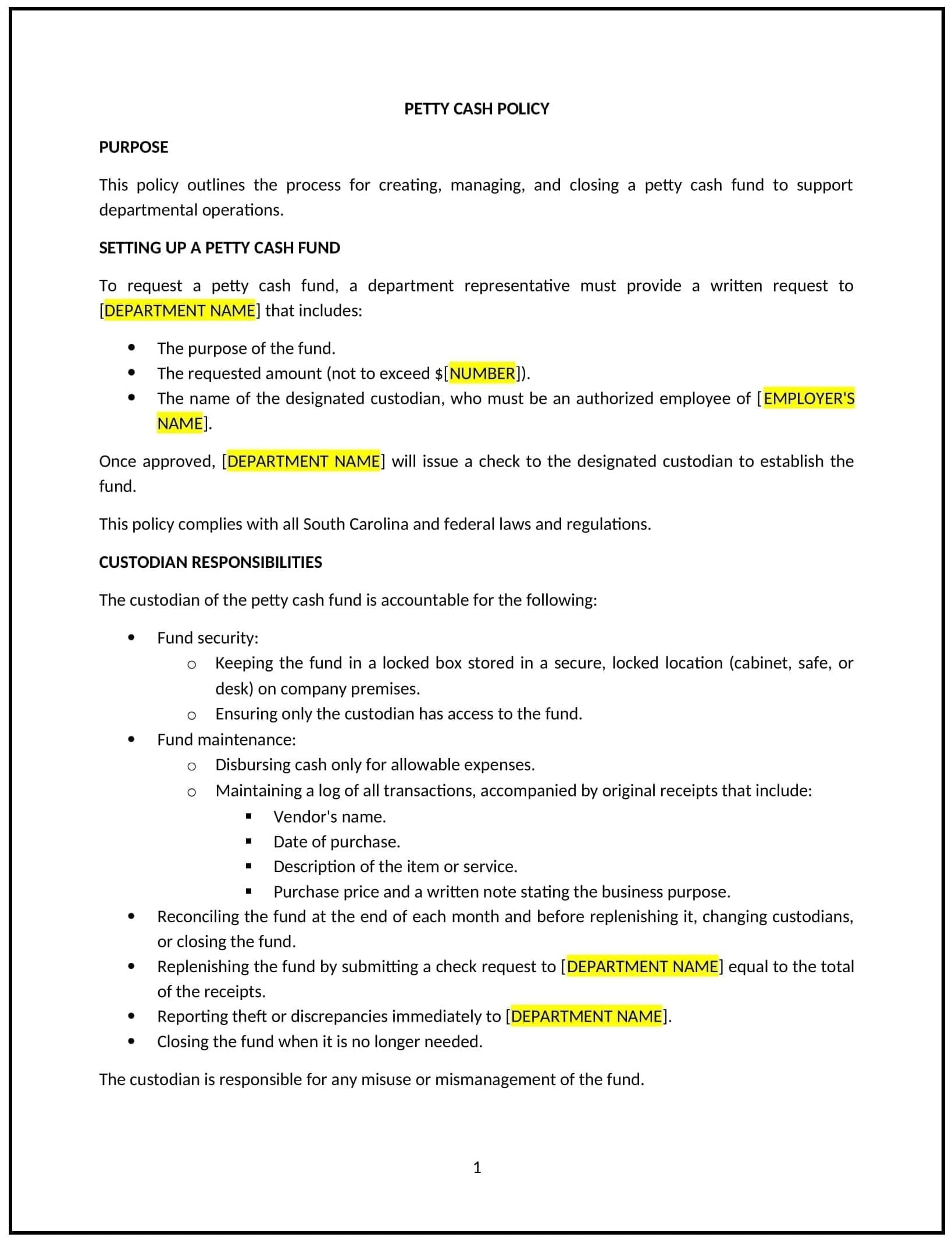
Petty cash policy (South Carolina): Free template
Details how petty cash is requested, used, and tracked for small business-related expenses.
- Policies
- South Carolina
Petty cash policy (South Carolina)
This petty cash policy is designed to help South Carolina businesses establish guidelines for managing small cash expenses, such as office supplies, travel reimbursements, or minor business-related purchases. It outlines procedures for disbursing, tracking, and reconciling petty cash funds to maintain accountability and prevent misuse.
By adopting this policy, businesses can streamline small expense management, reduce administrative burdens, and align with general best practices for financial accountability.
How to use this petty cash policy (South Carolina)
- Define petty cash: Explain what constitutes petty cash and its purpose, such as covering small, routine business expenses.
- Establish fund limits: Specify the maximum amount of petty cash available and the maximum amount for individual transactions.
- Set disbursement procedures: Provide steps for requesting and approving petty cash disbursements, including required documentation.
- Address reconciliation: Outline how petty cash funds will be tracked, replenished, and reconciled regularly.
- Train employees: Educate staff on their responsibilities for using petty cash appropriately and submitting receipts.
- Review and update: Assess the policy annually to ensure it aligns with evolving business needs and financial standards.
Benefits of using this petty cash policy (South Carolina)
This policy offers several advantages for South Carolina businesses:
- Streamlines expense management: Simplifies the process of handling small, routine business expenses.
- Enhances accountability: Ensures petty cash funds are used appropriately and tracked accurately.
- Aligns with best practices: Provides a structured approach to managing petty cash.
- Reduces administrative burdens: Minimizes paperwork and processing time for small expenses.
- Builds trust: Demonstrates a commitment to financial transparency and accountability.
Tips for using this petty cash policy (South Carolina)
- Communicate the policy: Share the policy with employees and include it in the employee handbook.
- Provide training: Educate staff on their responsibilities for using petty cash appropriately and submitting receipts.
- Monitor adherence: Regularly review petty cash transactions to ensure compliance with the policy.
- Address issues promptly: Take corrective action if petty cash is misused or if documentation is incomplete.
- Update regularly: Assess the policy annually to ensure it aligns with evolving business needs and financial standards.
Frequently asked questions (FAQs)
Similar templates
Where deals go from offer to paid
