Political activity policy (Alabama): Free template
Clarifies acceptable political conduct at work to avoid conflicts and ensure neutrality under Alabama law.
- Policies
- Alabama
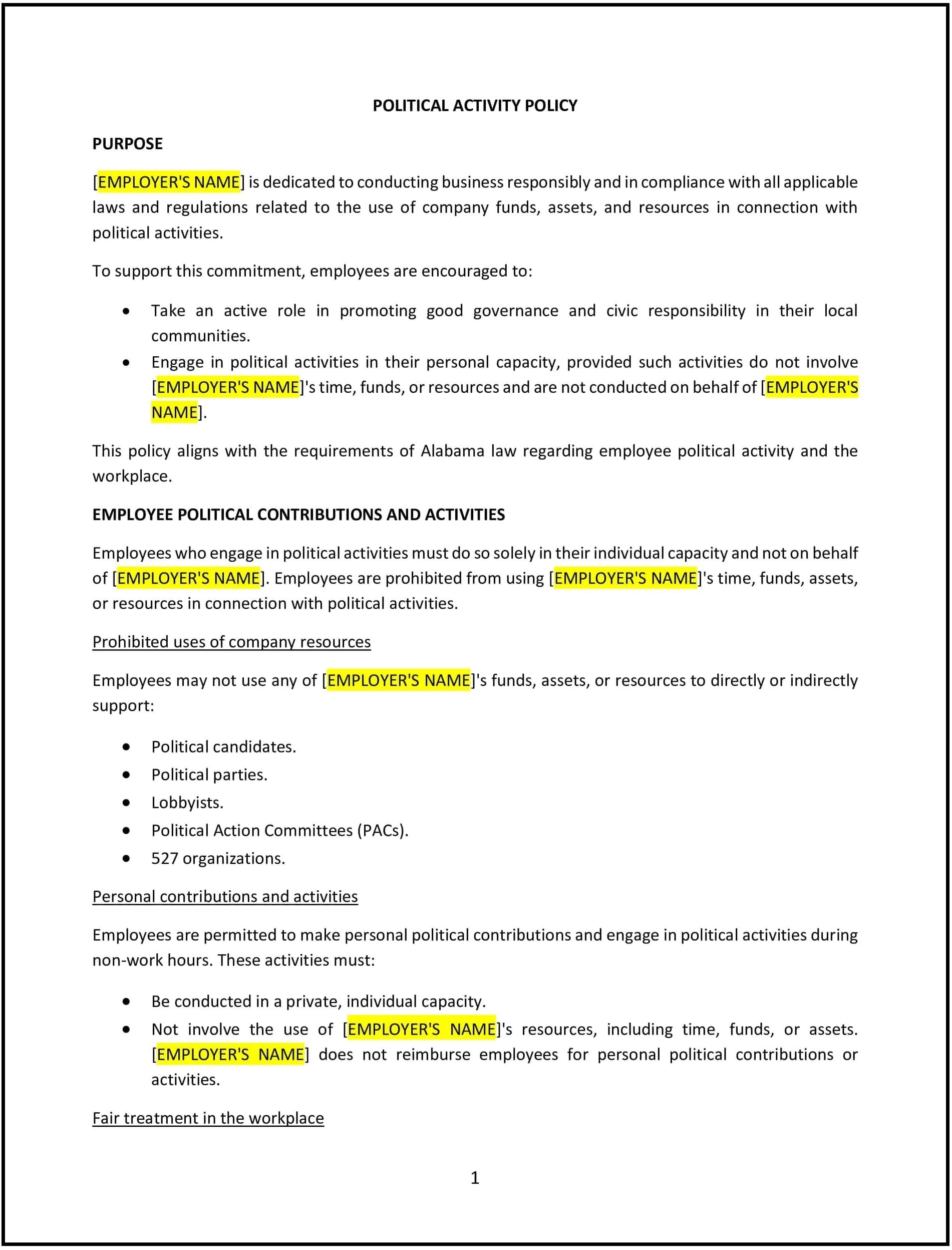
Political activity policy (Alabama)
A political activity policy provides guidelines for employees engaging in political activities to ensure such activities do not interfere with work responsibilities or create conflicts of interest. For SMBs in Alabama, this policy helps maintain a neutral and inclusive workplace while respecting employees’ rights to political expression outside of work.
This policy outlines expectations for political activities during work hours, the use of company resources, and participation in activities that could impact the company’s reputation or operations.
How to use this political activity policy (Alabama)
- Define political activity: Specify what constitutes political activities, such as campaigning, fundraising, or advocacy for political candidates or causes.
- Set boundaries for work hours: Clearly state that political activities are not permitted during work hours or on company premises unless explicitly authorized.
- Prohibit use of company resources: Include guidelines to prevent the use of company equipment, email, or other resources for political purposes.
- Address representation: Require employees to clarify that their personal political opinions and activities do not represent the company.
- Include non-retaliation clauses: Reaffirm that employees will not face retaliation or discrimination based on their political beliefs or activities conducted outside of work.
Benefits of using a political activity policy (Alabama)
A political activity policy helps balance individual rights with workplace neutrality. Here’s how it helps:
- Promotes inclusivity: Ensures political activities do not disrupt workplace harmony or alienate colleagues.
- Protects company resources: Prevents misuse of company tools, time, or funds for political purposes.
- Maintains professionalism: Reinforces the separation of personal beliefs and professional responsibilities.
- Reduces conflicts: Provides clear boundaries to prevent political discussions or actions from escalating into workplace disputes.
- Supports compliance: Aligns with Alabama and federal laws governing political activities in the workplace.
Tips for implementing a political activity policy (Alabama)
- Communicate expectations: Ensure employees understand the policy through onboarding sessions and regular updates.
- Provide training: Educate managers on handling political discussions or conflicts in the workplace.
- Monitor resource usage: Implement systems to track the use of company resources to prevent unauthorized political activities.
- Encourage respect: Foster a workplace culture where diverse opinions are respected, even when political beliefs differ.
- Review and update: Periodically assess the policy to ensure it reflects changes in laws or workplace dynamics.
Frequently asked questions (FAQs)
Similar templates
Where deals go from offer to paid
