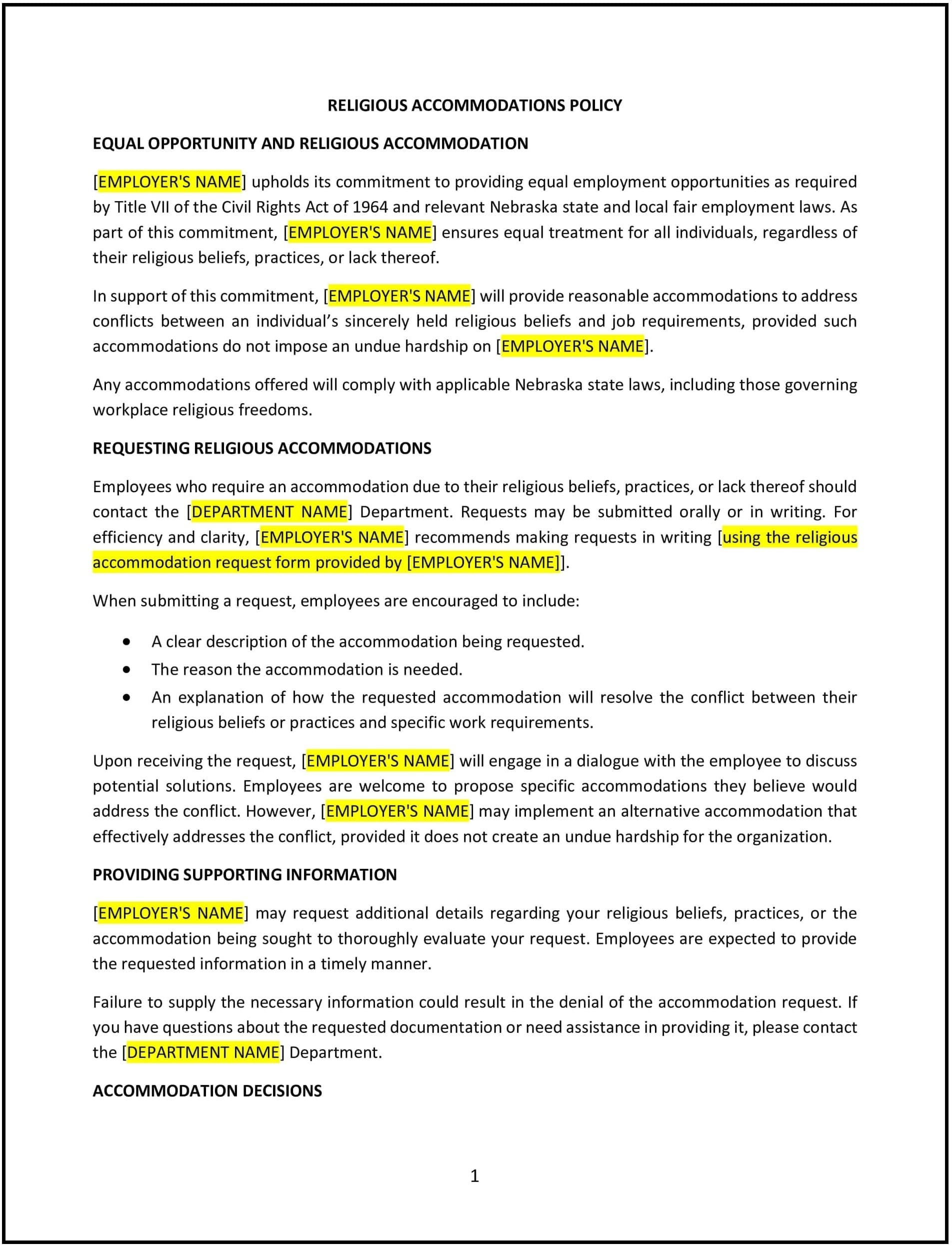
Religious accommodations policy (Nevada): Free template
Outlines expectations, eligibility, and responsibilities for employees working from home or offsite locations.
- Policies
- Nevada
Religious accommodations policy (Nevada)
This religious accommodations policy is designed to help Nevada businesses comply with federal and state laws, such as Title VII of the Civil Rights Act of 1964, by providing reasonable accommodations for employees' religious beliefs and practices. The policy outlines procedures for addressing accommodation requests while maintaining workplace fairness and operational efficiency.
By adopting this policy, businesses can foster inclusivity, improve compliance with legal requirements, and promote a supportive work environment.
How to use this religious accommodations policy (Nevada)
- Define reasonable accommodations: Specify that accommodations may include schedule adjustments, time off for religious observances, or exemptions from certain workplace practices.
- Outline the request process: Require employees to submit a formal request for accommodation, including details about their religious practice and the accommodation sought.
- Evaluate requests: Establish procedures for assessing accommodation requests, considering the impact on business operations and whether they impose an undue hardship.
- Ensure confidentiality: Emphasize that all accommodation requests and related discussions will be handled confidentially.
- Train managers and HR staff: Provide training to ensure that those handling accommodation requests are familiar with legal requirements and company procedures.
- Address undue hardship: Clarify that accommodations may be denied if they create significant difficulty or expense for the company, as defined by law.
- Encourage open communication: Promote respectful dialogue between employees and management to find mutually agreeable solutions.
- Monitor compliance: Regularly review accommodation practices to maintain adherence to this policy and legal standards.
Benefits of using this religious accommodations policy (Nevada)
This policy provides several benefits for Nevada businesses:
- Strengthens legal compliance: Aligns with federal and Nevada laws, reducing the risk of legal disputes or discrimination claims.
- Promotes inclusivity: Demonstrates a commitment to supporting employees of diverse religious backgrounds.
- Enhances employee satisfaction: Provides employees with the support they need to practice their faith, improving morale and retention.
- Maintains workplace harmony: Encourages open communication and mutual respect among employees and management.
- Supports operational efficiency: Provides a structured approach to managing accommodation requests while balancing business needs.
Tips for using this religious accommodations policy (Nevada)
- Communicate the policy: Share the policy with employees during onboarding and make it easily accessible through internal systems.
- Respond promptly: Address accommodation requests in a timely manner to demonstrate respect and prevent disruptions.
- Document all requests: Maintain detailed records of accommodation requests, evaluations, and resolutions to ensure transparency and compliance.
- Provide resources: Offer guidance or resources to employees and managers about religious accommodations and the company’s commitment to inclusivity.
- Update regularly: Review the policy periodically to reflect changes in laws, workplace dynamics, or employee needs.
Frequently asked questions (FAQs)
Similar templates
Where deals go from offer to paid
