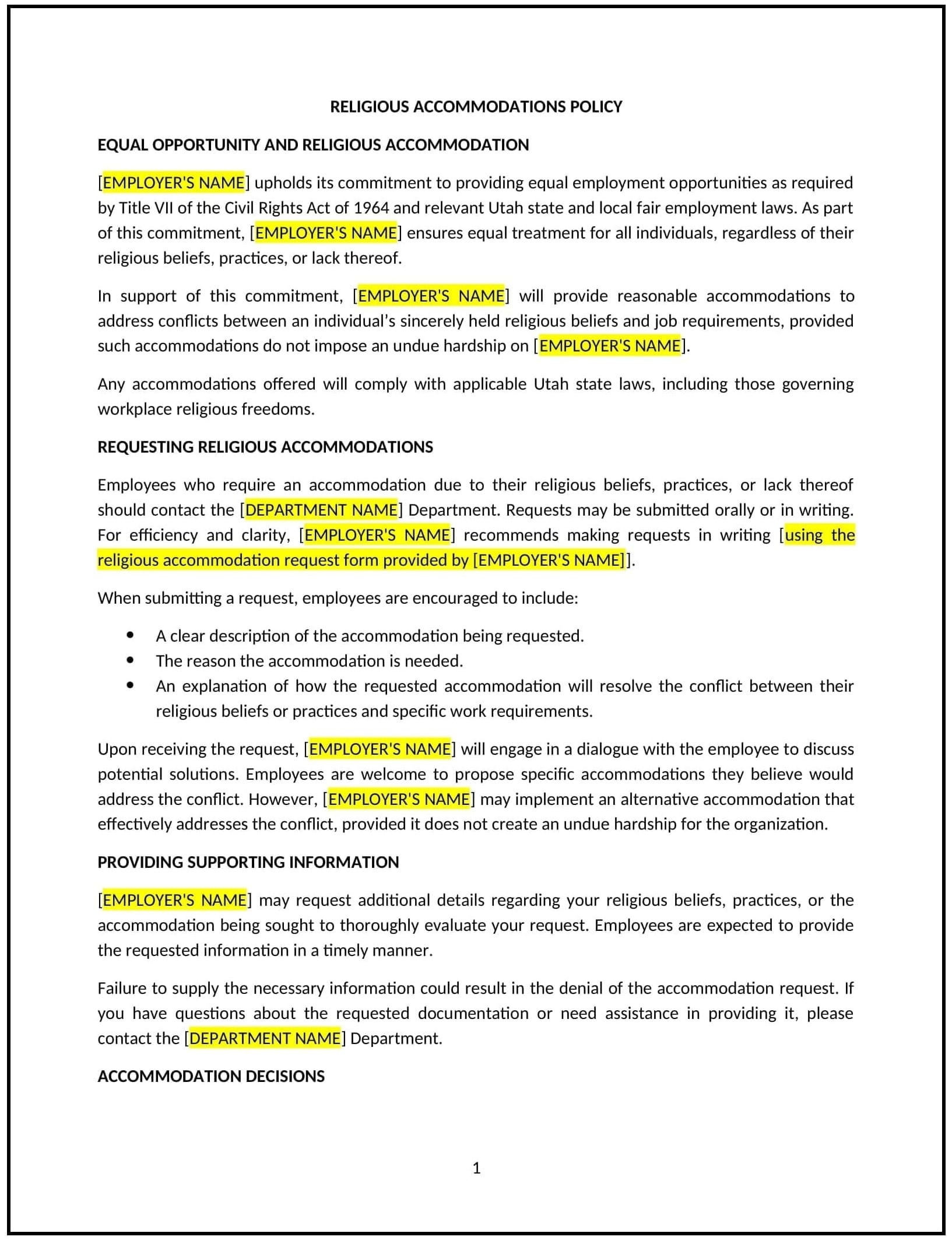
Religious accommodations policy (Utah): Free template
Explains how employees may request accommodations for religious practices while meeting Utah legal requirements.
- Policies
- Utah
Religious accommodations policy (Utah)
This religious accommodations policy is designed to help Utah businesses establish guidelines for accommodating employees’ religious beliefs and practices. It outlines procedures for requesting accommodations, addressing conflicts, and ensuring compliance with federal and state laws.
By adopting this policy, businesses can promote inclusivity, support employee well-being, and align with general best practices for workplace accommodations.
How to use this religious accommodations policy (Utah)
- Define religious accommodations: Explain what constitutes a religious accommodation, such as time off for religious holidays or dress code modifications.
- Establish request procedures: Provide steps for employees to request religious accommodations, including required documentation.
- Address conflicts: Specify how conflicts between religious practices and workplace requirements will be resolved.
- Ensure compliance: Align the policy with federal and state laws, such as Title VII of the Civil Rights Act.
- Train managers: Educate supervisors on handling religious accommodation requests and fostering inclusivity.
- Monitor compliance: Regularly review accommodation requests and outcomes to ensure adherence to the policy.
- Review and update: Assess the policy annually to ensure it aligns with evolving laws and workplace needs.
Benefits of using this religious accommodations policy (Utah)
This policy offers several advantages for Utah businesses:
- Promotes inclusivity: Demonstrates a commitment to respecting and accommodating employees’ religious beliefs.
- Supports employee well-being: Helps employees balance their religious practices with work responsibilities.
- Aligns with legal standards: Helps businesses comply with federal and state laws requiring religious accommodations.
- Reduces legal risks: Minimizes the potential for lawsuits or penalties related to religious discrimination.
- Builds trust: Fosters a positive workplace culture by valuing diversity and inclusion.
Tips for using this religious accommodations policy (Utah)
- Communicate the policy: Share the policy with employees and include it in the employee handbook.
- Provide training: Educate managers on handling religious accommodation requests and fostering inclusivity.
- Monitor compliance: Regularly review accommodation requests and outcomes to ensure adherence to the policy.
- Address issues promptly: Take corrective action if religious accommodations are denied improperly or conflicts arise.
- Update regularly: Assess the policy annually to ensure it aligns with evolving laws and workplace needs.
Frequently asked questions (FAQs)
Similar templates
Where deals go from offer to paid
