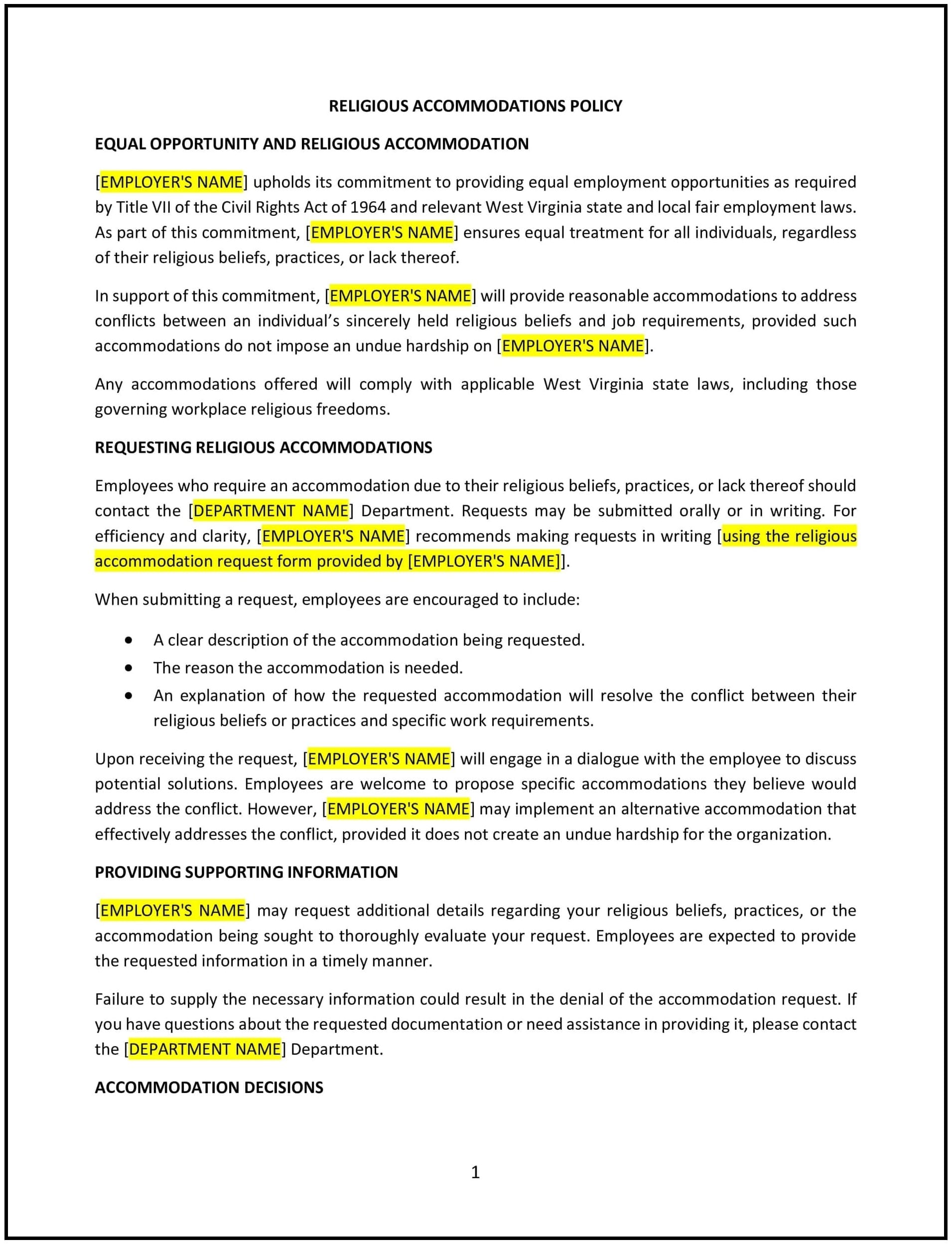
Religious accommodations policy (West Virginia): Free template
Explains how the organization supports employees’ religious practices through reasonable accommodations.
- Policies
- West Virginia
Religious accommodations policy (West Virginia)
In West Virginia, a religious accommodations policy ensures that employees can practice their religious beliefs without discrimination or undue hardship. This policy outlines the organization’s commitment to providing reasonable accommodations for employees’ religious practices in compliance with federal and state laws, such as Title VII of the Civil Rights Act.
The policy defines eligible accommodations, request procedures, and guidelines for balancing workplace needs with employees’ religious obligations.
How to use this religious accommodations policy (West Virginia)
- Define religious accommodations: Specify the types of accommodations that may be provided, such as schedule adjustments, dress code modifications, or space for religious observances.
- Outline request procedures: Detail how employees can request accommodations, including providing a written request and any necessary supporting documentation.
- Address the evaluation process: Explain how requests will be assessed, including determining whether the accommodation creates an undue hardship for the organization.
- Emphasize confidentiality: Assure employees that all requests will be handled with sensitivity and that their religious beliefs will be respected.
- Support compliance: Align the policy with West Virginia labor laws and federal anti-discrimination regulations to ensure fairness and adherence to legal requirements.
Benefits of using a religious accommodations policy (West Virginia)
- Promotes inclusivity: Fosters a workplace culture of respect and understanding for diverse religious beliefs.
- Supports compliance: Improves adherence to West Virginia laws and federal regulations, reducing the risk of discrimination claims.
- Enhances employee morale: Demonstrates the organization’s commitment to supporting employees’ religious practices.
- Encourages open communication: Provides a clear process for employees to discuss their needs and concerns regarding religious accommodations.
- Reduces conflicts: Establishes consistent guidelines for managing accommodation requests, minimizing misunderstandings or disputes.
Tips for using a religious accommodations policy (West Virginia)
- Communicate the policy: Share the policy with employees during onboarding and ensure it is accessible for future reference.
- Train managers: Provide training on handling accommodation requests fairly and in compliance with legal requirements.
- Document all requests: Maintain records of accommodation requests, evaluations, and decisions to ensure transparency and accountability.
- Encourage dialogue: Foster a supportive environment where employees feel comfortable discussing their religious needs with HR or supervisors.
- Review periodically: Update the policy to reflect changes in West Virginia laws, federal regulations, or organizational practices.
Frequently asked questions (FAQs)
Similar templates
Where deals go from offer to paid
