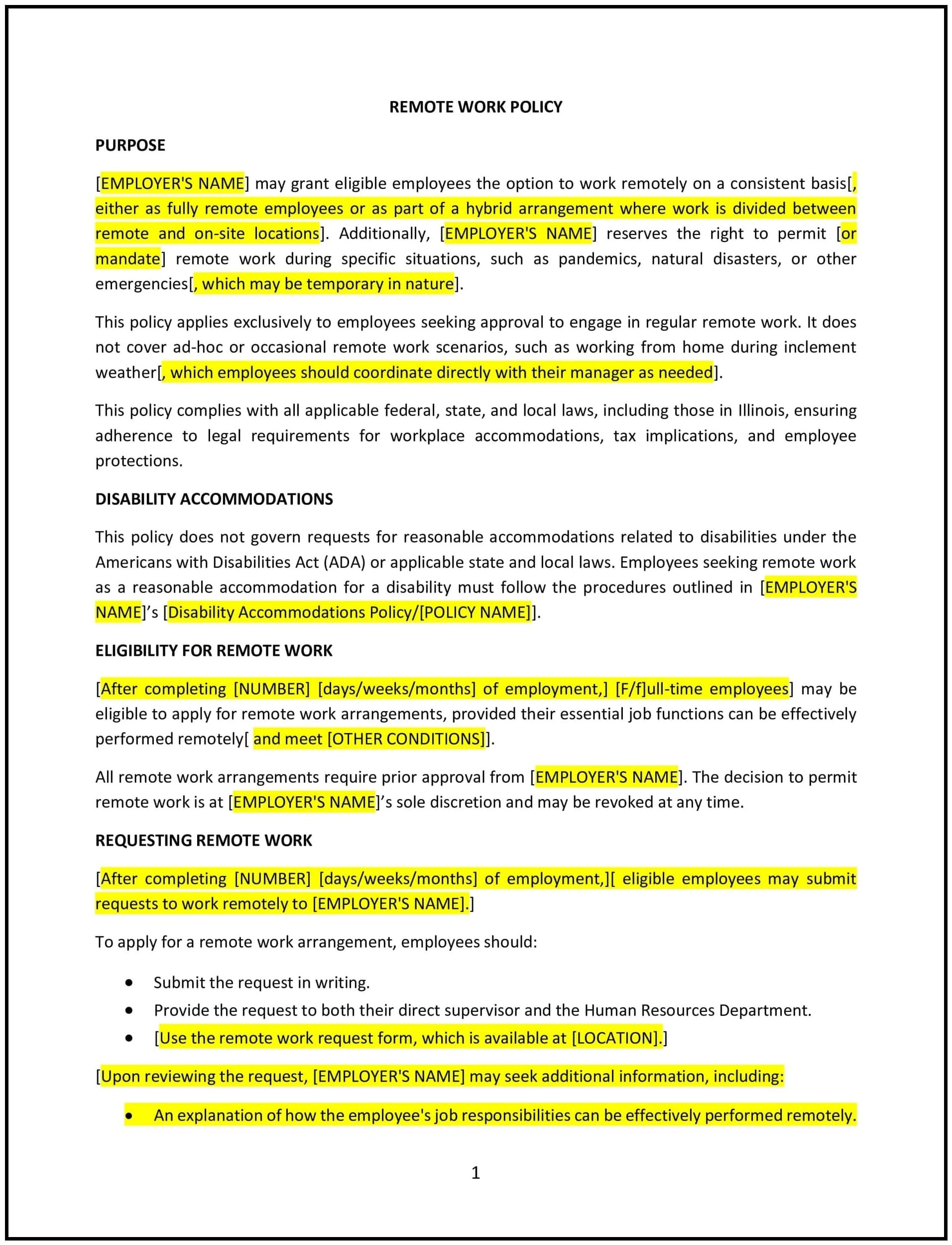
Remote work policy (Illinois): Free template
Establishes expectations and eligibility for Illinois employees working remotely, including communication, security, and performance standards.
- Policies
- Illinois
Remote work policy (Illinois)
This remote work policy is designed to help Illinois businesses establish guidelines for employees working remotely, either partially or fully. It outlines expectations for productivity, communication, and compliance with Illinois labor laws, including wage and hour requirements.
By adopting this policy, businesses can support flexible work arrangements while maintaining operational efficiency and accountability.
How to use this remote work policy (Illinois)
- Define eligibility: Specify which roles or employees are eligible for remote work based on job responsibilities and performance.
- Set expectations: Outline productivity, availability, and communication standards, such as response times and attending virtual meetings.
- Provide equipment guidelines: Clarify whether the company will provide equipment, such as laptops or internet reimbursements, and outline maintenance responsibilities.
- Address work hours: Require employees to adhere to agreed-upon work schedules and comply with Illinois wage and hour laws, including meal and rest breaks.
- Include data security measures: Emphasize the importance of protecting company data, such as using secure networks and following cybersecurity protocols.
- Establish performance monitoring: Detail how employee performance will be assessed, such as regular check-ins or productivity tracking tools.
- Require a remote work agreement: Request employees to sign a remote work agreement acknowledging the terms and conditions of the policy.
- Monitor compliance: Regularly review remote work arrangements to ensure alignment with company goals and legal requirements.
Benefits of using this remote work policy (Illinois)
This policy provides several benefits for Illinois businesses:
- Supports flexibility: Enables employees to work remotely while meeting company standards and expectations.
- Enhances compliance: Aligns with Illinois labor laws, such as wage and hour regulations, to avoid disputes.
- Protects company assets: Safeguards company data and equipment through clear usage guidelines.
- Maintains accountability: Establishes clear expectations for performance and communication.
- Improves productivity: Provides structure to ensure remote employees remain efficient and engaged.
Tips for using this remote work policy (Illinois)
- Communicate the policy: Share the policy with employees during onboarding and ensure it is easily accessible in the employee handbook.
- Train managers: Provide training to managers on supervising remote employees and maintaining productivity.
- Use technology: Implement tools for virtual meetings, performance tracking, and secure file sharing to support remote work.
- Encourage regular check-ins: Schedule periodic one-on-one meetings to discuss performance, challenges, and feedback.
- Update regularly: Revise the policy to reflect changes in Illinois labor laws, technology, or workplace practices.
Frequently asked questions (FAQs)
Similar templates
Where deals go from offer to paid
