Remote work policy (Mississippi): Free template
Defines expectations and eligibility for working from home or offsite locations.
- Policies
- Mississippi
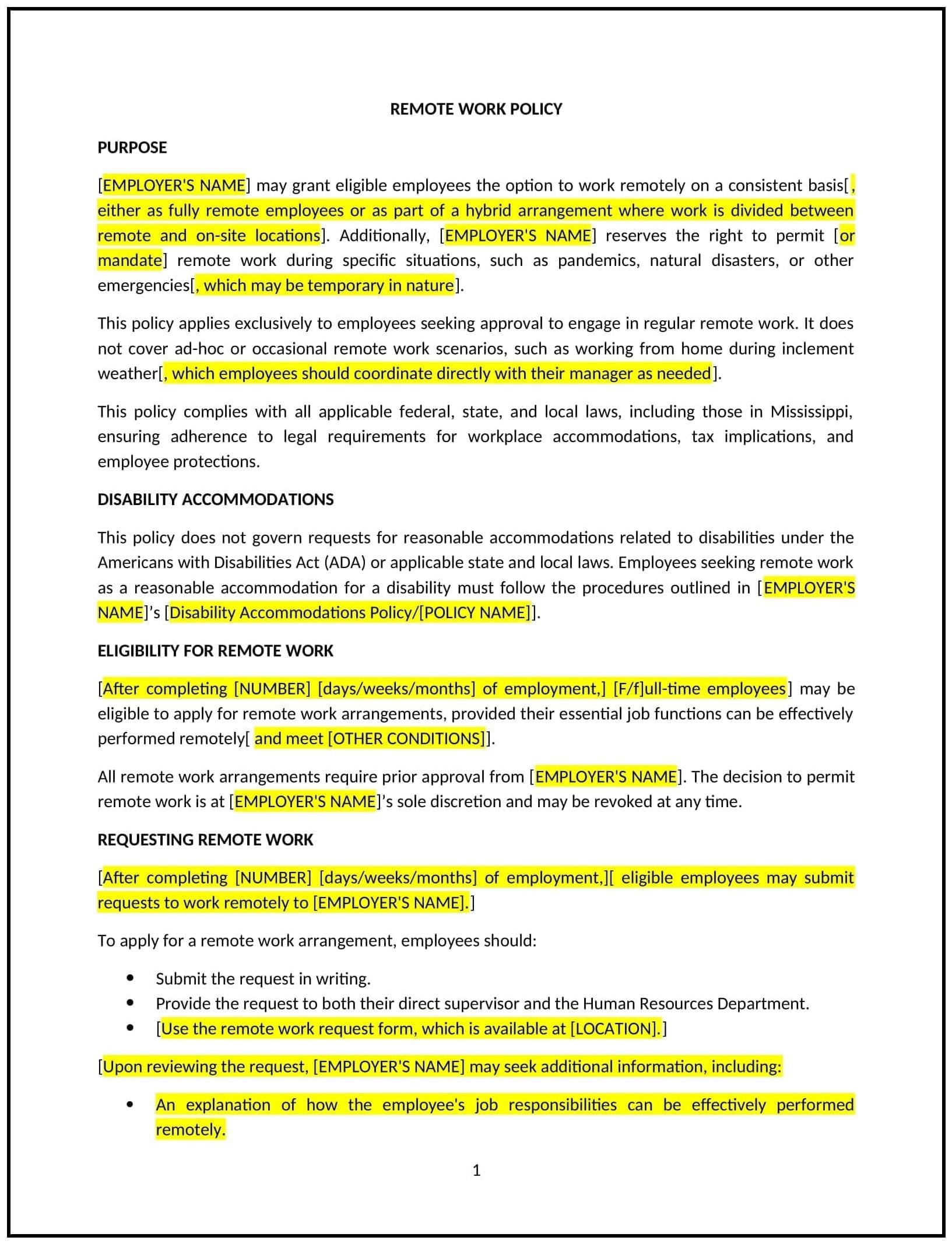
Remote work policy (Mississippi)
A remote work policy establishes guidelines for Mississippi businesses that allow employees to work from home or offsite locations. This policy helps businesses manage remote work expectations, maintain productivity, and ensure effective communication between remote and in-office employees.
By implementing this policy, businesses can offer flexibility while maintaining operational efficiency and accountability.
How to use this remote work policy (Mississippi)
- Define eligibility: Specify which roles or employees qualify for remote work based on job duties and business needs.
- Establish work expectations: Outline required work hours, availability, and performance standards for remote employees.
- Set communication protocols: Require employees to check in regularly via email, video calls, or messaging platforms.
- Provide technology guidelines: Specify which devices, software, and security measures employees should use when working remotely.
- Address cybersecurity concerns: Implement data protection policies, including secure access to company systems and use of VPNs.
- Outline workspace requirements: Encourage employees to set up a quiet, secure, and professional remote work environment.
- Define performance monitoring: Establish methods for tracking progress and evaluating productivity.
- Review and update the policy regularly: Adjust remote work guidelines as business needs evolve.
Benefits of using this remote work policy (Mississippi)
This policy offers several benefits for Mississippi businesses:
- Increases flexibility: Supports work-life balance and job satisfaction for employees.
- Enhances productivity: Allows employees to work in environments where they can focus and perform efficiently.
- Expands talent options: Enables businesses to hire and retain skilled employees regardless of location.
- Reduces overhead costs: Lowers expenses for office space, utilities, and commuting-related costs.
- Strengthens business continuity: Provides operational stability during emergencies or disruptions.
Tips for using this remote work policy (Mississippi)
- Set clear expectations: Communicate work hours, deadlines, and availability requirements upfront.
- Use collaboration tools: Provide employees with access to project management and communication software.
- Monitor performance: Assess productivity based on deliverables rather than time spent online.
- Encourage regular check-ins: Schedule virtual meetings to maintain teamwork and alignment on projects.
- Address security risks: Require employees to follow best practices for data protection and system access.
Frequently asked questions (FAQs)
Similar templates
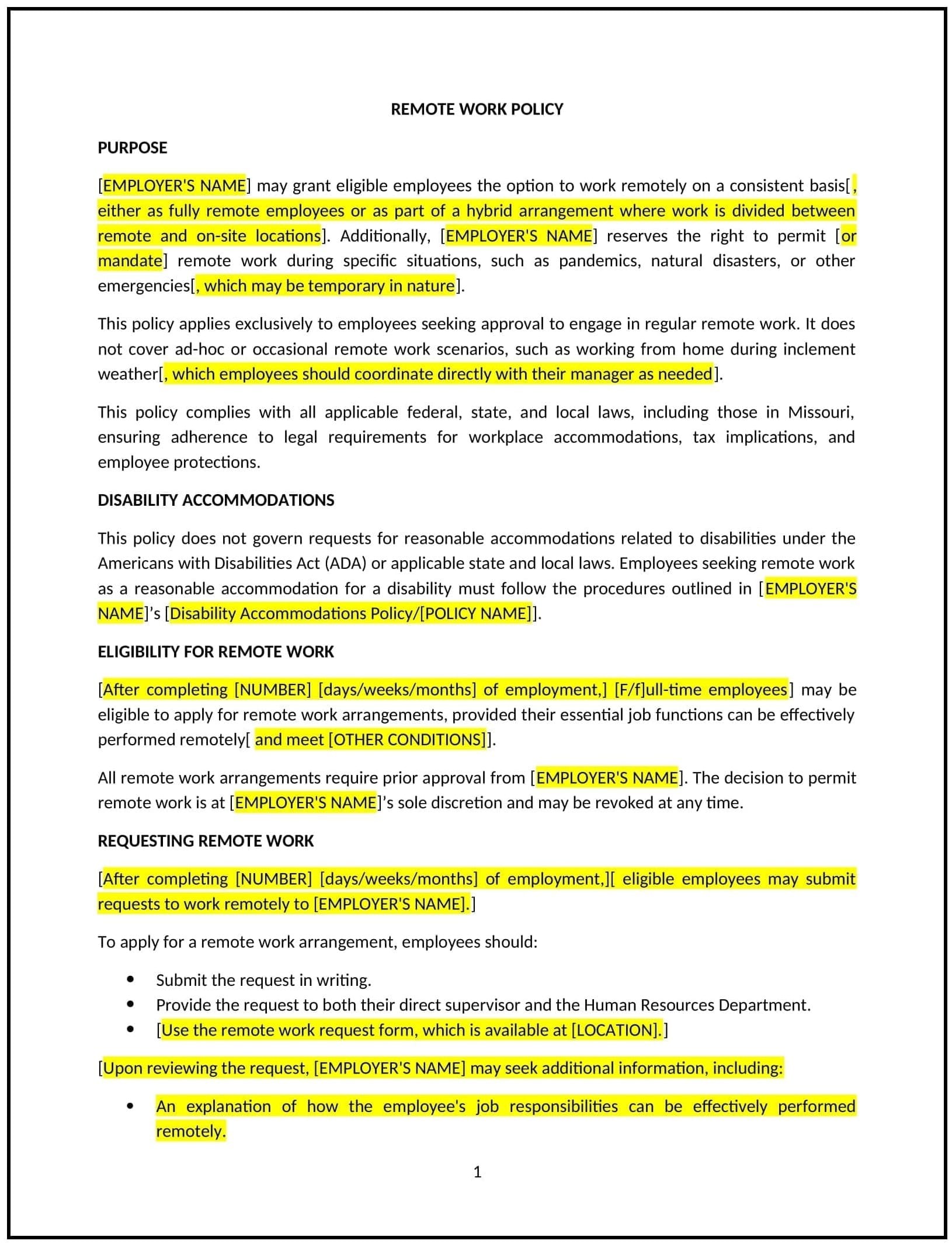
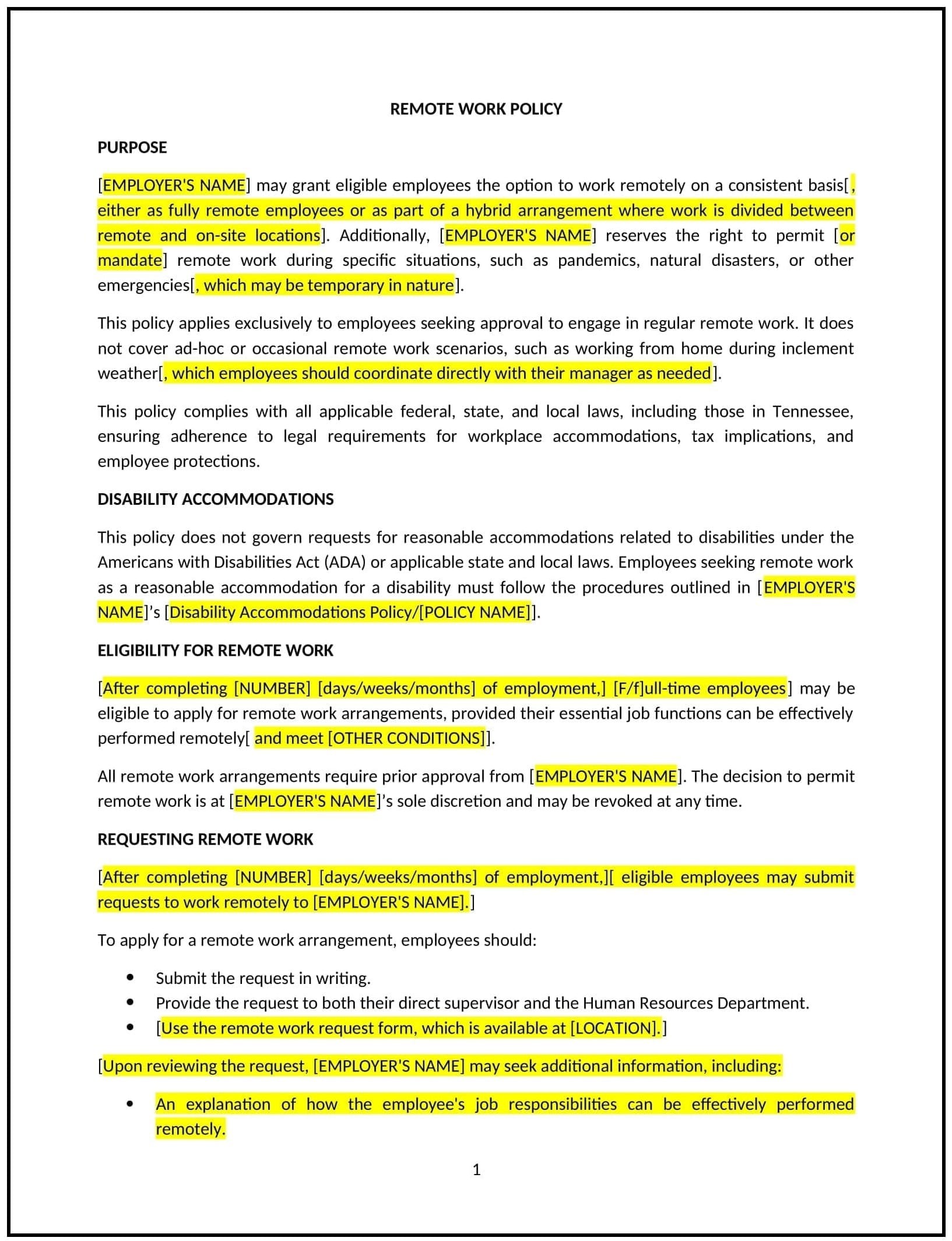
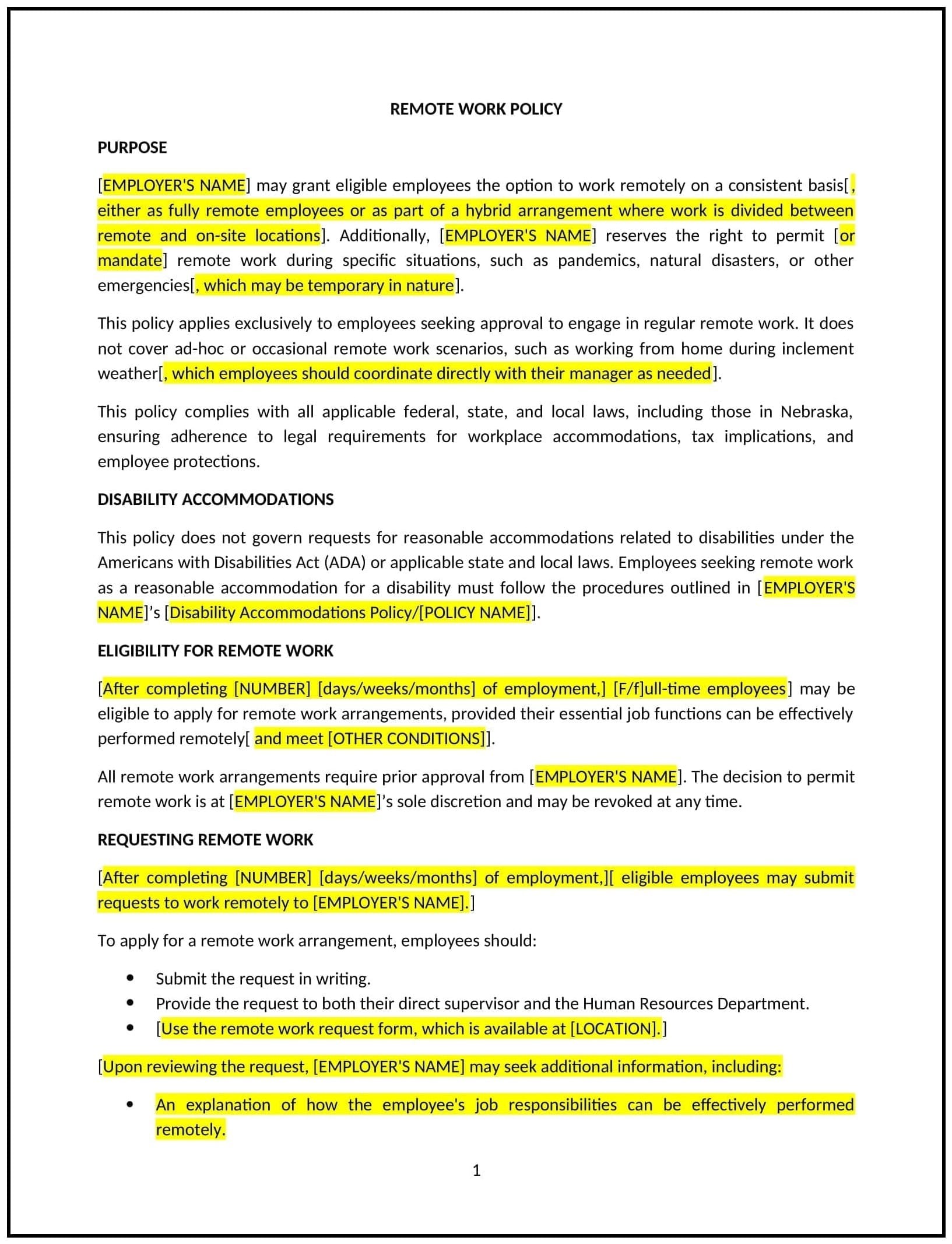
Where deals go from offer to paid
