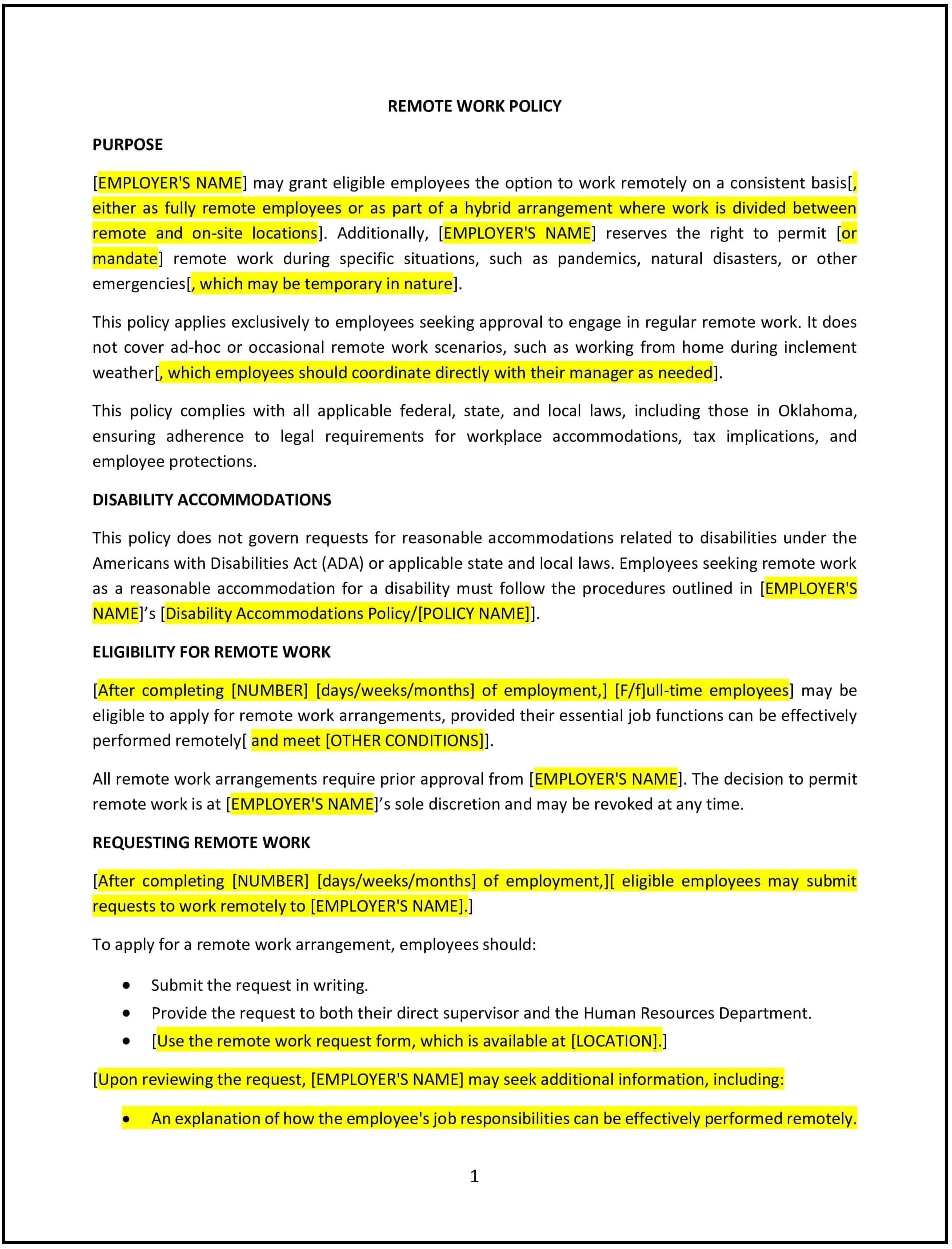
Remote work policy (Oklahoma): Free template
Outlines eligibility, expectations, and security requirements for employees working from home or alternate locations.
- Policies
- Oklahoma
Remote work policy (Oklahoma)
This remote work policy is designed to help Oklahoma businesses establish clear guidelines for employees working remotely, whether full-time, part-time, or on an as-needed basis. The policy outlines expectations for productivity, communication, cybersecurity, and eligibility to ensure effective remote work arrangements.
By implementing this policy, businesses can maintain operational efficiency, support work-life balance, and address security considerations for remote employees.
How to use this remote work policy (Oklahoma)
- Define eligibility: Specify which roles qualify for remote work based on job responsibilities and business needs.
- Establish work schedules: Outline expectations for availability, core working hours, and flexibility.
- Set communication guidelines: Require employees to stay responsive via email, phone, and video conferencing tools.
- Implement cybersecurity measures: Require secure connections, company-approved devices, and adherence to IT security protocols.
- Address performance expectations: Ensure remote employees meet deadlines, productivity goals, and quality standards.
- Define workspace requirements: Encourage employees to maintain a dedicated, safe, and professional work environment.
- Review regularly: Assess the policy periodically to adapt to business needs and evolving remote work trends.
Benefits of using this remote work policy (Oklahoma)
Implementing this policy provides several advantages for Oklahoma businesses:
- Enhances flexibility: Supports employees in balancing work and personal commitments.
- Improves productivity: Establishes clear performance expectations for remote workers.
- Strengthens data security: Reduces risks associated with remote access and IT vulnerabilities.
- Reduces overhead costs: Lowers expenses related to office space and utilities.
- Reflects Oklahoma-specific workplace considerations: Aligns with local employment trends and industry practices.
Tips for using this remote work policy (Oklahoma)
- Use remote-friendly collaboration tools: Provide access to video conferencing, file-sharing, and project management platforms.
- Maintain accountability: Require employees to submit work progress reports or participate in regular check-ins.
- Address tax implications: Advise employees to consult with tax professionals regarding remote work tax considerations.
- Set clear IT security rules: Enforce VPN usage, password protection, and secure device policies.
- Adjust policies as needed: Update remote work guidelines based on technology advancements and business needs.
Frequently asked questions (FAQs)
Similar templates
Where deals go from offer to paid
