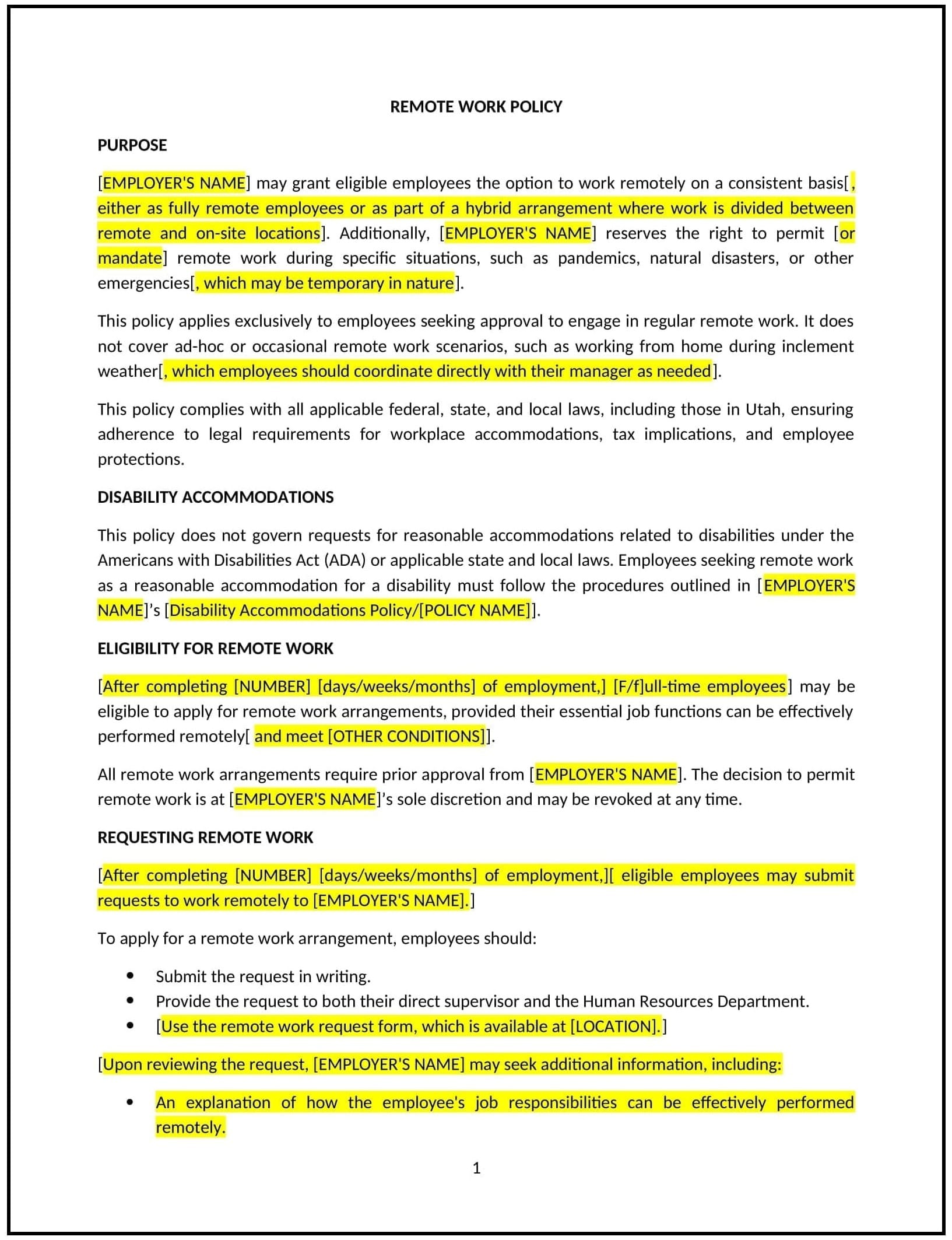
Remote work policy (Utah): Free template
Outlines eligibility, expectations, and communication standards for telework arrangements under Utah employment practices.
- Policies
- Utah
Remote work policy (Utah)
This remote work policy is designed to help Utah businesses establish guidelines for employees working outside the traditional office environment. It outlines procedures for eligibility, expectations, and communication to ensure productivity and accountability.
By adopting this policy, businesses can offer flexibility, support work-life balance, and align with general best practices for remote work.
How to use this remote work policy (Utah)
- Define eligibility: Specify which employees are eligible for remote work, such as full-time or part-time staff in specific roles.
- Set expectations: Outline performance standards, work hours, and communication requirements for remote employees.
- Address equipment and expenses: Specify whether the business will provide equipment or reimburse remote work-related expenses.
- Ensure data security: Provide guidelines for protecting sensitive information while working remotely.
- Train employees: Educate remote employees on the policy, tools, and best practices for working from home.
- Monitor performance: Regularly review remote employees’ productivity and adherence to the policy.
- Review and update: Assess the policy annually to ensure it aligns with evolving business needs and remote work trends.
Benefits of using this remote work policy (Utah)
This policy offers several advantages for Utah businesses:
- Enhances flexibility: Allows employees to work from home or other remote locations, improving work-life balance.
- Increases productivity: Provides employees with the flexibility to work during their most productive hours.
- Reduces overhead costs: Minimizes expenses related to office space, utilities, and supplies.
- Attracts talent: Offers a competitive benefit that appeals to job seekers seeking remote work opportunities.
- Supports continuity: Ensures business operations can continue during disruptions, such as natural disasters or pandemics.
Tips for using this remote work policy (Utah)
- Communicate the policy: Share the policy with employees and include it in the employee handbook.
- Provide training: Educate remote employees on tools, security protocols, and best practices for working from home.
- Monitor performance: Regularly review remote employees’ productivity and adherence to the policy.
- Address issues promptly: Take corrective action if remote work arrangements negatively impact productivity or team dynamics.
- Update regularly: Assess the policy annually to ensure it aligns with evolving business needs and remote work trends.
Frequently asked questions (FAQs)
Similar templates
Where deals go from offer to paid
