Third-party agents policy (Michigan): Free template
Sets standards for engaging vendors and contractors to ensure compliance with ethical and legal guidelines.
- Policies
- Michigan
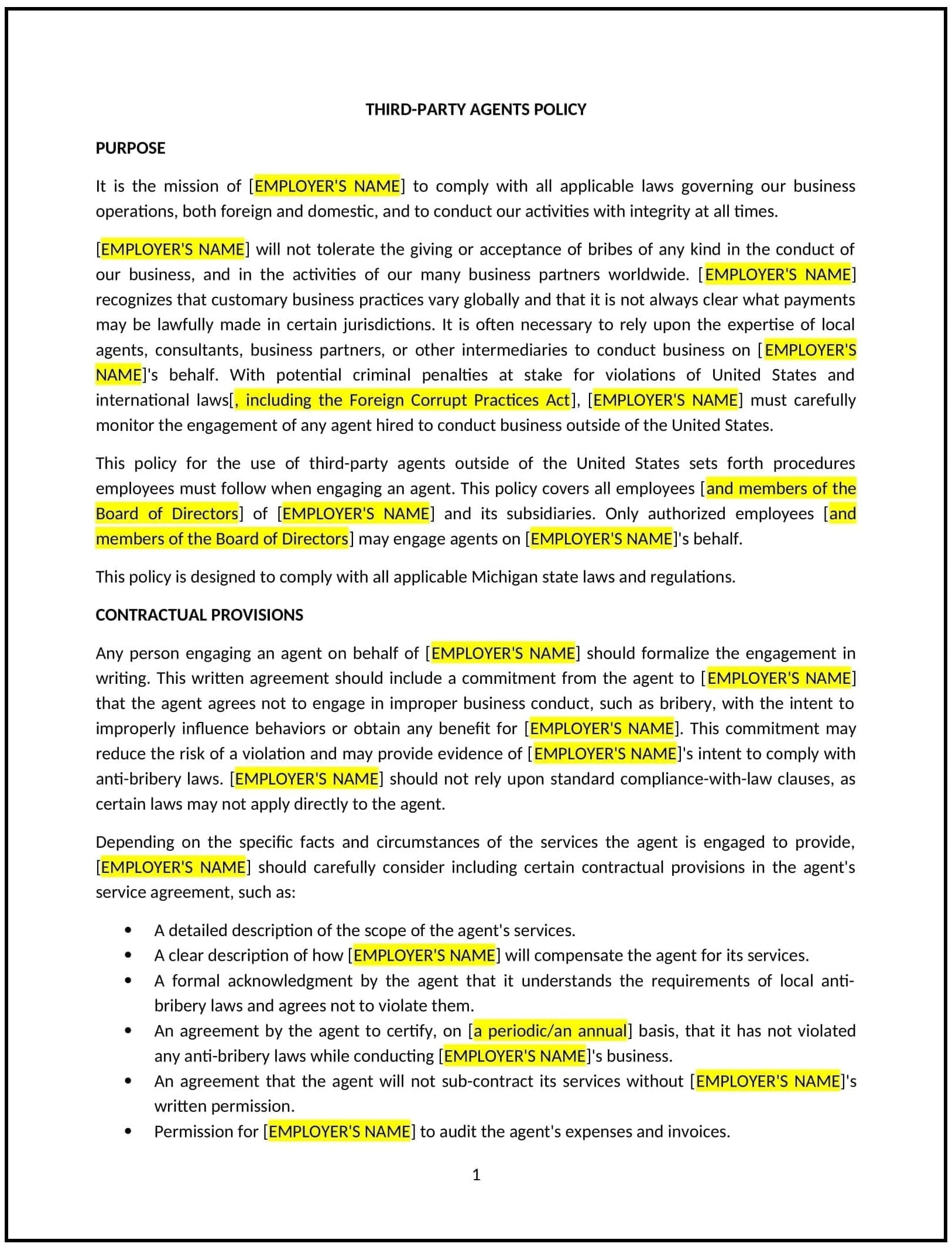
Third-party agents policy (Michigan)
A third-party agents policy provides Michigan businesses with guidelines for managing relationships with third-party agents, contractors, and vendors. This policy establishes clear expectations for due diligence, compliance, and monitoring of third-party activities to ensure they align with the business’s values, legal requirements, and business objectives. It outlines the process for selecting, contracting, and managing third-party agents, with particular attention to risks such as fraud, corruption, and conflicts of interest.
By adopting this policy, businesses can mitigate risks associated with third-party relationships, maintain compliance with relevant regulations, and ensure that external partners uphold the business's standards and reputation.
How to use this third-party agents policy (Michigan)
- Define what constitutes a third-party agent: Clearly define the types of third-party agents the policy applies to, including contractors, consultants, suppliers, and other external parties who perform services on behalf of the business.
- Conduct due diligence: Establish procedures for performing background checks and evaluating the reputation, financial stability, and compliance history of potential third-party agents before entering into a business relationship. This process helps minimize risks associated with fraud, corruption, or unethical behavior.
- Set expectations for compliance: Clearly outline the business’s compliance expectations, including adherence to Michigan state laws, federal regulations, and industry-specific standards. Ensure third-party agents understand the importance of complying with these requirements.
- Require written contracts: Ensure all agreements with third-party agents are formalized in written contracts. These contracts should outline the terms of the relationship, expectations for performance, compliance with laws, confidentiality agreements, and dispute resolution procedures.
- Monitor third-party performance: Establish processes for regularly monitoring and reviewing the performance and compliance of third-party agents. This may include conducting audits, assessing deliverables, and ensuring that agents meet contractual obligations and business standards.
- Address conflicts of interest: Include guidelines for identifying and managing conflicts of interest in third-party relationships. Agents should be required to disclose any potential conflicts and avoid situations where their interests could undermine the business’s goals or ethical standards.
- Manage confidentiality and data security: Define how third-party agents should handle sensitive business information, including intellectual property, customer data, and trade secrets. Contracts should specify security measures and confidentiality obligations to protect proprietary information.
- Specify consequences for non-compliance: Outline the consequences for third-party agents who fail to meet contractual obligations or comply with the policy. This may include penalties, termination of the relationship, or legal action if necessary.
- Review and update regularly: Periodically review the policy to ensure it reflects current legal requirements, best practices, and the evolving needs of the business. Regular updates help maintain a strong and effective third-party management strategy.
Benefits of using this third-party agents policy (Michigan)
This policy provides several key benefits for Michigan businesses:
- Mitigates risks: By establishing clear guidelines for managing third-party agents, businesses can reduce the risk of fraud, corruption, and legal violations that can arise from external relationships.
- Enhances legal compliance: The policy ensures that businesses comply with Michigan state laws, federal regulations, and industry standards, reducing the risk of fines, penalties, or legal action.
- Improves accountability: Clear expectations and monitoring processes hold third-party agents accountable for their performance and compliance, ensuring they meet the business’s standards and contractual obligations.
- Protects sensitive information: By specifying confidentiality and data security measures, the policy helps protect the business’s proprietary information and customer data from unauthorized access or misuse by third parties.
- Strengthens business reputation: A well-managed third-party agent policy demonstrates that the business values ethical conduct, compliance, and transparency, which can enhance its reputation among customers, investors, and partners.
- Supports business growth: A solid third-party agent policy allows businesses to confidently expand their network of external partners while minimizing risks, ensuring that relationships contribute positively to business objectives.
Tips for using this third-party agents policy (Michigan)
- Communicate the policy clearly: Ensure all employees, especially those involved in contracting and vendor management, understand the third-party agents policy and its requirements.
- Perform regular due diligence: Continuously evaluate and reassess third-party agents before and during the course of the relationship to ensure they meet the business’s compliance and performance standards.
- Monitor performance and compliance: Regularly track third-party agents' performance and ensure they are meeting all contractual obligations and legal requirements. Conduct audits and reviews as needed.
- Maintain clear and comprehensive contracts: Make sure that all third-party relationships are documented with clear contracts that outline expectations, performance metrics, compliance requirements, and the handling of confidential information.
- Address issues proactively: When problems arise with third-party agents, address them immediately. Use the contract as a guide to resolve disputes and maintain a professional and transparent relationship.
- Review the policy regularly: Update the policy regularly to ensure it reflects any changes in laws, business operations, or risk management strategies.
Frequently asked questions (FAQs)
Similar templates
Where deals go from offer to paid
