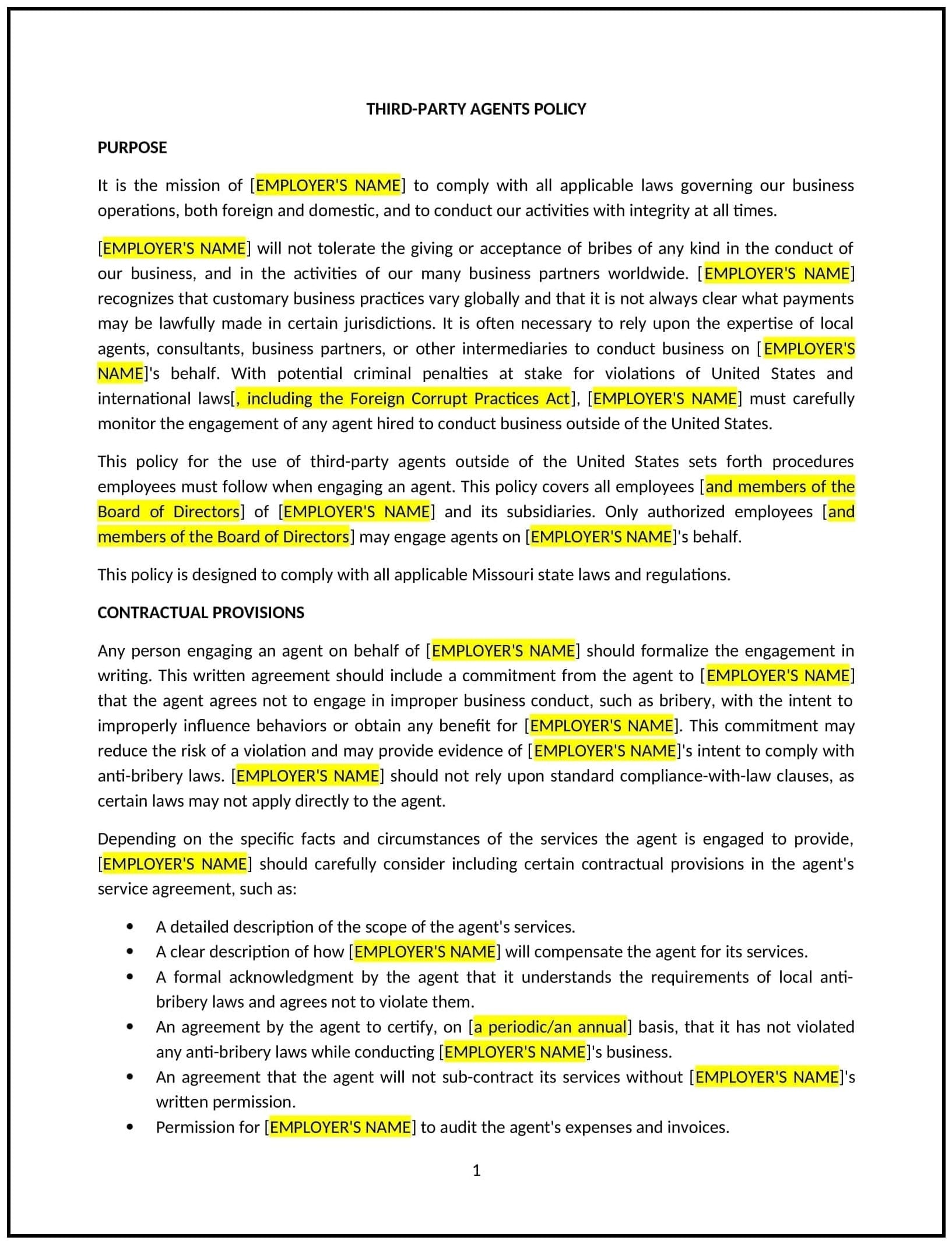
Third-party agents policy (Missouri): Free template
Establishes standards for hiring and managing external agents, ensuring legal and ethical compliance.
- Policies
- Missouri
Third-party agents policy (Missouri)
A third-party agents policy helps businesses in Missouri establish guidelines for working with third-party vendors, contractors, or agents who act on the company’s behalf. This policy outlines the expectations for third-party agents regarding compliance with company standards, ethical behavior, confidentiality, and legal requirements. It is designed to ensure that third-party agents represent the business fairly, transparently, and in alignment with the company’s values and legal obligations.
By adopting this policy, businesses can reduce risks related to third-party relationships, enhance collaboration, and maintain consistency in the way third-party agents operate on their behalf.
How to use this third-party agents policy (Missouri)
- Define third-party agents: Clearly identify who qualifies as a third-party agent, such as vendors, contractors, consultants, or service providers, and the specific role they play in the business.
- Set expectations for conduct: Outline the behavior expected of third-party agents, including ethical standards, compliance with laws, confidentiality, and respect for the company’s reputation.
- Address compliance with laws and regulations: Ensure that third-party agents comply with all relevant Missouri state laws, federal regulations, and industry standards related to their work with the company.
- Outline confidentiality requirements: Specify the level of confidentiality required when third-party agents have access to proprietary or sensitive information, such as client data, financial details, or intellectual property.
- Establish performance monitoring: Define how the performance of third-party agents will be monitored, including regular audits, assessments, or reviews to ensure that they meet the company’s standards and expectations.
- Set guidelines for contract management: Provide clear guidelines for the contract process, including the terms and conditions to be included in agreements with third-party agents, and the procedures for contract renewal, termination, or modification.
- Define consequences for violations: Outline the actions that will be taken if a third-party agent fails to meet the company’s standards or violates the policy, including possible termination of the relationship, legal action, or financial penalties.
- Review regularly: Periodically review and update the policy to reflect changes in Missouri state laws, federal regulations, or evolving business needs.
Benefits of using this third-party agents policy (Missouri)
This policy provides several benefits for businesses in Missouri:
- Mitigates risks: A clear third-party agent policy helps businesses mitigate risks related to outsourcing, such as legal liability, financial risks, or reputational damage resulting from third-party actions.
- Ensures consistent performance: By setting expectations for performance and compliance, businesses can ensure that third-party agents consistently meet company standards and deliver quality work.
- Protects confidential information: Establishing confidentiality requirements helps protect sensitive business information, preventing unauthorized access, theft, or misuse of data.
- Enhances accountability: By outlining consequences for violations, businesses can hold third-party agents accountable for their actions, ensuring that they adhere to the terms of the agreement.
- Promotes ethical business practices: A third-party agent policy encourages ethical behavior and transparency, ensuring that agents align with the company’s values and operate in a responsible manner.
- Supports legal compliance: The policy helps businesses comply with legal requirements related to third-party relationships, reducing the risk of legal disputes, fines, or penalties.
Tips for using this third-party agents policy (Missouri)
- Communicate the policy clearly: Ensure that all third-party agents are aware of the company’s expectations, including the ethical standards, confidentiality requirements, and compliance obligations outlined in the policy.
- Establish strong contracts: Develop comprehensive contracts that clearly define the terms and conditions of the relationship, including performance metrics, confidentiality provisions, and compliance requirements.
- Monitor performance regularly: Set up regular checks and audits to monitor the performance of third-party agents, ensuring that they consistently meet the agreed-upon standards and comply with legal requirements.
- Provide training and support: Offer training to third-party agents as needed to ensure they understand the company’s standards, legal requirements, and expectations regarding confidentiality and ethical conduct.
- Address issues promptly: If any issues arise, address them quickly and effectively to avoid potential disruptions to business operations, legal challenges, or reputational harm.
- Review regularly: Periodically review and update the policy to ensure it reflects any changes in Missouri state law, industry best practices, or evolving business needs.
Frequently asked questions (FAQs)
Similar templates
Where deals go from offer to paid
