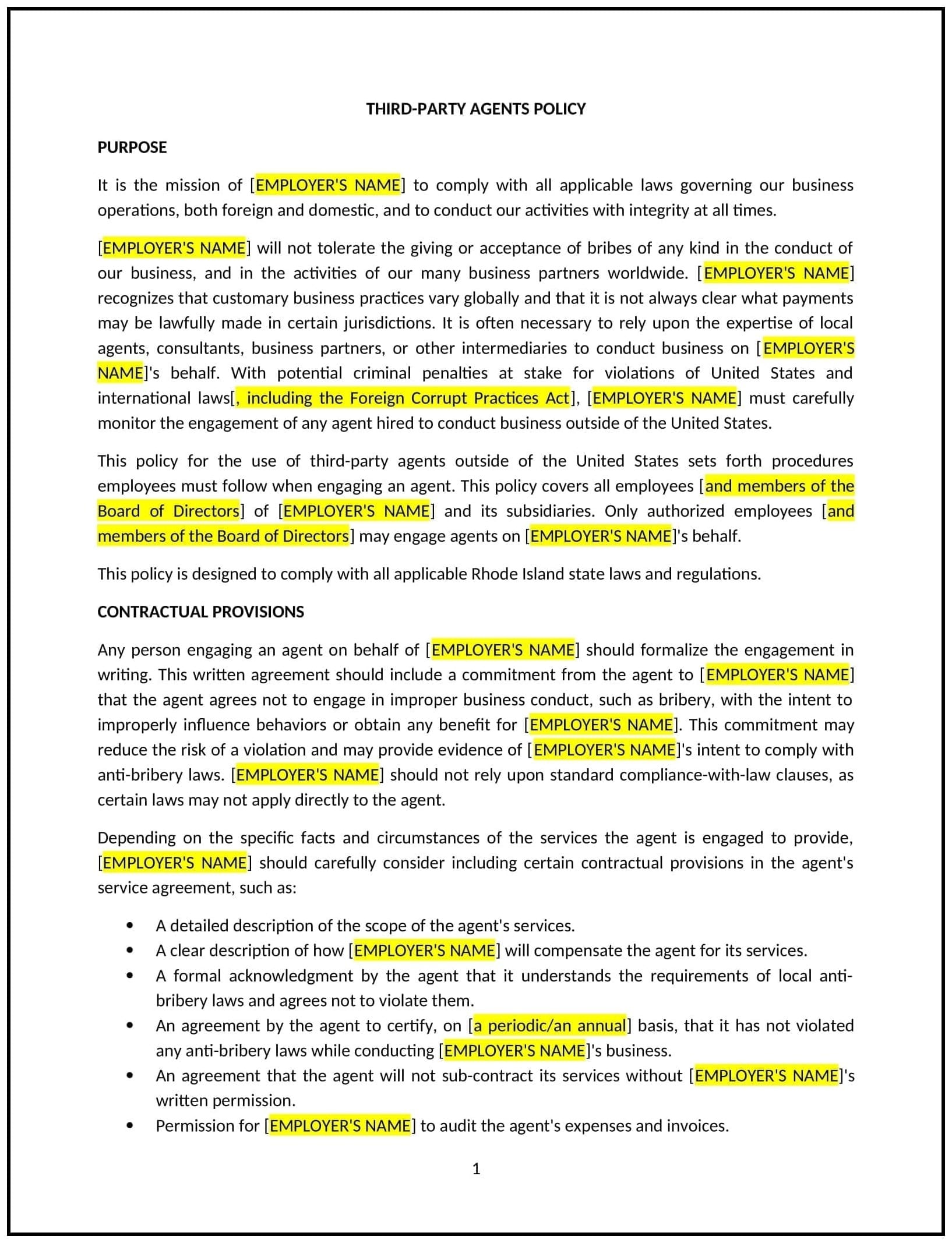
Third-party agents policy (Rhode Island): Free template
Sets expectations for working with external agents to ensure ethical practices and regulatory compliance.
- Policies
- Rhode Island
Third-party agents policy (Rhode Island)
This third-party agents policy is designed to help Rhode Island businesses establish guidelines for working with external vendors, contractors, and consultants. It outlines expectations, confidentiality requirements, and compliance measures for third-party relationships.
By adopting this policy, businesses can protect sensitive information, maintain quality standards, and ensure accountability in third-party partnerships.
How to use this third-party agents policy (Rhode Island)
- Define third-party agents: Clarify who qualifies as a third-party agent, such as vendors, contractors, or consultants.
- Set expectations: Outline performance standards, deliverables, and communication protocols for third-party agents.
- Address confidentiality: Require third-party agents to sign non-disclosure agreements (NDAs) to protect sensitive information.
- Ensure compliance: Specify that third-party agents must adhere to all applicable laws and regulations.
- Train managers: Educate supervisors on managing third-party relationships and enforcing the policy.
- Review and update: Assess the policy annually to ensure it aligns with evolving business needs and legal requirements.
Benefits of using this third-party agents policy (Rhode Island)
This policy offers several advantages for Rhode Island businesses:
- Protects sensitive information: Ensures third-party agents handle confidential data responsibly.
- Maintains quality standards: Sets clear expectations for third-party performance and deliverables.
- Ensures accountability: Provides a framework for addressing issues and enforcing consequences.
- Aligns with regulations: Supports compliance with Rhode Island’s business and data protection laws.
- Enhances trust: Demonstrates the business’s commitment to ethical and professional partnerships.
Tips for using this third-party agents policy (Rhode Island)
- Communicate the policy: Share the policy with third-party agents and include it in contracts or agreements.
- Provide training: Educate managers on managing third-party relationships and enforcing the policy.
- Monitor compliance: Regularly review third-party performance and address any issues promptly.
- Address violations consistently: Apply consequences fairly and consistently to maintain trust.
- Update regularly: Assess the policy annually to ensure it aligns with evolving business needs and legal requirements.
Frequently asked questions (FAQs)
Similar templates
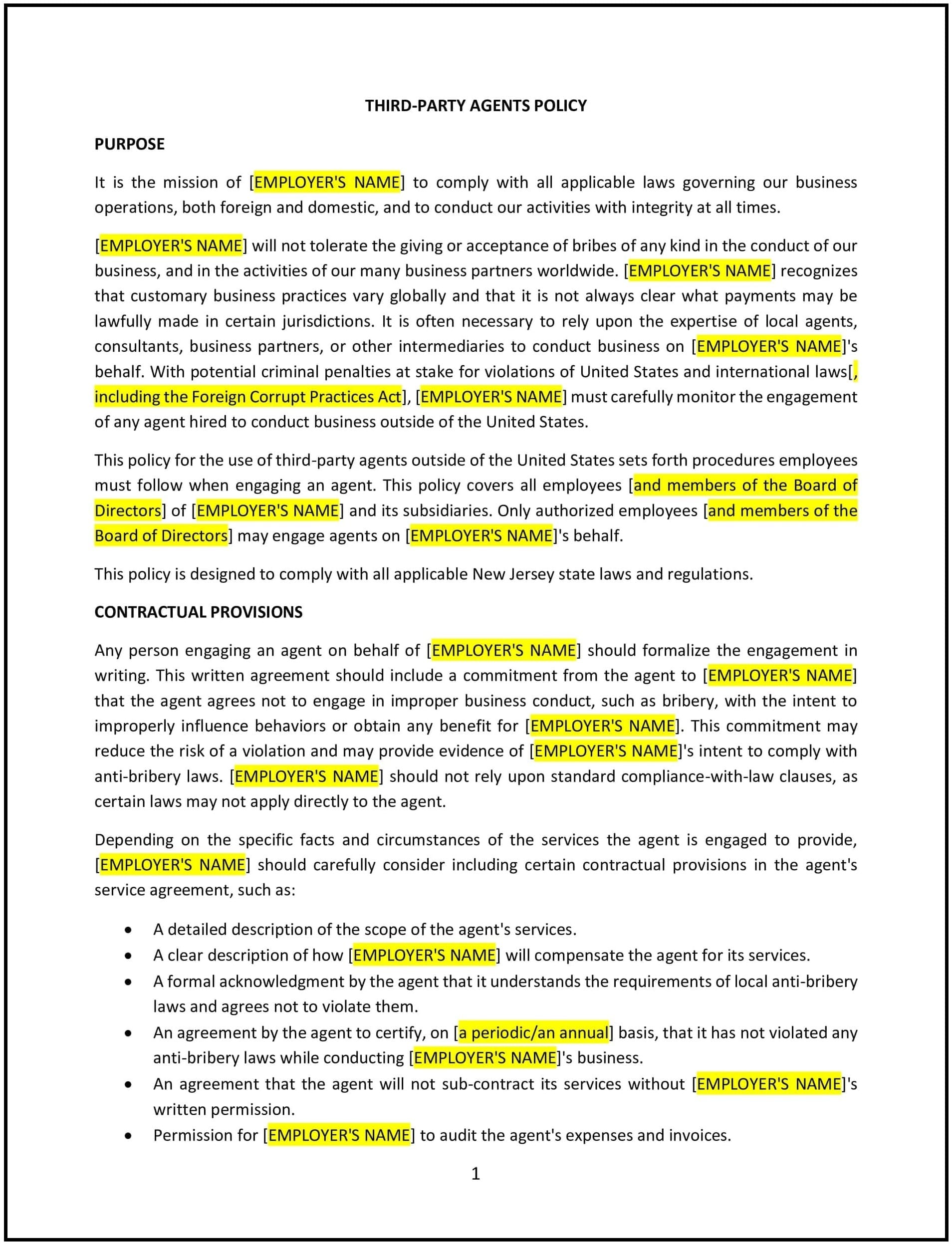
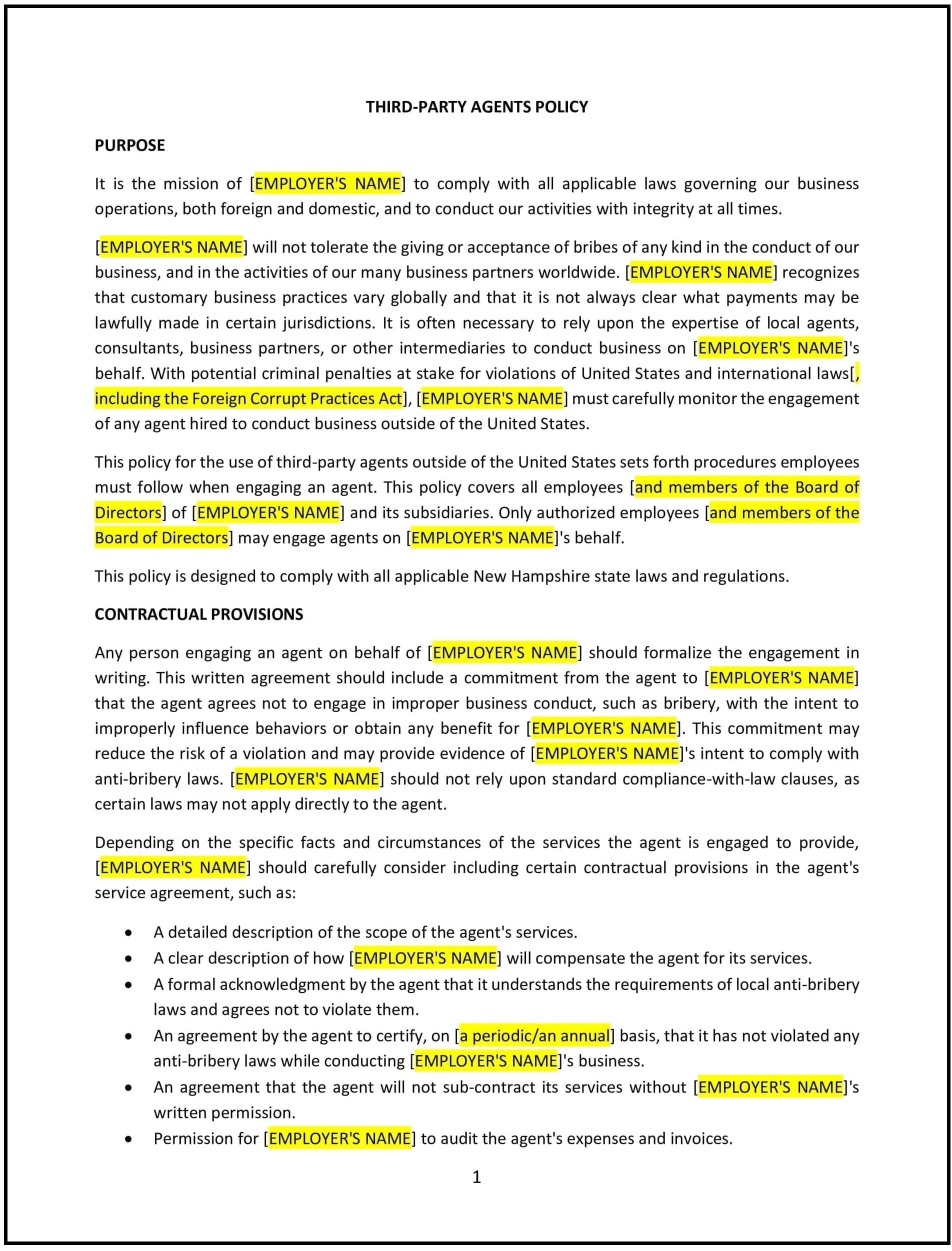
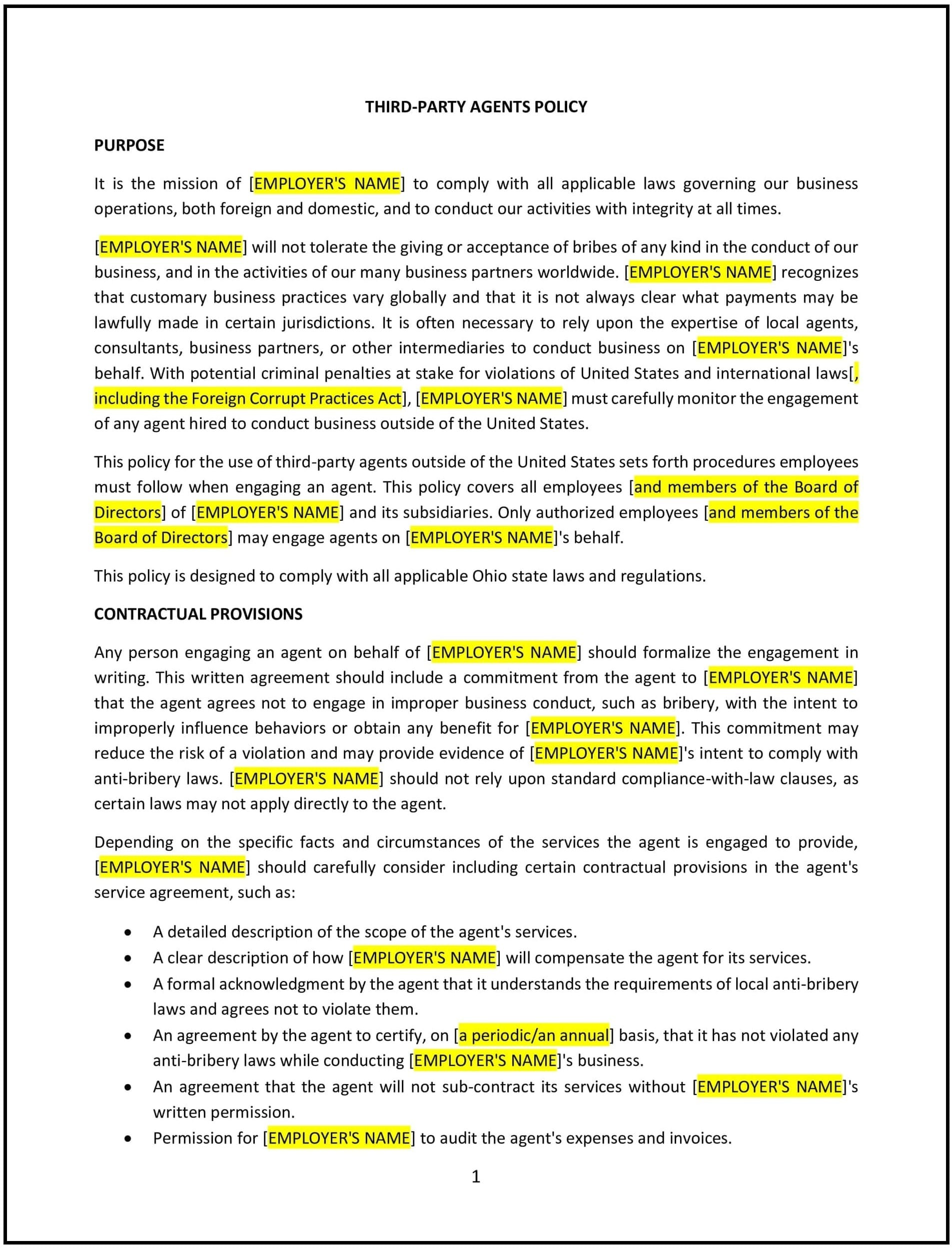
Where deals go from offer to paid
