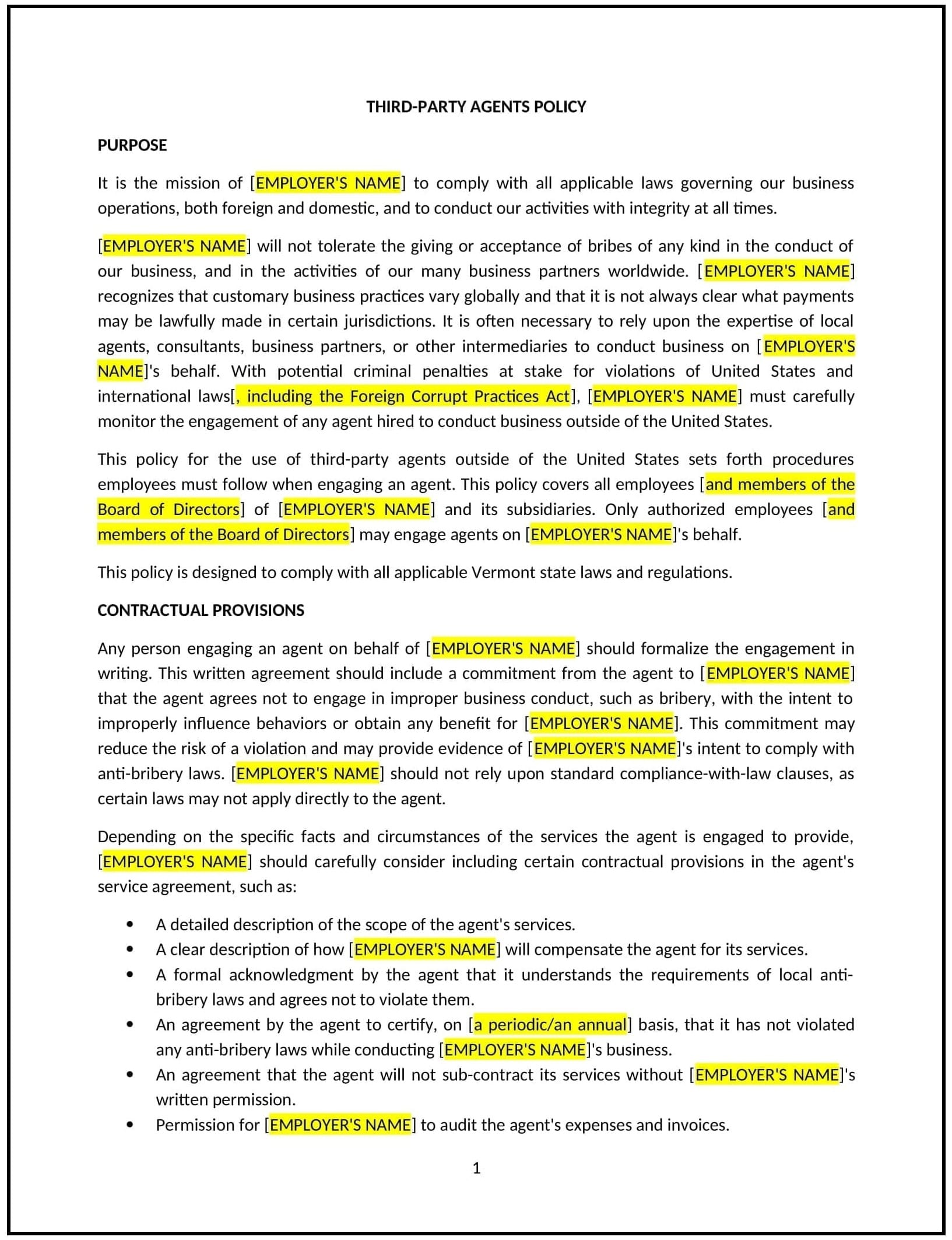
Third-party agents policy (Vermont): Free template
Covers expectations for third-party agents acting on behalf of the company, ensuring compliance with Vermont law.
- Policies
- Vermont
Third-party agents policy (Vermont)
This third-party agents policy is designed to help Vermont businesses manage relationships with external agents, contractors, and representatives. It establishes guidelines for engaging, monitoring, and overseeing third-party agents to promote compliance with Vermont laws, protect business interests, and maintain operational integrity.
By adopting this policy, businesses can reduce risks, improve accountability, and enhance transparency in third-party engagements.
How to use this third-party agents policy (Vermont)
- Define third-party agents: Specify who qualifies as a third-party agent, such as contractors, vendors, or representatives acting on behalf of the business.
- Outline due diligence processes: Provide steps for vetting third-party agents, including background checks, financial reviews, and reference checks.
- Include contract requirements: Require formal contracts outlining roles, responsibilities, and compliance obligations for all third-party agents.
- Establish performance monitoring: Detail how agent activities will be monitored, such as regular reporting, audits, or performance reviews.
- Address compliance expectations: Emphasize adherence to Vermont and federal laws, company policies, and ethical standards.
- Include termination guidelines: Provide criteria for terminating relationships with agents who fail to meet expectations or violate policy terms.
- Monitor compliance: Conduct periodic reviews of third-party engagements to ensure alignment with company goals and legal standards.
Benefits of using this third-party agents policy (Vermont)
This policy provides several benefits for Vermont businesses:
- Enhances accountability: Establishes clear roles, responsibilities, and performance expectations for third-party agents.
- Promotes compliance: Helps third-party activities align with Vermont laws, federal regulations, and company policies.
- Reduces risks: Minimizes legal, financial, and reputational risks associated with third-party relationships.
- Improves transparency: Provides a structured approach to managing and overseeing agent activities.
- Supports operational integrity: Ensures agents contribute positively to business goals and adhere to ethical practices.
Tips for using this third-party agents policy (Vermont)
- Communicate the policy: Share the policy with employees managing third-party relationships and include it in internal resources.
- Provide training: Educate employees on selecting, onboarding, and monitoring third-party agents effectively.
- Maintain documentation: Keep detailed records of agent contracts, performance evaluations, and compliance audits.
- Encourage feedback: Foster open communication with agents to address concerns or improve collaboration.
- Update regularly: Revise the policy to reflect changes in Vermont laws, workplace practices, or industry standards.
Frequently asked questions (FAQs)
Similar templates
Where deals go from offer to paid
