Third-party agents policy (West Virginia): Free template
Establishes standards for working with third-party representatives to ensure ethical and legal compliance.
- Policies
- West Virginia
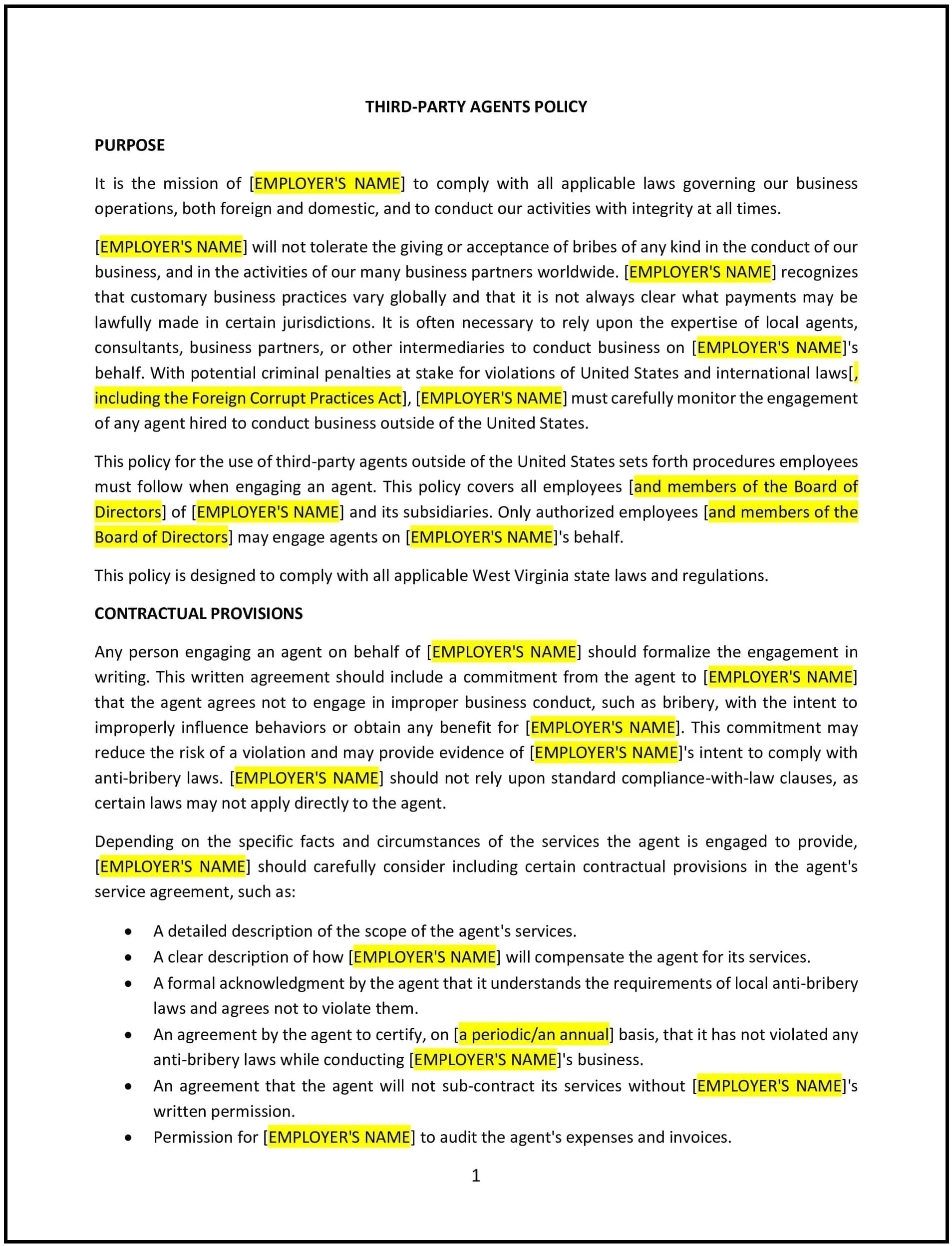
Third-party agents policy (West Virginia)
In West Virginia, a third-party agents policy provides guidelines for managing relationships with contractors, vendors, and other external agents who act on behalf of the organization. This policy ensures that third-party agents operate in alignment with the organization’s standards, values, and legal obligations, and improve compliance with state and federal laws.
The policy defines the scope of third-party relationships, outlines responsibilities, and establishes procedures for monitoring and accountability.
How to use this third-party agents policy (West Virginia)
- Define third-party agents: Specify who qualifies as a third-party agent, including contractors, vendors, consultants, or service providers.
- Outline responsibilities: Clearly state the expectations for third-party agents, such as adhering to the organization’s policies, ethical standards, and compliance requirements.
- Establish vetting procedures: Include steps for evaluating and approving third-party agents, such as background checks, references, and contract reviews.
- Detail monitoring practices: Specify how the organization will oversee third-party agents, including performance evaluations, compliance audits, and reporting protocols.
- Support compliance: Align the policy with West Virginia laws, federal regulations, and industry standards to ensure lawful and ethical operations.
Benefits of using a third-party agents policy (West Virginia)
- Enhances accountability: Establishes clear expectations and responsibilities for third-party agents, reducing risks of non-compliance.
- Supports compliance: Improves adherence to West Virginia and federal laws governing third-party relationships, such as anti-bribery and data protection regulations.
- Protects organizational reputation: Reduces the risk of reputational harm caused by third-party misconduct or negligence.
- Promotes transparency: Provides a framework for managing and monitoring third-party relationships effectively.
- Minimizes risks: Reduces the likelihood of legal disputes or financial losses related to third-party actions.
Tips for using a third-party agents policy (West Virginia)
- Communicate expectations: Share the policy with third-party agents during onboarding and include it in contracts or agreements.
- Train employees: Provide guidance to staff on managing third-party relationships and ensuring compliance with the policy.
- Conduct regular audits: Periodically review the performance and compliance of third-party agents to identify and address potential issues.
- Document agreements: Maintain detailed records of contracts, agreements, and communications with third-party agents to ensure accountability.
- Review periodically: Update the policy to reflect changes in West Virginia laws, industry practices, or organizational needs.
Frequently asked questions (FAQs)
Similar templates
Where deals go from offer to paid
