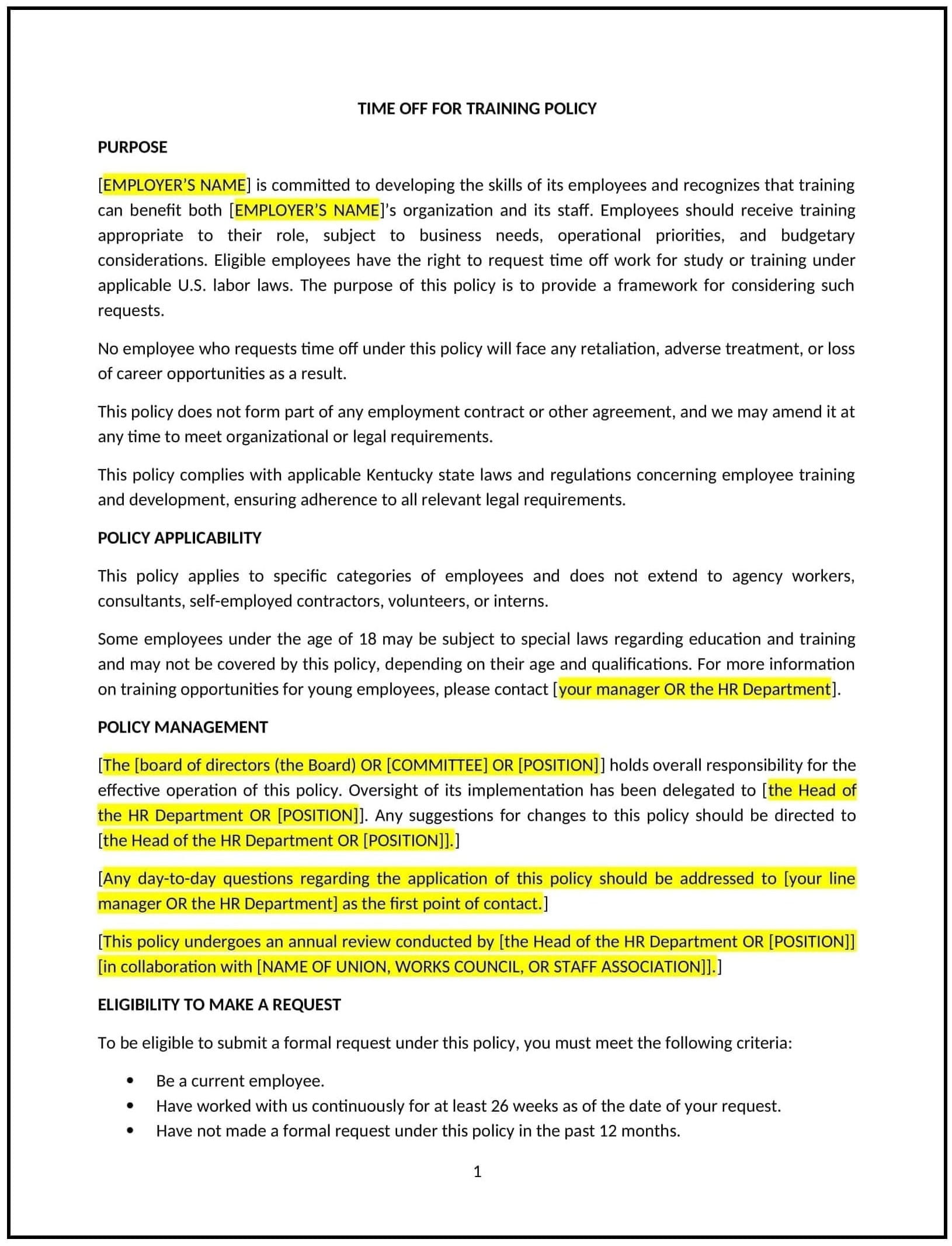
Time off for training policy (Kentucky): Free template
Grants leave for employees to attend approved job-related training, supporting skill development in Kentucky workplaces.
- Policies
- Kentucky
Time off for training policy (Kentucky)
A time off for training policy provides Kentucky businesses with guidelines for granting employees leave to participate in job-related training, professional development, or certifications. This policy supports skill enhancement while maintaining workplace productivity and operational balance.
By adopting this policy, businesses can invest in employee growth, improve performance, and foster a culture of learning.
How to use this time off for training policy (Kentucky)
- Define eligible training: Specify the types of training or development activities covered, such as workshops, seminars, certification courses, or industry conferences.
- Address employee eligibility: Outline criteria for employees to qualify for training leave, including tenure, role, or relevance of the training to their position.
- Clarify paid vs. unpaid leave: Indicate whether time off for training is paid, unpaid, or partially compensated, depending on the nature of the training and its alignment with business goals.
- Establish application procedures: Provide instructions for employees to request training leave, including advance notice, training details, and any required approvals.
- Link to business goals: Encourage employees to pursue training that aligns with business objectives or enhances their job performance.
- Set reimbursement guidelines: If applicable, clarify whether the business will cover training costs, such as fees, travel, or materials, and under what conditions.
- Include post-training expectations: Outline requirements for employees to share knowledge or apply new skills gained during training to their work.
Benefits of using this time off for training policy (Kentucky)
This policy provides several key benefits for Kentucky businesses:
- Encourages professional development: Supports employees in gaining new skills or certifications, enhancing their capabilities.
- Improves job performance: Helps employees apply up-to-date knowledge and skills to their roles, benefiting the business.
- Attracts and retains talent: Demonstrates the business’s commitment to employee growth and career progression.
- Promotes alignment: Ensures training activities align with organizational goals and priorities.
- Fosters a learning culture: Creates an environment where continuous improvement and development are valued.
Tips for using this time off for training policy (Kentucky)
- Communicate the policy: Ensure employees are aware of training leave opportunities and the application process through onboarding and ongoing communication.
- Encourage relevant training: Promote training options that align with business goals or enhance employees’ current roles.
- Track training outcomes: Monitor how employees apply new skills or knowledge to assess the value of the training investment.
- Provide manager training: Equip managers with the tools to evaluate training requests fairly and effectively.
- Review regularly: Update the policy to reflect changes in Kentucky laws, workplace needs, or industry training standards.
Frequently asked questions (FAQs)
Similar templates
Where deals go from offer to paid
