Travel disruption policy (Nevada): Free template
Addresses procedures and compensation related to travel delays or cancellations during business trips.
- Policies
- Nevada
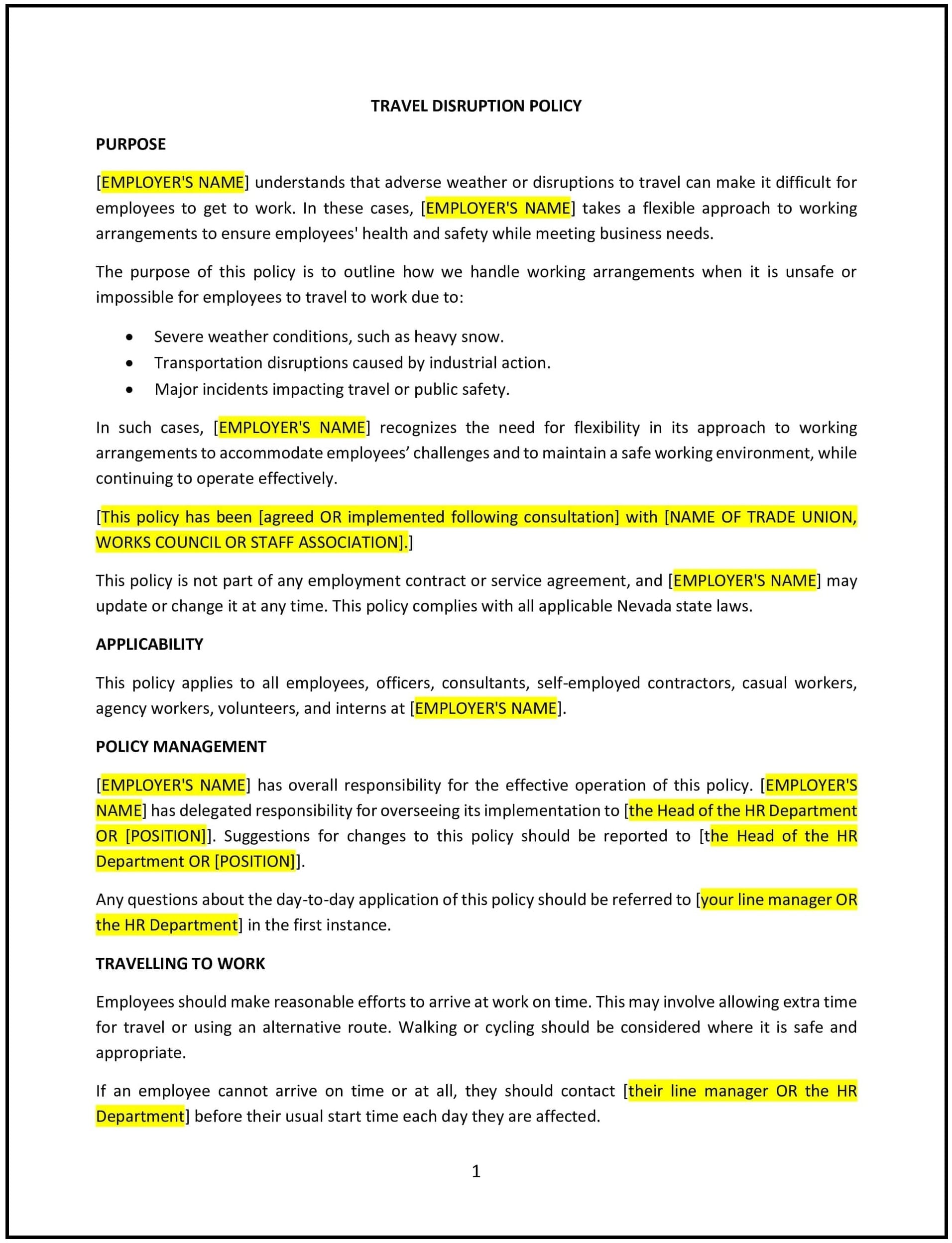
Travel disruption policy (Nevada)
This travel disruption policy is designed to help Nevada businesses provide clear guidelines for addressing travel-related disruptions that affect employees during work-related trips. It outlines the responsibilities of employees and employers, as well as reimbursement and assistance procedures, to ensure minimal inconvenience and fairness.
By adopting this policy, businesses can support employees during travel disruptions, maintain operational continuity, and promote a proactive approach to managing unexpected events.
How to use this travel disruption policy (Nevada)
- Define travel disruptions: Specify what constitutes a travel disruption, such as flight delays or cancellations, extreme weather, or unexpected accommodations issues.
- Establish employee responsibilities: Outline employee expectations for reporting disruptions, seeking alternatives, and documenting expenses related to the disruption.
- Provide employer responsibilities: Clarify the company’s role in supporting employees, such as arranging alternative travel or covering reasonable additional expenses.
- Include reimbursement guidelines: Specify which expenses are reimbursable, such as extra lodging, meals, or transportation costs incurred due to the disruption.
- Detail reporting procedures: Require employees to notify their manager or HR immediately about the disruption and follow the process for submitting related expenses.
- Address safety measures: Emphasize employee safety during travel disruptions, such as avoiding high-risk areas or seeking shelter during extreme weather events.
- Outline resolution timelines: Include timelines for resolving disruptions, such as arranging alternative plans or processing reimbursements.
- Monitor compliance: Ensure the policy aligns with Nevada labor laws and industry best practices.
Benefits of using this travel disruption policy (Nevada)
This policy provides several benefits for Nevada businesses:
- Supports employee well-being: Offers guidance and assistance to employees facing unexpected travel issues.
- Promotes operational continuity: Minimizes disruption to business operations by providing clear procedures for handling travel-related issues.
- Ensures fairness: Establishes consistent guidelines for reimbursing expenses and supporting employees during disruptions.
- Reduces stress: Provides employees with a structured plan for managing unexpected travel challenges.
- Maintains legal compliance: Aligns with Nevada labor laws regarding travel-related expenses and employee safety.
Tips for using this travel disruption policy (Nevada)
- Communicate the policy: Share the policy with employees who are required to travel for work and ensure they understand its provisions.
- Provide emergency contacts: Offer employees access to a designated travel coordinator or HR representative for immediate assistance during disruptions.
- Use travel insurance: Consider providing travel insurance for employees to cover unexpected costs or emergencies during work-related trips.
- Monitor expenses: Implement an expense tracking system to streamline reimbursements and ensure transparency.
- Update regularly: Review and revise the policy as needed to reflect changes in travel practices, company operations, or Nevada laws.
Frequently asked questions (FAQs)
Similar templates
Where deals go from offer to paid
