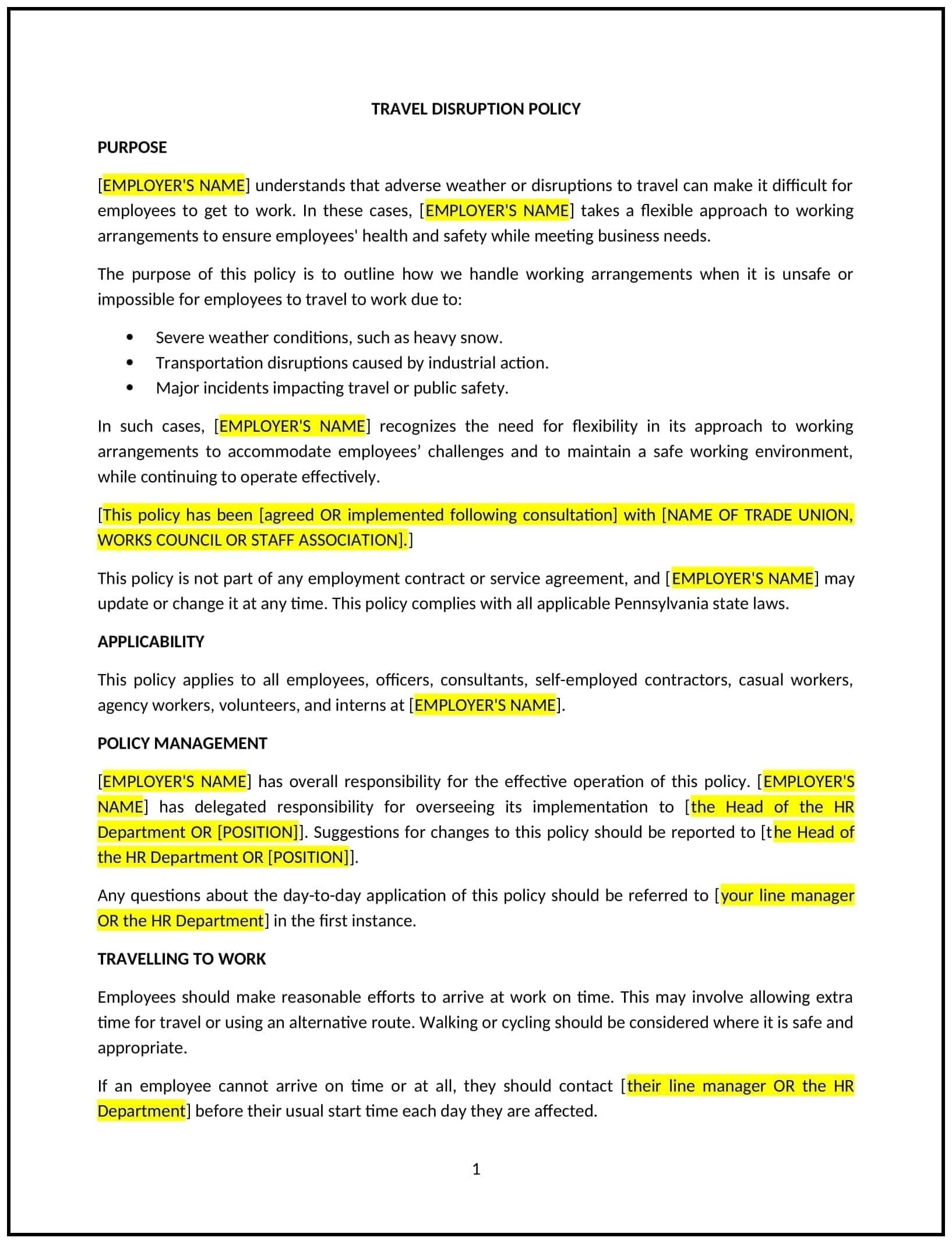
Travel disruption policy (Pennsylvania): Free template
Outlines procedures for handling travel interruptions and minimizing impact on business operations.
- Policies
- Pennsylvania
Travel disruption policy (Pennsylvania)
This travel disruption policy is designed to help businesses in Pennsylvania provide clear guidelines for addressing unexpected interruptions to business travel, such as flight cancellations, weather delays, or transportation issues. By outlining procedures for managing disruptions, reimbursing additional expenses, and supporting employee safety, this template ensures businesses can handle travel challenges effectively and responsibly.
By using this template, businesses can minimize travel-related risks, support employees, and maintain operational efficiency.
How to use this travel disruption policy (Pennsylvania)
- Define travel disruptions: Clearly outline scenarios covered by the policy, such as flight cancellations, severe weather, or missed connections during business travel.
- Provide response procedures: Include steps employees should take during a disruption, such as notifying their manager, rebooking transportation, or securing temporary accommodations.
- Address reimbursement guidelines: Specify which additional expenses, such as lodging, meals, or rebooking fees, are eligible for reimbursement and the required documentation.
- Prioritize employee safety: Emphasize the importance of employees prioritizing their safety and well-being during travel disruptions.
- Reflect Pennsylvania-specific considerations: Tailor the policy to include local or regional travel scenarios, such as disruptions caused by weather typical to Pennsylvania or major regional transit hubs.
Benefits of using a travel disruption policy (Pennsylvania)
A well-structured travel disruption policy supports employee safety and operational continuity. Here's how it helps:
- Enhances employee safety: Ensures employees have clear guidance to prioritize their safety during travel disruptions.
- Reduces stress: Provides employees with a clear course of action for managing unexpected travel challenges.
- Supports compliance: Aligns with Pennsylvania labor laws regarding reimbursement and travel-related policies.
- Promotes accountability: Establishes clear procedures for reporting disruptions and managing expenses.
- Reflects local needs: Addresses Pennsylvania-specific travel scenarios, such as disruptions at major airports like Philadelphia International or regional weather-related issues.
Tips for using a travel disruption policy (Pennsylvania)
- Communicate the policy: Share the policy with employees who travel for business to ensure they understand how to handle disruptions effectively.
- Provide emergency contacts: Include a list of company contacts available to assist employees during travel disruptions.
- Use travel management tools: Implement travel booking systems that offer rebooking options or travel alerts to minimize disruption impacts.
- Monitor expenses: Track and review expenses related to disruptions to ensure adherence to the policy and cost control.
- Review periodically: Update the policy to reflect changes in Pennsylvania-specific travel conditions, weather trends, or business travel practices.
Frequently asked questions (FAQs)
Similar templates
Where deals go from offer to paid
