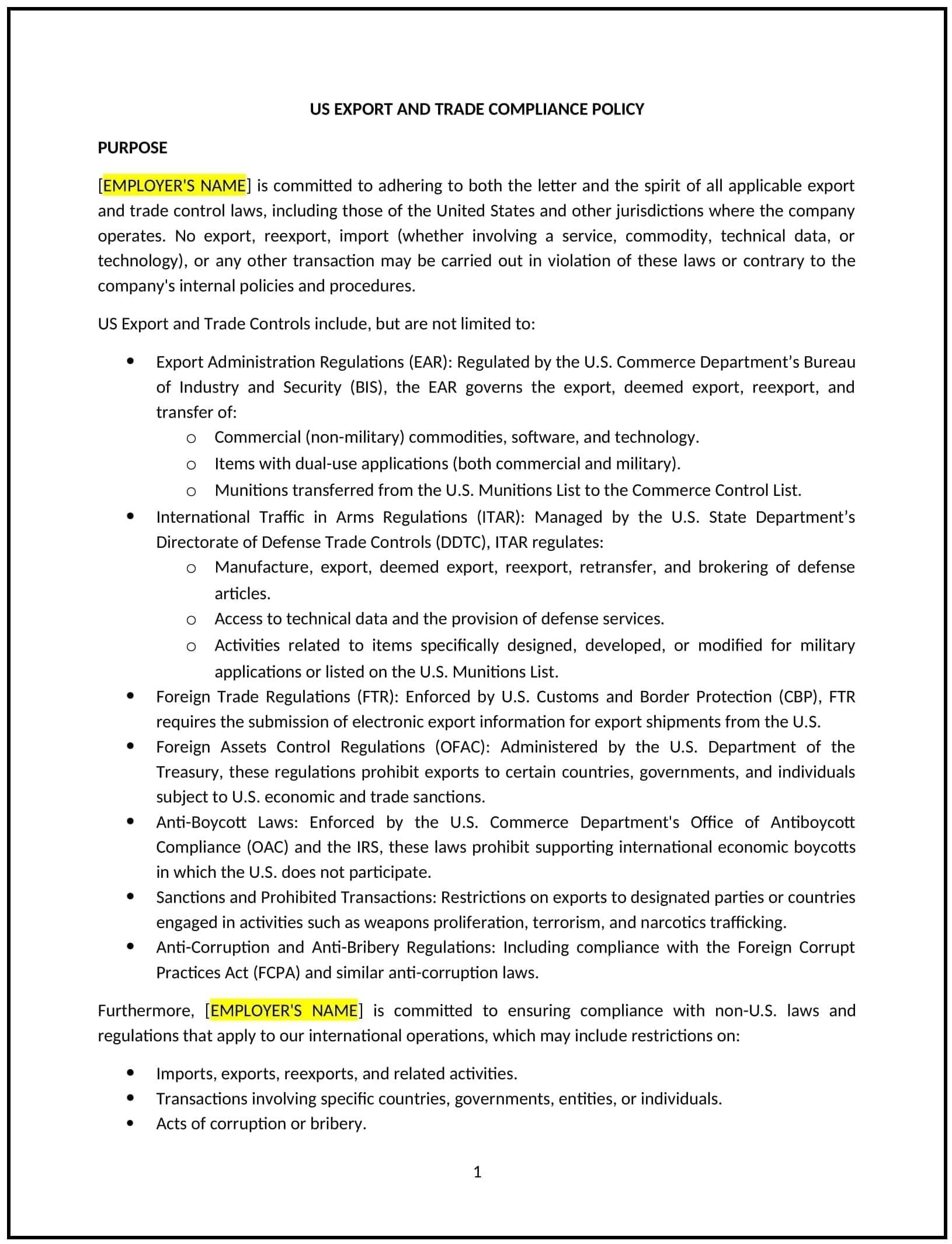
US export and trade compliance policy (New Mexico): Free template
Ensures compliance with federal regulations on international trade, sanctions, and export controls.
- Policies
- New Mexico
US export and trade compliance policy (New Mexico)
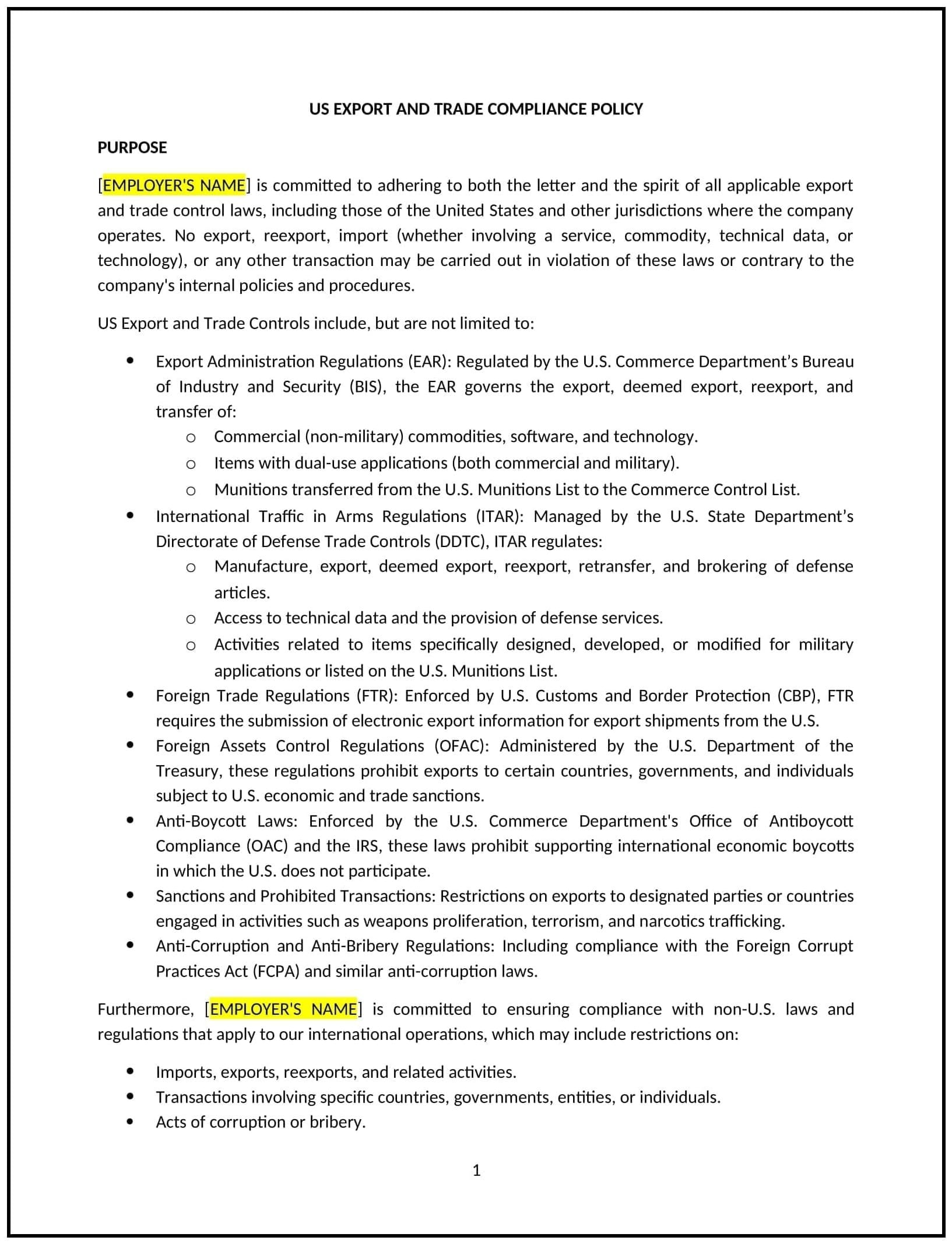
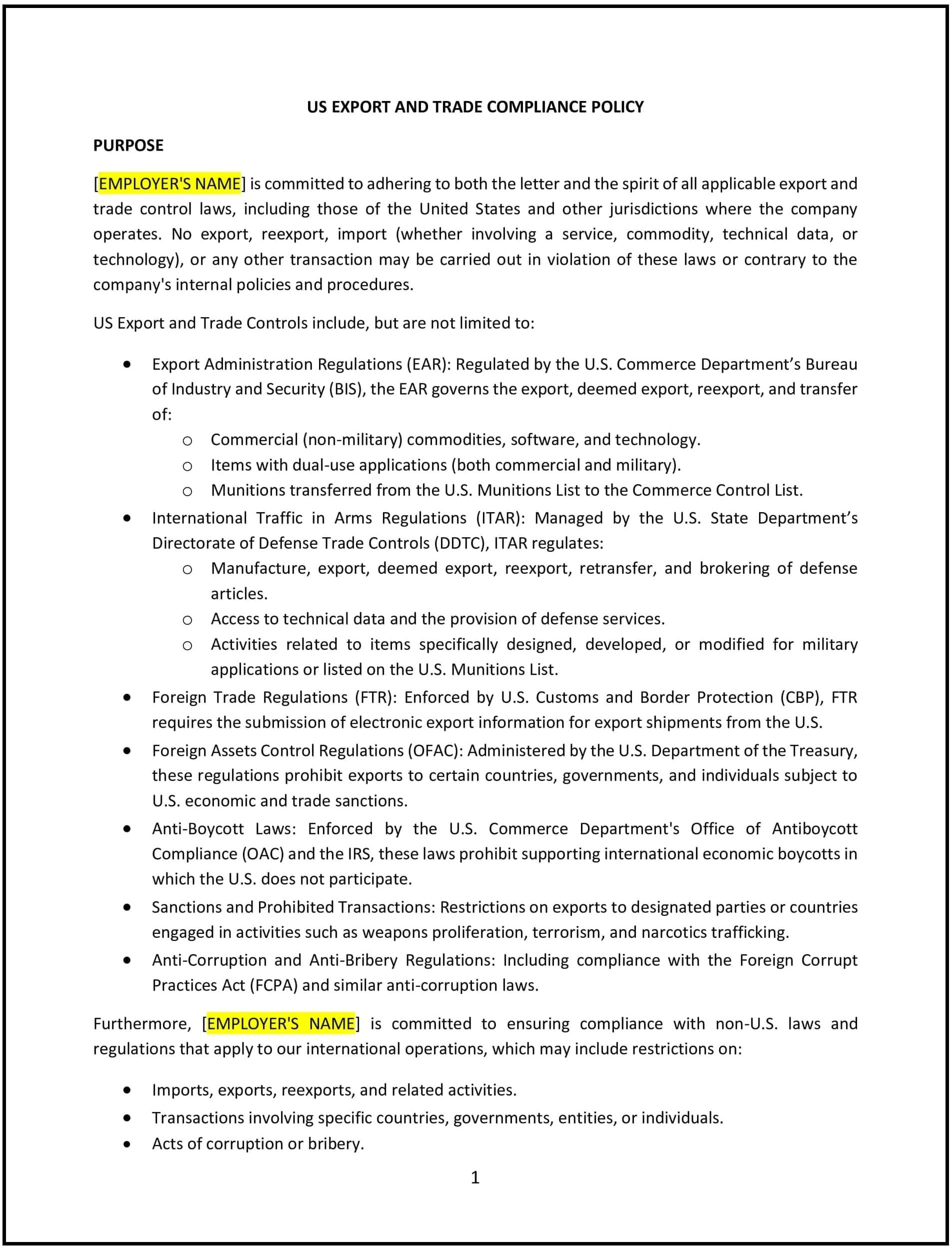
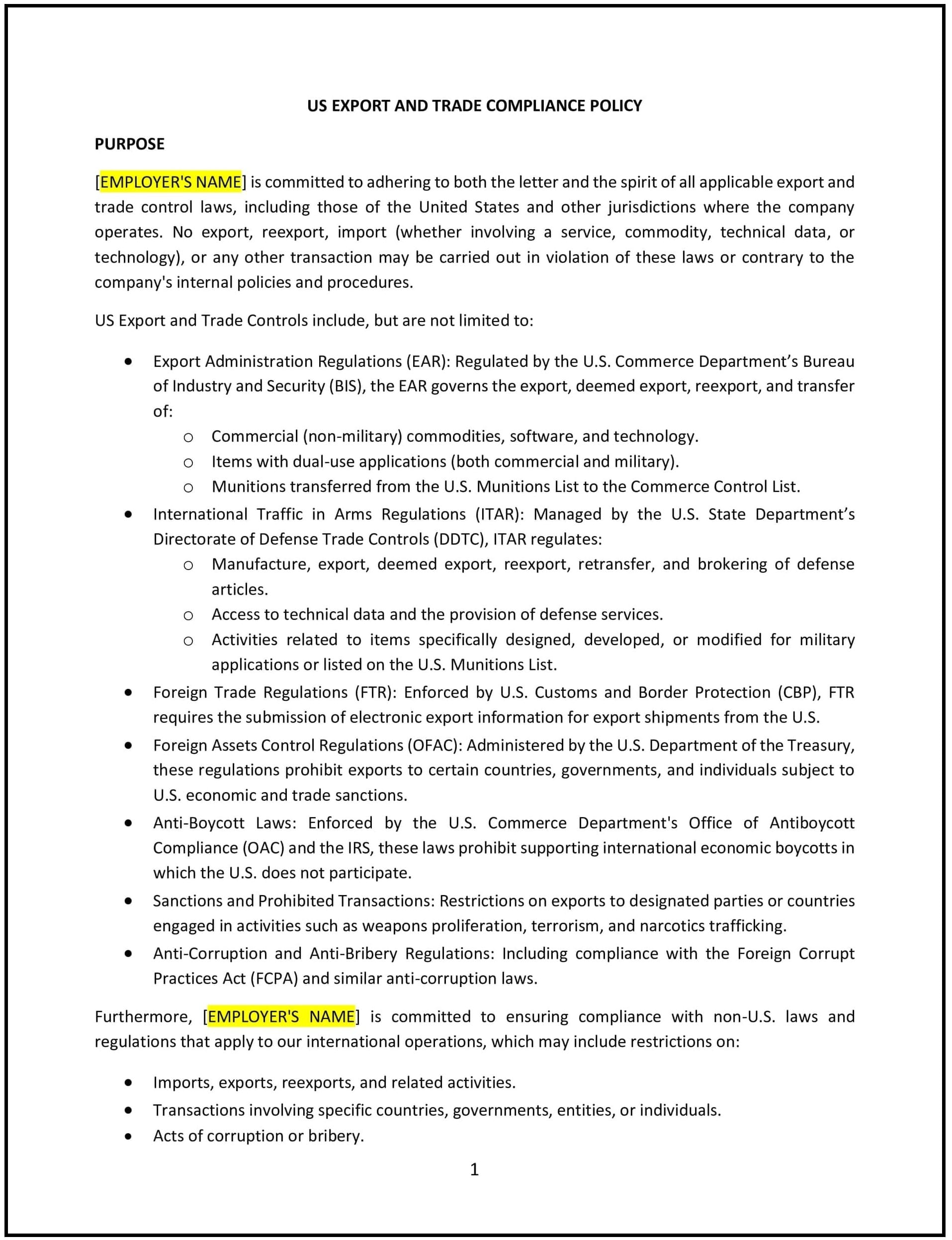
A US export and trade compliance policy helps New Mexico businesses navigate the complex landscape of US export controls and trade regulations. This policy outlines the responsibilities of businesses in adhering to federal and state laws regarding the export of goods, services, and technologies, as well as any trade restrictions or sanctions imposed by the US government. It is designed to mitigate the risk of violating export and trade regulations and to ensure that businesses conduct international trade in a lawful and ethical manner.
By adopting this policy, businesses in New Mexico can minimize the risk of legal and financial penalties, safeguard their reputation, and ensure smooth and compliant international operations.
How to use this US export and trade compliance policy (New Mexico)
- Define key export and trade compliance terms: Clearly outline what constitutes an export, including tangible goods, services, and technology, and identify relevant regulations such as the Export Administration Regulations (EAR) and International Traffic in Arms Regulations (ITAR).
- Outline compliance responsibilities: Specify the roles and responsibilities of employees and departments involved in export activities, including legal, sales, logistics, and compliance teams.
- Set screening procedures: Implement procedures to screen customers, end users, and foreign parties against restricted lists, including the Department of Commerce’s Entity List, the Office of Foreign Assets Control (OFAC) lists, and other relevant sanctions.
- Describe licensing requirements: Outline when an export license is required, the process for obtaining licenses, and how to handle restricted or embargoed goods or services.
- Provide training and resources: Offer regular training for employees involved in exports to ensure they are up-to-date on relevant regulations and compliance practices.
- Establish record-keeping and audit protocols: Maintain thorough records of export transactions, licenses, and communications for audit purposes and to facilitate regulatory reviews.
- Review and update: Periodically review the policy to ensure it reflects current trade laws, regulations, and best practices in New Mexico and at the federal level.
Benefits of using this US export and trade compliance policy (New Mexico)
This policy offers several advantages for New Mexico businesses:
- Minimizes legal risks: Clear compliance procedures help businesses avoid penalties, fines, and other legal consequences related to export violations.
- Promotes ethical business practices: Ensuring compliance with export and trade laws reflects the business's commitment to ethical and responsible international trade.
- Enhances operational efficiency: A streamlined compliance process makes it easier to conduct international trade while staying within the bounds of legal requirements.
- Protects business reputation: Adhering to trade compliance standards safeguards the business’s reputation with customers, regulators, and partners.
- Supports strategic growth: A well-defined compliance policy enables businesses to pursue international expansion with confidence, knowing they are compliant with US trade laws and regulations.
Tips for using this US export and trade compliance policy (New Mexico)
- Communicate the policy clearly: Ensure all employees involved in export activities understand the policy and their specific responsibilities.
- Implement screening tools: Use automated screening systems to verify whether customers, suppliers, and business partners are on restricted lists or subject to trade sanctions.
- Stay informed: Regularly monitor updates from the Bureau of Industry and Security (BIS), OFAC, and other regulatory bodies to stay current with changes in US export and trade laws.
- Conduct internal audits: Regularly audit export transactions and procedures to ensure compliance and identify potential issues before they become problematic.
- Provide continuous training: Offer ongoing education and training on export and trade compliance to keep employees informed of any new regulations or best practices.
Frequently asked questions (FAQs)
Similar templates
Where deals go from offer to paid
