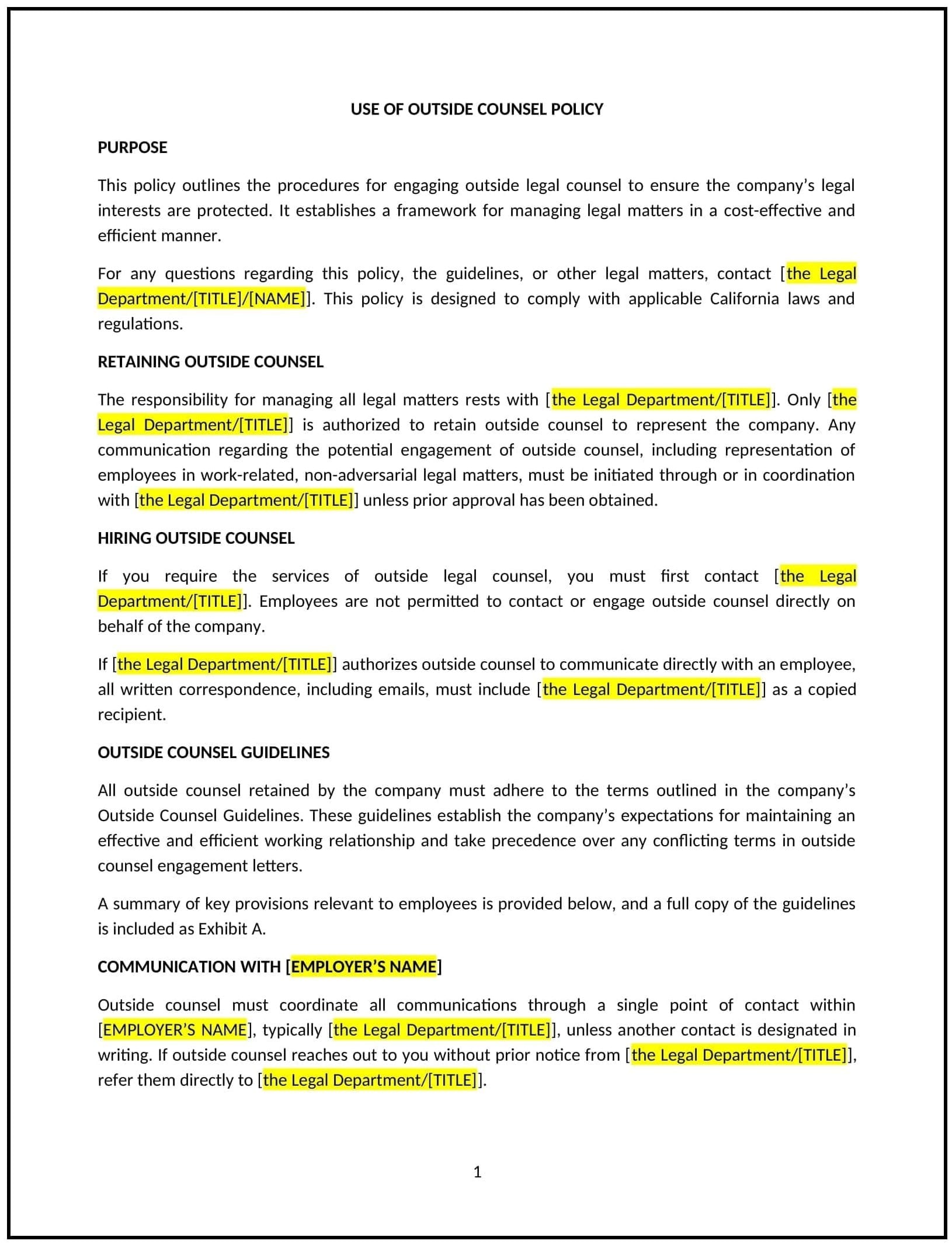
Use of outside counsel policy (California): Free template
Clarifies when external legal counsel should be engaged to ensure cost‑effective compliance with California regulations.
- Policies
- California
Use of outside counsel policy (California)
In California, a use of outside counsel policy provides businesses with guidelines for engaging external legal advisors to handle specialized legal matters or supplement in-house capabilities. This policy ensures a consistent approach to managing legal services while maintaining compliance with California laws, such as attorney-client privilege and fee agreement requirements.
This policy outlines the process for selecting, engaging, and managing outside counsel, as well as the business’s expectations for collaboration and communication. By implementing this policy, California businesses can manage legal risks effectively and ensure efficient use of legal resources.
How to use this use of outside counsel policy (California)
- Define scope: Specify the types of legal matters that may require outside counsel, such as complex litigation, regulatory compliance, or intellectual property issues.
- Outline selection criteria: Provide guidelines for choosing outside counsel, including qualifications, expertise, and alignment with the business’s needs.
- Communicate engagement procedures: Detail the process for approving and formalizing relationships with outside counsel, including fee structures and written agreements.
- Set collaboration expectations: Clarify how outside counsel will work with in-house teams, including communication protocols and reporting requirements.
- Monitor performance: Establish procedures for evaluating the effectiveness and cost-efficiency of outside counsel’s services.
Benefits of using this use of outside counsel policy (California)
This policy offers several advantages for California businesses:
- Supports compliance: Ensures legal engagements align with California laws, including rules on fee agreements and attorney-client privilege.
- Enhances efficiency: Streamlines the process for selecting and managing outside counsel, saving time and resources.
- Reduces risks: Promotes consistent oversight of legal matters, minimizing exposure to potential liabilities.
- Improves collaboration: Facilitates effective communication and coordination between outside counsel and internal teams.
- Promotes cost control: Provides clear guidelines for managing legal expenses and ensuring value for services.
Tips for using this use of outside counsel policy (California)
- Reflect California-specific considerations: Address state requirements, such as written fee agreements for services exceeding $1,000, as required by the California Business and Professions Code.
- Use clear agreements: Formalize engagements with outside counsel through written contracts outlining scope, fees, and confidentiality terms.
- Train decision-makers: Ensure managers authorized to engage outside counsel understand the policy and its procedures.
- Conduct regular reviews: Evaluate the performance and cost-efficiency of outside counsel periodically to ensure alignment with business needs.
- Update regularly: Revise the policy to reflect changes in California laws, industry trends, or business priorities.
Frequently asked questions (FAQs)
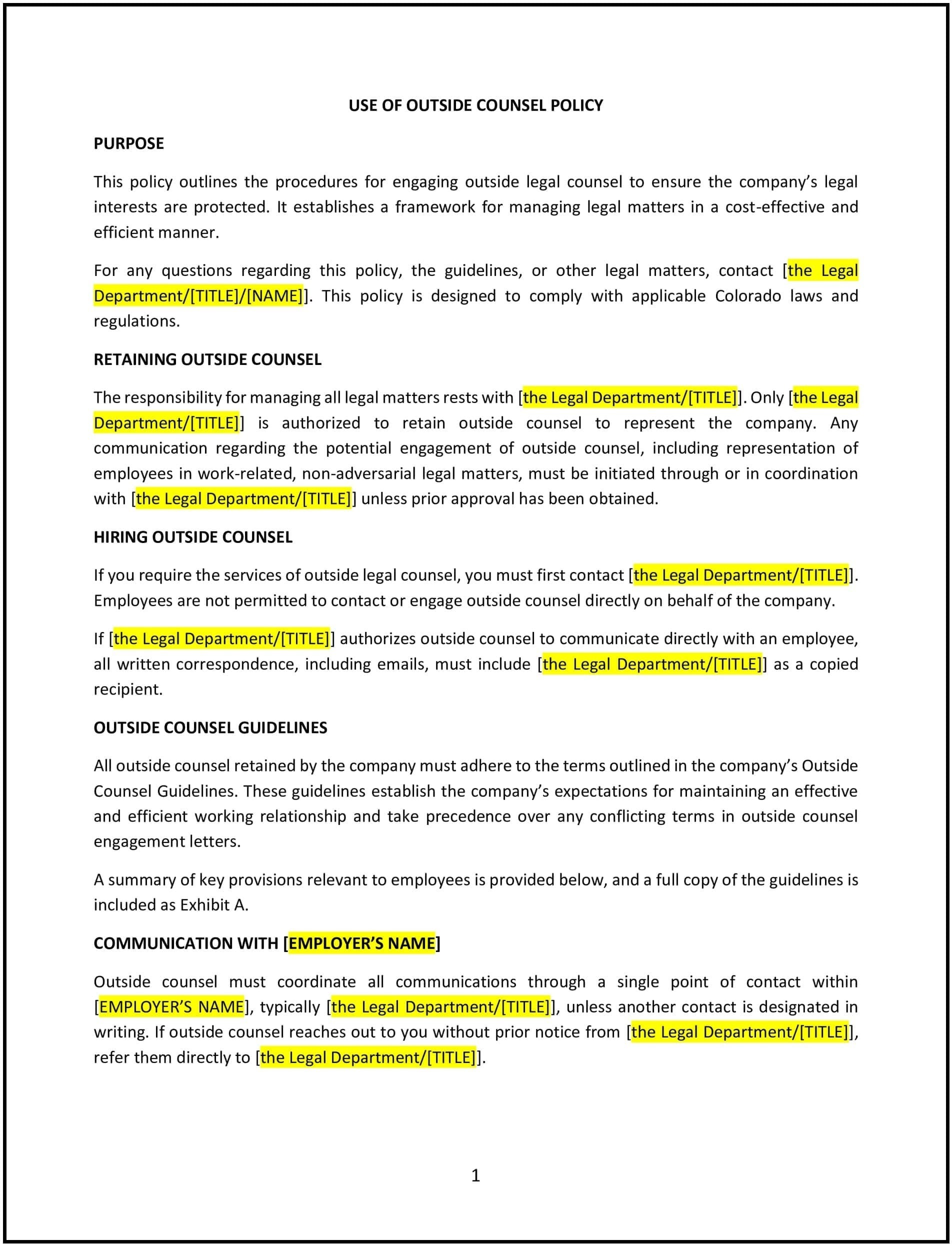
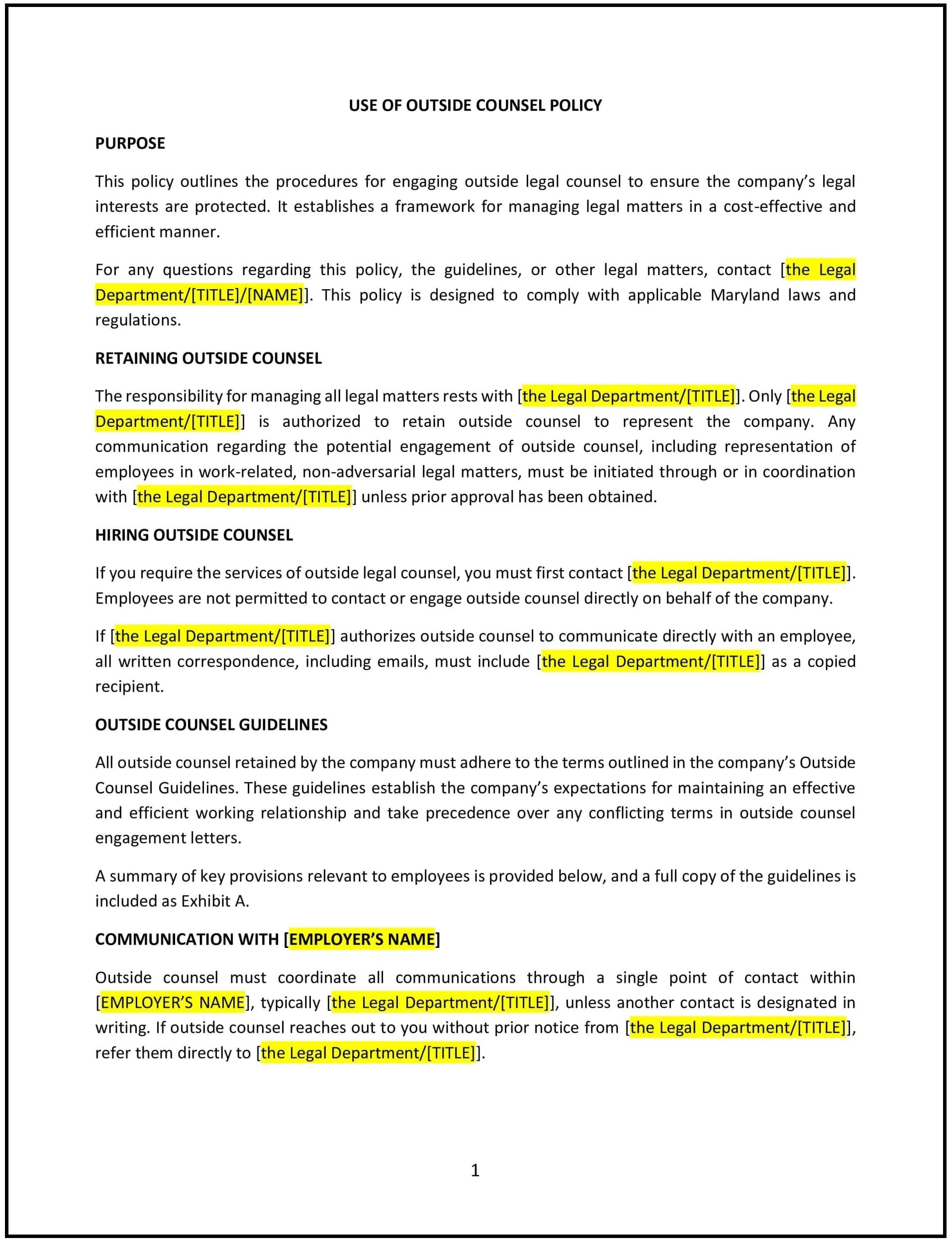
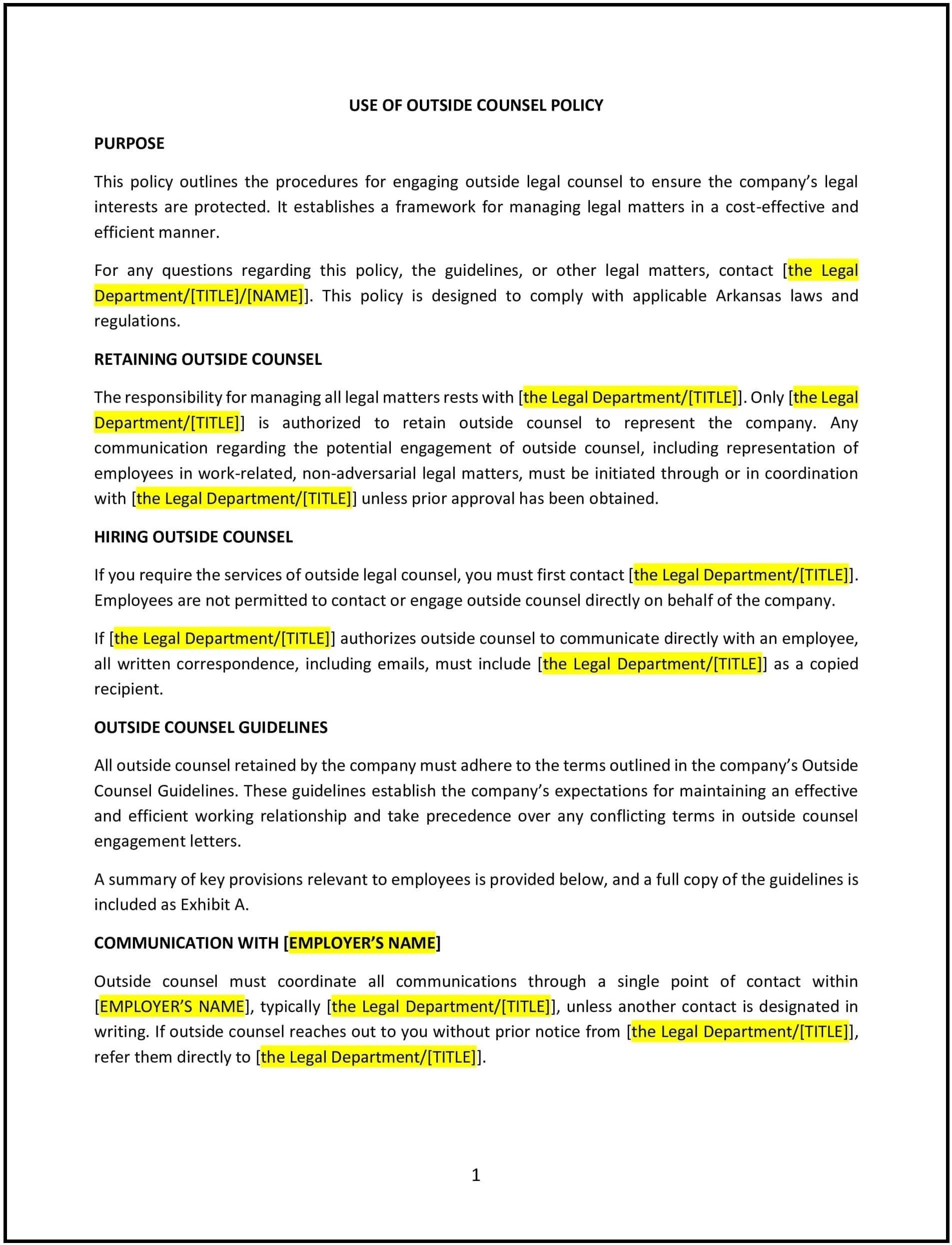
Similar templates
Where deals go from offer to paid
