Use of outside counsel policy (Rhode Island): Free template
Clarifies when and how external legal counsel can be engaged for company matters.
- Policies
- Rhode Island
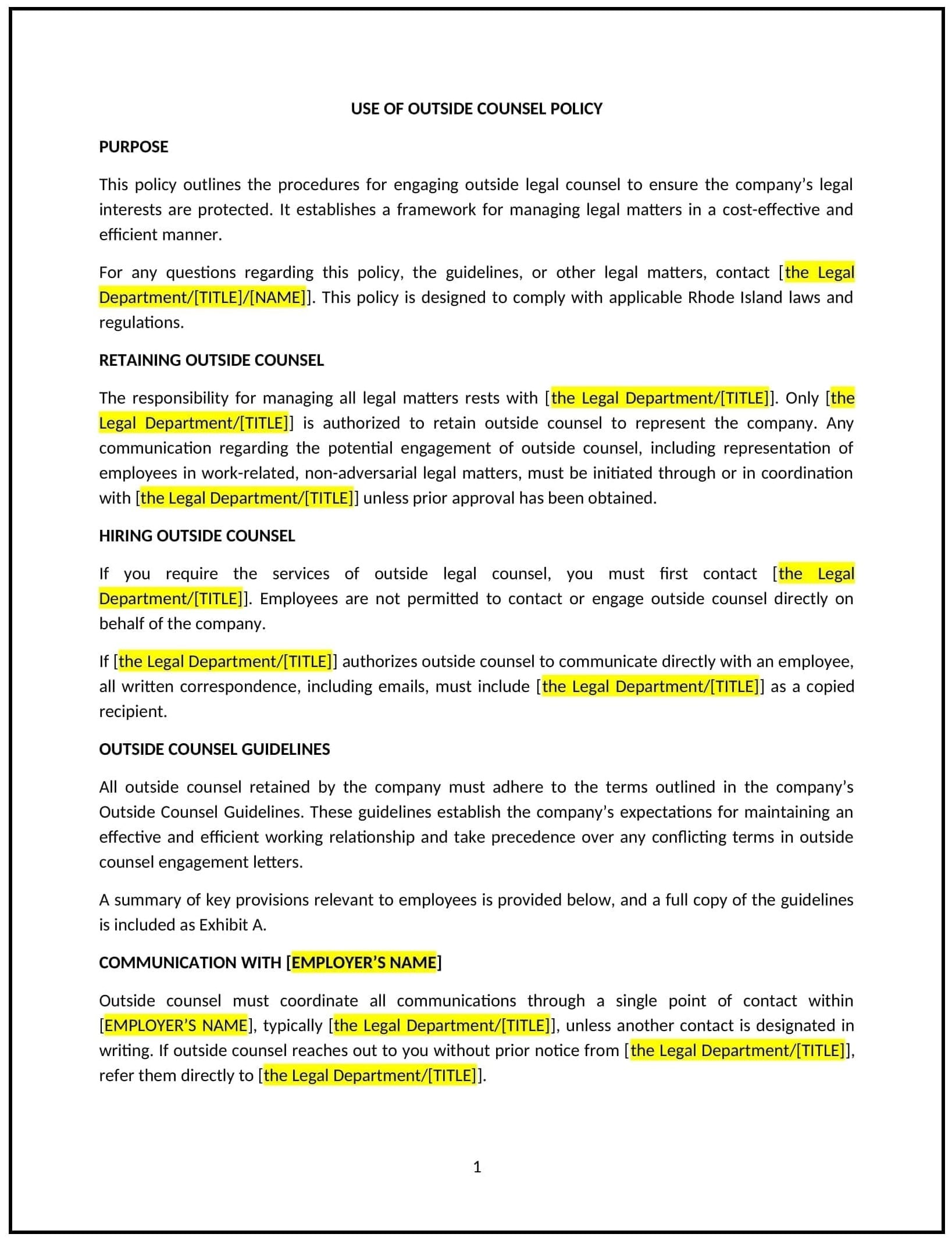
Use of outside counsel policy (Rhode Island)
This use of outside counsel policy is designed to help Rhode Island businesses establish guidelines for engaging external legal advisors. It outlines procedures for selecting, managing, and compensating outside counsel.
By adopting this policy, businesses can ensure effective legal representation, control costs, and maintain transparency.
How to use this use of outside counsel policy (Rhode Island)
- Define selection criteria: Outline factors for choosing outside counsel, such as expertise, experience, and cost.
- Establish engagement procedures: Specify steps for engaging outside counsel, including contract negotiation and approval.
- Address billing practices: Set guidelines for billing rates, invoicing, and expense reimbursement.
- Monitor performance: Regularly review the performance of outside counsel to ensure quality and cost-effectiveness.
- Train managers: Educate supervisors on managing relationships with outside counsel.
- Review and update: Assess the policy annually to ensure it aligns with evolving business needs and legal requirements.
Benefits of using this use of outside counsel policy (Rhode Island)
This policy offers several advantages for Rhode Island businesses:
- Ensures effective representation: Provides a structured approach to selecting and managing outside counsel.
- Controls costs: Sets guidelines for billing rates and expense reimbursement, reducing legal expenses.
- Maintains transparency: Ensures clear communication and accountability in legal matters.
- Enhances trust: Demonstrates the business’s commitment to ethical and professional legal practices.
- Aligns with best practices: Offers a framework for managing external legal relationships.
Tips for using this use of outside counsel policy (Rhode Island)
- Communicate the policy: Share the policy with employees and include it in the employee handbook.
- Provide training: Educate managers on managing relationships with outside counsel.
- Monitor compliance: Regularly review the performance and billing practices of outside counsel.
- Address issues promptly: Take corrective action if outside counsel’s performance or billing practices are unsatisfactory.
- Update regularly: Assess the policy annually to ensure it aligns with evolving business needs and legal requirements.
Frequently asked questions (FAQs)
Similar templates
Where deals go from offer to paid
