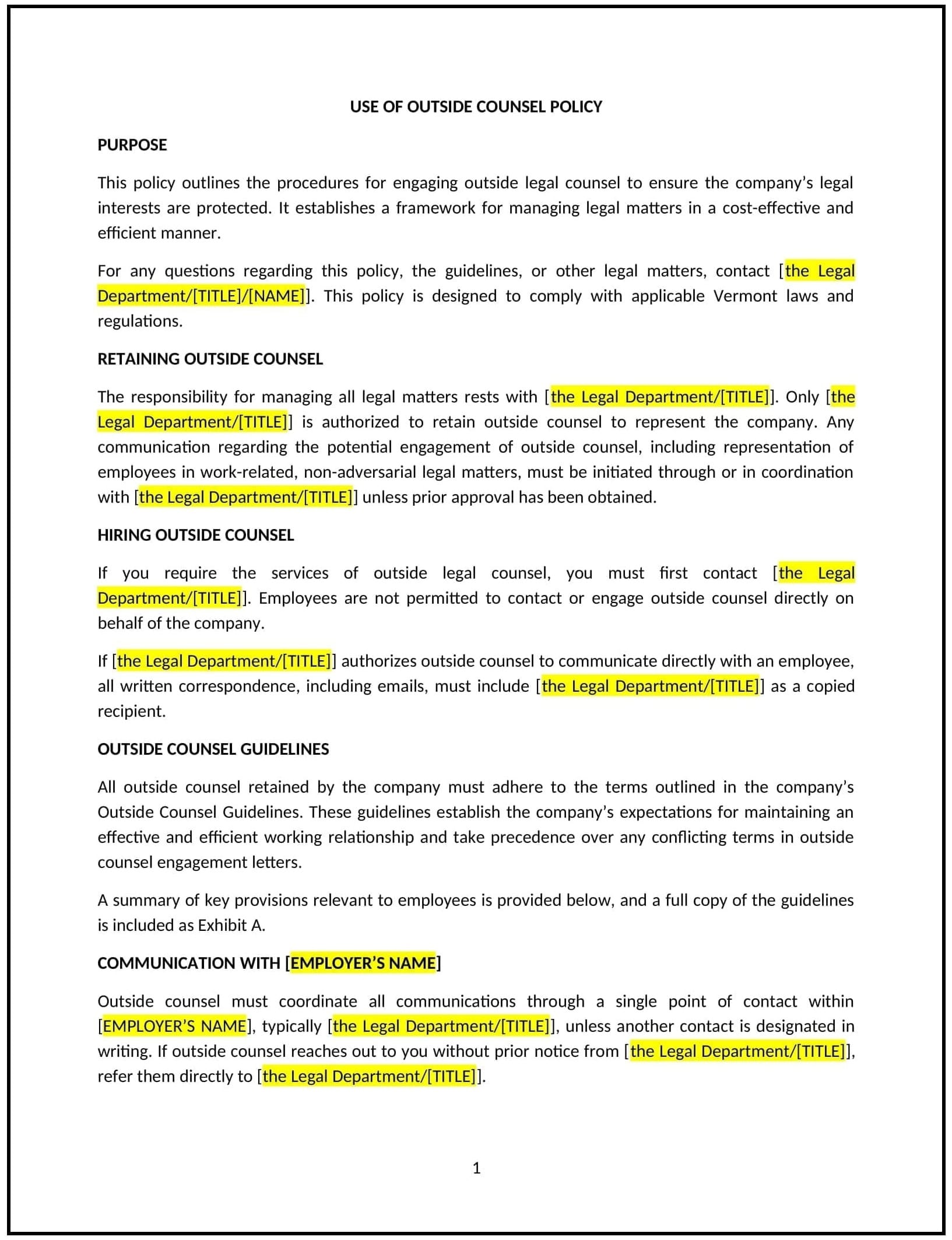
Use of outside counsel policy (Vermont): Free template
Specifies when external legal help should be used, supporting sound decision-making in Vermont workplaces.
- Policies
- Vermont
Use of outside counsel policy (Vermont)
This use of outside counsel policy is designed to help Vermont businesses effectively manage their relationships with external legal advisors. It provides guidelines for engaging, monitoring, and evaluating outside counsel to ensure legal matters are handled efficiently and align with the organization’s goals.
By adopting this policy, businesses can streamline legal processes, control costs, and maintain compliance with Vermont laws and professional ethics.
How to use this use of outside counsel policy (Vermont)
- Define the scope of engagement: Specify the types of legal matters that require outside counsel, such as litigation, regulatory compliance, or intellectual property disputes.
- Establish selection criteria: Outline the factors for selecting outside counsel, such as expertise, experience, and cost-effectiveness.
- Include approval procedures: Provide steps for seeking management approval before engaging outside counsel, including the submission of engagement letters or proposals.
- Address fee structures: Detail the fee arrangements, such as hourly rates, flat fees, or contingency fees, and the process for reviewing invoices.
- Set performance expectations: Specify the standards for communication, responsiveness, and progress updates from outside counsel.
- Monitor compliance: Require regular reviews of outside counsel’s performance and adherence to Vermont laws and ethical standards.
- Include termination guidelines: Provide criteria for ending relationships with outside counsel if they fail to meet expectations or comply with the company’s requirements.
Benefits of using this use of outside counsel policy (Vermont)
This policy provides several benefits for Vermont businesses:
- Enhances efficiency: Streamlines the process of engaging and managing outside legal advisors.
- Promotes cost control: Provides clear guidelines for budgeting and reviewing legal expenses.
- Improves accountability: Establishes performance expectations for outside counsel to ensure high-quality service.
- Supports compliance: Aligns with Vermont laws and professional ethics for legal services.
- Reduces risks: Minimizes the potential for disputes or misunderstandings with external legal advisors.
Tips for using this use of outside counsel policy (Vermont)
- Communicate the policy: Share the policy with employees involved in legal matters and include it in internal resources, such as the employee handbook.
- Engage multiple firms: Consider creating a pre-approved list of outside counsel for different legal needs to streamline the selection process.
- Track legal costs: Maintain detailed records of all invoices and expenses associated with outside counsel for budgeting and audit purposes.
- Evaluate regularly: Periodically assess the performance of outside counsel and seek feedback from internal stakeholders.
- Update as needed: Revise the policy to reflect changes in Vermont laws, company practices, or legal industry standards.
Frequently asked questions (FAQs)
Similar templates
Where deals go from offer to paid
