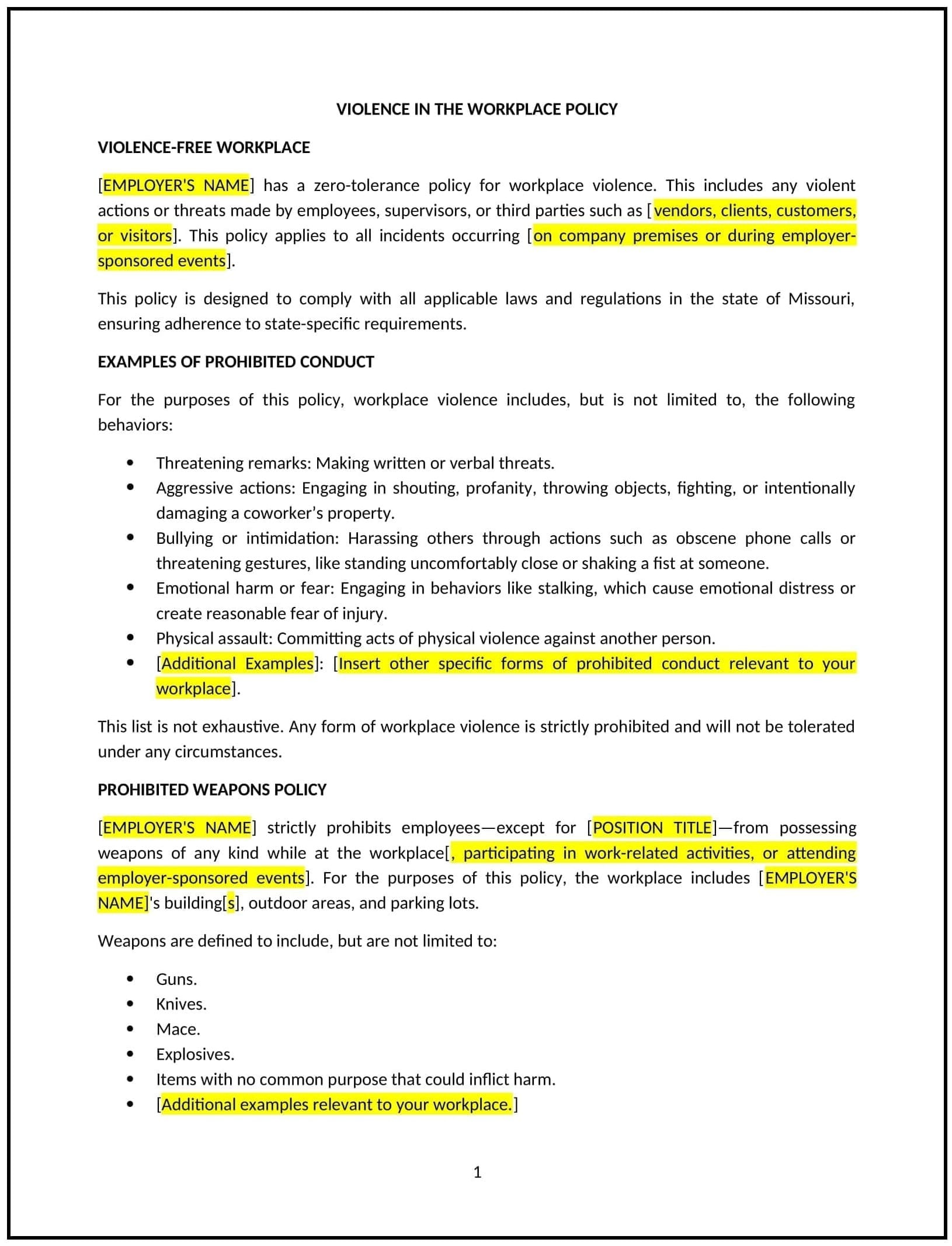
Violence in the workplace policy (Missouri): Free template
Addresses prevention, reporting, and handling of violent incidents to protect all employees.
- Policies
- Missouri
Violence in the workplace policy (Missouri)
A violence in the workplace policy helps businesses in Missouri maintain a safe and secure work environment by outlining measures to prevent, address, and respond to workplace violence. This policy defines what constitutes workplace violence, sets expectations for behavior, and details the steps employees should take if they witness or experience violence. It also outlines the responsibilities of both employees and the company in maintaining a safe environment.
By adopting this policy, businesses can reduce the risk of violent incidents, promote a culture of respect, and ensure that employees feel safe at work.
How to use this violence in the workplace policy (Missouri)
- Define workplace violence: Clearly explain what constitutes workplace violence, including physical violence, threats, harassment, intimidation, or any other behavior that creates a hostile or unsafe work environment.
- Set expectations for behavior: Establish a zero-tolerance policy for workplace violence, specifying that violent behavior will not be tolerated and will result in disciplinary action, up to and including termination.
- Provide reporting procedures: Detail how employees should report incidents of violence or threats of violence, including the appropriate channels (e.g., HR, supervisor, or a confidential reporting system) and the timeframe for reporting incidents.
- Provide support resources: Offer information about employee assistance programs (EAPs), counseling, and other support resources to employees affected by workplace violence.
- Develop emergency response plans: Establish clear protocols for responding to incidents of violence, including evacuation procedures, communication protocols, and contacting law enforcement if necessary.
- Ensure ongoing training: Implement training programs to educate employees about recognizing early warning signs of violence, de-escalation techniques, and the proper steps to take if they encounter a violent situation.
- Review regularly: Periodically review and update the policy to ensure it remains relevant to the workplace environment and aligned with any changes in Missouri state law or federal regulations.
Benefits of using this violence in the workplace policy (Missouri)
This policy provides several benefits for businesses in Missouri:
- Promotes safety: Clear guidelines help prevent violent incidents and ensure that the workplace remains safe for employees, visitors, and customers.
- Reduces risk: Proactive measures reduce the likelihood of workplace violence, minimizing the potential impacts on the business, such as legal costs, insurance claims, or damage to reputation.
- Supports employee well-being: Providing resources and support to employees affected by violence shows the company’s commitment to employee safety and mental health.
- Enhances workplace culture: A policy that prioritizes safety helps foster a culture of trust, respect, and professionalism, which can improve employee morale and productivity.
- Encourages accountability: By establishing clear consequences for violent behavior, businesses can hold employees accountable, promoting a work environment where safety and respect are prioritized.
- Improves preparedness: Having an emergency response plan and employee training helps ensure that employees know how to react in case of an incident, making the business better equipped to handle violence if it occurs.
Tips for using this violence in the workplace policy (Missouri)
- Communicate the policy clearly: Ensure all employees understand the policy and its implications. Include the policy in employee handbooks, and conduct periodic reminders through training sessions or internal communications.
- Provide adequate training: Offer training on recognizing early signs of workplace violence, conflict resolution, and how to safely respond to violent incidents.
- Encourage prompt reporting: Foster a culture where employees feel comfortable reporting any incidents or concerns of violence, assuring them that they will not face retaliation for doing so.
- Follow up on reports: Ensure that all reports of violence or threats are taken seriously and followed up on promptly to resolve the issue and ensure employee safety.
- Review and refine the policy: Regularly review the policy to address any emerging risks, changes in legal requirements, or feedback from employees. Keep the policy up-to-date to reflect current best practices.
- Maintain confidentiality: Ensure that all reports of workplace violence are handled confidentially and with respect for the privacy of those involved.
Frequently asked questions (FAQs)
Similar templates
Where deals go from offer to paid
