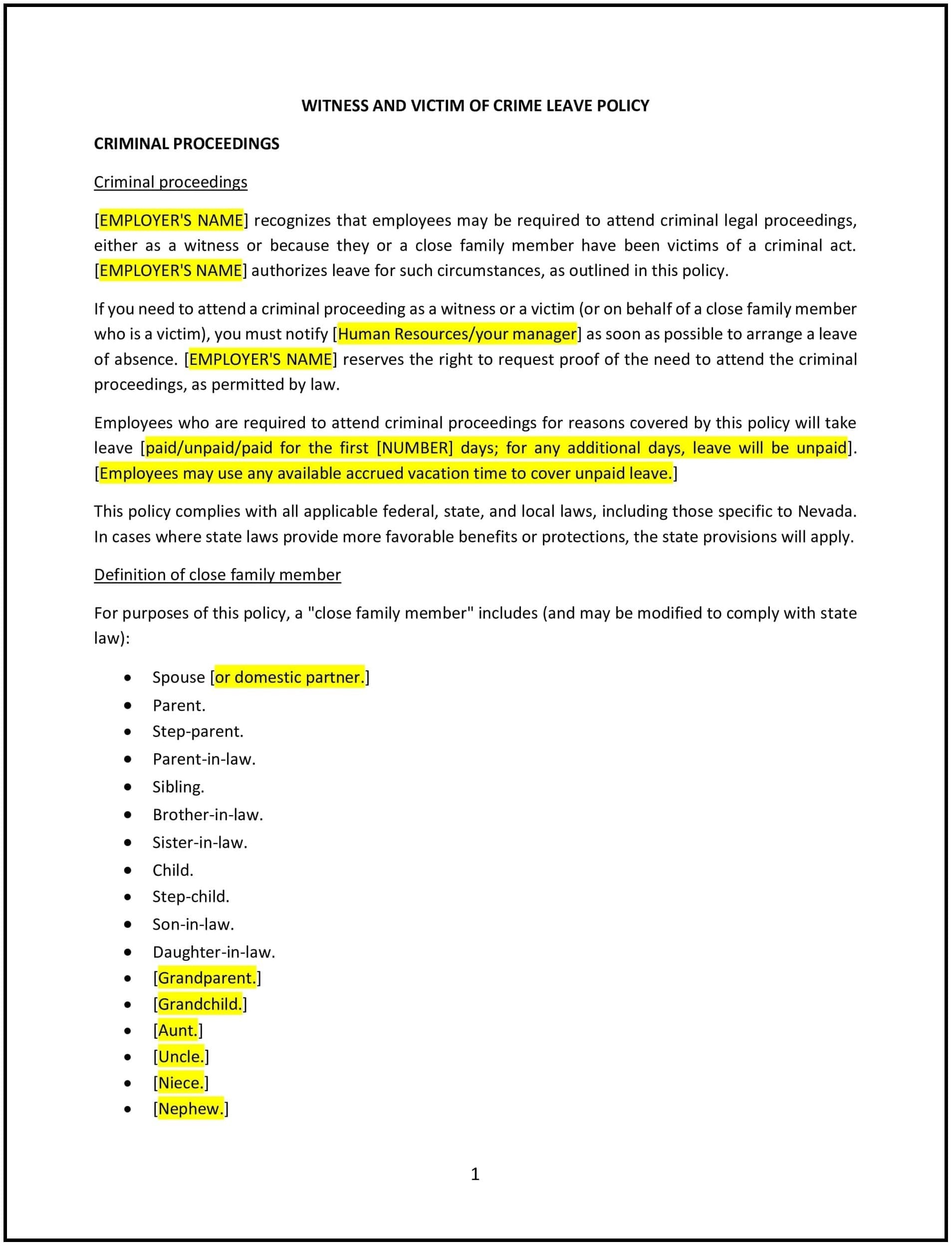
Witness and victim of crime leave policy (Nevada): Free template
Grants leave for employees participating in legal proceedings as victims or witnesses of crimes.
- Policies
- Nevada
Witness and victim of crime leave policy (Nevada)
This witness and victim of crime leave policy is designed to help Nevada businesses provide employees with the necessary time off to participate in legal proceedings or recover from crime-related incidents. It strengthens compliance with Nevada laws and supports employees during challenging circumstances.
By adopting this policy, businesses can foster a supportive workplace environment, improve legal compliance, and promote employee well-being.
How to use this witness and victim of crime leave policy (Nevada)
- Define eligibility: Specify which employees are eligible for leave under this policy, such as those subpoenaed as witnesses, victims of crimes, or family members of victims.
- Outline covered activities: Detail the types of activities covered, including attending court proceedings, providing testimony, or participating in related legal processes.
- Include notification requirements: Require employees to provide reasonable notice and supporting documentation, such as a subpoena or police report, when requesting leave.
- Address pay during leave: Clarify whether the leave is paid or unpaid, depending on company policy and legal requirements.
- Emphasize job protection: Assure employees that their job or an equivalent position will be available upon their return, in compliance with Nevada law.
- Provide support resources: Offer access to employee assistance programs (EAPs) or other resources to support employees during their leave.
- Monitor compliance: Ensure the policy aligns with Nevada laws and is implemented consistently across the organization.
Benefits of using this witness and victim of crime leave policy (Nevada)
This policy provides several benefits for Nevada businesses:
- Promotes legal compliance: Aligns with Nevada laws regarding leave for witnesses and victims of crimes.
- Supports employees: Provides time off for employees to fulfill legal obligations or recover from crime-related incidents.
- Enhances retention: Demonstrates the company’s commitment to employee well-being, fostering loyalty and trust.
- Reduces workplace disruption: Establishes clear procedures for managing leave requests related to legal or crime-related matters.
- Ensures fairness: Applies consistent guidelines for all employees eligible under this policy.
Tips for using this witness and victim of crime leave policy (Nevada)
- Communicate the policy: Share the policy with employees during onboarding and make it easily accessible in employee handbooks or internal systems.
- Train managers: Equip managers to handle leave requests related to legal or crime-related matters sensitively and effectively.
- Provide documentation guidance: Inform employees about acceptable documentation, such as subpoenas or police reports, required to request leave.
- Offer support: Encourage employees to use available resources, such as EAPs, during their leave.
- Update regularly: Review and revise the policy to reflect changes in Nevada laws or workplace practices.
Frequently asked questions (FAQs)
Similar templates
Where deals go from offer to paid
