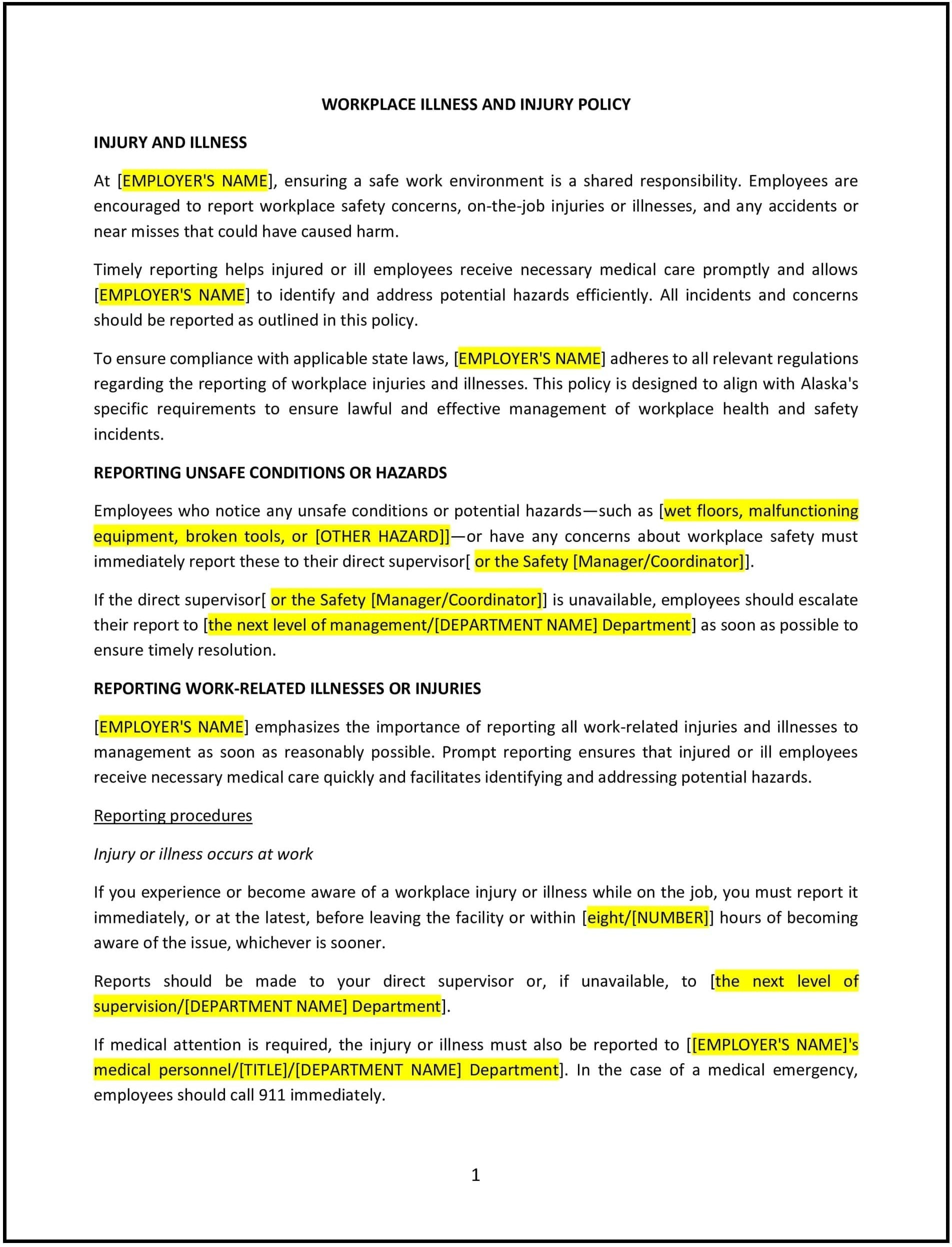
Workplace illness and injury policy (Alaska)
Explains how to report, document, and respond to workplace illnesses or injuries under Alaska safety laws.
- Policies
- Alaska
Workplace bullying policy (Alaska)
In Alaska, a workplace bullying policy outlines guidelines for addressing and preventing bullying behaviors in the workplace. This policy defines unacceptable behaviors, provides clear procedures for reporting and resolving incidents, and fosters a respectful and inclusive work environment. By implementing this policy, businesses can enhance employee well-being, reduce conflicts, and support productivity.
How to use this workplace bullying policy (Alaska)
- Define bullying: Clearly specify what constitutes workplace bullying, such as repeated verbal abuse, intimidation, exclusion, or other actions that create a hostile work environment.
- Include reporting procedures: Provide detailed steps for employees to report bullying incidents, including whom to contact and how confidentiality will be maintained.
- Outline investigation processes: Describe how reported incidents will be addressed, including timelines for investigations and communication of outcomes.
- Address preventive measures: Include training programs and awareness initiatives to promote a culture of respect and discourage bullying behaviors.
- Clarify consequences: Specify disciplinary actions for confirmed cases of bullying, ranging from warnings to termination, depending on severity.
Benefits of using a workplace bullying policy (Alaska)
A workplace bullying policy provides several advantages for businesses in Alaska. Here’s how it helps:
- Enhances employee well-being: Creates a safe and respectful environment that supports employee morale and mental health.
- Reduces conflicts: Provides a clear framework for addressing and resolving bullying incidents quickly and effectively.
- Promotes retention: Fosters a positive workplace culture, encouraging employees to remain with the organization.
- Supports productivity: Minimizes disruptions caused by workplace bullying, enabling teams to focus on their work.
- Protects the company: Reduces legal and reputational risks by demonstrating a commitment to addressing bullying proactively.
Tips for using a workplace bullying policy (Alaska)
- Tailor to workplace needs: Include specific examples of behaviors relevant to your industry or workplace setting in Alaska.
- Train employees: Offer regular training sessions to help employees recognize bullying and understand how to respond effectively.
- Monitor workplace culture: Conduct surveys or feedback sessions to assess employee perceptions and identify potential issues.
- Ensure accessibility: Make the policy easily available to all employees, such as including it in the employee handbook or posting it on the company intranet.
- Update regularly: Revise the policy to reflect changes in workplace dynamics, legal standards, or best practices.
Frequently asked questions (FAQs)
Similar templates
Where deals go from offer to paid
