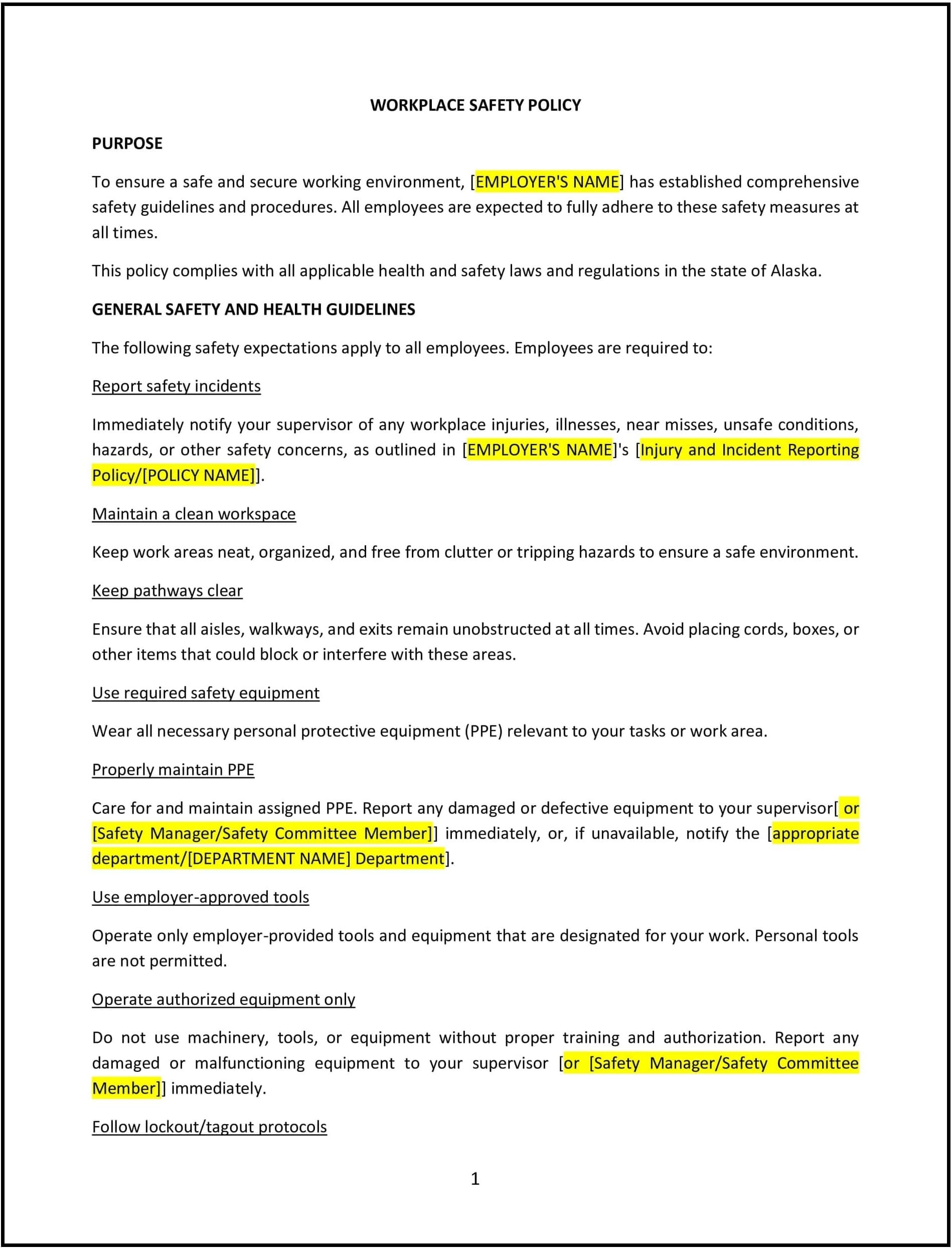
Workplace safety policy (Alaska): Free template
Establishes safety procedures and responsibilities to reduce risk and ensure compliance with Alaska workplace safety laws.
- Policies
- Alaska
Workplace safety policy (Alaska)
In Alaska, a workplace safety policy provides guidelines to ensure a secure and healthy work environment for all employees. This policy outlines safety protocols, employee responsibilities, and procedures for reporting hazards or incidents.
By implementing a workplace safety policy, businesses can minimize risks, comply with regulations, and foster a culture of safety.
How to use this workplace safety policy (Alaska)
- Define safety standards: Clearly specify the safety measures and practices required to protect employees from common risks, including those unique to Alaska’s industries and environment.
- Outline employee responsibilities: Provide guidance on how employees should follow safety protocols, report hazards, and use personal protective equipment (PPE).
- Include reporting procedures: Establish clear steps for employees to report safety concerns, near misses, or workplace injuries promptly.
- Provide emergency protocols: Detail actions to take in emergencies, such as natural disasters, fires, or medical incidents, with an emphasis on preparedness.
- Emphasize training: Require regular safety training for employees to ensure awareness and understanding of workplace safety practices.
Benefits of using a workplace safety policy (Alaska)
A workplace safety policy provides several advantages for businesses in Alaska. Here’s how it helps:
- Ensures compliance: Aligns with Alaska Occupational Safety and Health (AKOSH) standards and other applicable regulations.
- Promotes a safety culture: Encourages employees to prioritize safety and collaborate to maintain a hazard-free environment.
- Reduces risks: Minimizes the likelihood of workplace accidents, injuries, and illnesses.
- Protects employees: Provides clear guidelines for responding to emergencies, ensuring employee well-being.
- Enhances productivity: Reduces disruptions caused by incidents or injuries, allowing employees to focus on their work.
Tips for using a workplace safety policy (Alaska)
- Address Alaska-specific risks: Include measures for handling unique hazards, such as extreme weather, remote work environments, or wildlife encounters.
- Conduct regular inspections: Schedule routine safety audits to identify and address potential hazards in the workplace.
- Provide ongoing training: Offer periodic safety training tailored to your industry and workplace conditions.
- Involve employees: Encourage employees to participate in safety committees or initiatives to foster collective responsibility.
- Update regularly: Revise the policy as needed to reflect changes in regulations, workplace conditions, or industry standards.
Frequently asked questions (FAQs)
Similar templates
Where deals go from offer to paid
