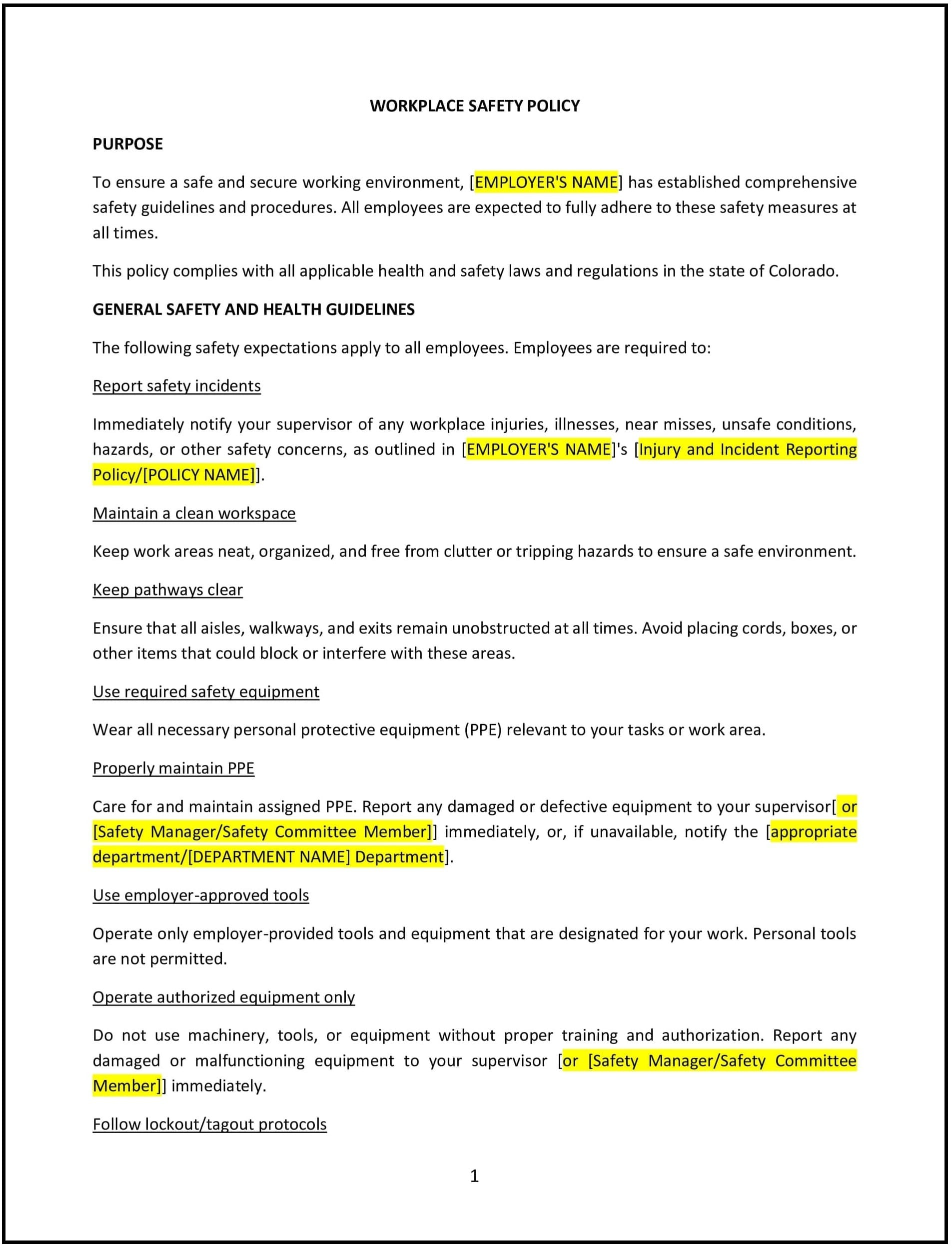
Workplace safety policy (Colorado): Free template
Outlines safety responsibilities, training, and hazard controls to meet Colorado occupational safety requirements.
- Policies
- Colorado
Workplace safety policy (Colorado)
A workplace safety policy helps Colorado businesses create a secure environment by outlining safety protocols, preventive measures, and procedures for addressing workplace hazards and emergencies. This policy supports compliance with state and federal safety regulations, including OSHA standards, while promoting a culture of safety.
By implementing this policy, businesses can reduce risks, protect employees, and maintain compliance with Colorado workplace safety laws.
How to use this workplace safety policy (Colorado)
- Define safety responsibilities: Clearly outline roles for employees, managers, and safety officers in maintaining a safe workplace.
- Identify hazards: Specify potential workplace hazards and include measures to minimize or eliminate risks.
- Provide training: Offer regular safety training sessions to ensure employees understand safety protocols and emergency procedures.
- Establish reporting procedures: Include steps for employees to report unsafe conditions, accidents, or near-misses promptly.
- Support compliance: Align the policy with OSHA requirements and Colorado-specific safety regulations to reduce liability.
Benefits of using this workplace safety policy (Colorado)
This policy offers several benefits for Colorado businesses:
- Promotes a safe environment: Reduces risks of workplace injuries and illnesses through preventive measures.
- Supports compliance: Aligns workplace practices with OSHA standards and Colorado safety laws.
- Enhances productivity: Minimizes disruptions caused by accidents or unsafe conditions.
- Builds trust: Demonstrates the business’s commitment to employee health and safety.
- Reduces liability: Helps protect the business from legal and financial risks associated with workplace safety incidents.
Tips for using this workplace safety policy (Colorado)
- Conduct regular audits: Perform workplace inspections to identify and address safety hazards proactively.
- Encourage reporting: Foster a culture where employees feel comfortable reporting unsafe conditions or potential risks without fear of retaliation.
- Maintain records: Document all safety training sessions, incidents, and inspections to support compliance and continuous improvement.
- Provide clear signage: Use signs and labels to highlight hazards and communicate safety information effectively.
- Review periodically: Update the policy to reflect changes in Colorado laws, OSHA standards, or workplace conditions.
Frequently asked questions (FAQs)
Similar templates
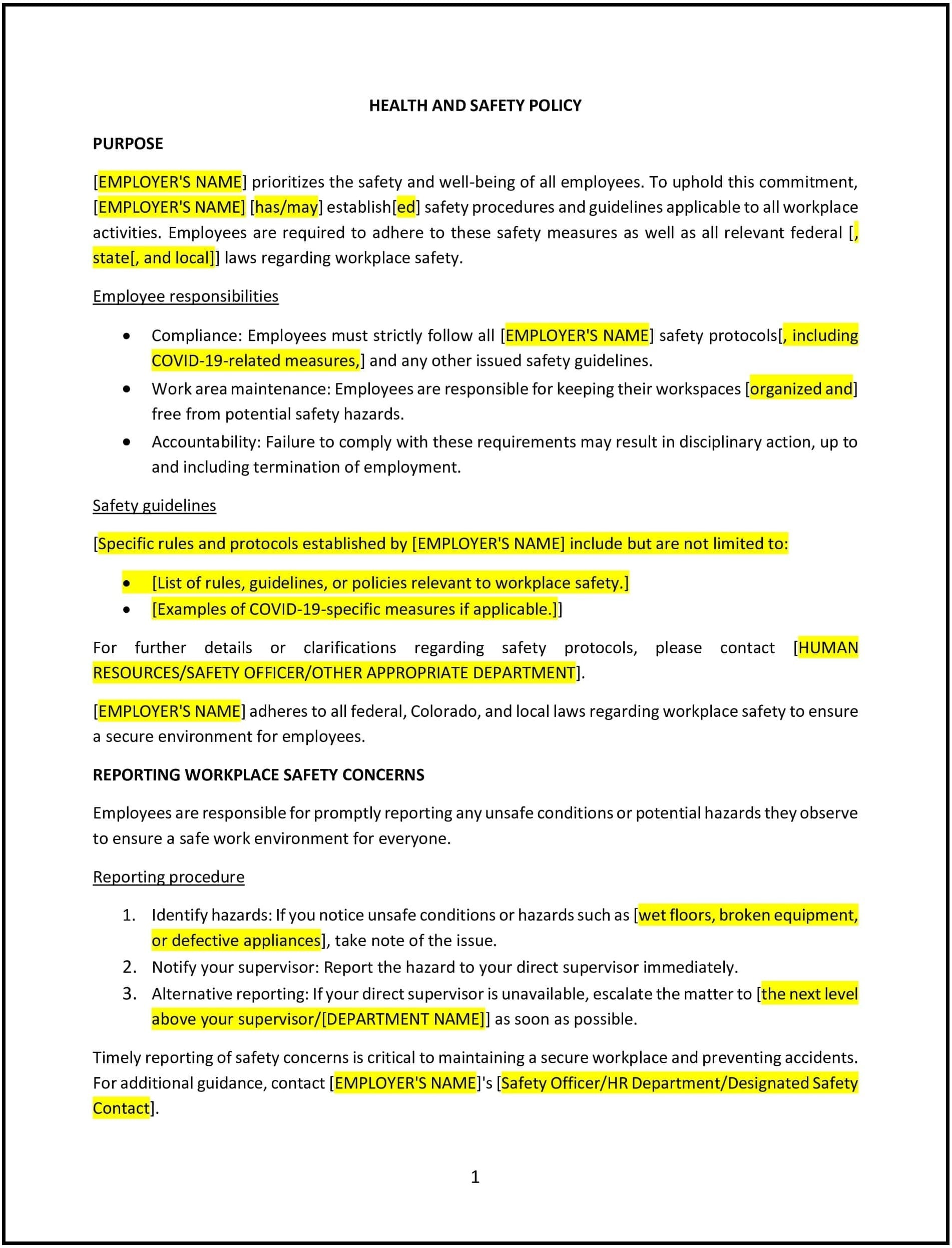
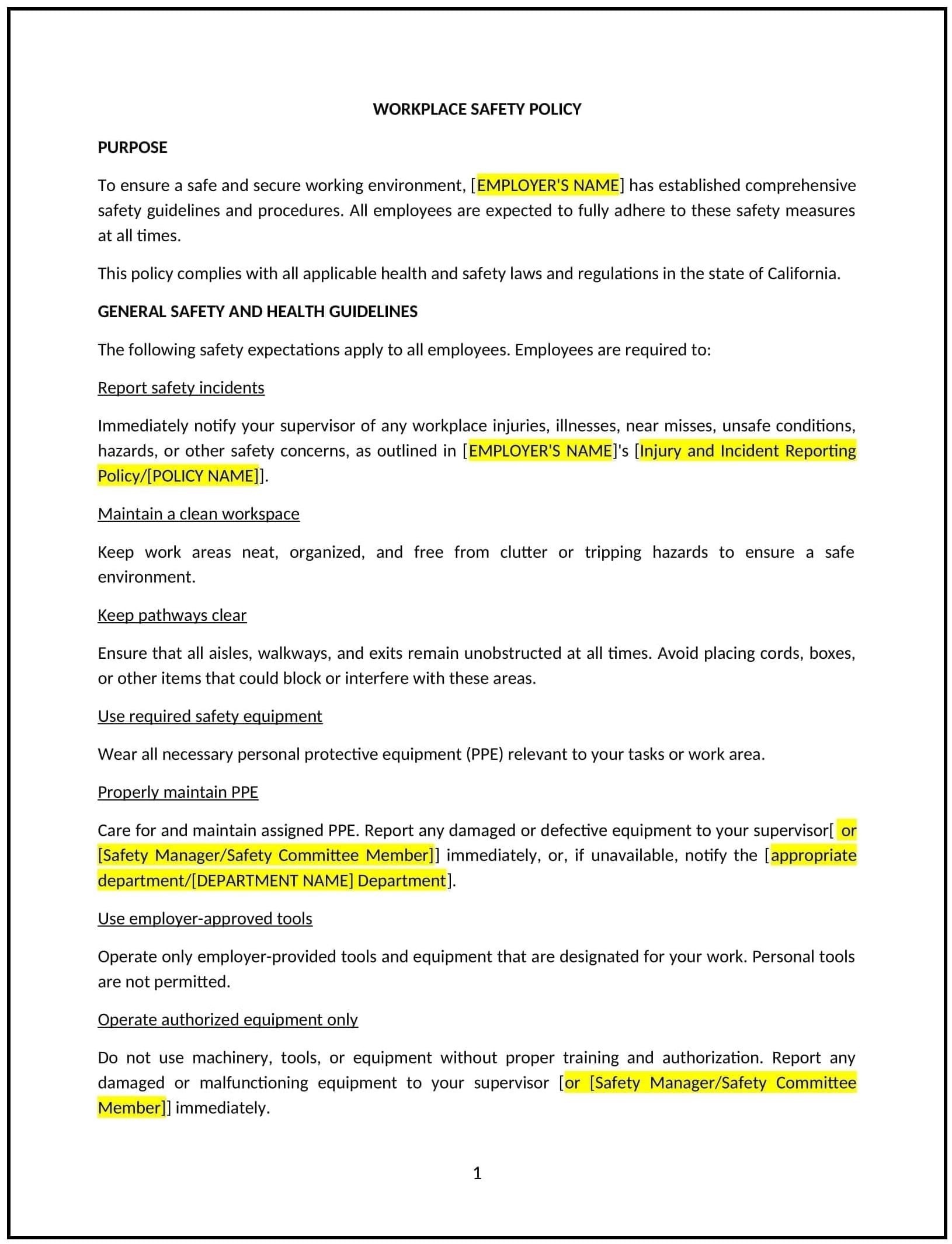
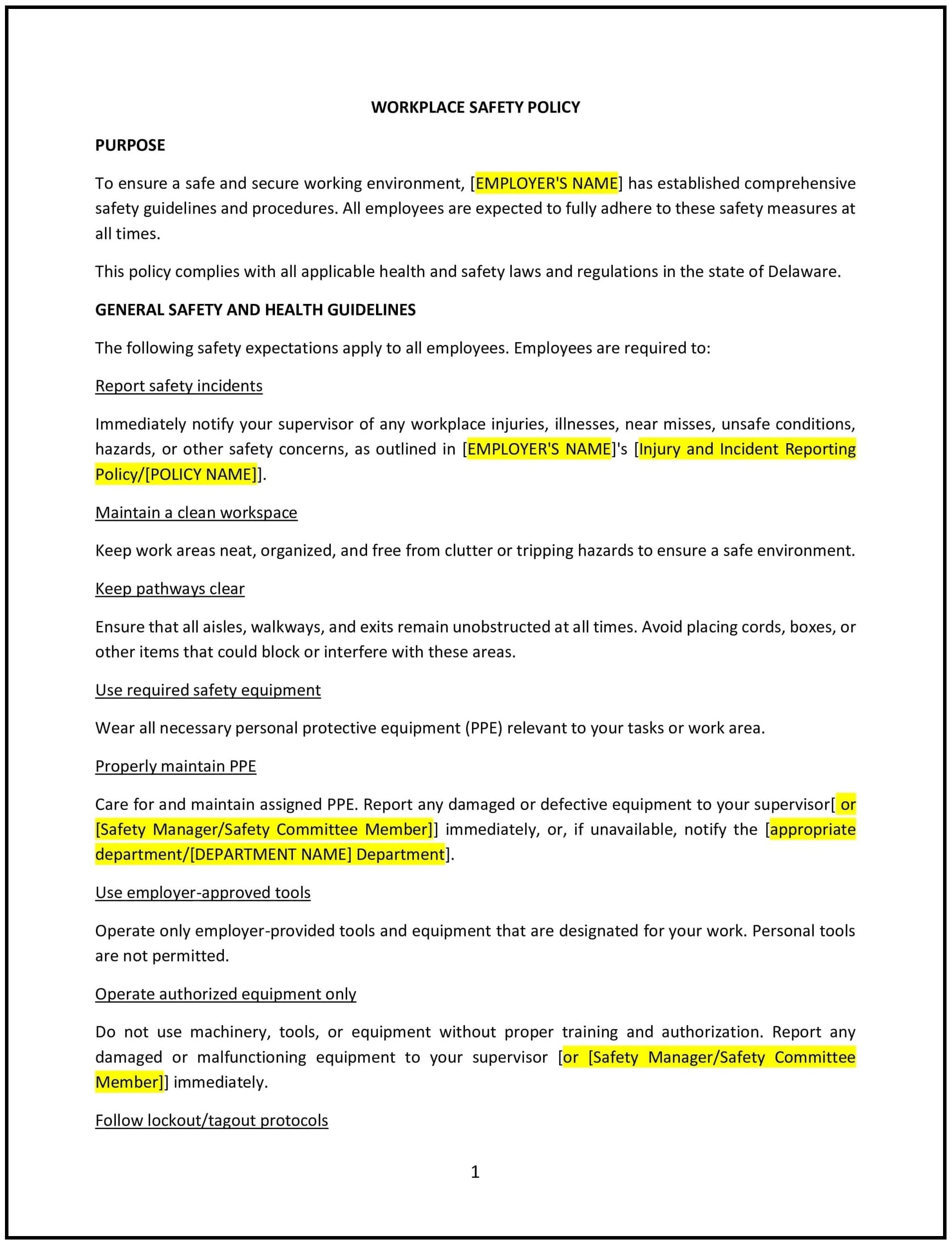
Where deals go from offer to paid
