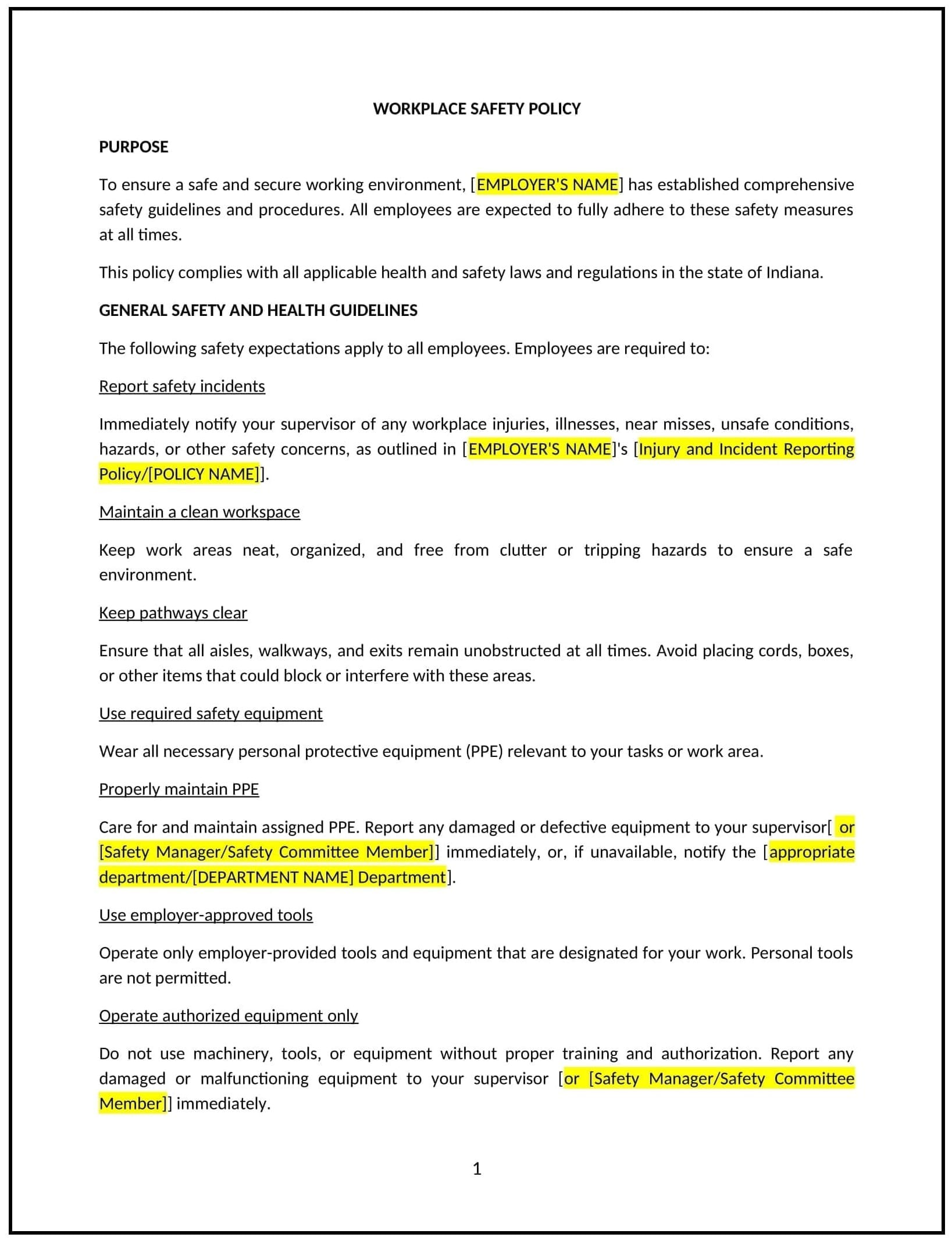
Workplace safety policy (Indiana): Free template
Defines employer and employee responsibilities for maintaining a safe Indiana workplace in compliance with OSHA and state law.
- Policies
- Indiana
Workplace safety policy (Indiana): Free template
This workplace safety policy helps Indiana businesses establish a framework for maintaining a safe and healthy work environment. It outlines safety procedures, employee responsibilities, and reporting processes to minimize workplace hazards and ensure compliance with Indiana and federal safety regulations.
By implementing this policy, Indiana businesses can prioritize employee well-being, reduce risks, and promote a culture of safety and accountability.
How to use this workplace safety policy (Indiana)
- Define safety standards: Clearly outline safety expectations for all employees, including adherence to OSHA regulations and Indiana-specific safety requirements.
- Identify workplace hazards: Provide guidelines for identifying and addressing potential hazards, such as unsafe equipment, hazardous materials, or ergonomic risks.
- Establish reporting procedures: Include steps for employees to report unsafe conditions, near-misses, or workplace accidents promptly and confidentially.
- Assign responsibilities: Clarify the roles of managers, supervisors, and employees in maintaining workplace safety, including monitoring and enforcement.
- Require training: Specify mandatory safety training for employees based on their roles, including handling equipment, hazardous materials, or emergency procedures.
- Include emergency protocols: Provide clear instructions for responding to emergencies, such as fires, severe weather, or medical incidents.
- Conduct regular inspections: Outline how and when the workplace will be inspected for safety compliance and potential risks.
- Review and update regularly: Periodically assess the policy to reflect changes in regulations, workplace conditions, or best practices.
Benefits of using this workplace safety policy (Indiana)
Implementing this policy provides several key benefits for Indiana businesses:
- Promotes employee well-being: Creates a safer work environment, reducing the risk of injuries and illnesses.
- Ensures regulatory compliance: Aligns with Indiana workplace safety laws and OSHA standards to avoid fines or penalties.
- Enhances productivity: Reduces disruptions caused by accidents or unsafe conditions.
- Encourages accountability: Clearly defines responsibilities, ensuring everyone contributes to maintaining safety.
- Reduces liability: Mitigates legal and financial risks by addressing safety concerns proactively.
- Builds trust: Demonstrates the business’s commitment to employee health and safety.
Tips for using this workplace safety policy (Indiana)
- Communicate the policy: Share the policy during onboarding and ensure it is included in the employee handbook for easy access.
- Provide ongoing training: Offer regular training sessions tailored to specific job roles and workplace risks.
- Foster a safety culture: Encourage employees to prioritize safety in their daily tasks and to speak up about potential risks.
- Track incidents: Maintain detailed records of reported incidents, inspections, and corrective actions to monitor trends and improve safety measures.
- Conduct regular audits: Schedule routine safety inspections to ensure compliance and address risks before they become issues.
- Encourage employee involvement: Solicit feedback from employees to identify areas for improvement and strengthen safety practices.
Frequently asked questions (FAQs)
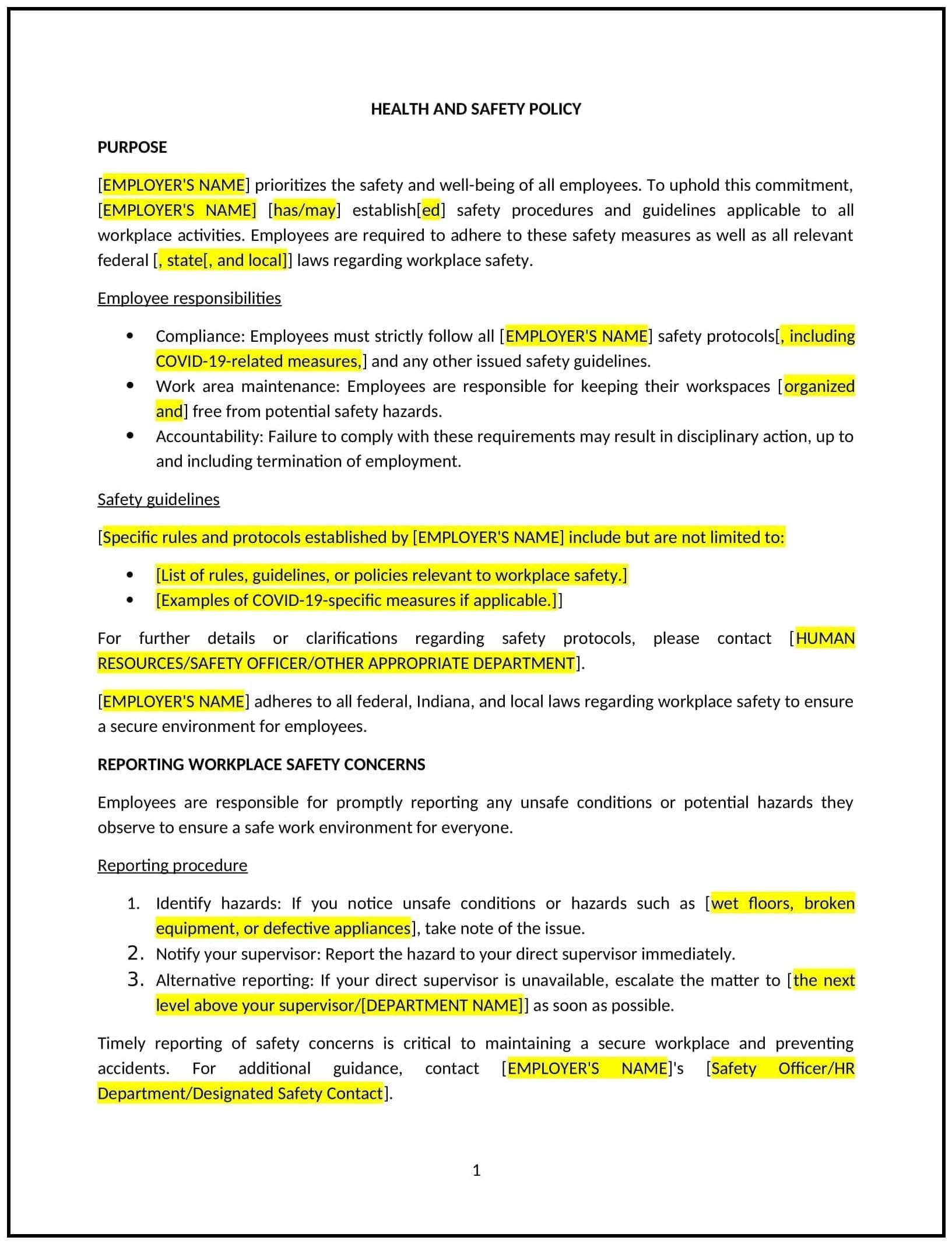
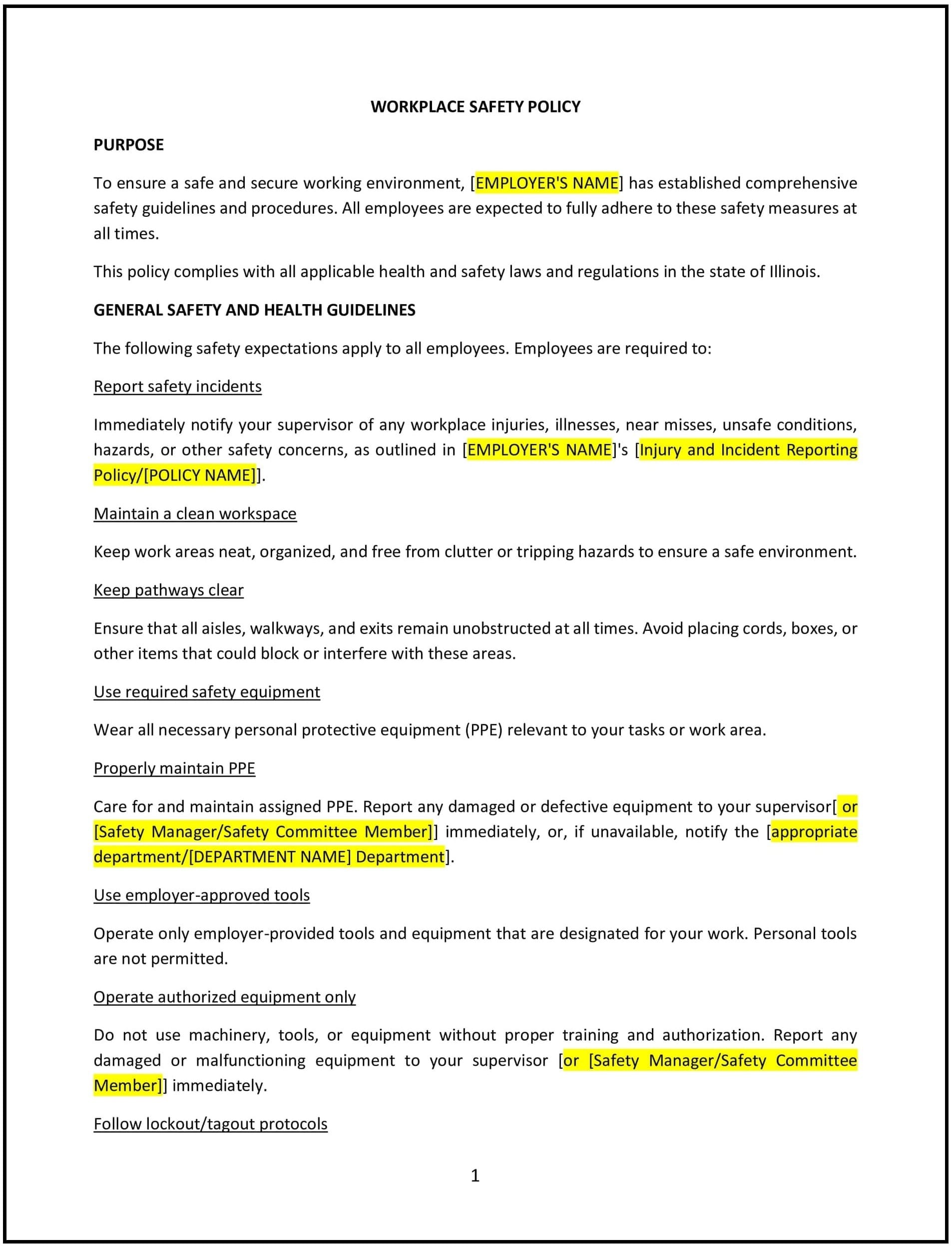
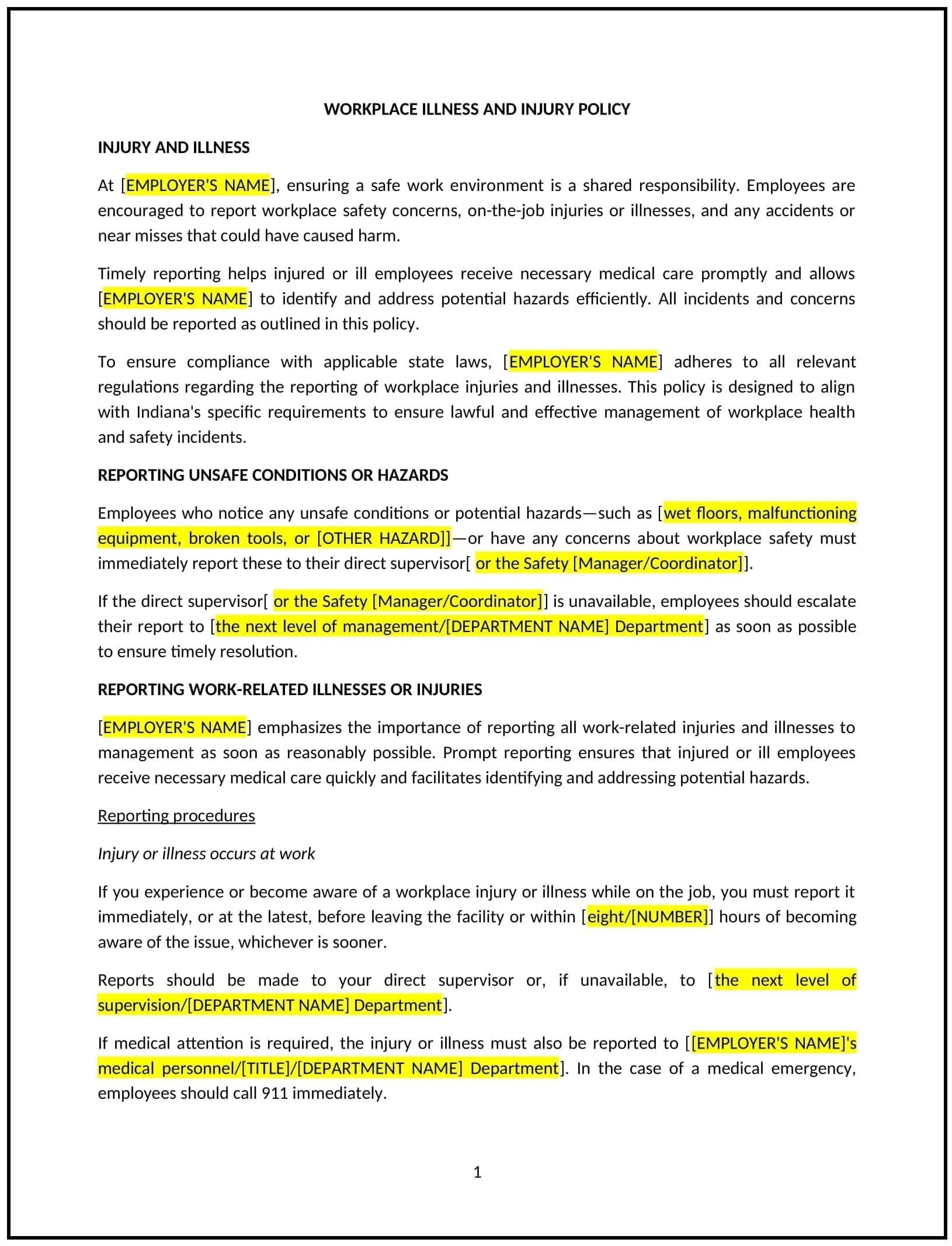
Similar templates
Where deals go from offer to paid
