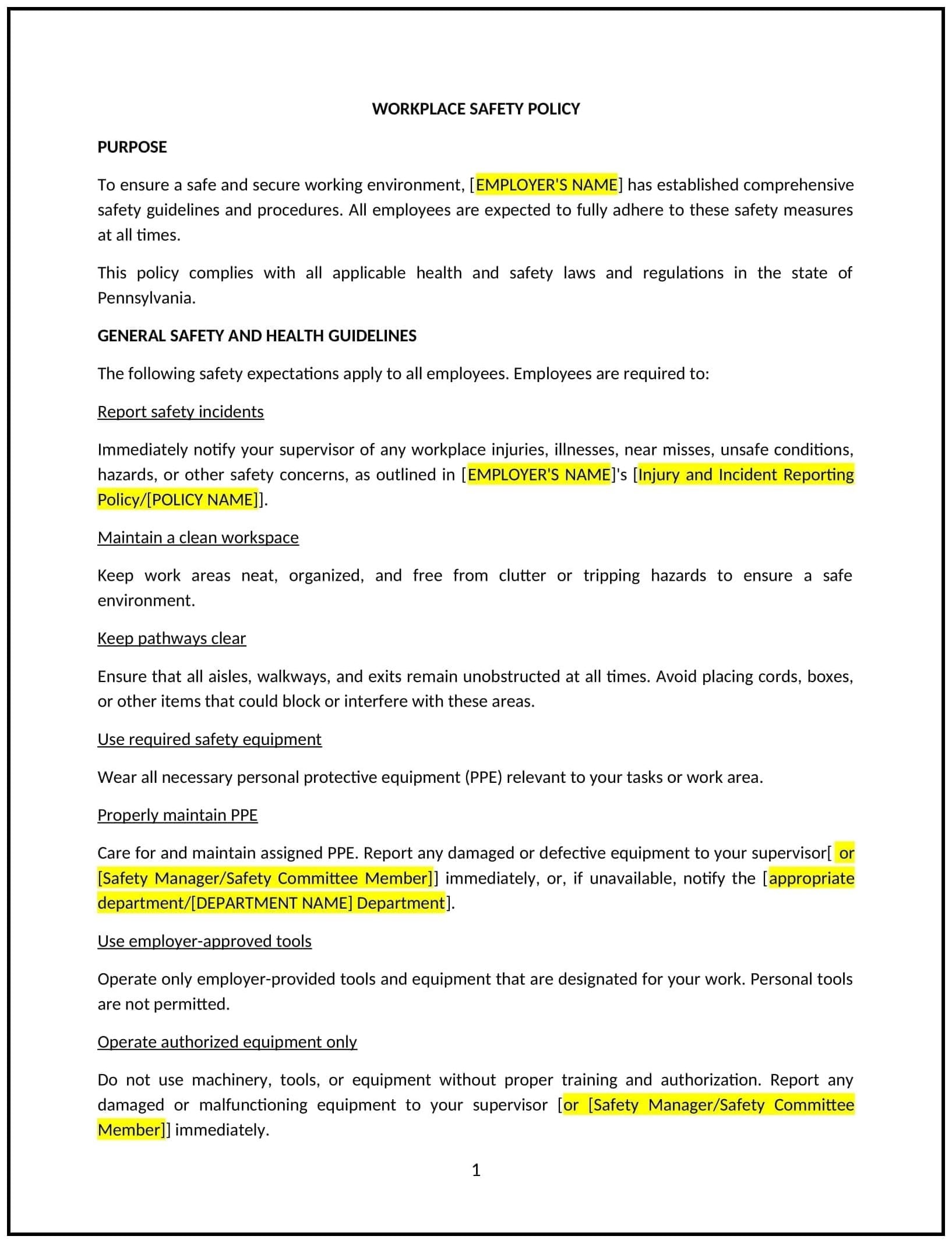
Workplace safety policy (Pennsylvania): Free template
Establishes procedures and responsibilities to protect employee health and ensure a safe work environment.
- Policies
- Pennsylvania
Workplace safety policy (Pennsylvania)
This workplace safety policy is designed to help businesses in Pennsylvania establish guidelines to maintain a safe and healthy work environment for all employees. By outlining responsibilities, preventive measures, and reporting procedures, this template helps businesses reduce risks and align with Pennsylvania and federal safety regulations, including OSHA standards.
By using this template, businesses can protect employees, improve compliance, and foster a culture of safety.
How to use this workplace safety policy (Pennsylvania)
- Define safety expectations: Clearly specify safety standards, such as maintaining clean workspaces, using personal protective equipment (PPE), and following emergency protocols.
- Establish roles and responsibilities: Assign safety-related responsibilities to employees, supervisors, and management to ensure accountability.
- Include preventive measures: Provide strategies for hazard identification, regular safety training, and implementing workplace inspections.
- Detail reporting procedures: Outline how employees can report unsafe conditions, accidents, or near-misses, including designated contacts and required documentation.
- Reflect Pennsylvania-specific considerations: Tailor the policy to address industry-specific risks or state safety requirements, such as those relevant to manufacturing or energy sectors.
Benefits of using a workplace safety policy (Pennsylvania)
A well-structured workplace safety policy supports employee protection and operational efficiency. Here's how it helps:
- Promotes employee well-being: Reduces the risk of workplace injuries, illnesses, and accidents.
- Improves compliance: Aligns with Pennsylvania and federal safety regulations, minimizing legal risks and penalties.
- Encourages accountability: Establishes clear expectations for maintaining workplace safety and reporting hazards.
- Enhances workplace morale: Demonstrates the organization’s commitment to employee safety and well-being.
- Reflects local needs: Considers Pennsylvania-specific safety concerns, such as regional industry risks or weather-related hazards.
Tips for using a workplace safety policy (Pennsylvania)
- Communicate the policy: Share the policy with employees during onboarding and ensure it is easily accessible for reference.
- Provide training: Offer regular safety training tailored to the organization’s specific risks and workplace hazards.
- Conduct inspections: Perform routine workplace inspections to identify and address potential hazards.
- Document incidents: Maintain thorough records of workplace accidents, injuries, and corrective actions to ensure accountability.
- Review periodically: Update the policy to reflect changes in Pennsylvania safety laws, workplace practices, or employee needs.
Frequently asked questions (FAQs)
Similar templates
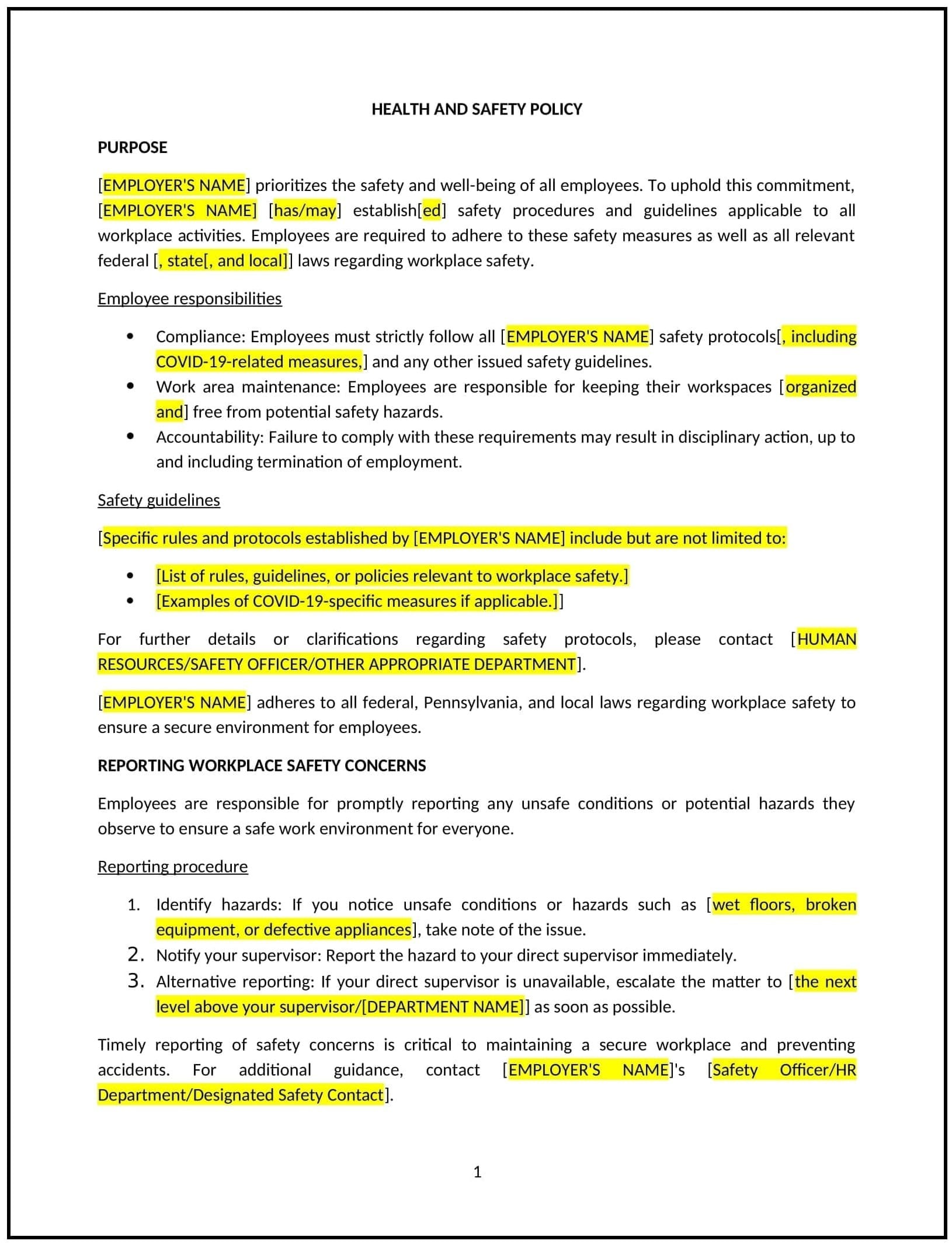
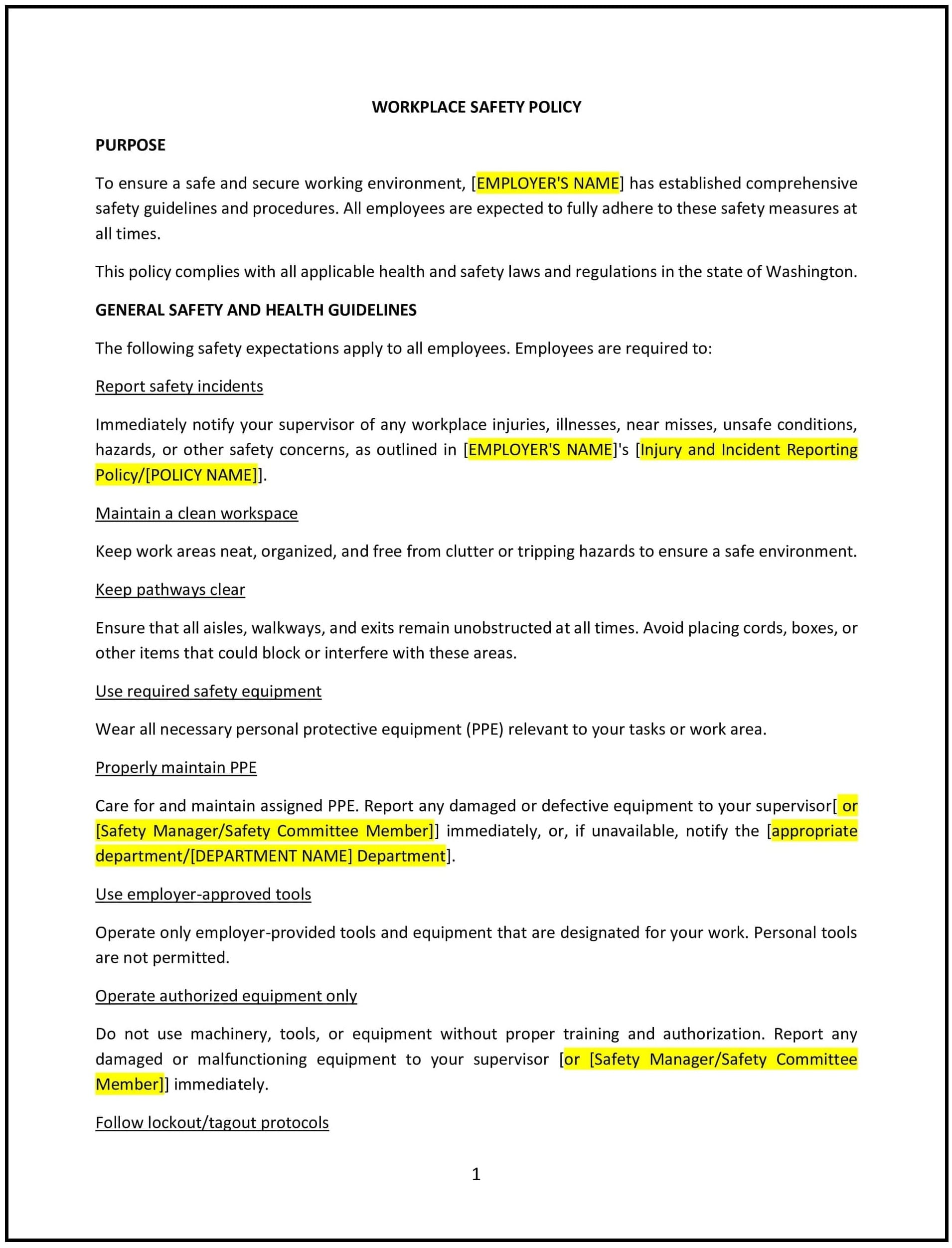
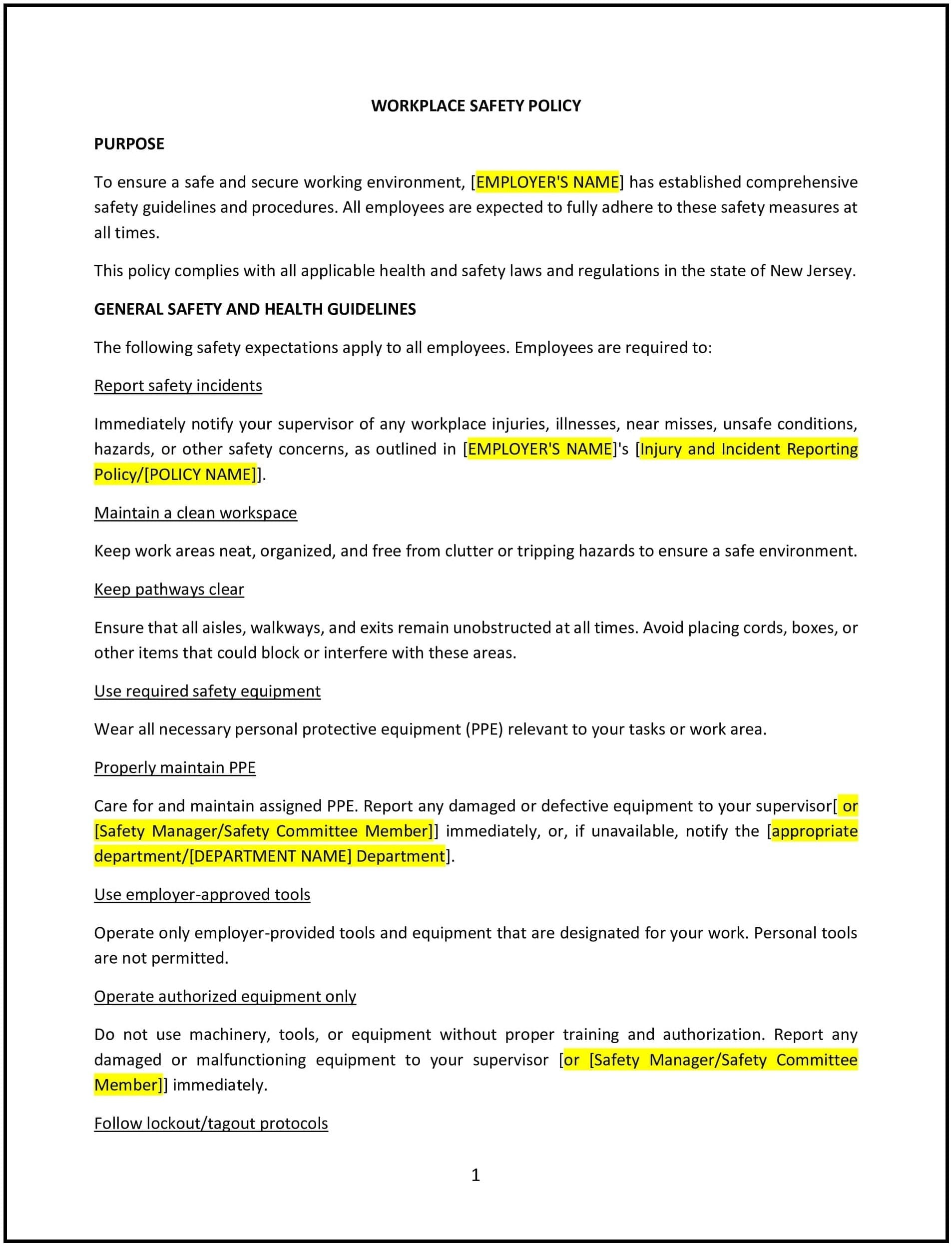
Where deals go from offer to paid
