Continuing-education program proposal: Free template
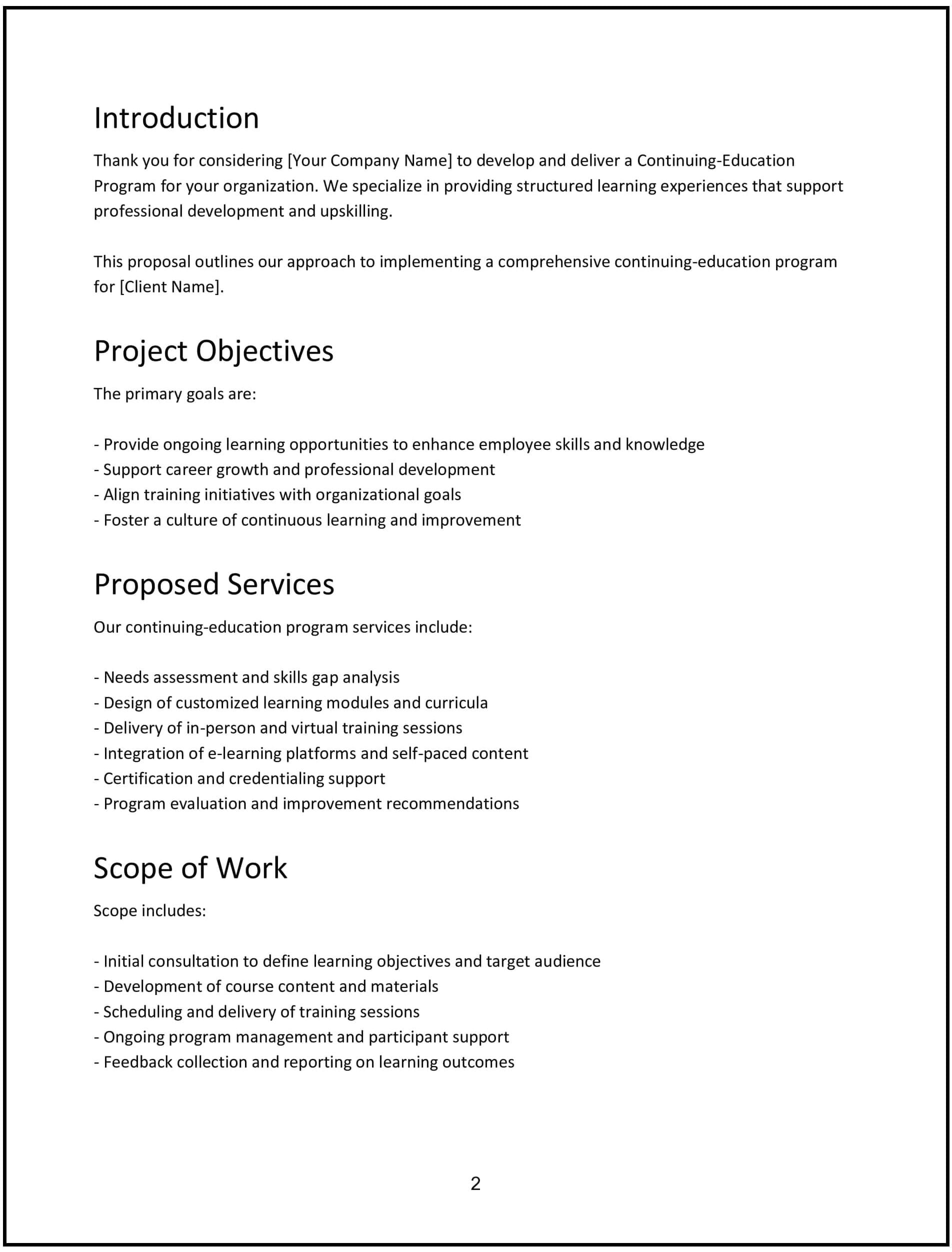
Proposes a continuing education program, covering curriculum development, delivery methods, certification processes, and participant engagement strategies.
- Proposal
Customize this free continuing-education program proposal with Cobrief
Open this free continuing-education program proposal in Cobrief and start editing it instantly using AI. You can adjust the tone, structure, and content based on your industry, audience, and credentialing requirements. You can also use AI to review your draft — spot gaps, tighten language, and improve clarity before sending.
Once you're done, send, download, or save the proposal in one click — no formatting or setup required.
This template is fully customizable and built for real-world use — ideal for pitching CE programs to professional associations, healthcare institutions, corporate HR teams, or academic partners. Whether you’re offering online modules, live workshops, or hybrid sessions, this version gives you a structured head start and removes the guesswork.
What is a continuing-education program proposal?
A continuing-education (CE) program proposal outlines your plan to design, deliver, and manage professional learning experiences that meet industry standards for certification, licensure, or skill development. It typically includes program objectives, curriculum design, delivery method, accreditation alignment, timeline, and pricing.
This type of proposal is commonly used:
- When proposing CE content for licensed professionals (e.g., healthcare, law, finance, engineering)
- To fulfill HR or compliance requirements for staff development
- In partnership with credentialing bodies or regulatory boards
It helps organizations keep teams qualified, competitive, and in good standing with certification requirements.
A strong proposal helps you:
- Align the learning experience with practical goals and professional standards
- Clarify delivery format, engagement style, and credential value
- Demonstrate experience in education design and regulatory compliance
- Set expectations for content review, participant tracking, and reporting
Why use Cobrief to edit your proposal
Cobrief helps you create a polished, easy-to-tailor proposal fast — with AI tools and no formatting delays.
- Edit the proposal directly in your browser: No extra software or formatting required — just start writing.
- Rewrite sections with AI: Instantly adjust tone, structure, or jargon to match the client’s sector and learner base.
- Run a one-click AI review: Let AI flag unclear outcomes, missing details, or weak phrasing.
- Apply AI suggestions instantly: Accept changes line by line or apply all edits in one go.
- Share or export instantly: Send the proposal directly or download a clean PDF or DOCX version for delivery.
You’ll spend less time polishing and more time pitching.
When to use this proposal
Use this continuing-education program proposal when:
- Proposing CE content to a professional association, hospital, HR team, or licensing board
- Offering courses or modules to support required certifications or ongoing licensure
- Delivering internal CE programs for employee retention or career advancement
- Packaging CE alongside conferences, webinars, or training platforms
- Supporting compliance or workforce development initiatives
It’s especially useful when clients need education that meets external accreditation or internal development goals.
What to include in a continuing-education program proposal
Use this template to walk the client through your curriculum, learning outcomes, delivery model, and compliance alignment — all in clear, plain-smart language.
- Project overview: Describe the purpose of the CE program — whether for certification, licensure renewal, skill development, or professional growth — and who it’s designed for.
- Learning objectives: Outline the specific competencies or knowledge areas the program addresses and how they map to professional or regulatory requirements.
- Curriculum design: Summarize the content structure — number of modules, instructional formats (e.g., video, live session, reading), and pacing options.
- Delivery method: Explain how learners will access the program — online portal, in-person session, hybrid format — and whether it’s self-paced or scheduled.
- Accreditation and compliance: Note whether the content meets the requirements of licensing boards or CE accrediting bodies (e.g., CME, CLE, CPE, CEUs).
- Evaluation and tracking: Describe how participation, engagement, and completion will be monitored and reported — including quizzes, feedback, and certificates.
- Timeline: Provide a schedule for program development, review, launch, and optional follow-up or cohort sessions.
- Pricing: Present your pricing model — per learner, flat project fee, or license-based. Include optional services like content customization or platform integration.
- Next steps: End with a clear CTA — such as reviewing the curriculum plan, confirming accreditation requirements, or scheduling a kickoff call.
How to write an effective continuing-education program proposal
This proposal should feel credible, structured, and learner-focused — especially for clients concerned with accreditation, outcomes, and engagement.
- Start with learner value: Show how the program supports real-world development or credential maintenance.
- Make outcomes concrete: Focus on specific skills, competencies, or professional tasks the program improves.
- Match the industry tone: Adjust formality and language for medical, legal, academic, or corporate audiences.
- Emphasize accreditation where needed: Clarify how the program aligns with required CE standards and audit-ready records.
- Keep it flexible and scalable: Highlight options for delivery formats, pacing, and integrations.
- End with a clear next step: Help the client act quickly — don’t leave them guessing about what comes next.
Frequently asked questions (FAQs)
Similar templates
Where deals go from offer to paid
