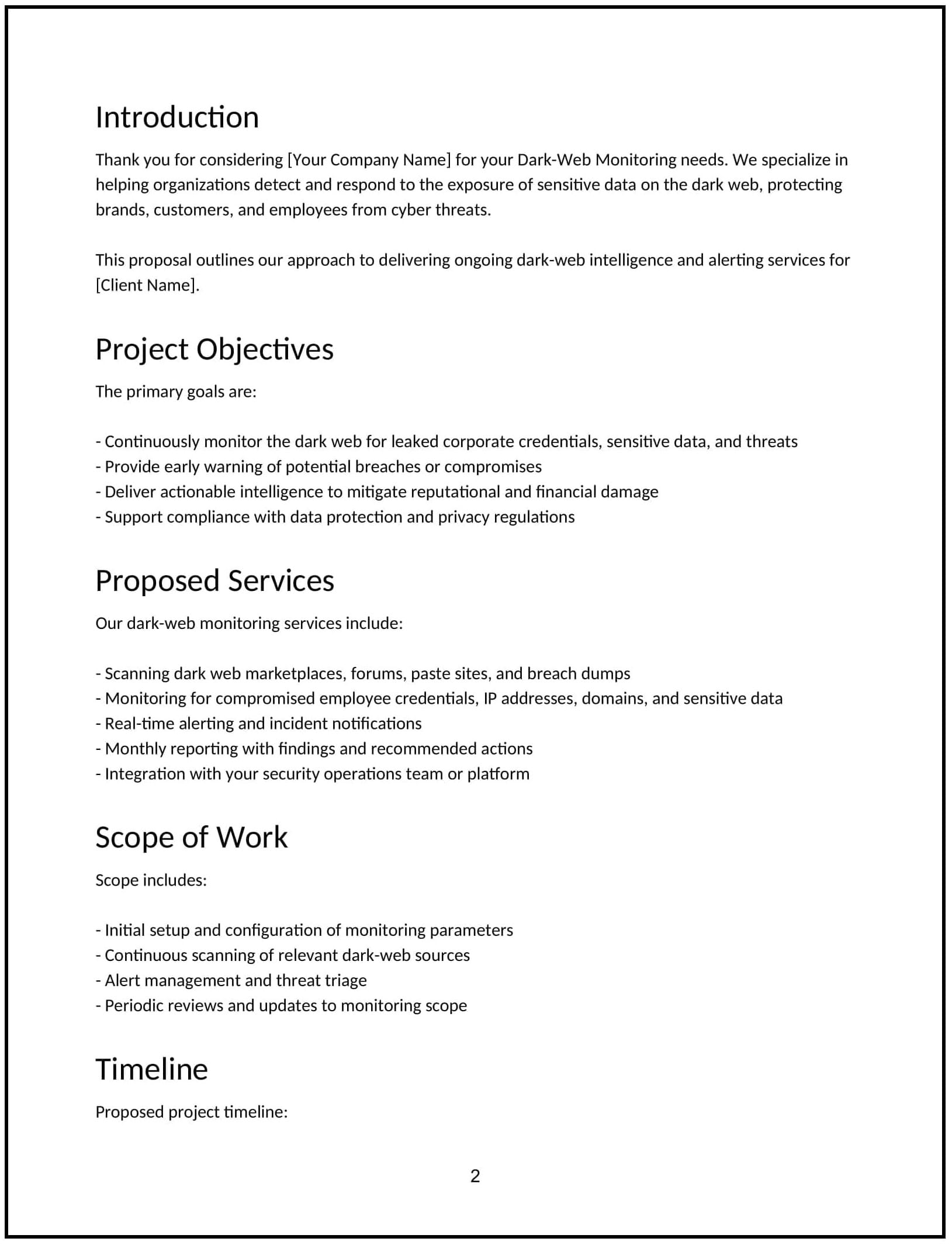
Dark web monitoring service proposal: Free template
Proposes a dark web monitoring service, detailing threat detection methods, compromised data alerts, response protocols, and reporting tools to protect sensitive business information.
- Proposal
Customize this free dark web monitoring service proposal with Cobrief
Open this free dark web monitoring service proposal in Cobrief and start editing it instantly using AI. You can adjust the tone, structure, and content based on the client’s risk profile, industry, and security maturity. You can also use AI to review your draft — spot gaps, tighten language, and improve clarity before sending.
Once you're done, send, download, or save the proposal in one click — no formatting or setup required.
This template is fully customizable and built for real-world use — ideal for pitching dark-web monitoring to IT leads, CISOs, compliance managers, or high-risk exec teams. Whether it’s a one-time exposure scan or part of a continuous threat-monitoring package, this version gives you a structured head start and removes the guesswork.
What is a dark web monitoring service proposal?
A dark web monitoring service proposal outlines your plan to detect and report on exposed credentials, sensitive data, or internal assets found on dark-web forums, marketplaces, and breach dumps. It typically includes credential exposure scanning, alerting, executive summaries, and follow-up recommendations.
This type of proposal is commonly used:
- When companies want to proactively monitor for stolen credentials or breached data
- After a known breach, phishing attack, or employee credential leak
- To support compliance efforts like SOC 2, HIPAA, ISO 27001, or cybersecurity insurance
- As part of a broader threat detection or security awareness program
It helps clients spot early signs of compromise — and respond before damage escalates.
A strong proposal helps you:
- Monitor exposed credentials (emails, passwords, usernames) tied to company domains
- Detect mentions of internal tools, IPs, or sensitive data on marketplaces or forums
- Deliver high-signal alerts with context — not noisy dashboards
- Guide remediation with practical steps (e.g., resets, MFA rollout, account lockdowns)
Why use Cobrief to edit your proposal
Cobrief helps you write structured, high-trust proposals — fast. No formatting issues or boilerplate overload.
- Edit the proposal directly in your browser: Stay focused on clarity, not layout.
- Rewrite sections with AI: Instantly adjust tone for CISOs, IT leads, or business owners.
- Run a one-click AI review: Let AI flag unclear scope, soft positioning, or vague deliverables.
- Apply AI suggestions instantly: Accept edits line by line or across the full proposal.
- Share or export instantly: Send via Cobrief or download a clean PDF or DOCX version.
You’ll move from outline to delivery-ready copy in less time — with stronger framing.
When to use this proposal
Use this dark web monitoring service proposal when:
- A company wants early warning if employee credentials or internal data are leaked
- They’ve experienced phishing, credential stuffing, or ransomware targeting
- Compliance, legal, or insurance requires exposure monitoring
- Security awareness is growing, but there’s no visibility into external threats
- You’re adding threat detection to a broader security or managed services offering
It’s especially useful when clients feel exposed — but don’t know what’s already out there.
What to include in a dark web monitoring service proposal
Use this template to walk the client through your monitoring approach — from setup to alerting — in clear, plain-smart language.
- Project overview: Frame the threat — credential leaks, marketplace data, breach re-use — and how your service closes the visibility gap.
- Monitoring scope: Define what’s included — e.g., company domains, email addresses, user handles, IP ranges, vendor mentions.
- Data sources: Briefly describe how your system scans dark-web forums, paste sites, credential dumps, and breach marketplaces (without revealing tooling specifics).
- Alerting and reporting: Explain how alerts are generated, delivered (email, dashboard, report), and triaged — including severity levels.
- Remediation support: Describe what happens when data is found — password reset guidance, MFA enforcement, access control reviews.
- Optional continuous monitoring: Offer real-time or recurring scans for ongoing protection, if scoped.
- Timeline and phases: Break into setup, scanning, review, and reporting — with typical duration for one-time or recurring services.
- Pricing: Offer flat-fee or subscription pricing based on frequency, user count, or monitored domains. Include optional remediation or advisory add-ons.
- Next steps: End with a CTA — such as confirming domain list, sharing employee directory, or scheduling kickoff.
How to write an effective dark web monitoring proposal
This proposal should feel low-friction, credible, and proactive — especially for clients without in-house security teams.
- Focus on visibility, not fear: Emphasize control and insight, not paranoia or doomscrolling.
- Don’t overpromise: Make clear this is monitoring — not takedown or full threat hunting.
- Keep results actionable: Always show how you’ll help them respond — not just send alerts and walk away.
- Align with real risks: Highlight credential reuse, phishing, or ransomware as practical use cases.
- Offer continuity: Give clients the option to turn a one-time scan into a recurring service with monthly or quarterly coverage.
Frequently asked questions (FAQs)
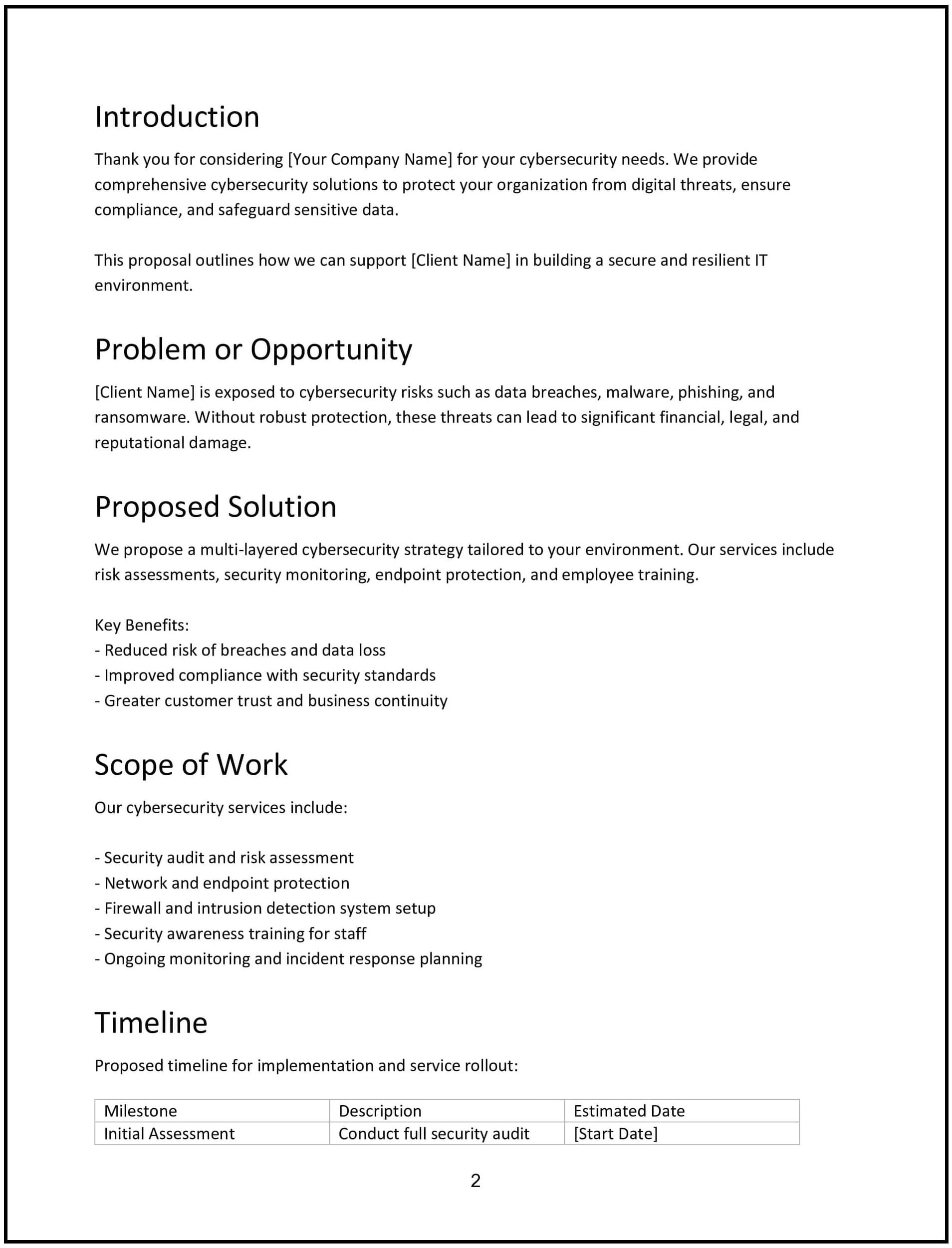
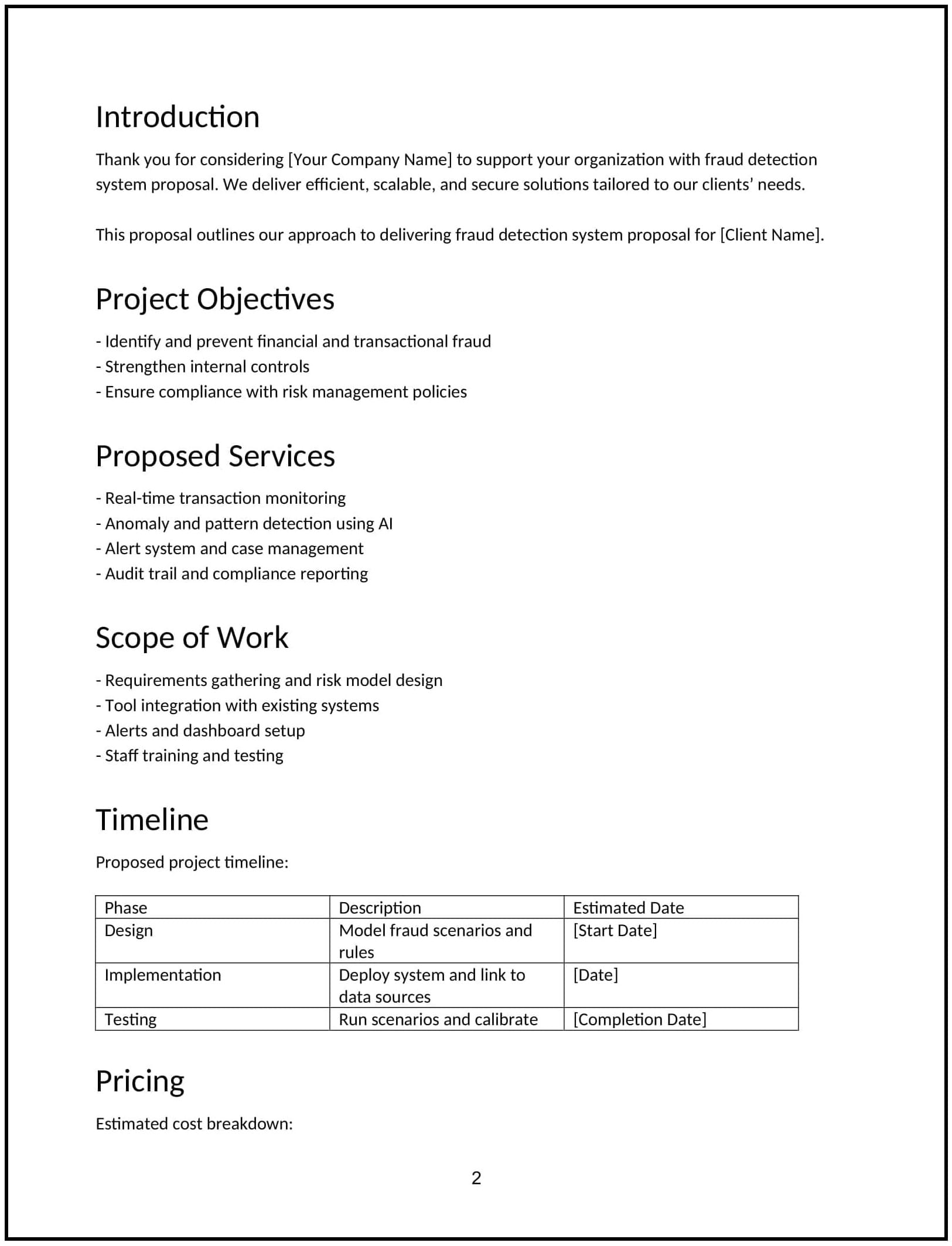
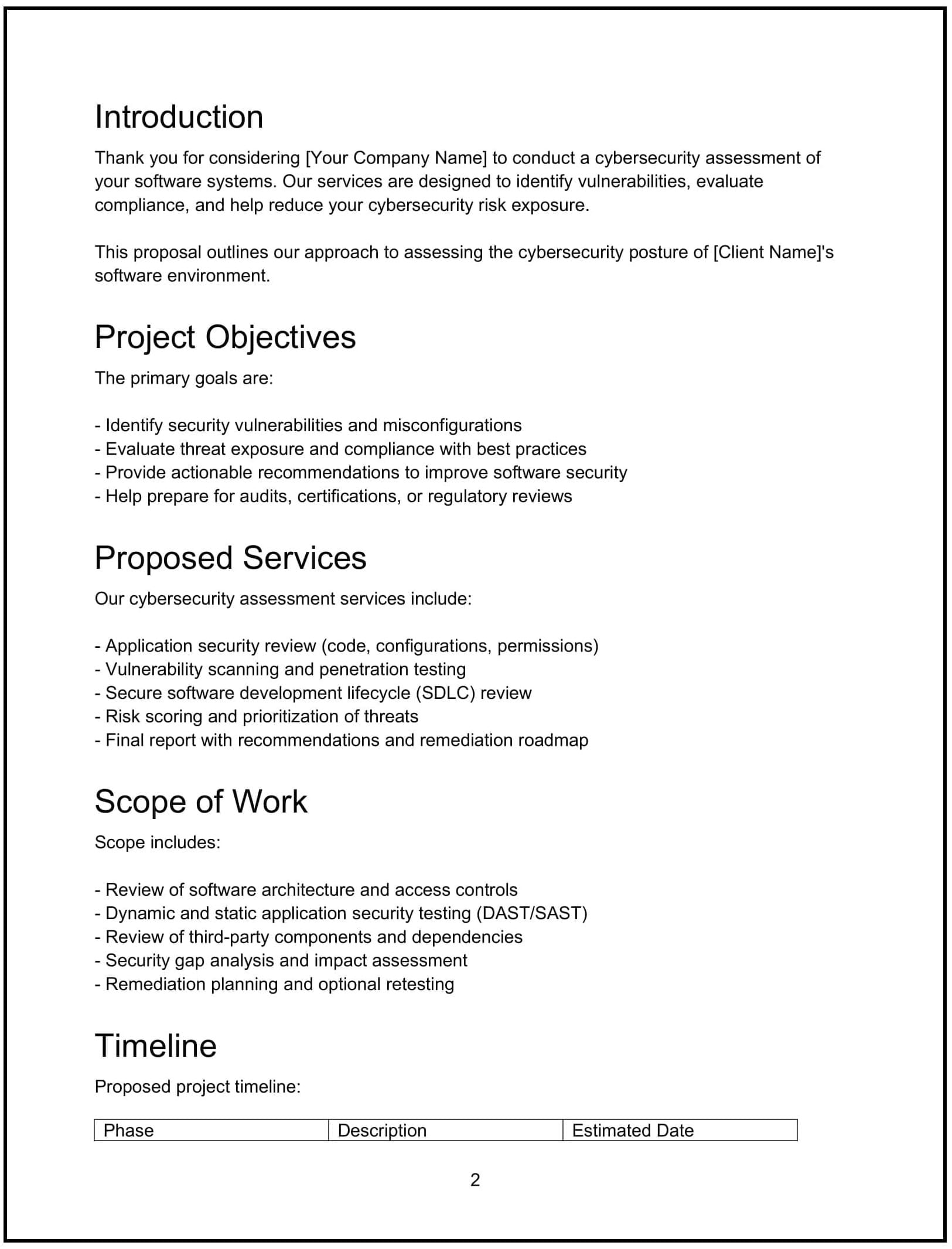
Similar templates
Where deals go from offer to paid
