Endpoint security implementation proposal: Free template
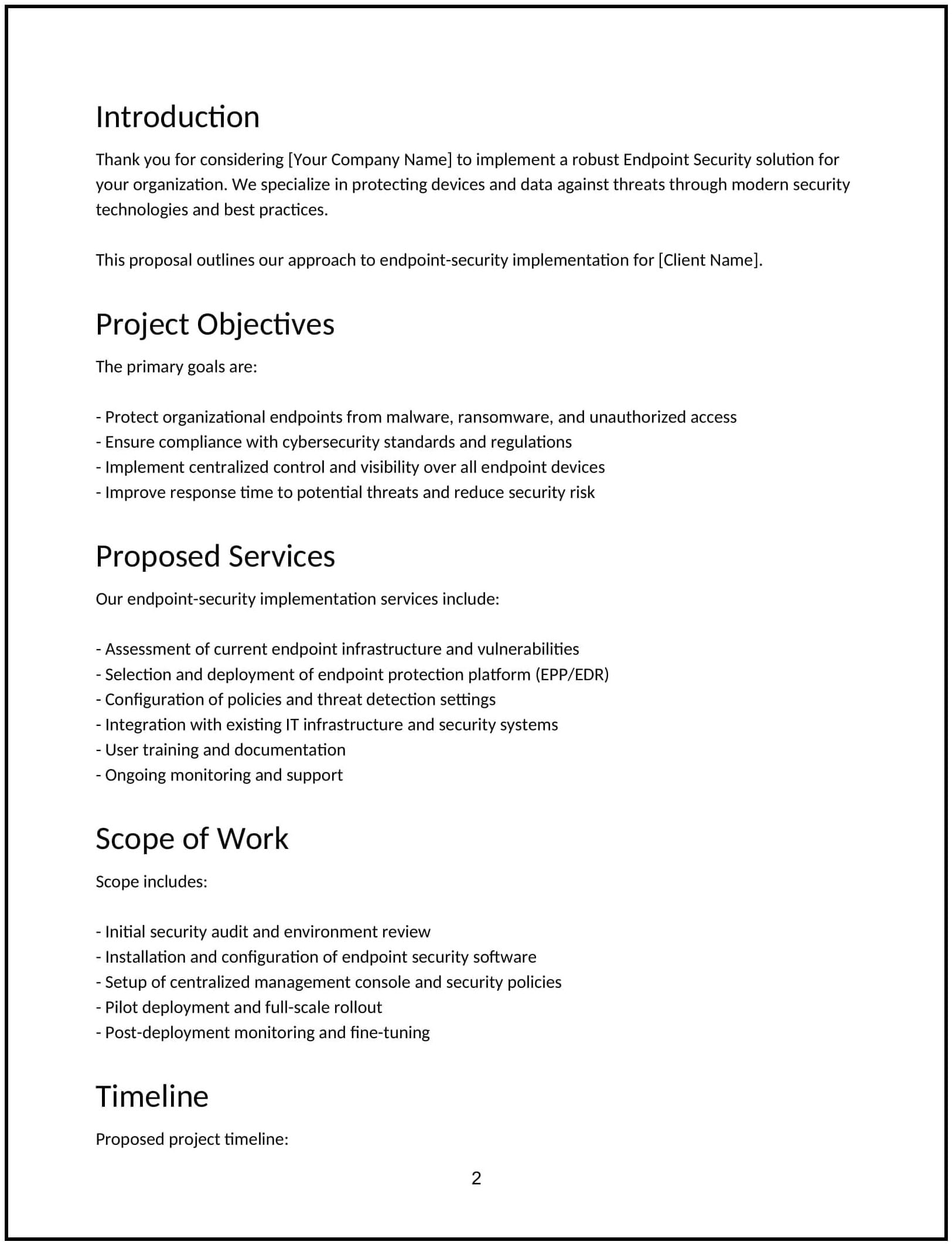
Proposes an endpoint security implementation plan, outlining device protection measures, threat detection tools, policy enforcement, and monitoring systems to safeguard organizational networks.
- Proposal
Customize this free endpoint security implementation proposal with Cobrief
Open this free endpoint-security implementation proposal in Cobrief and start editing it instantly using AI. You can adjust the tone, structure, and content based on the client’s IT environment, threat profile, and compliance needs. You can also use AI to review your draft — spot gaps, tighten language, and improve clarity before sending.
Once you're done, send, download, or save the proposal in one click — no formatting or setup required.
This template is fully customizable and built for real-world use — ideal for pitching endpoint-security setups to IT leads, CISOs, founders, or operations teams. Whether you’re deploying tools for the first time or replacing legacy protection, this version gives you a structured head start and removes the guesswork.
What is an endpoint security implementation proposal?
An endpoint-security implementation proposal outlines your plan to secure devices like laptops, desktops, mobile phones, and servers against unauthorized access, malware, and data loss. It typically includes threat analysis, tool selection, policy configuration, deployment, and monitoring setup.
This type of proposal is commonly used:
- When companies are growing and need to formalize cybersecurity controls
- After a security incident, audit, or compliance review
- To replace outdated antivirus or point tools with modern EDR or XDR solutions
- As part of a broader IT modernization or Zero Trust security strategy
It helps clients reduce risk, improve visibility, and protect sensitive data across all employee devices.
A strong proposal helps you:
- Recommend appropriate tools based on environment and budget (e.g., CrowdStrike, SentinelOne, Microsoft Defender, Jamf)
- Roll out consistent policies across all endpoints — BYOD and company-owned
- Configure automated alerts, response actions, and reporting
- Ensure compliance with frameworks like ISO 27001, NIST, HIPAA, or SOC 2
Why use Cobrief to edit your proposal
Cobrief helps you write structured, secure-by-default proposals without wasting time on formatting or blank docs.
- Edit the proposal directly in your browser: Just focus on content — formatting is handled.
- Rewrite sections with AI: Instantly adjust tone for CTOs, security leads, or general ops teams.
- Run a one-click AI review: Let AI flag scope creep, jargon, or unclear deliverables.
- Apply AI suggestions instantly: Accept changes line by line or across the full document.
- Share or export instantly: Send via Cobrief or download a clean PDF or DOCX file.
You’ll go from scoping call to delivery-ready proposal faster — and with clearer framing.
When to use this proposal
Use this endpoint-security implementation proposal when:
- A client has no endpoint protection or is relying on outdated antivirus tools
- They're undergoing SOC 2, HIPAA, or ISO 27001 certification and need endpoint control
- Their team has scaled and BYOD devices are introducing unmanaged risk
- They want centralized control, visibility, and automated response for all endpoints
- A past incident exposed gaps in device security, access control, or data protection
It’s especially useful when the client has some tools in place — but no unified or enforceable policy.
What to include in an endpoint security implementation proposal
Use this template to walk the client through your plan — from tool selection to deployment — in clear, structured language.
- Project overview: Frame the issue — unmanaged devices, inconsistent protection, or compliance risk — and how your implementation solves it.
- Environment assessment: Describe how you’ll review device types, OS mix, remote access patterns, and existing security tools.
- Tool selection: Recommend endpoint protection tools based on threat profile, team size, and budget. Justify any paid tools vs. built-in options.
- Policy configuration: Define security baselines — e.g., encryption, patching, app control, USB restrictions, firewall settings.
- Device enrollment and deployment: Explain how you’ll roll out agents or profiles across Windows, macOS, mobile, or Linux endpoints.
- Integration and monitoring: Describe how the solution will plug into SIEMs, MDM platforms, or alerting tools for ongoing visibility.
- Incident response and alerting: Set up playbooks or automated actions for malware detection, data exfiltration, or suspicious behavior.
- Training and handoff: Include a short guide or session so IT or ops can manage and extend the system going forward.
- Timeline and phases: Break into discovery, tool setup, pilot, full rollout, and review — with time estimates.
- Pricing: Offer fixed-fee or phase-based pricing. Separate tooling costs from implementation if applicable.
- Next steps: End with a CTA — such as sharing device counts, approving a pilot tool, or scheduling a kickoff call.
How to write an effective endpoint security implementation proposal
This proposal should feel technically credible, tightly scoped, and operationally grounded — especially for busy IT teams or security-conscious leadership.
- Anchor in risk reduction: Frame each step around risk — not just technical setup.
- Don’t oversell: Many SMBs don’t need full XDR — match tooling to budget and risk tolerance.
- Clarify what’s covered (and what’s not): Define what’s included — agent setup, policy config — and what’s out of scope (e.g., phishing training).
- Minimize friction: Focus on rollout methods that don’t overwhelm internal teams — especially for remote environments.
- Make reporting easy: If tools include dashboards or alerts, highlight them clearly for non-technical leaders.
Frequently asked questions (FAQs)
Similar templates
Where deals go from offer to paid
