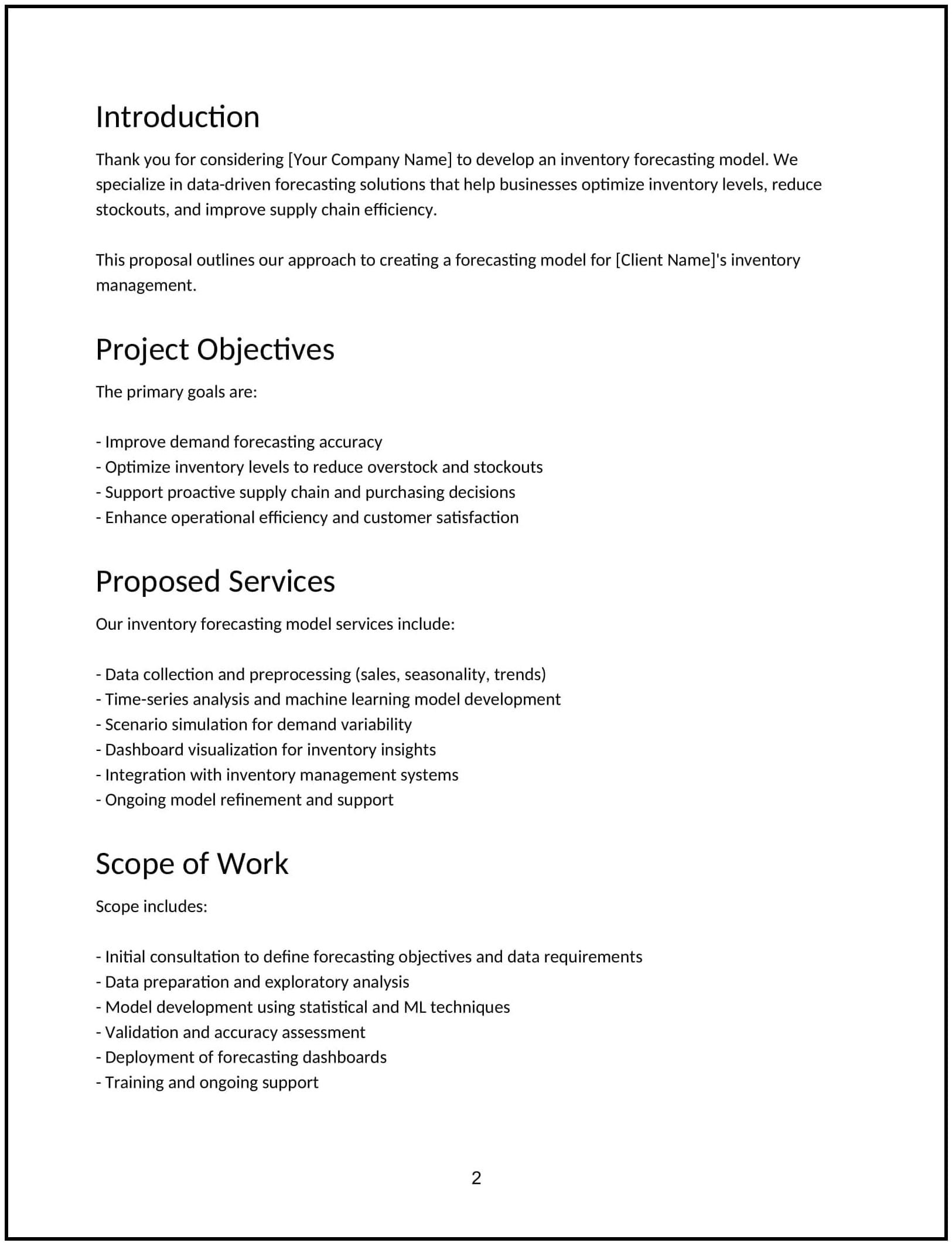
Inventory forecasting model proposal: Free template
Proposes an inventory forecasting model, detailing data inputs, predictive algorithms, accuracy goals, and integration plan.
- Proposal
Customize this free inventory forecasting model proposal with Cobrief
Open this free inventory forecasting model proposal in Cobrief and start editing it instantly using AI. You can adjust the tone, structure, and content based on your client’s product range, sales channels, and seasonality. You can also use AI to review your draft — spot gaps, tighten language, and improve clarity before sending.
Once you're done, send, download, or save the proposal in one click — no formatting or setup required.
This template is fully customizable and built for real-world use — ideal for pitching demand forecasting and inventory planning solutions to retailers, wholesalers, e-commerce brands, or supply chain teams. Whether you’re creating proposals daily or occasionally, this version gives you a structured head start and removes the guesswork.
What is an inventory forecasting model proposal?
An inventory forecasting model proposal outlines your plan to predict future stock needs using historical sales data, seasonality trends, and predictive modeling. It typically includes data review, model selection (e.g. time series, regression, ML-based), validation, and delivery of a functional forecast tool or integration.
This type of proposal is commonly used by data analysts, supply chain consultants, or demand planning teams helping businesses optimize inventory levels, reduce stockouts, and minimize overstock.
A strong proposal helps you:
- Reduce working capital locked in unsold inventory.
- Improve inventory availability during high-demand periods.
- Align purchasing and production with actual sales trends.
- Build trust in forecasting through clear logic and transparent metrics.
If you offer analytics, planning, or AI-driven forecasting services, this is the right kind of proposal to use.
Why use Cobrief to edit your proposal
Instead of copying a static template, you can use Cobrief to tailor and refine your proposal directly in your browser — with AI built in to help along the way.
- Edit the proposal directly in your browser: No setup or formatting required — just click and start customizing.
- Rewrite sections with AI: Highlight any sentence and choose from actions like shorten, expand, simplify, or change tone.
- Run a one-click AI review: Get instant suggestions to improve clarity, fix vague sections, or tighten your message.
- Apply AI suggestions instantly: Review and accept individual AI suggestions, or apply all improvements across the proposal in one click.
- Share or export instantly: Send your proposal through Cobrief or download a clean PDF or DOCX version when you’re done.
Cobrief helps you create a polished, persuasive proposal — without wasting time on formatting or second-guessing your copy.
When to use this proposal
This inventory forecasting model proposal works well in scenarios like:
- When a business wants to replace manual stock planning with predictive tools.
- When dealing with frequent stockouts or excess inventory.
- When preparing for seasonal surges or new product launches.
- When aligning procurement or manufacturing with smarter forecasts.
Use this proposal whenever you want to show how data-driven planning leads to better margins, fewer errors, and smoother operations.
What to include in an inventory forecasting model proposal
Each section of the proposal is designed to help you explain your offer clearly and professionally. Here's how to use them:
- Executive summary: Highlight how the model will improve inventory accuracy, reduce waste, and drive more reliable fulfillment and purchasing decisions.
- Scope of work: Include historical data review, feature engineering (e.g. promo flags, seasonality), model design (e.g. ARIMA, Prophet, XGBoost), backtesting and validation, forecast visualization, and recommendations for application (e.g., order planning, buffer stock levels).
- Timeline: Break into phases — discovery, data prep, modeling, testing, delivery, and rollout. Most projects run 3–6 weeks depending on data quality and number of SKUs.
- Pricing: Offer project-based or milestone pricing. Add-ons can include dashboard integration, automated reforecasting, or inventory health tracking.
- Terms and conditions: Clarify data access, model ownership, update frequency, performance limitations, and ongoing support (if applicable).
- Next steps: Include a CTA like “Approve to begin data intake and trend analysis” or “Schedule a kickoff session to align on forecasting priorities.”
How to write an effective inventory forecasting proposal
Use these best practices to highlight reliability and operational value:
- Make the client the focus: Frame the work around solving real issues like missed sales, slow inventory turnover, or supply chain delays.
- Personalize where it matters: Reference known seasonality, SKU volatility, or platform-specific constraints (e.g., Shopify, NetSuite).
- Show results, not just logic: Share outcomes like “Cut inventory holding costs by 15%” or “Reduced stockouts by 30% in 60 days.”
- Be clear and confident: Explain forecasting techniques in simple terms — focus on outcomes, not algorithms.
- Keep it skimmable: Use bolded section headers, bullets, and timelines that help supply chain or ops leaders scan quickly.
- End with momentum: Offer a light, low-friction first step — like uploading sales history or reviewing SKU categories.
Frequently asked questions (FAQs)
Similar templates
Where deals go from offer to paid
