Got contracts to review? While you're here for proposals, let Cobrief make contract review effortless—start your free review now.
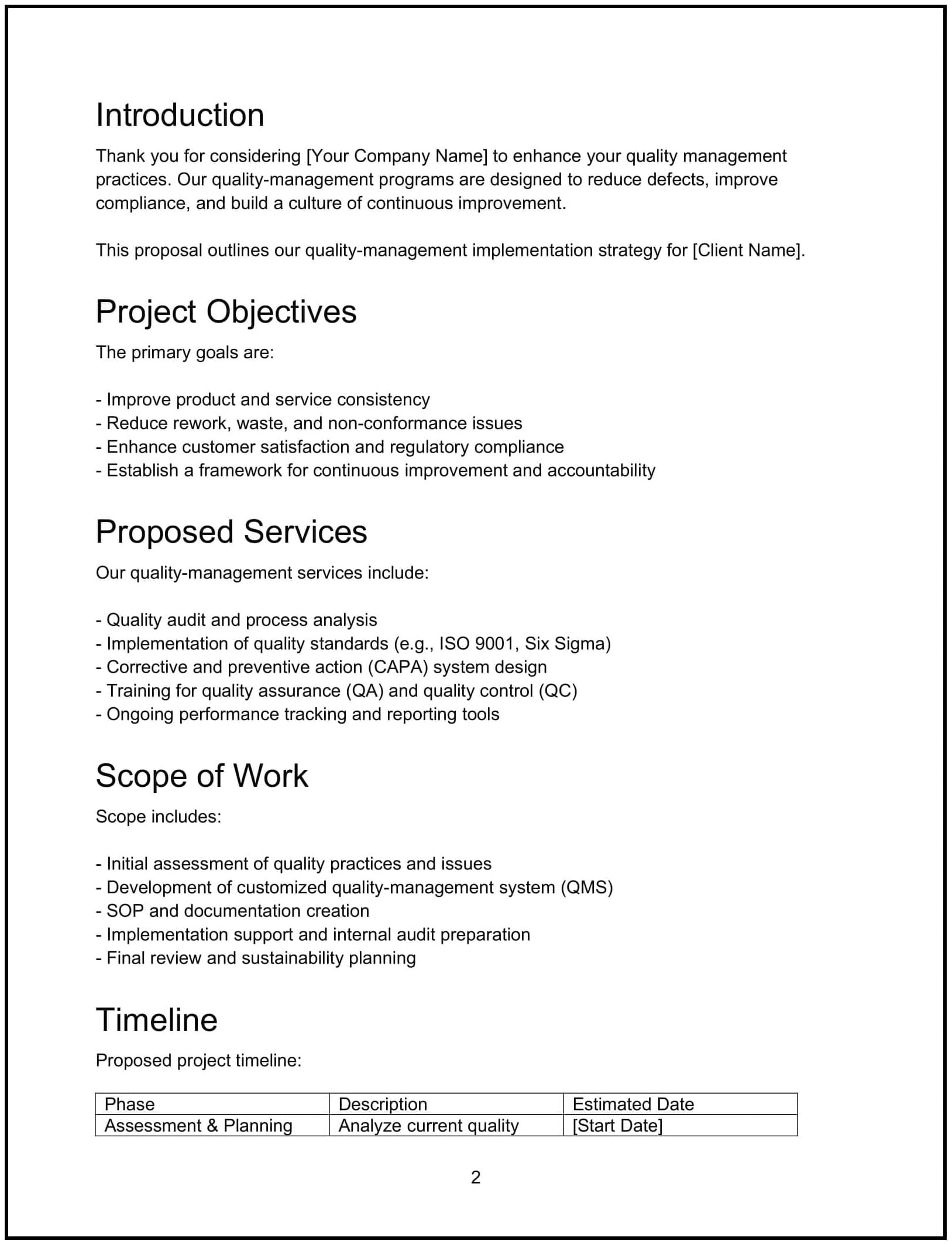
Customize this template for free
Customize this free quality management proposal with Cobrief
Open this free quality management proposal in Cobrief and start editing it instantly using AI. You can adjust the tone, structure, and content based on your offer, the client’s quality goals, and the specific challenges they face. You can also use AI to review your draft — spot gaps, tighten language, and improve clarity before sending.
Once you're done, send, download, or save the proposal in one click — no formatting or setup required.
This template is fully customizable and built for real-world use — ideal for pitching quality assurance programs, process audits, and continuous improvement initiatives. Whether you’re creating proposals regularly or occasionally, this version gives you a structured head start and removes the guesswork.
What is a quality management proposal?
A quality management proposal is a document used to present a clear plan for improving or establishing quality standards and processes within an organization. It covers your understanding of the client’s current challenges, proposed quality frameworks or tools, training and audit plans, and expected improvements.
Typically shared after discovery sessions or preliminary audits, this proposal helps stakeholders align on objectives, scope, methodology, timelines, and budget.
This proposal helps users:
- Define quality goals tailored to the client’s products, services, and regulatory requirements
- Communicate a clear, actionable plan for audits, process improvements, and training
- Set expectations around timelines, deliverables, and ongoing quality monitoring
- Build confidence with clients by demonstrating expertise and practical benefits
Use this proposal when you want to provide a structured, outcome-focused approach to enhancing quality management.
Why use Cobrief to edit your proposal
Cobrief offers a streamlined way to tailor and perfect your proposal directly in your browser — with AI tools that support precision and clarity.
- Edit the full proposal instantly — no uploads or formatting hassles
- Use AI to rewrite or adjust tone in any section — simplify, professionalize, or personalize your language
- Run a comprehensive AI review to catch unclear phrasing or missing detail
- Accept individual AI suggestions or apply all improvements in one click
- Export or send your proposal directly — as a clean PDF or DOCX ready to share
This makes proposal writing faster, clearer, and more professional every time.
When to use this proposal
Use this quality management proposal when:
- Pitching a new quality assurance or control framework to an existing or new client
- Proposing a process audit to identify gaps and risks in current quality management
- Offering continuous improvement programs focused on reducing defects or compliance risks
- Preparing clients for industry certifications like ISO 9001 or sector-specific standards
- Delivering staff training and coaching on quality standards and best practices
This proposal is ideal when clear, actionable quality improvements are needed to meet client goals.
What to include in a quality management proposal
Each section helps you communicate the offer clearly and professionally:
- Executive summary: Start with a concise overview of the client’s current quality challenges and the improvements your plan will deliver. Reference any data or audit findings if available.
- Quality objectives: Clearly state measurable targets such as defect reduction rates, compliance scores, or customer satisfaction improvements.
- Methodology and approach: Describe the tools and processes you’ll use — e.g., audits, root cause analysis, process mapping, statistical controls, training workshops. Explain why these are suited to the client’s context.
- Implementation plan and timeline: Break down your approach into phases with realistic milestones — assessments, design, rollout, training, and ongoing monitoring. Include expected dates or durations.
- Pricing and scope: Provide transparent fees linked to phases or deliverables. Clarify what is included — audits, reports, training sessions, follow-ups.
- Terms and conditions: Outline payment terms, scope change procedures, confidentiality, and client responsibilities.
- Next steps: End with a clear call to action — propose a kickoff meeting, contract review, or feedback session to keep momentum.
How to write an effective quality management proposal
An effective quality management proposal is precise, client-centric, and actionable. To improve yours:
- Use client-specific examples and data to demonstrate understanding of their quality challenges and context.
- Explain quality concepts simply and clearly, avoiding jargon unless the audience is technical.
- Highlight tangible benefits like fewer defects, faster issue resolution, or improved compliance with standards.
- Set clear timelines and milestones to build trust and manage expectations.
- Offer phased or scalable solutions to adapt to client needs and budgets.
- Close with a simple, direct next step to make it easy for clients to proceed.
Frequently asked questions (FAQs)
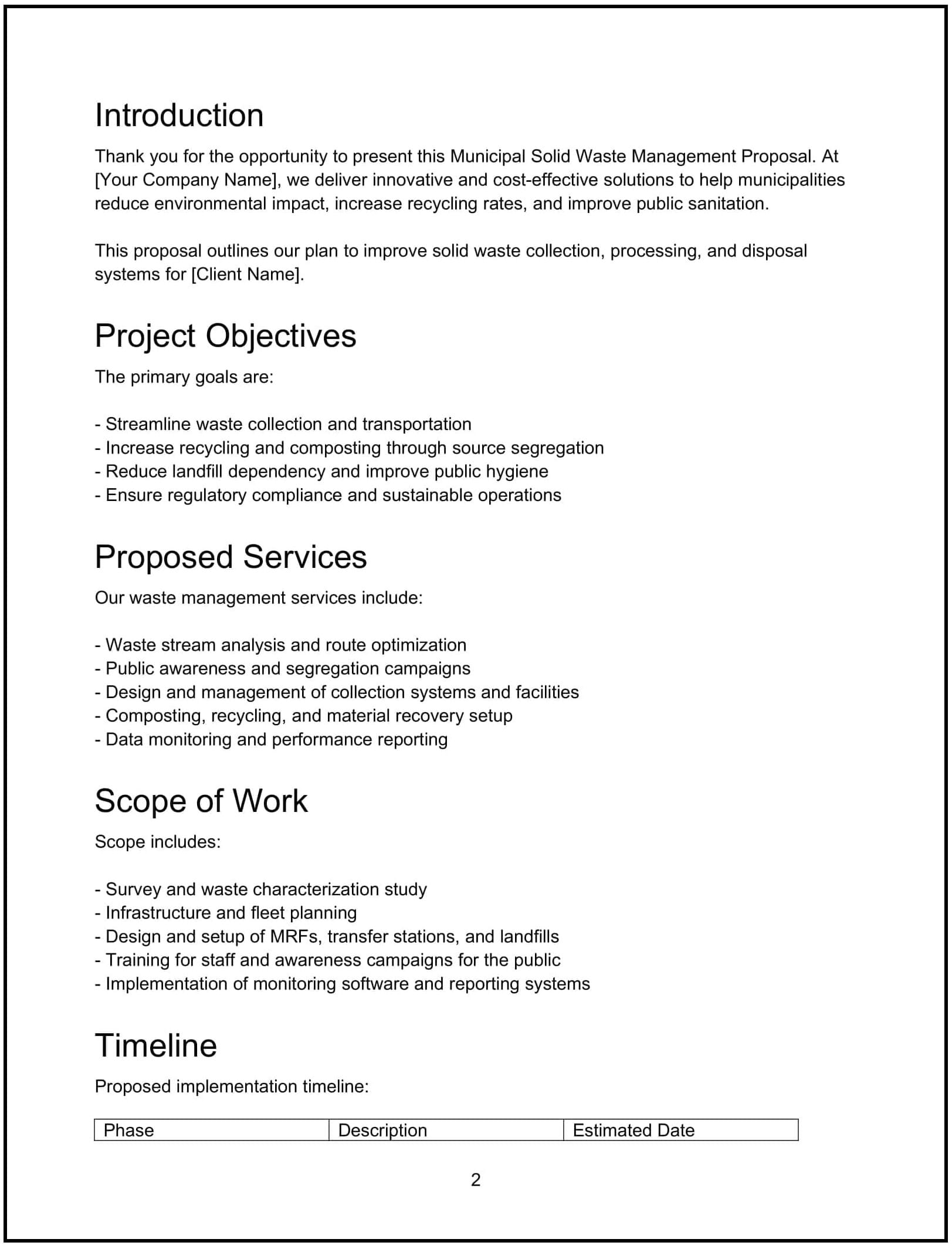
Proposes a municipal solid waste management plan, outlining collection systems, recycling initiatives, landfill diversion strategies, and regulatory compliance to promote environmental sustainability and public health.
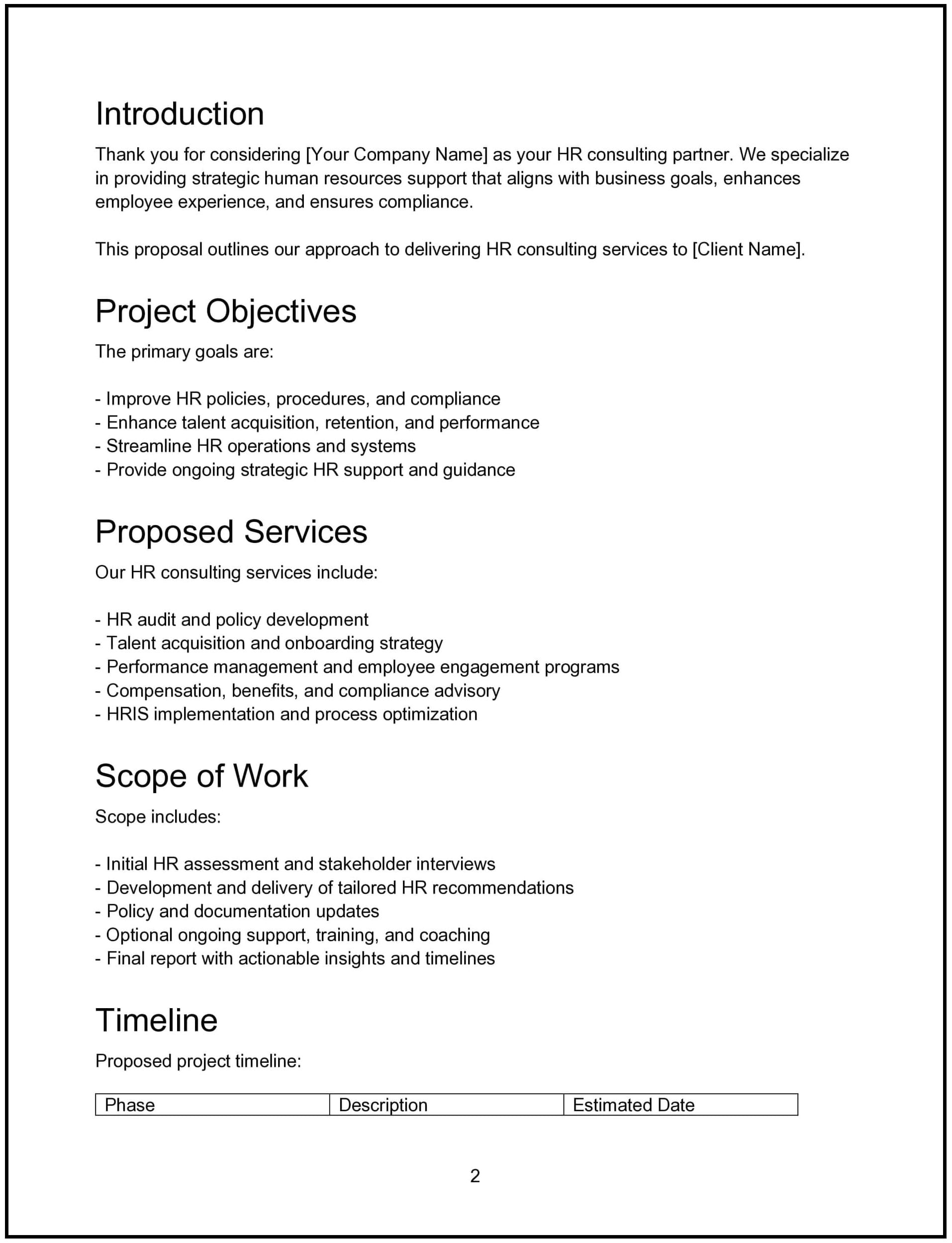
Proposes HR consulting services, outlining organizational assessments, policy development, talent management strategies, and compliance support to optimize human resource operations.
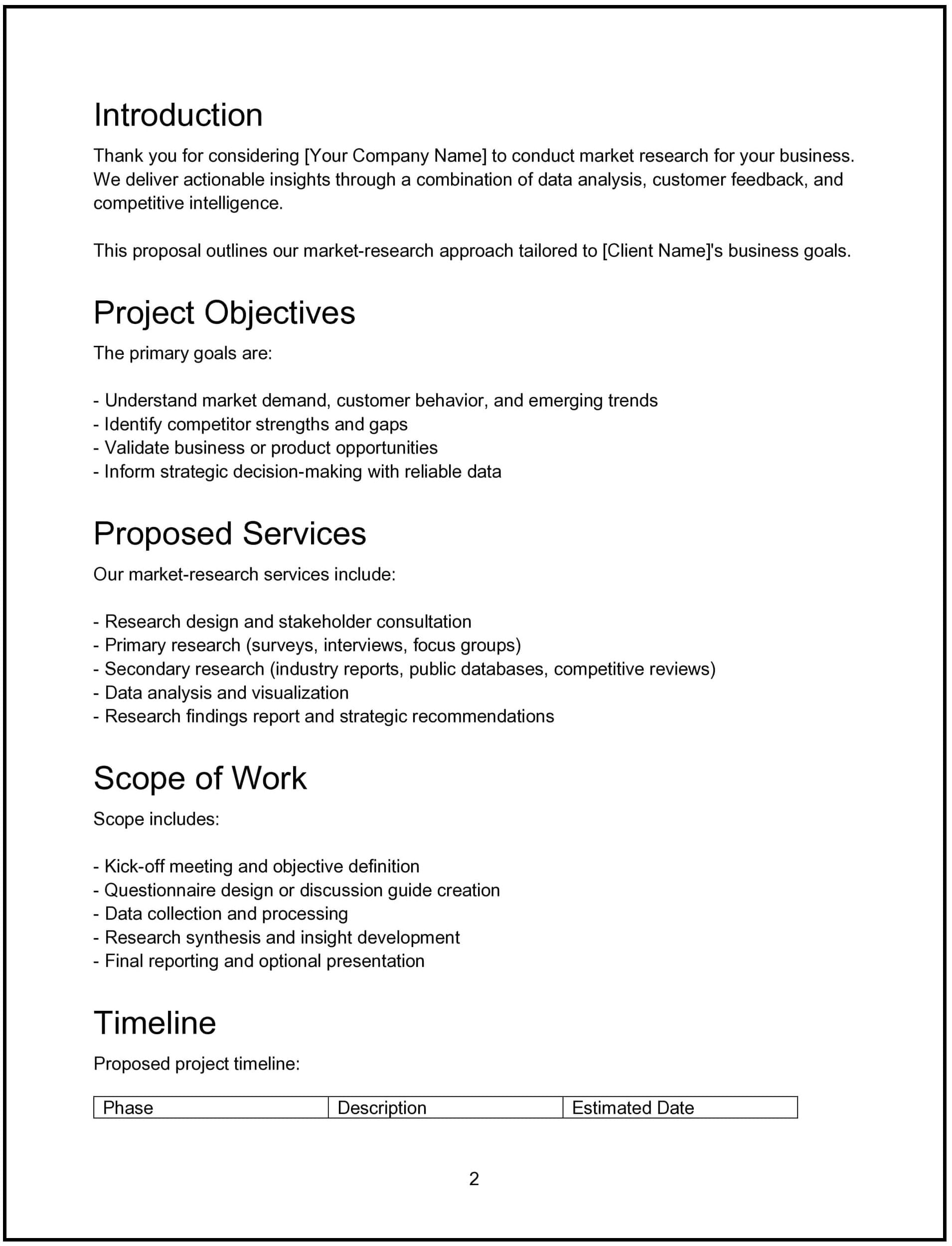
Proposes a market research plan, detailing research objectives, methodology, data collection, analysis techniques, and reporting to support strategic business decisions.