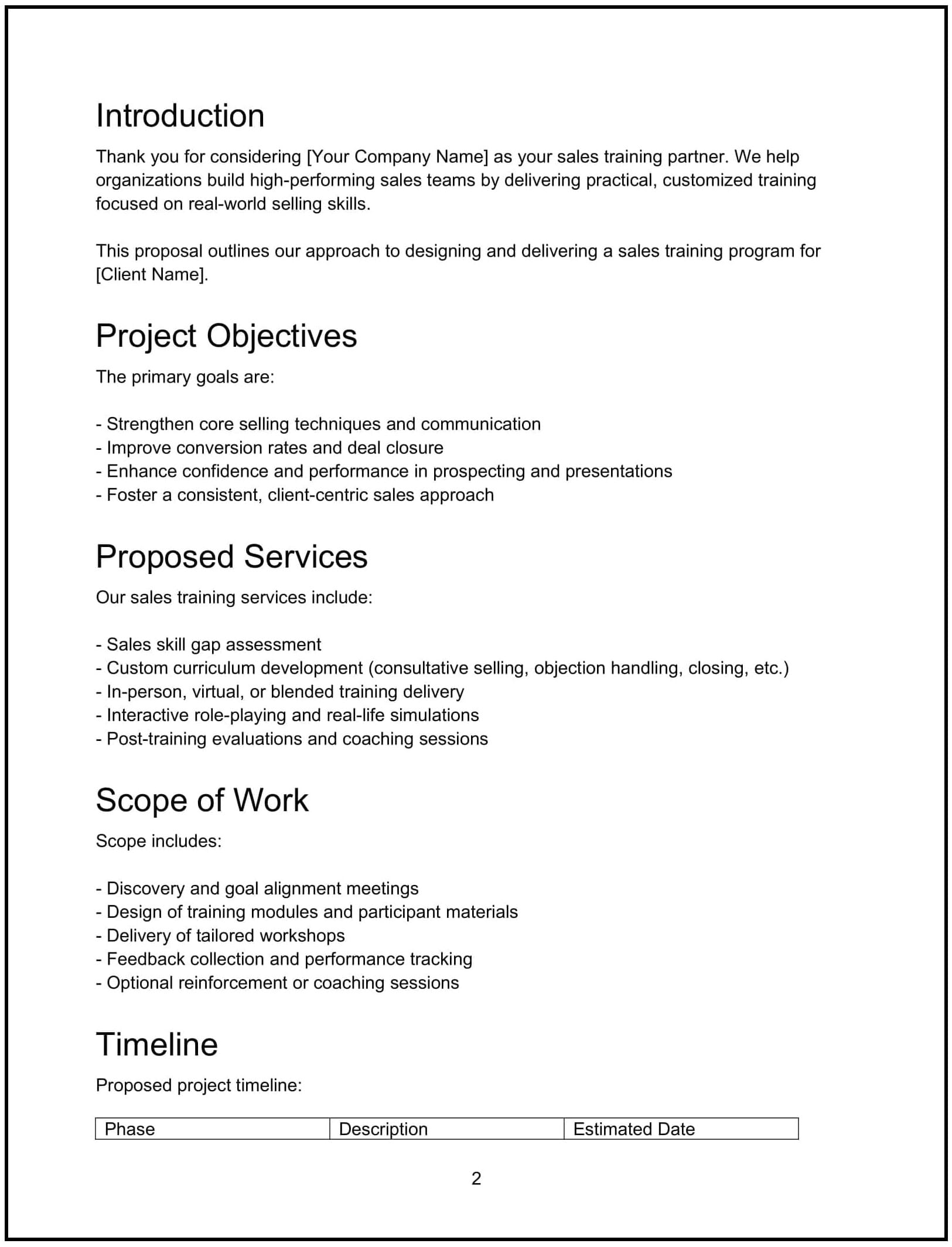
Sales training proposal: Free template
Proposes a sales training program, detailing skill development modules, delivery formats, coaching methods, and performance metrics to boost sales effectiveness and revenue growth.
- Proposal
Customize this free sales training proposal with Cobrief
Open this free sales training proposal in Cobrief and start editing it instantly using AI. You can adjust the tone, structure, and content based on the client’s team structure, sales model, and growth targets. You can also use AI to review your draft — spot gaps, tighten language, and improve clarity before sending.
Once you're done, send, download, or save the proposal in one click — no formatting or setup required.
This template is fully customizable and built for real-world use — ideal for pitching sales enablement or performance training to CROs, heads of sales, RevOps, or founders. Whether you’re running workshops, coaching sessions, or full curriculum rollouts, this version gives you a structured head start and removes the guesswork.
What is a sales training proposal?
A sales training proposal outlines your plan to improve a sales team’s performance through structured education, coaching, or workshops. It typically includes learning objectives, delivery format, sales methodology, skill areas covered, and follow-up recommendations.
This type of proposal is commonly used:
- When sales teams are underperforming, plateauing, or missing quota
- As part of onboarding for new SDRs, AEs, or AMs
- To standardize methodology across new regions or sales roles
- To upskill teams during product launches, GTM changes, or leadership transitions
It helps clients build more consistent, confident, and effective sales behavior — with measurable lift over time.
A strong proposal helps you:
- Define clear outcomes tied to revenue, pipeline health, or close rates
- Structure training to match deal stages, role types, or sales cycles
- Tailor content to the business model — transactional, consultative, or enterprise
- Deliver high-impact sessions with reinforcement, not just theory
Why use Cobrief to edit your proposal
Cobrief helps you deliver high-signal proposals fast — with built-in AI tools and formatting that gets out of the way.
- Edit the proposal directly in your browser: No template juggling — just focus on the offer.
- Rewrite sections with AI: Tailor tone instantly for CROs, RevOps, or founder-led sales teams.
- Run a one-click AI review: Let AI flag weak scoping, unclear timelines, or vague outcomes.
- Apply AI suggestions instantly: Accept edits line by line or across the full doc.
- Share or export instantly: Send via Cobrief or download a clean PDF or DOCX file.
You’ll go from outline to ready-to-send in less time — with sharper messaging throughout.
When to use this proposal
Use this sales training proposal when:
- A sales team is hitting a wall — in close rate, ACV, pipeline conversion, or outbound effectiveness
- The business is hiring fast and needs scalable onboarding
- Sales methodology is inconsistent across reps, teams, or geographies
- A new product, ICP, or GTM strategy requires sales process updates
- You’re embedding training into a broader enablement or performance program
It’s especially useful when there’s pressure to grow pipeline or close faster — but no structured system in place.
What to include in a sales training proposal
Use this template to walk the client through your program — from structure to results — in clear, structured language.
- Project overview: Frame the business challenge — e.g. missed targets, weak qualification, inconsistent messaging — and how your training solves it.
- Training objectives: Outline the core outcomes — better discovery calls, stronger outbound, improved forecasting, etc.
- Audience and roles: Define which roles are included — SDRs, AEs, AMs, SEs — and how the training may differ by group.
- Sales methodology: Explain your framework or approach (e.g., MEDDIC, SPIN, challenger, consultative), or note if you’re tailoring to the client’s own process.
- Format and delivery: Detail how training will be delivered — live sessions, roleplays, async modules, coaching blocks — and session lengths/frequency.
- Curriculum structure: Provide a high-level breakdown of session topics or modules by week or cohort.
- Tools and assets: Include any workbooks, recordings, cheat sheets, objection-handling guides, or email scripts you’ll provide.
- Reinforcement and follow-up: Describe how you’ll drive retention — via coaching, assessments, or feedback loops.
- Timeline and phases: Break into phases — discovery, prep, delivery, follow-up — with time estimates.
- Pricing: Offer fixed-fee, per-seat, or per-cohort pricing. Include optional coaching add-ons, refresher sessions, or pipeline reviews.
- Next steps: End with a CTA — like booking a kickoff call, reviewing team structure, or finalizing calendar slots.
How to write an effective sales training proposal
This proposal should feel focused, revenue-aware, and actionable — especially for teams under pressure to hit targets.
- Tie every section to sales outcomes: Quota attainment, deal velocity, outbound conversion — not just “confidence” or “skills.”
- Respect the sales calendar: Don’t propose all-day workshops during end-of-quarter crunch — work around peak activity periods.
- Build for coaching, not just instruction: Layer in roleplays, live calls, or feedback to drive real behavior change.
- Keep methodology optional: If the client already has a framework, adapt to it — don’t force yours unless it's part of the pitch.
- Make measurement part of the value: Offer to track performance before and after — even simple KPIs like meetings booked, deal size, or win rate.
Frequently asked questions (FAQs)
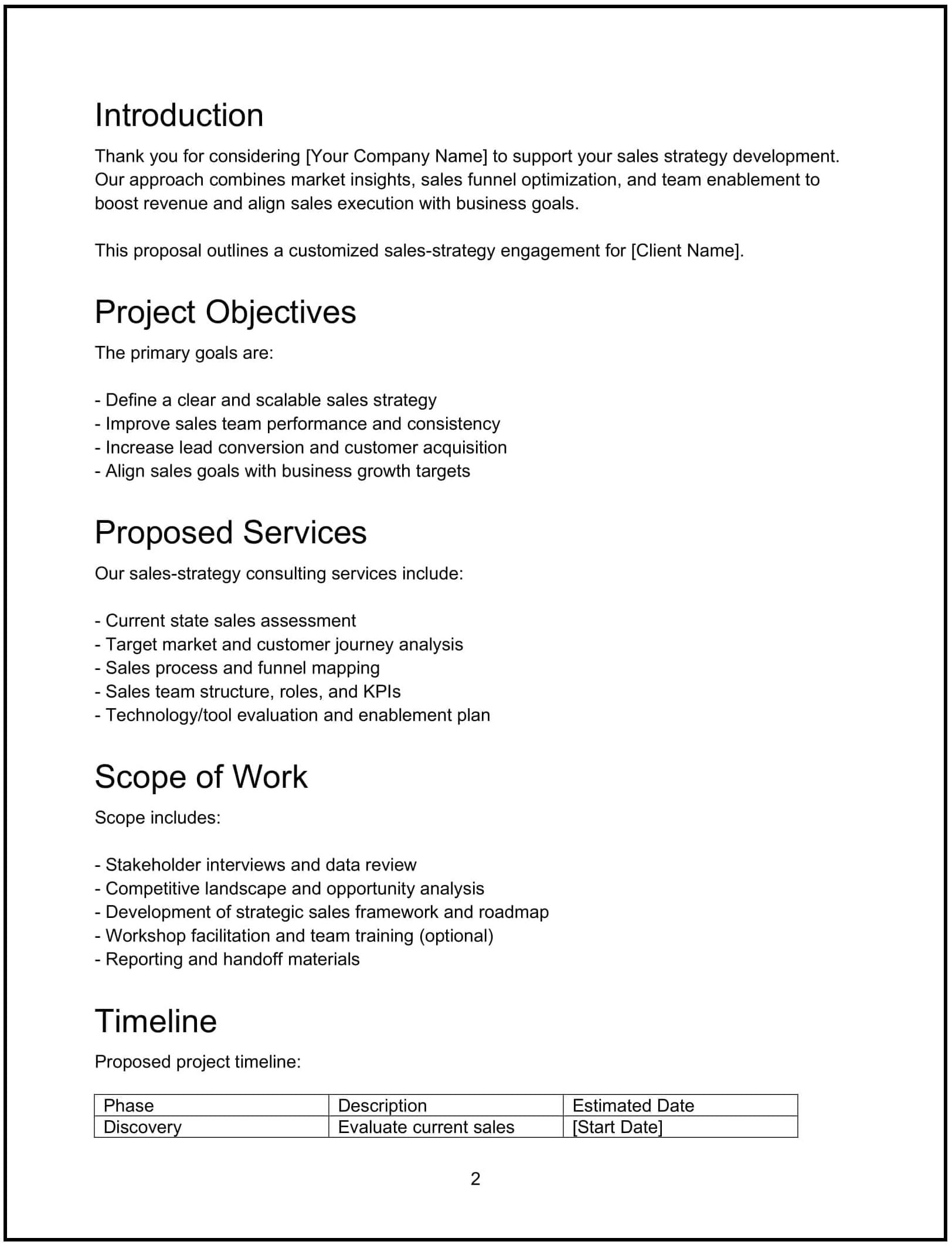
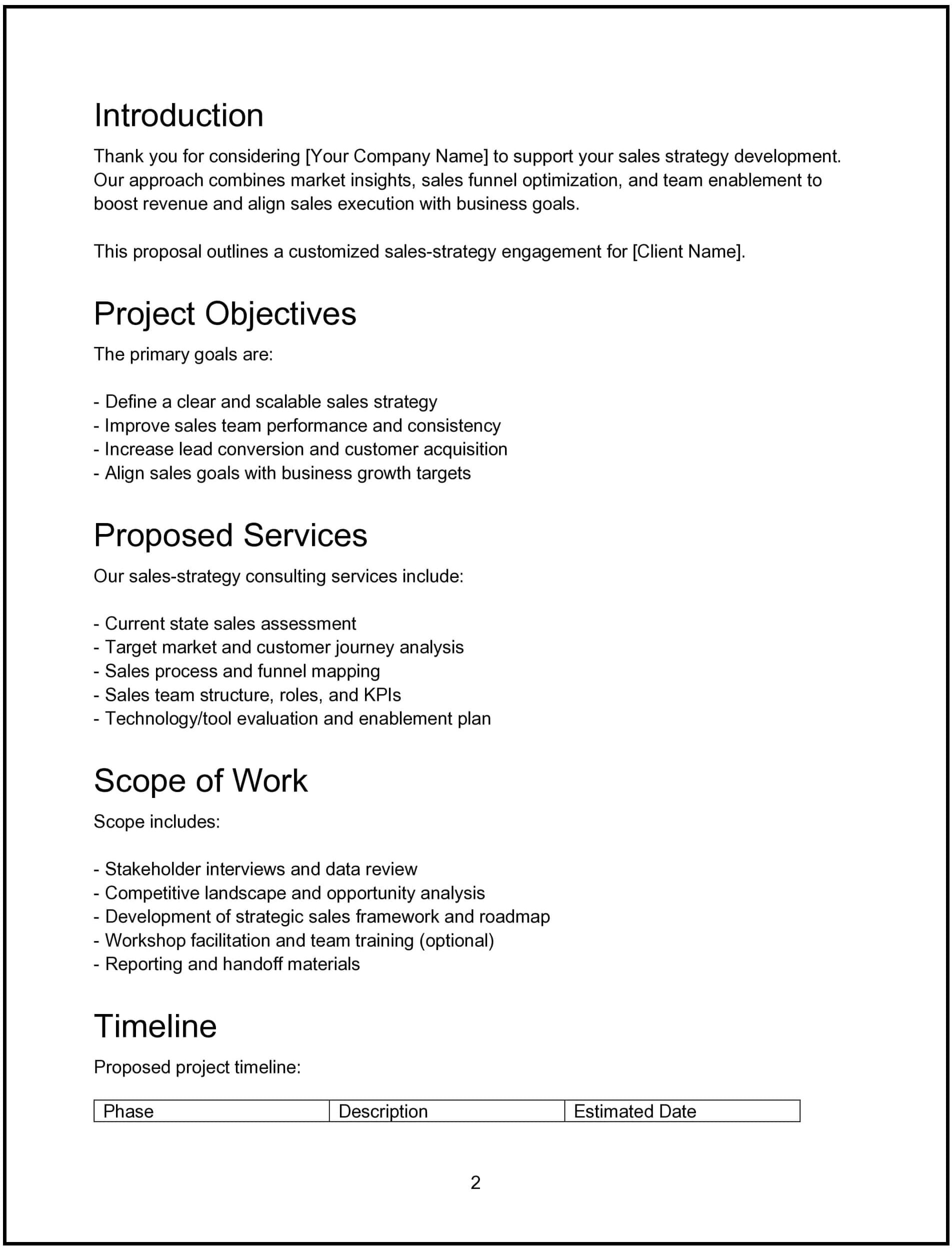
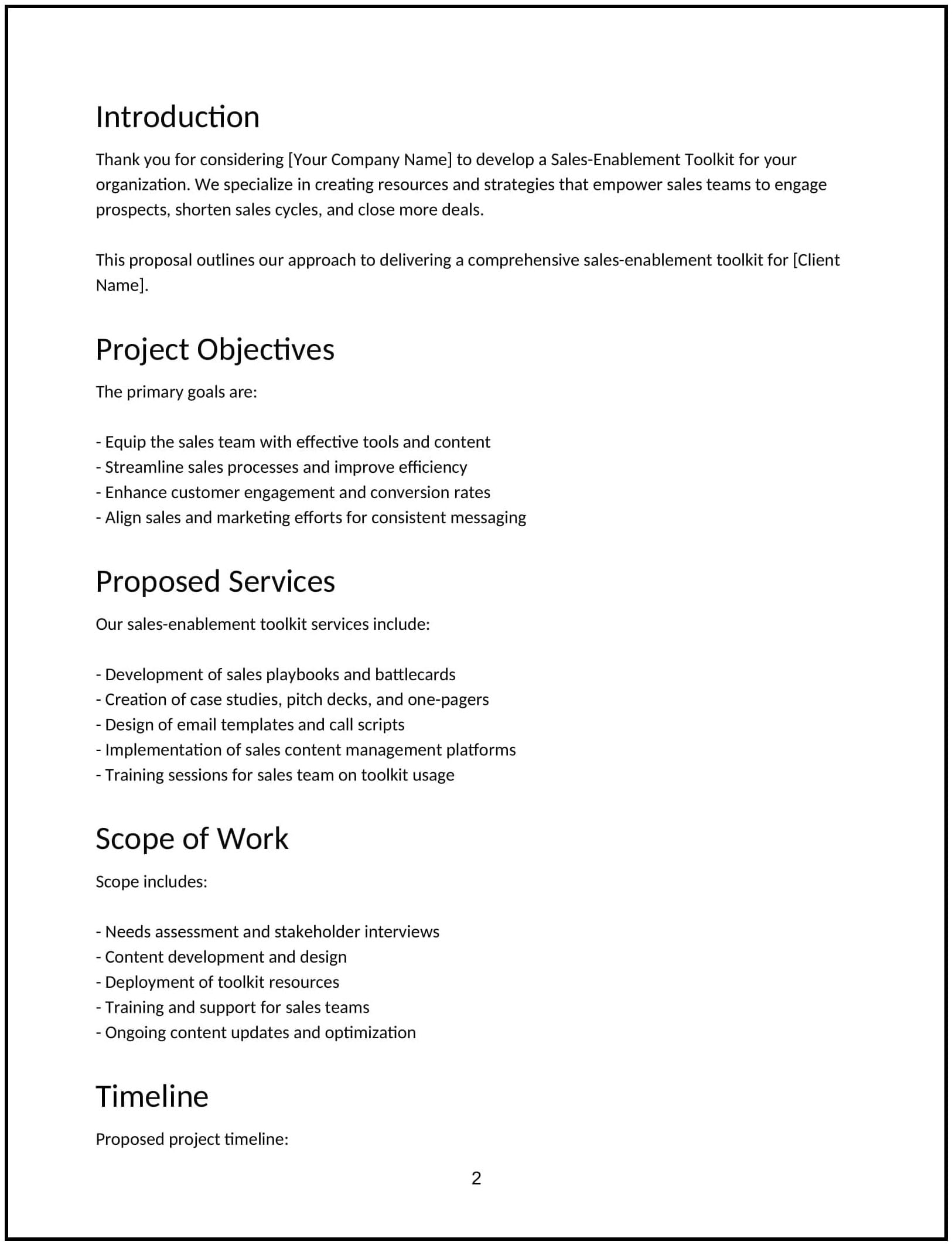
Similar templates
Where deals go from offer to paid
