Software cybersecurity assessment proposal: Free template
Got contracts to review? While you're here for proposals, let Cobrief make contract review effortless—start your free review now.
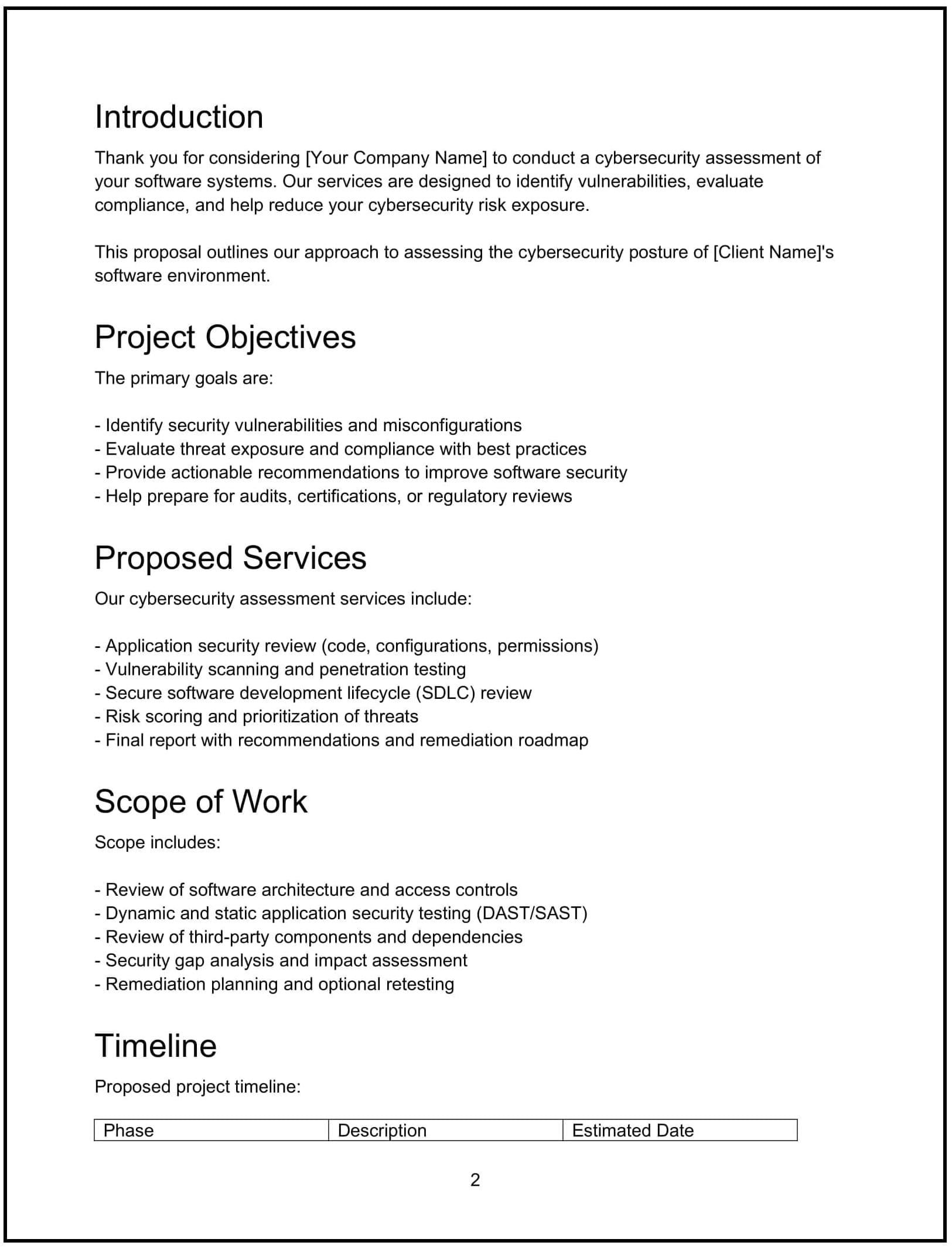
Customize this template for free
Customize this free software cybersecurity assessment proposal with Cobrief
Open this free software cybersecurity assessment proposal in Cobrief and start editing it instantly using AI. You can adjust the tone, structure, and content based on your offer, the client’s security posture, and software environment. You can also use AI to review your draft — spot gaps, tighten language, and improve clarity before sending.
Once you're done, send, download, or save the proposal in one click — no formatting or setup required.
This template is fully customizable and built for real-world use — ideal for pitching security audits, vulnerability assessments, and compliance reviews for software applications. Whether you’re creating proposals regularly or occasionally, this version gives you a structured head start and removes the guesswork.
What is a software cybersecurity assessment proposal?
A software cybersecurity assessment proposal outlines a plan to evaluate the security of software systems through testing, code review, and risk analysis. It describes your approach to identifying vulnerabilities, assessing threats, and recommending remediation.
Typically shared after initial consultations or security scoping, this proposal helps align stakeholders on scope, methodology, deliverables, timelines, and pricing.
A good software cybersecurity assessment proposal helps you:
- Define assessment scope including applications, environments, and attack surfaces.
- Communicate your testing methods such as penetration testing, code analysis, and configuration review.
- Set expectations on reporting, severity ratings, and remediation guidance.
- Build trust by emphasizing compliance with relevant security standards.
Use this proposal when you want to offer a thorough, expert-led security evaluation.
Why use Cobrief to edit your proposal
Cobrief simplifies proposal creation with AI-driven tools:
- Edit directly in your browser — no formatting or uploads required.
- Use AI to rewrite sections for clarity, precision, and tone.
- Run AI reviews to identify unclear phrasing or missing details.
- Accept AI suggestions individually or all at once for speed.
- Export or share polished PDFs or DOCX files instantly.
When to use this proposal
This software cybersecurity assessment proposal fits scenarios like:
- Evaluating new or existing software for security vulnerabilities.
- Preparing for compliance audits such as SOC 2, ISO 27001, or GDPR.
- Identifying risks before software launches or updates.
- Responding to incident investigations or suspected breaches.
- Supporting ongoing security monitoring and improvement.
Use this proposal when a detailed, expert security evaluation is needed.
What to include in a software cybersecurity assessment proposal
Ensure clear communication with these sections:
- Executive summary: Overview of client’s software environment and assessment goals.
- Scope of assessment: Define systems, modules, and environments included.
- Assessment methodology: Describe penetration testing, static/dynamic code analysis, and configuration reviews.
- Reporting and remediation: Outline report format, severity levels, and follow-up support.
- Timeline and milestones: Present phases and expected delivery dates.
- Pricing and fees: Transparent cost breakdown linked to assessment scope.
- Terms and conditions: Confidentiality, liability, and change management policies.
- Next steps: Clear call to action for approval, kickoff, or further clarification.
How to write an effective software cybersecurity assessment proposal
Write to build confidence and clarity:
- Lead with client risk: Highlight how assessment reduces breach risks and protects assets.
- Avoid jargon overload: Explain testing methods in accessible language.
- Be specific about deliverables: Detail reports, remediation plans, and support.
- Emphasize compliance: Reference relevant standards and frameworks.
- Set realistic timelines: Manage expectations for testing and reporting phases.
- Close with a confident next step: End with one clear CTA to move forward.
Frequently asked questions (FAQs)
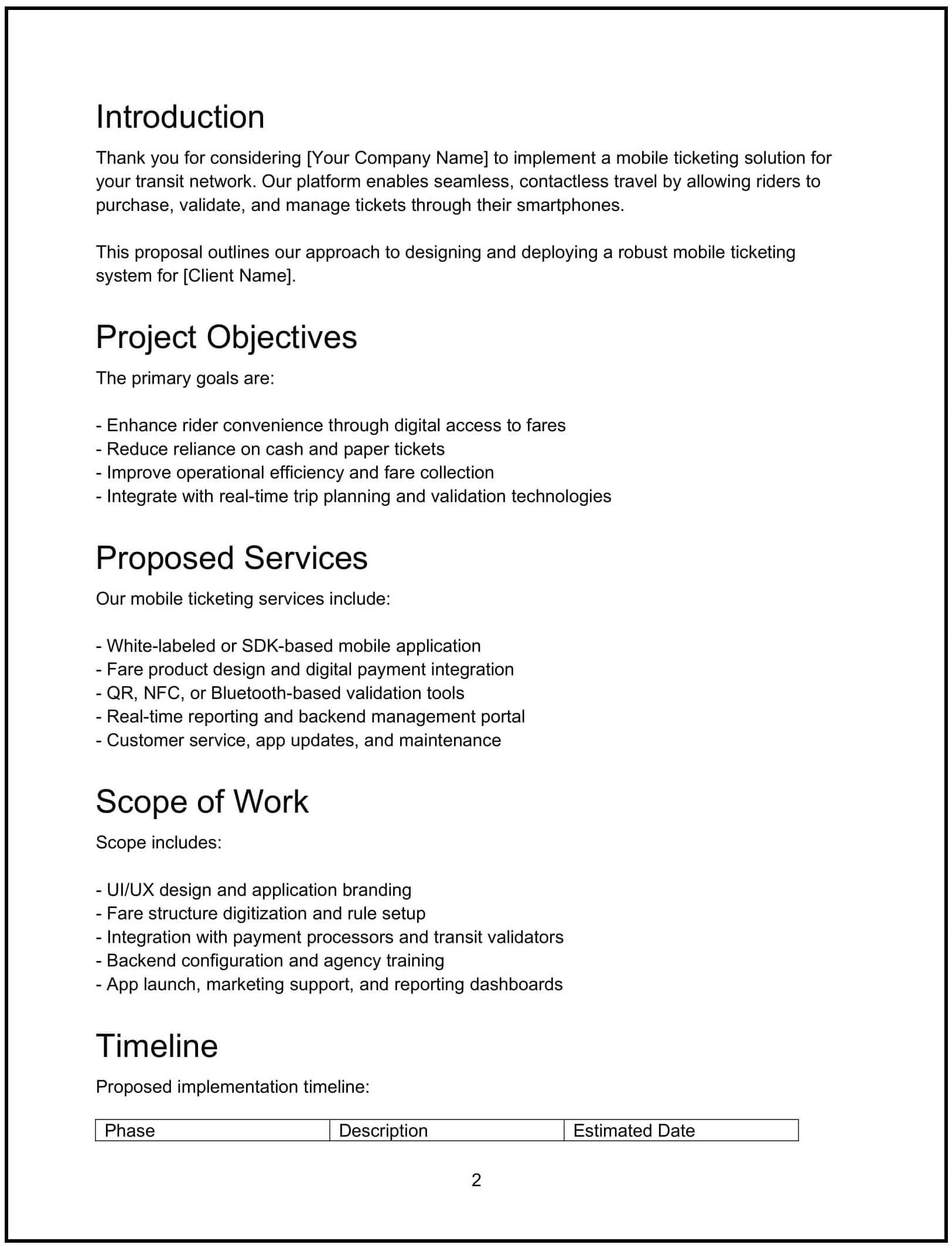
Proposes a public transit mobile ticketing solution, detailing app functionality, payment integration, user experience, and implementation timelines to improve rider convenience and operational efficiency.
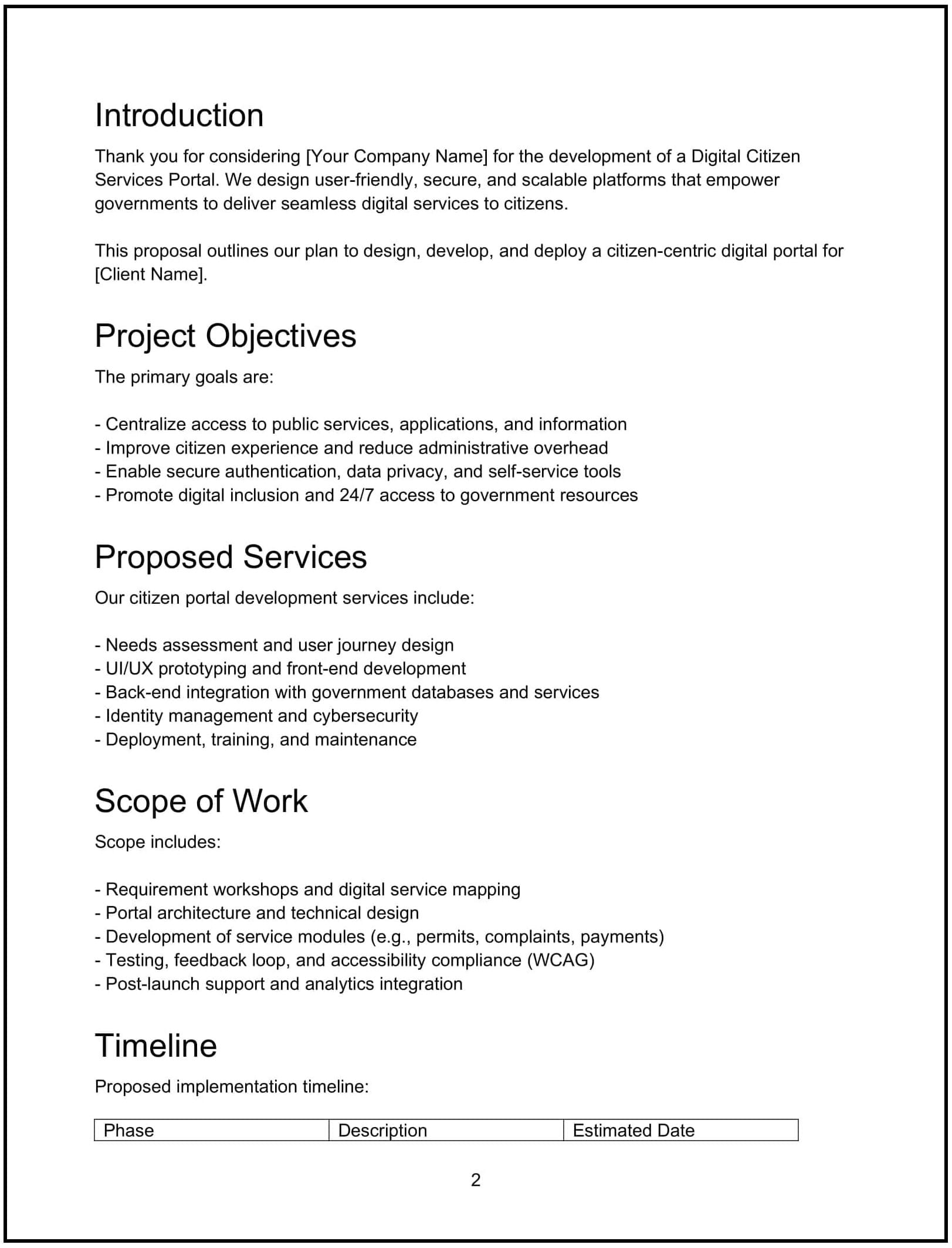
Proposes a smart city master plan, outlining infrastructure modernization, technology integration, data governance, and sustainability initiatives to enhance urban living and operational efficiency.
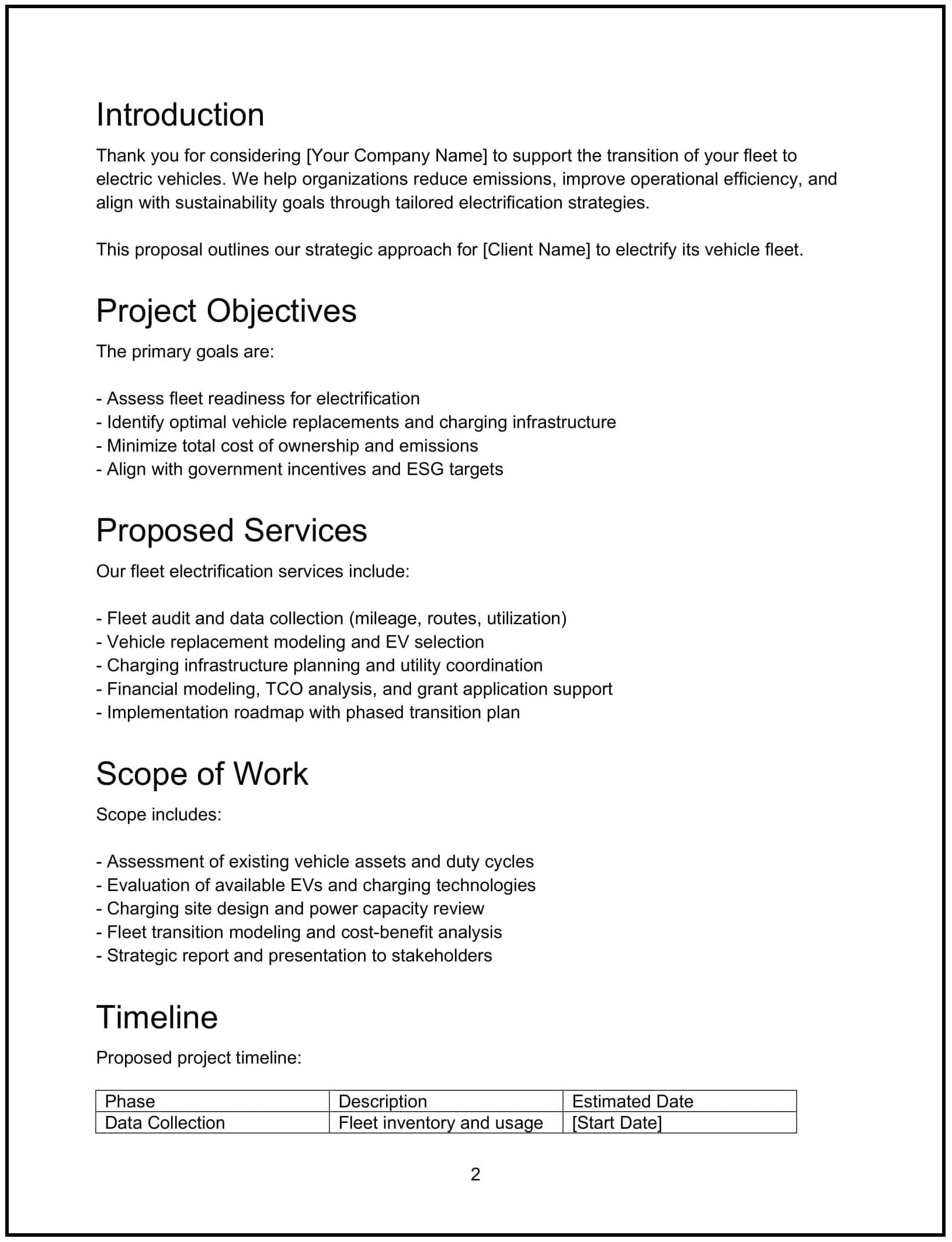
Proposes a fleet electrification strategy, detailing vehicle selection, charging infrastructure, cost-benefit analysis, and implementation timeline to support sustainable transportation goals.