Start a new document with this content. Open the editor to build from scratch — paste in what you need and keep writing.
Consumer product recall checklist
When a product is found to be defective, handling a recall properly is crucial to protect your customers and your business. This consumer product recall checklist helps guide you through each step, from identifying a potential issue to managing the recall process and improving your future products.
With clear planning and the right response, you can reduce risks, maintain consumer trust, and ensure compliance with safety regulations. Use this checklist to stay prepared and act quickly if a recall becomes necessary.
How to use this consumer product recall checklist
This consumer product recall checklist is designed to guide you through the steps required to manage a recall effectively. Here’s how to use it.
- Follow the steps in order: Each section of the checklist outlines key actions, from assembling a recall team to conducting the recall and managing post-recall tasks.
- Tailor it to your business: Adapt the checklist based on the type of products you sell and the markets you operate in. Some sections may require more emphasis, depending on your specific product or industry.
- Keep it updated: Use this checklist as a living document. Review and revise it periodically, especially after conducting a mock recall or when regulations change.
- Assign responsibilities: Ensure your team knows who is responsible for each part of the checklist. Clear roles prevent confusion during a recall and ensure all tasks are completed efficiently.
- Review after each recall: After any recall event, revisit the checklist to assess what worked well and what needs improvement. Use this information to update your corrective action plan (CAP) for future recalls.
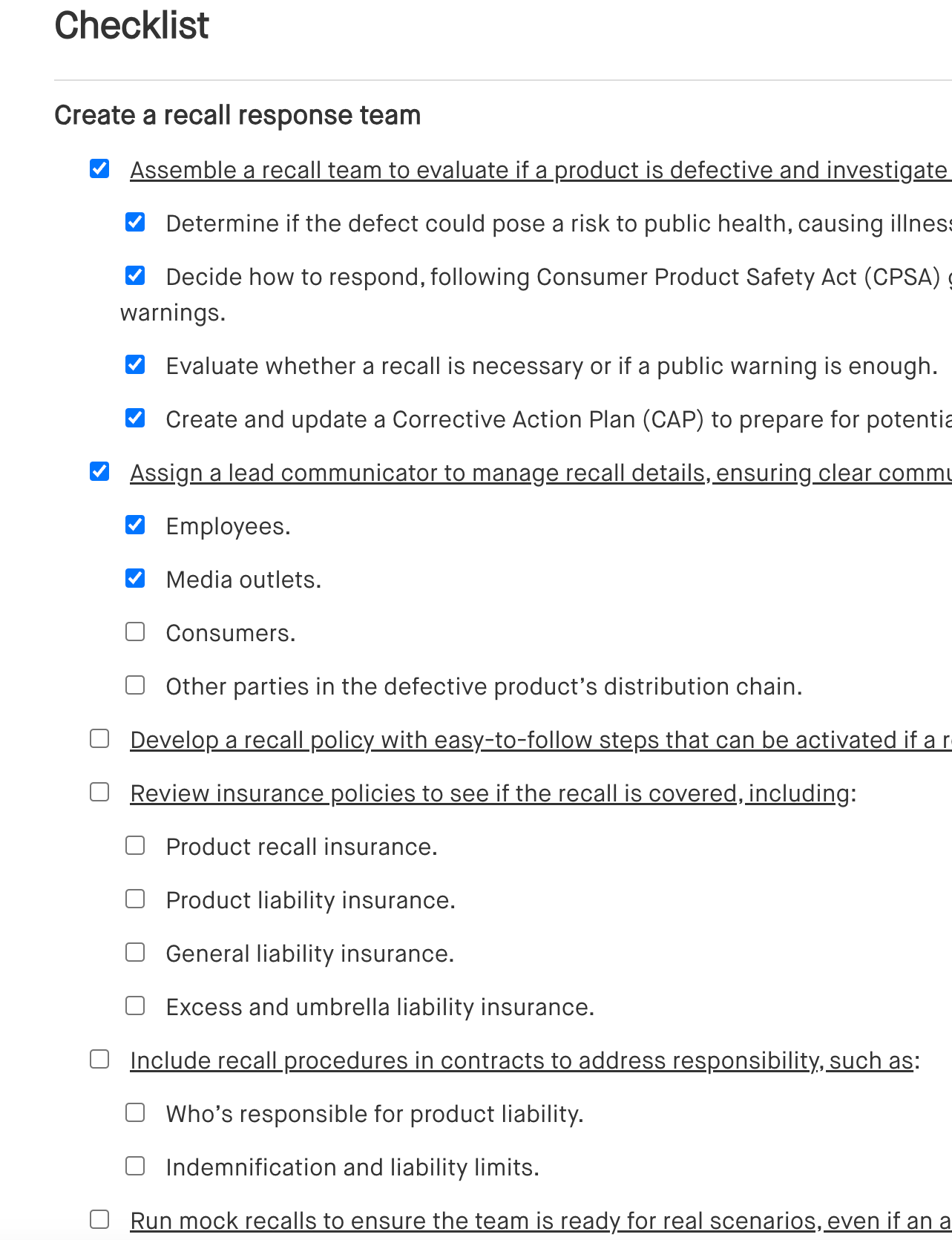
Checklist
Create a recall response team
[ ] Assemble a recall team to evaluate if a product is defective and investigate the cause:
[ ] Determine if the defect could pose a risk to public health, causing illness, injury, or death.
[ ] Decide how to respond, following Consumer Product Safety Act (CPSA) guidelines for recalls or public warnings.
[ ] Evaluate whether a recall is necessary or if a public warning is enough.
[ ] Create and update a Corrective Action Plan (CAP) to prepare for potential recalls.
[ ] Assign a lead communicator to manage recall details, ensuring clear communication with:
[ ] Employees.
[ ] Media outlets.
[ ] Consumers.
[ ] Other parties in the defective product’s distribution chain.
[ ] Develop a recall policy with easy-to-follow steps that can be activated if a recall is needed.
[ ] Review insurance policies to see if the recall is covered, including:
[ ] Product recall insurance.
[ ] Product liability insurance.
[ ] General liability insurance.
[ ] Excess and umbrella liability insurance.
[ ] Include recall procedures in contracts to address responsibility, such as:
[ ] Who’s responsible for product liability.
[ ] Indemnification and liability limits.
[ ] Run mock recalls to ensure the team is ready for real scenarios, even if an actual recall never happens.
[ ] Be ready for a real recall by having clear steps and responsibilities in place.
[ ] Involve key departments in the recall team, including:
[ ] Legal.
[ ] Research and development (R&D).
[ ] Manufacturing.
[ ] Distribution.
[ ] Marketing.
[ ] Sales.
[ ] Regulatory compliance.
[ ] Public relations.
[ ] Hire experienced outside counsel to assist with product liability issues, ensuring the in-house team has proper legal support.
Develop a Corrective Action Plan (CAP)
[ ] Understand the purpose of a CAP: It outlines the steps a seller will take to fix the problem and protect people from being harmed by a defective product.
[ ] Create a CAP before a recall is needed: Preparing early helps avoid delays if a product issue arises.
[ ] Follow these steps when developing a CAP:
[ ] Review Sections 15(b) and 37 of the Consumer Product Safety Act (CPSA) and Section 102 of the Child Safety Protection Act to ensure compliance.
[ ] Read the Consumer Product Safety Commission (CPSC) guidelines for creating a CAP (found in the CPSC Product Safety Planning, Reporting, and Recall Handbook).
[ ] Check the regulatory guidelines in all regions where the product is sold.
[ ] Familiarize yourself with industry best practices for conducting recalls.
[ ] Put recall policies and procedures in place to trace the product from manufacturing to the consumer.
[ ] Ensure the CAP includes the following to gain CPSC approval:
[ ] A clear statement outlining the hazard associated with the defective product.
[ ] Details on how the seller will notify the public, including methods such as:
[ ] Letters.
[ ] Press releases.
[ ] Social media posts.
[ ] Website notices or advertising.
[ ] A clear description of the product, including model number or other identifiers.
[ ] Instructions for safe use or handling while waiting for a fix or replacement.
[ ] An explanation of the cause of the product hazard.
[ ] Confirmation that replacement products, test data, and relevant drawings for repairs or replacements are available.
[ ] A statement on what actions will be taken to prevent the issue from happening again.
[ ] A plan for how the seller will correct product units already in the distribution chain.
[ ] An acknowledgment that the CPSC may monitor the corrective actions and that the seller will provide any required information (such as customer lists).
[ ] Agreement that the CPSC can publicize the plan to inform the public.
[ ] A confirmation that the CAP only becomes effective after CPSC approval.
Maintain accurate records
[ ] Track product data: Maintain clear and detailed records before and after a product recall to quickly identify issues and take action.
[ ] Keep records of complaints, warranty returns, insurance claims, and lawsuits. These can signal potential safety concerns or defects.
[ ] Store production and distribution details, such as model, serial and lot numbers, product codes, production runs, shipments, delivery dates and destinations.
[ ] Maintain accurate sales data to understand product performance and distribution.
[ ] Document quality control measures to demonstrate steps taken to ensure product safety.
[ ] For children’s products, store product registration cards to facilitate quick consumer contact in case of a recall (see Children’s Product Compliance guidelines).
[ ] Review and update contact lists: Regularly review and circulate a list of key contacts to the recall response team for quick access during a recall. Include:
[ ] Suppliers.
[ ] Distributors.
[ ] Retailers.
[ ] Customers.
[ ] Media contacts.
[ ] Government agencies.
[ ] Insurance carriers.
[ ] Financial institutions.
[ ] Outside counsel.
Conduct a mock recall
[ ] Assess preparedness: A mock recall helps a company test how ready it is to handle a real-life recall scenario that could involve illness, injury, or death due to a defective product.
[ ] Test product traceability to ensure you can track the defective items through the supply chain.
[ ] Evaluate the Corrective Action Plan (CAP) to identify and address weaknesses in your recall policies and procedures.
[ ] Fix any discovered weaknesses to be fully prepared for an actual recall.
[ ] Simulate relevant scenarios: Base the mock recall on possible defects tied to your industry:
[ ] For example, an auto manufacturer could run a scenario involving defective brakes.
[ ] A toy manufacturer might simulate a recall for toys with small parts that pose a choking hazard to children.
[ ] Ensure management support: Get buy-in from leadership so the mock recall is taken seriously by employees.
[ ] Follow the full CAP: Go through every step of the company’s corrective action plan to simulate the recall accurately.
[ ] Document actions taken: Keep records of all actions during the mock recall to review later.
[ ] Review and improve: After the mock recall:
[ ] Review results to determine what worked and what needs improvement.
[ ] Have the legal team evaluate whether the recall followed CPSC guidelines.
[ ] Make necessary changes to improve the CAP.
[ ] Common issues to address:
[ ] Public relations: Prepare a strategy to handle media inquiries.
[ ] Regulatory responses: Ensure you have proper procedures for dealing with agencies.
[ ] Contact information: Make sure you have up-to-date contact details for customers and others impacted by the recall.
[ ] Product tracking: Ensure you can accurately trace the defective product after it leaves the factory.
Conduct a product recall
[ ] Assess the defect: Understand the nature and severity of the product defect to determine the recall's scope, cost, and reporting obligations under the Consumer Product Safety Act (CPSA). Ensure compliance with CPSC reporting requirements.
[ ] Notify your insurance carrier: Inform your insurance provider about the recall to confirm coverage under any applicable policies.
[ ] Consult with legal counsel: Work with outside lawyers who specialize in product safety to protect private conversations in case of lawsuits or investigations related to the recall.
[ ] Identify all defective products: Locate all defective products or parts, whether:
[ ] Not yet manufactured.
[ ] In the manufacturing process.
[ ] In inventory (factory, warehouse, distribution centers).
[ ] Already on the market.
[ ] Stop production: Halt the production of any additional defective products immediately.
[ ] Quarantine and remove defective products:
[ ] Separate defective products from non-defective ones in your distribution chain.
[ ] Remove them from distribution and from consumer possession.
[ ] Notify stakeholders: Inform affected customers and other key players in the distribution chain, including:
[ ] Employees.
[ ] Government agencies, like the Consumer Product Safety Commission (CPSC).
[ ] Suppliers, distributors and retailers.
[ ] Sales reps, financial institutions, and media outlets.
[ ] Publicize the recall: Use all available channels to announce the recall, including:
[ ] A joint news release with the CPSC.
[ ] Posting on the company website and social media.
[ ] Sending emails to consumers.
[ ] Direct notifications (push notifications, blog posts, press releases, ads, etc.).
[ ] Multilingual communication: Make sure all recall communications are available in different languages that your customers speak.
[ ] Document notifications: Keep detailed records of all parties notified of the recall. This helps manage liability later.
[ ] Compensate consumers: Decide on compensation for consumers, which may include:
[ ] Credits or refunds.
[ ] Incentives for returning products.
[ ] Repair or replacement options.
[ ] Manage returns: Set up processes for receiving returned products and providing refunds or replacements.
[ ] Monitor the recall: Continuously track the recall to ensure everything goes smoothly.
[ ] Dispose of defective products: Safely and properly dispose of all defective items.
[ ] Consult with the CPSC: Regularly communicate with the CPSC to ensure compliance with recall regulations.
[ ] Submit progress reports: Send timely reports to the CPSC and expect inspections to verify corrective actions and check that defective products are no longer being sold.
After conducting a product recall
[ ] Identify the defect’s cause: Analyze and determine what led to the product defect to prevent it from recurring.
[ ] Redesign future products: Update product designs to eliminate the identified defect in future production runs.
[ ] Relabel repaired products: Clearly relabel any repaired products to differentiate them from the defective ones.
[ ] Evaluate your recall process: Review the effectiveness of the Corrective Action Plan (CAP) and other recall procedures.
[ ] Update your CAP: Make necessary improvements to the CAP and recall policies to better handle any potential future recalls.
[ ] Employee training: Consider training employees on how to handle recalls and respond to them effectively.
[ ] Prepare for litigation and investigations: Be ready for possible lawsuits, shareholder actions, or investigations from the government if issues arise after the recall.
[ ] Measure consumer reaction: Assess how consumers reacted to the recall and the replacement or compensation they received.
[ ] Launch a reputation recovery campaign: Consider running advertising or promotional campaigns to rebuild your reputation in the industry, with the media, and among consumers.
[ ] Promote recall success: If the recall achieved all the company’s goals, consider sharing its success with stakeholders to build trust.
Benefits of using a consumer product recall checklist
Using a consumer product recall checklist ensures your recall process is smooth, effective, and compliant. Here’s how it helps.
- Stay organized: The checklist provides a step-by-step guide to follow, ensuring nothing is overlooked. This makes it easier to manage the recall process from start to finish.
- Minimize legal risks: By adhering to the checklist, you’ll comply with regulatory requirements like those from the Consumer Product Safety Commission (CPSC). This reduces the risk of fines or legal issues.
- Protect your brand: A well-managed recall shows customers you care about their safety, helping to maintain trust in your brand even during a crisis.
- Improve response time: With the checklist, your recall team is better prepared, allowing you to act quickly when a product issue arises, reducing the potential harm to consumers.
- Strengthen internal processes: Regularly using and updating the checklist helps you spot weak points in your recall strategy and correct them, making future recalls more efficient.
Frequently asked questions (FAQs)
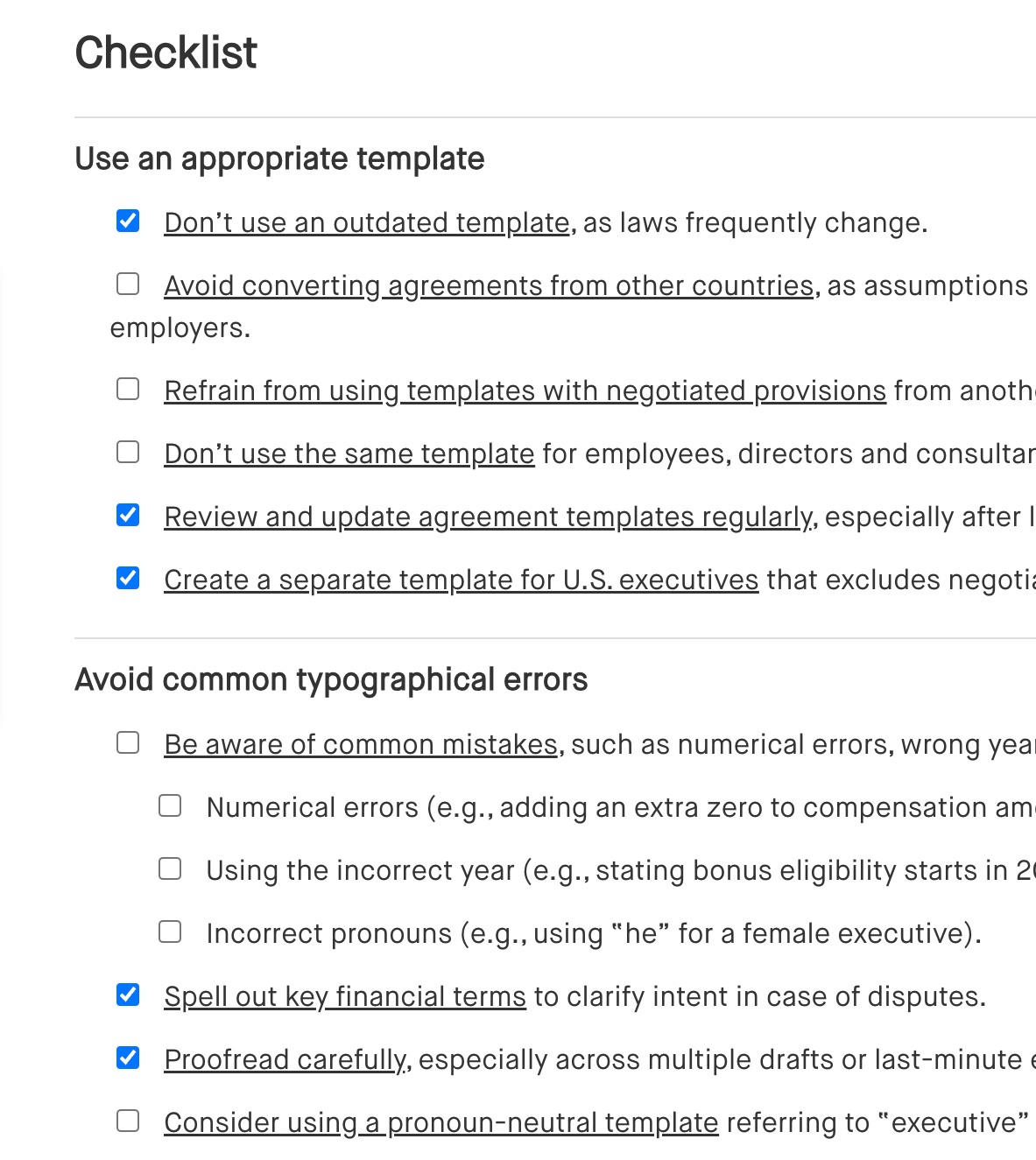
Outlines key components for drafting an executive employment agreement, including compensation, benefits, responsibilities, and termination terms.

Outlines guidelines for employee use of social media, including setting clear boundaries, monitoring activity, and ensuring alignment with company values and policies.
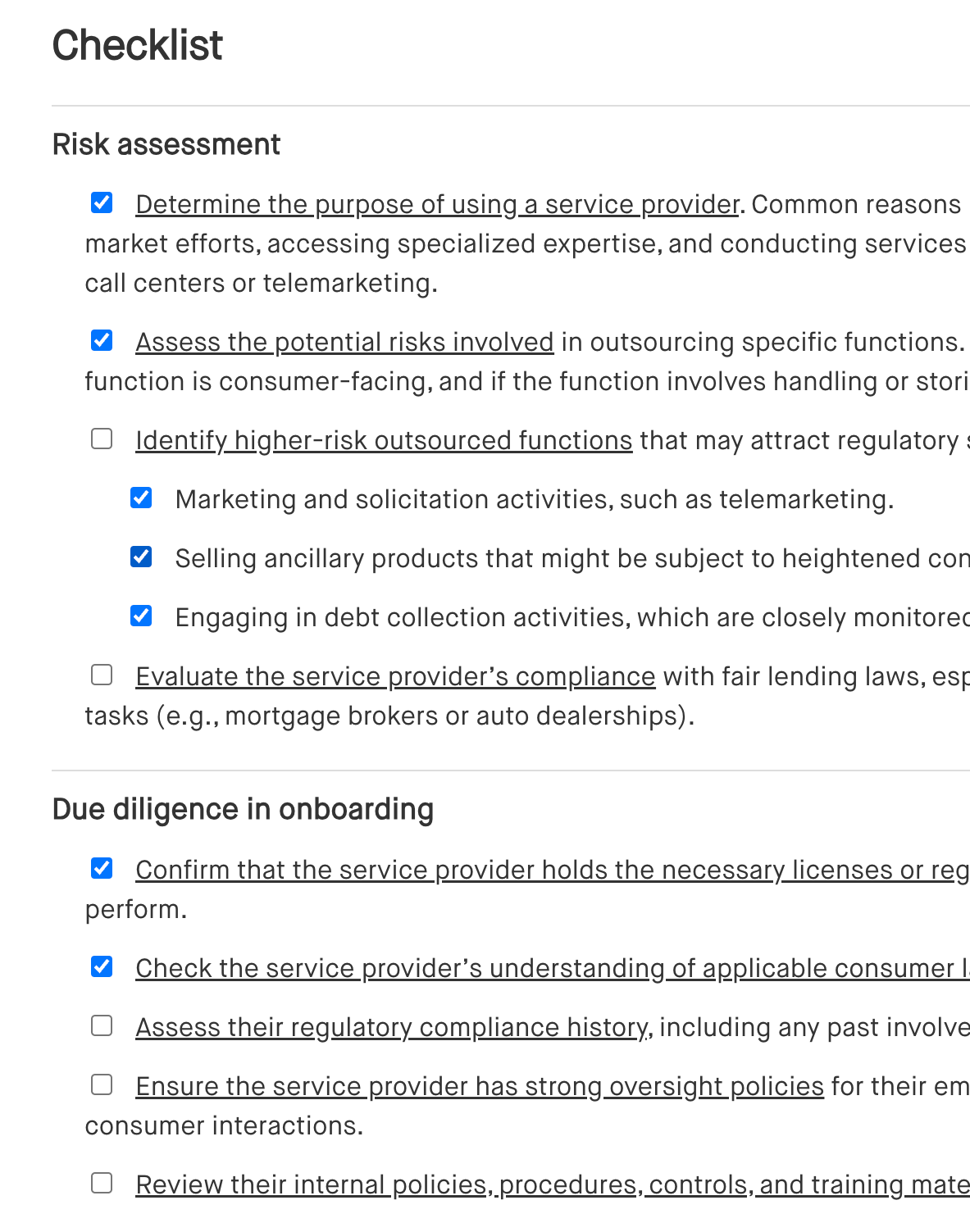
Covers essential steps for managing vendors, focusing on evaluating performance, maintaining clear contracts, and monitoring ongoing risk factors.