Start a new document with this content. Open the editor to build from scratch — paste in what you need and keep writing.
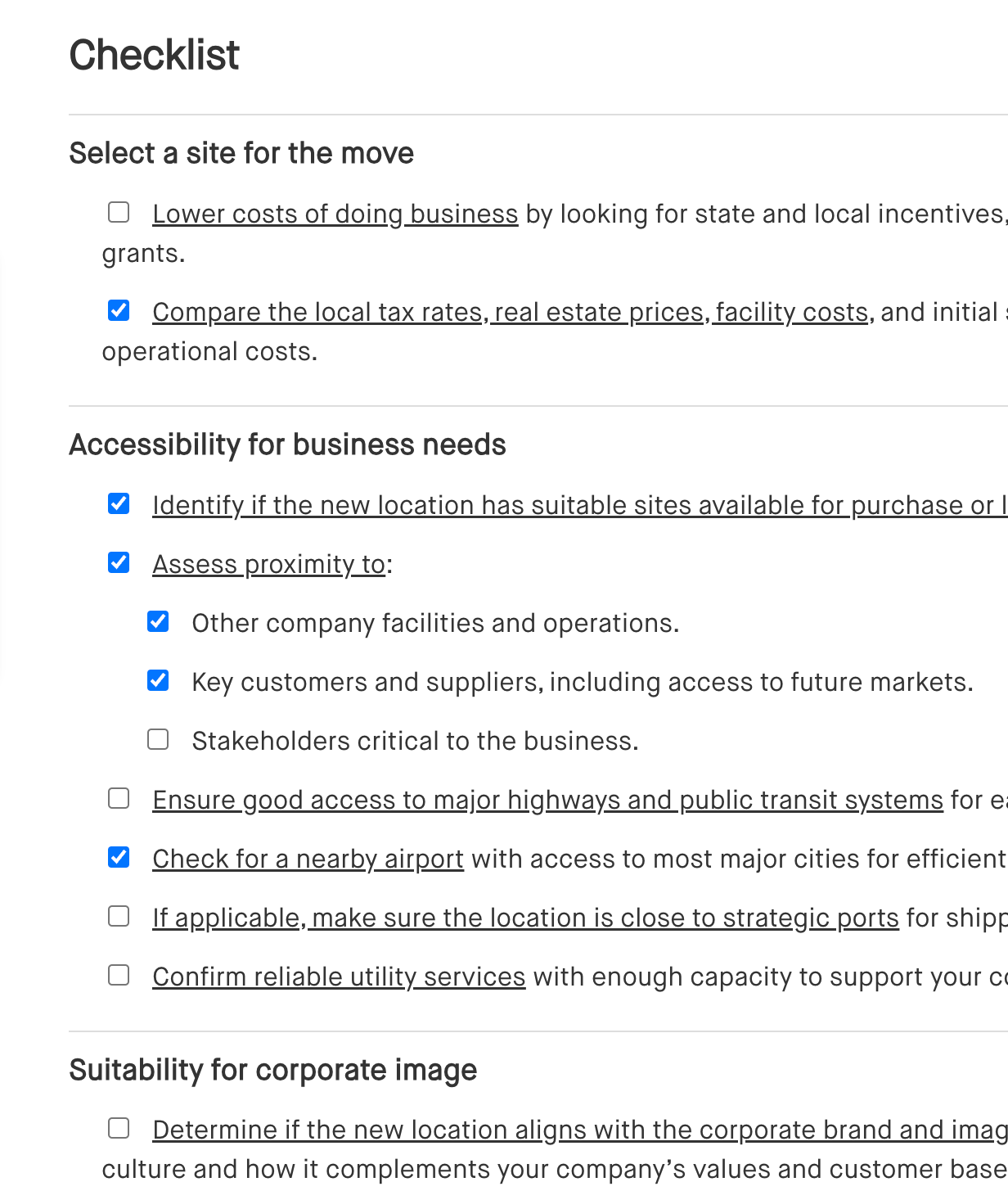
Moving company headquarters checklist
Relocating your company’s headquarters or office is a complex process that requires detailed planning to minimize disruptions and ensure a smooth transition.
Whether you're downsizing, expanding, or just seeking a better location, having a comprehensive moving offices checklist is essential. This office moving checklist covers all the critical steps for a successful move, from selecting a new site to notifying third parties and setting up operations at the new location.
By following this moving office checklist, you can streamline the process, reduce downtime, and stay compliant with legal obligations. For those looking for an organized approach, you can also download an office moving checklist PDF to keep everything on track.
How to use this moving company headquarters checklist
This moving company headquarters checklist is designed to guide you through the complex process of relocating your business headquarters. Here’s how to use it:
- Start with site selection: Begin by reviewing the factors for selecting a new location, such as cost, accessibility, and suitability for future growth. This helps you identify the best location that aligns with your business needs and long-term goals.
- Ensure legal compliance: Follow the checklist sections on state incorporation, employee laws, and tax implications to make sure your business complies with all relevant state and local regulations when moving.
- Plan employee transitions: Use the checklist to handle employee communications, relocations, terminations, and potential remote work options. This ensures a smooth transition for your team, minimizing disruption and legal risks.
- Notify third parties: Work through the steps to inform customers, suppliers, and other stakeholders about your move, updating contact information and securing any necessary consents.
- Set up new operations: Use the final sections to plan the physical move and get the new headquarters ready. This includes acquiring or leasing property, setting up contracts with service providers, and ensuring a smooth transition of equipment and services.
Checklist
Select a site for the move
[ ] Lower costs of doing business by looking for state and local incentives, such as tax credits, rebates or cash grants.
[ ] Compare the local tax rates, real estate prices, facility costs, and initial salary expectations to reduce long-term operational costs.
Accessibility for business needs
[ ] Identify if the new location has suitable sites available for purchase or lease for the headquarters.
[ ] Assess proximity to:
[ ] Other company facilities and operations.
[ ] Key customers and suppliers, including access to future markets.
[ ] Stakeholders critical to the business.
[ ] Ensure good access to major highways and public transit systems for easy travel and commutes.
[ ] Check for a nearby airport with access to most major cities for efficient travel.
[ ] If applicable, make sure the location is close to strategic ports for shipping and receiving goods.
[ ] Confirm reliable utility services with enough capacity to support your company’s operational needs.
Suitability for corporate image
[ ] Determine if the new location aligns with the corporate brand and image you wish to project. Consider the local culture and how it complements your company’s values and customer base.
Flexibility for future expansion
[ ] Ensure that the chosen site allows for future growth. Consider:
[ ] Whether the location offers enough space for physical expansion of facilities.
[ ] Flexibility for any planned changes in the business model or future product lines.
Ease of relocating, attracting and retaining employees
[ ] Assess the availability of a skilled workforce by considering:
[ ] The size and qualifications of the local labor pool to fill both current and future roles.
[ ] Review the cost of living in the area, looking for:
[ ] Affordable housing options.
[ ] Low crime rates and good public safety records.
[ ] Competitive healthcare and educational systems.
[ ] Short commute times and access to quality public transport.
[ ] Consider lifestyle amenities that can attract younger, urban employees who value walkability, nearby restaurants, entertainment, and cultural offerings.
Favorable employment laws
[ ] Review the local legal environment and compliance obligations that may affect operations. Specifically:
[ ] Hiring laws and requirements, such as background checks and drug testing regulations.
[ ] Wage and hour laws to ensure fair and lawful compensation practices.
[ ] Paid and unpaid leave regulations for employees.
[ ] Unemployment insurance and workers’ compensation requirements.
[ ] Non-compete and non-solicitation agreements under local laws.
[ ] Right-to-work laws and how they impact union involvement and employee rights.
Determine the state of incorporation
[ ] Decide whether the company will maintain its current state of incorporation or reorganize by changing its state of incorporation.
[ ] If maintaining the current state of incorporation:
[ ] Verify whether the company needs to qualify as a foreign entity to do business in the new state.
[ ] Apply for business licenses in the new state.
[ ] If changing the state of incorporation:
[ ] Review the statutory requirements of both the current and new states.
[ ] Assess whether the company must:
[ ] Form a new corporation in the new state and merge the old corporation into the new one.
[ ] File for a conversion if permitted in both states, which may involve submitting a Certificate of Conversion with the relevant secretaries of state.
[ ] Review the tax implications of corporate reorganization, including potential tax-free reorganizations, to ensure compliance and minimize tax liability.
[ ] Obtain approval from the board of directors for the move, including any corporate reorganization or foreign qualification actions.
[ ] Determine whether stockholder approval is required or recommended based on:
[ ] Company by-laws.
[ ] Organizational documents or stockholder agreements.
[ ] Review the company’s by-laws to ensure that proper procedures are followed for:
[ ] Stockholder and director meetings.
[ ] Written consents, including notice, time, and place requirements.
[ ] Check for any consent or amendment requirements in:
[ ] Organizational documents.
[ ] Stockholder agreements.
[ ] Options, warrants, or similar agreements.
Address employee issues
[ ] Communicate the move clearly to employees clearly:
[ ] Explain the reasons for the move.
[ ] Outline the timeline for the relocation.
[ ] Address how the move will affect employees, including transfers, layoffs, or transitions to remote work.
[ ] Consider employee morale:
[ ] Assess the impact on employee morale and productivity.
[ ] Provide ample notice and support for employees impacted by the move to help ease transitions.
[ ] Offer counseling or relocation assistance as needed.
[ ] Review federal and state WARN Act obligations:
[ ] Determine if layoffs or employee relocations due to the move trigger the federal Worker Adjustment and Retraining Notification (WARN) Act or any state-specific WARN acts.
[ ] If triggered, ensure compliance with the notice and reporting requirements.
[ ] Determine if there is a duty to bargain under the National Labor Relations Act (NLRA) or under a collective bargaining agreement (CBA).
[ ] Check for any requirements under the CBA, such as:
[ ] Notifying the union in advance of the move.
[ ] Following agreed-upon procedures for layoffs, employee transfers, bumping rights, or maintaining employees at the old location during the transition.
Relocate employees
[ ] Determine which relocation benefits and expenses the company will cover for relocating employees.
[ ] Review existing executive or employment agreements for any pre-agreed relocation terms.
[ ] Determine if relocation triggers a right for executives to terminate their employment for "good reason.”
[ ] Assess whether this termination would require the company to provide severance benefits, and/or accelerated vesting of equity awards.
[ ] Decide whether to adjust wages to align with the local wage scale of the new location if it differs from the current one.
[ ] Review and update employee benefit plans to ensure they apply to the new location.
[ ] If necessary, select new benefit providers for employees at the new headquarters.
[ ] For employees with H-1B status, check if a new Labor Condition Application (LCA) is required for the new work location.
[ ] Review differences in labor laws between the current and new location, including wage and hour regulations, and non-compete and leave laws.
[ ] Consider offering incentives, such as a stay bonus, to employees who are not relocating but are essential to assisting with the transition.
Terminate employees
[ ] Set clear criteria for determining which employees will be relocated and which will be terminated.
[ ] Evaluate litigation risks associated with the selection criteria, ensuring compliance with anti-discrimination laws.
[ ] Review for potential issues related to disparate impact or retaliation.
[ ] Check plan documents and award agreements to assess how employee layoffs will impact employee benefits or equity compensation.
[ ] Determine legal obligations to provide compensation and benefits, such as, COBRA coverage under the Consolidated Omnibus Budget Reconciliation Act of 1985.
[ ] If the terminated employee is a sponsored foreign worker, ensure the company covers the reasonable cost of return transportation abroad.
[ ] Check company severance plans or policies and any executive or employment agreements for applicable severance triggers.
[ ] Mitigate termination risks by adhering to legal standards and best practices in termination procedures.
Recruit and hire employees at the new location
[ ] Avoid discriminatory employment decisions during recruiting, interviewing, and hiring. Ensure compliance with federal and state laws protecting against discrimination.
[ ] Meet federal and state legal requirements when hiring new employees, including:
[ ] Immigration compliance (e.g., I-9 verification).
[ ] Wage and hour regulations, ensuring employees are properly classified as exempt or non-exempt.
[ ] Reporting requirements for new hires, including tax forms and benefit enrollments.
[ ] Implement best practices to safeguard the company's trade secrets and confidential information when hiring new employees:
[ ] Use nondisclosure agreements (NDAs) and intellectual property clauses in employment contracts.
[ ] Ensure new employees are educated on their responsibilities to protect sensitive company data.
[ ] Revise employee handbooks and policies to ensure they comply with state and local employment laws at the new location. Areas to review include:
[ ] Wage and hour policies.
[ ] Leave entitlements.
[ ] Health and safety regulations.
Notify third parties
[ ] Inform all relevant third parties about the move, including:
[ ] Customers and suppliers to ensure ongoing business relations.
[ ] Insurers, banks, indenture trustees, and warrant agents to maintain financial and legal compliance.
[ ] Financing companies, utilities, marketing agencies, website service providers, and industry organizations.
[ ] Update contact details:
[ ] Provide new contact information, such as the company's mailing address and headquarters location.
[ ] Review and amend contract notice provisions with each party as needed.
[ ] Obtain necessary consents if required by contract terms. Review each agreement for clauses related to relocation and seek approval where applicable.
[ ] Notify the relevant agencies about the change of address and update any required licenses (e.g., for gaming, food service, hazardous waste disposal).
[ ] Update the company’s mailing address for corporate and payroll taxes.
[ ] Ensure all registrations (intellectual property, business licenses) are updated to reflect the new location.
[ ] Review and file updates for UCC-1 financing statements and other relevant documentation.
[ ] Ensure third-party notifications comply with any notice provisions or approval requirements specified in existing contracts:
[ ] Review contracts to determine if relocation triggers any specific clauses, like notice periods or approval requests.
[ ] Take necessary actions to prevent any contractual breaches related to the move.
Acquiring or disposing of real estate
[ ] Determine if the company is acquiring or disposing of real estate:
[ ] If acquiring, perform due diligence on the new property.
[ ] If disposing, ensure proper steps are taken for the sale or lease termination of the old property.
[ ] Conduct due diligence on the new location:
[ ] Review zoning, environmental issues, and title matters.
[ ] Negotiate and close the deal:
[ ] Work with counsel to negotiate favorable terms for purchasing or selling the commercial property.
[ ] Ensure compliance with any state regulations related to real estate ownership.
[ ] If acquiring real estate, explore financing options and ensure all requirements are met for obtaining commercial real estate loans.
Leasing real estate
[ ] Review office leasing needs at the new location:
[ ] Evaluate the space requirements for the new office and ensure the lease terms align with the company’s business goals.
[ ] Evaluate the existing lease for the old headquarters:
[ ] If the company is moving before the current lease expires, review the lease’s termination or sublease options.
Set up operations at the new site
[ ] Hire architects, engineers, and contractors to design and build out the new office space:
[ ] Negotiate contracts with professionals for preparing the office.
[ ] Consider modern office designs to boost productivity, such as open layouts, collaborative areas, and standing desks.
[ ] Involve employees in the design process to improve morale and productivity by getting input on workspace needs.
[ ] Lease equipment necessary for operations:
[ ] Set up contracts for leasing office equipment, computers, and telecommunications systems.
[ ] Work with service providers for the move:
[ ] Contract movers, utility companies, IT support, and cleaning services to assist in setting up the new headquarters.
[ ] Use a professional services agreement for any service provider engagements.
Terminate services at the old site
[ ] Cancel unneeded services at the old location:
[ ] Review existing contracts with service providers like cleaning, security, and lawn care. Identify the notice periods and other termination requirements.
[ ] Issue termination notices if necessary.
Update insurance policies
[ ] Review and update insurance coverage:
[ ] Ensure the company has appropriate insurance for the new site, including commercial general liability, property, workers’ compensation, and directors and officers insurance.
Frequently asked questions (FAQs)
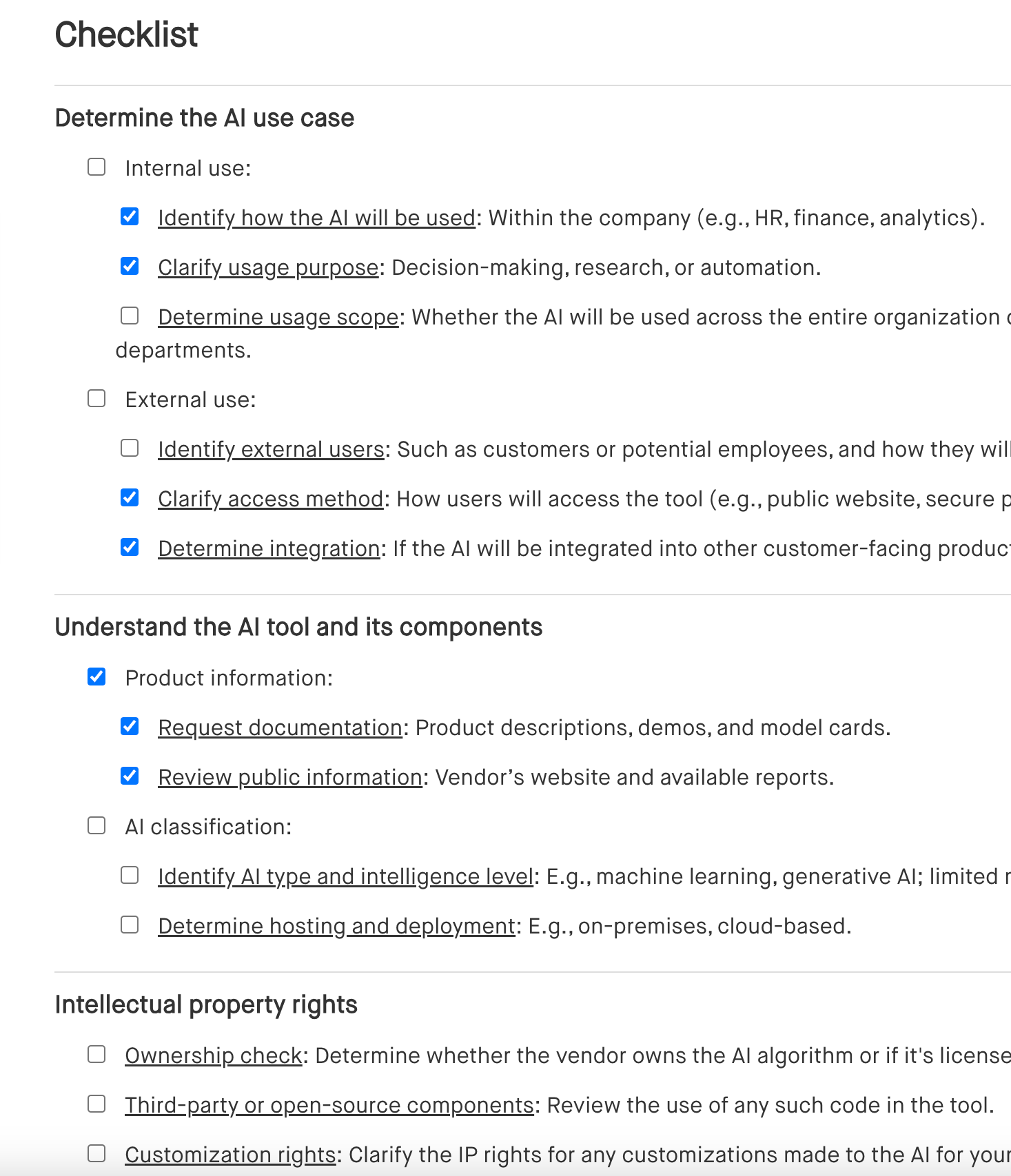
Outlines key steps for AI vendor due diligence, including evaluating the vendor’s technology, assessing data security measures, reviewing compliance with regulations, and verifying their track record and support capabilities.
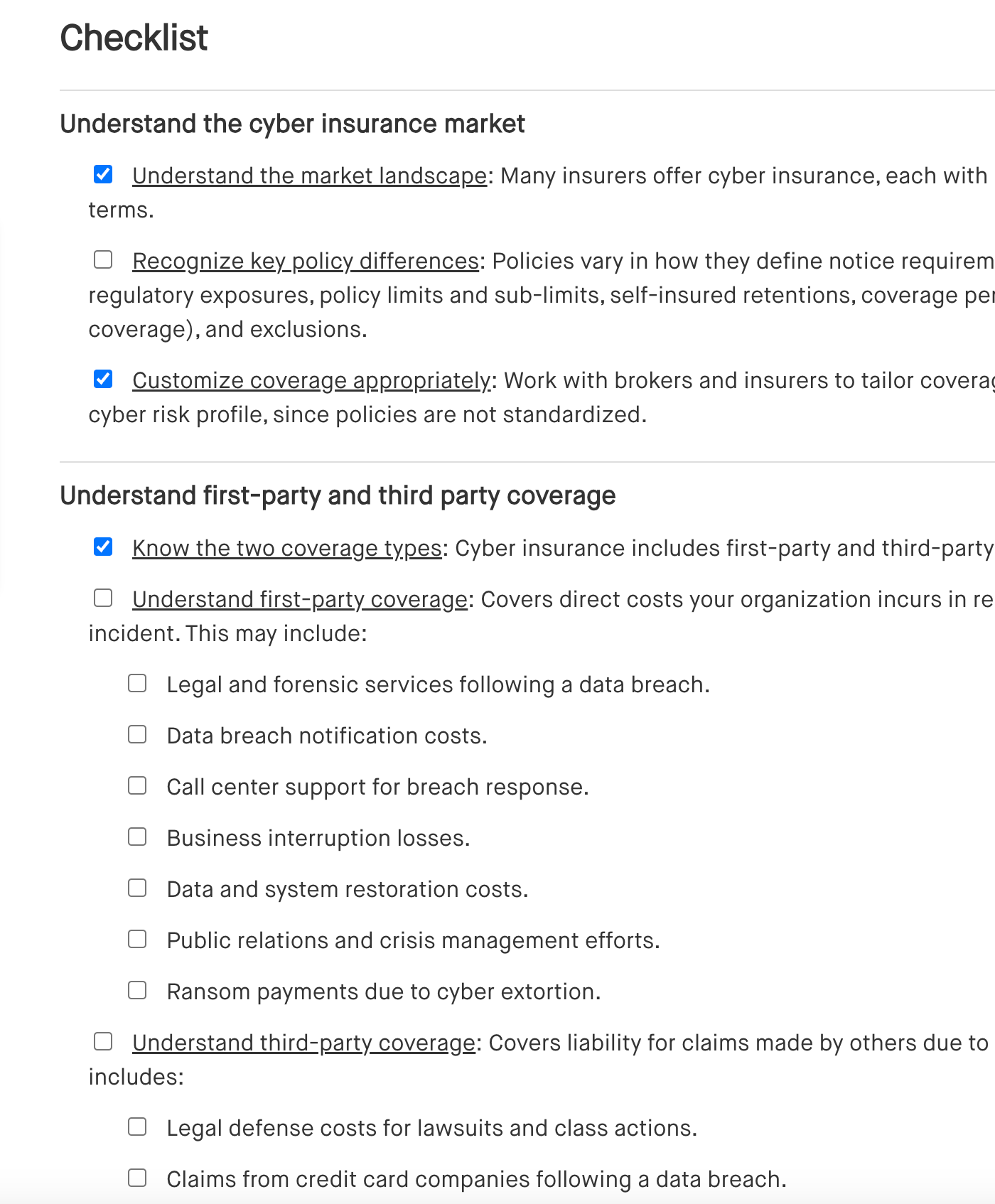
Outlines the steps for obtaining cyber insurance, including assessing risk exposure, reviewing policy options, evaluating coverage limits, and ensuring compliance with the insurer’s requirements.
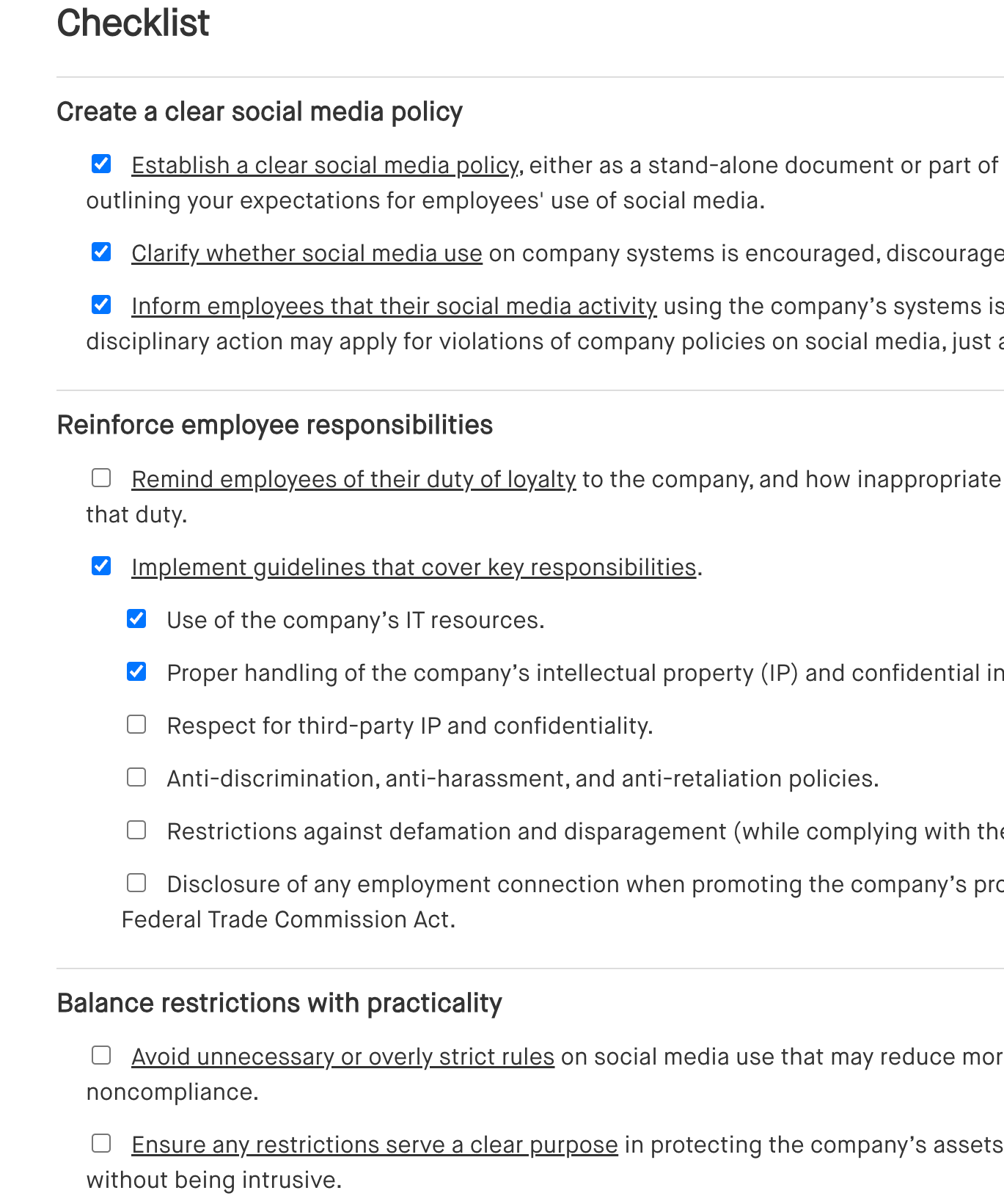
Outlines guidelines for employee use of social media, including setting clear boundaries, monitoring activity, and ensuring alignment with company values and policies.