Sexual harassment prevention training: Free checklist
Start a new document with this content. Open the editor to build from scratch — paste in what you need and keep writing.
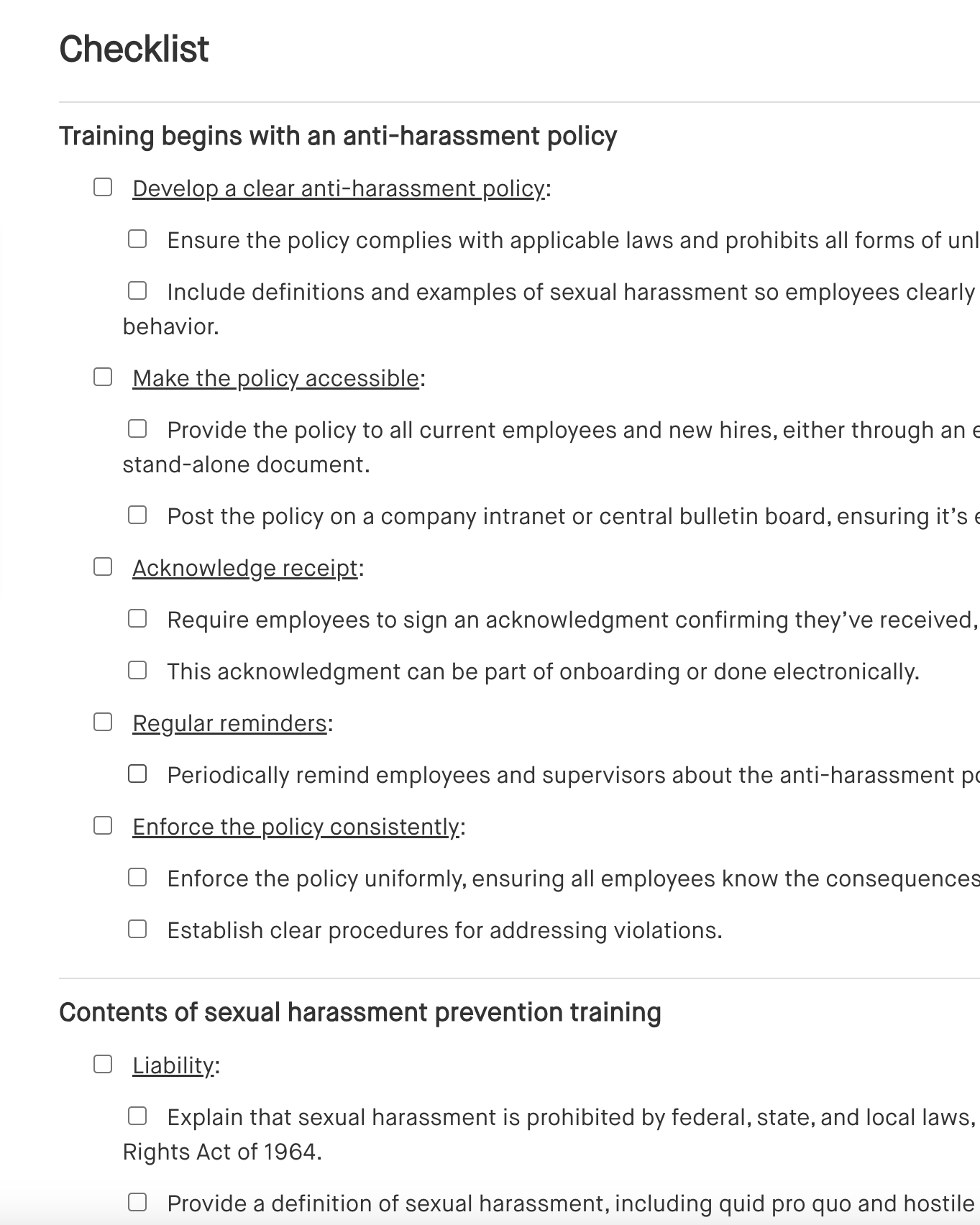
Sexual harassment prevention training checklist
Sexual harassment in the workplace is a violation of Title VII of the Civil Rights Act of 1964 and many state and local laws. It includes unwelcome sexual advances, requests for sexual favors, and other inappropriate conduct based on gender. Beyond legal violations, sexual harassment can lead to costly lawsuits, lower employee morale, and increased turnover. Employers are responsible for taking steps to prevent harassment and ensure a safe, respectful environment for all employees.
One essential measure for preventing harassment is offering sexual harassment prevention training. This training reinforces the company’s anti-harassment policy and ensures employees understand the impact of inappropriate behavior. It’s not just a best practice—it’s legally required in several states. For example, states like California and New York have specific laws that mandate employers to provide sexual harassment training at regular intervals, especially to supervisors and managers. California, for instance, requires two hours of training for supervisors and one hour for nonsupervisory employees.
Training may vary by state or local law, which can dictate:
- Who must be trained: Some states require all employees to be trained, while others focus only on supervisors.
- Training length: States like California require one hour of training for nonsupervisory employees and two hours for supervisors.
- Training methods: Online training is allowed in certain states, like California and Connecticut, but it must be interactive and effective.
- Content requirements: Different states specify what topics need to be covered, such as recognizing harassment, how to report it, and legal consequences.
- Trainer qualifications: In some areas, only qualified trainers may be allowed to conduct the training.
- Recordkeeping: States may require employers to maintain records of the training, including who was trained and when it occurred.
Even if your state doesn’t legally require sexual harassment prevention training, it’s still best practice to implement it. Employers who train their staff regularly create a safer and more respectful workplace, reduce the risk of harassment claims, and demonstrate a clear commitment to employee well-being.
This sexual harassment prevention training checklist is designed to help employers ensure their training programs comply with legal requirements and best practices. By following this checklist, employers can create a safer, more inclusive workplace while reducing the risk of costly lawsuits and fostering a positive environment for all employees.
The checklist guides you through essential steps, from understanding state and local laws to delivering comprehensive training that effectively addresses sexual harassment. It also helps ensure that your organization maintains compliance with evolving regulations and demonstrates a commitment to workplace safety and respect.
How to use this sexual harassment prevention training checklist
This sexual harassment prevention training checklist is designed to guide you through building and delivering effective training for your workplace. Here’s how to use it:
- Start with your policy: Ensure your anti-harassment policy is clear, up to date, and accessible to all employees. The checklist will help make sure your training reinforces this policy.
- Follow the steps in order: Each section of the checklist walks you through the key topics, from creating the policy to handling reporting procedures. Stick to the order to make sure you cover all necessary points.
- Tailor the content: Customize the checklist to fit your organization’s size, structure, and state laws. Make sure the examples, definitions, and reporting procedures align with your specific workplace.
- Train both employees and supervisors: Use this checklist to ensure all employees receive the same core training, while also offering extra guidance and responsibilities for supervisors and managers.
- Regular updates: Keep this checklist updated to reflect changes in the law or company policies. After each training session, review what worked and what can be improved for next time.
Checklist
Training begins with an anti-harassment policy
[ ] Develop a clear anti-harassment policy:
[ ] Ensure the policy complies with applicable laws and prohibits all forms of unlawful harassment.
[ ] Include definitions and examples of sexual harassment so employees clearly understand unacceptable behavior.
[ ] Make the policy accessible:
[ ] Provide the policy to all current employees and new hires, either through an employee handbook or as a stand-alone document.
[ ] Post the policy on a company intranet or central bulletin board, ensuring it’s easily accessible to everyone.
[ ] Acknowledge receipt:
[ ] Require employees to sign an acknowledgment confirming they’ve received, read, and understood the policy.
[ ] This acknowledgment can be part of onboarding or done electronically.
[ ] Regular reminders:
[ ] Periodically remind employees and supervisors about the anti-harassment policy to keep it top of mind.
[ ] Enforce the policy consistently:
[ ] Enforce the policy uniformly, ensuring all employees know the consequences of non-compliance.
[ ] Establish clear procedures for addressing violations.
Contents of sexual harassment prevention training
[ ] Liability:
[ ] Explain that sexual harassment is prohibited by federal, state, and local laws, including Title VII of the Civil Rights Act of 1964.
[ ] Provide a definition of sexual harassment, including quid pro quo and hostile work environment harassment.
[ ] Clarify employer liability for harassment by supervisors, co-workers, and third parties (such as vendors or customers).
[ ] Highlight supervisor liability under specific state laws, where supervisors and sometimes all employees can be held individually responsible for harassment.
[ ] Emphasize that employers can be held liable for harassment on social media or outside the workplace (such as at company events or business trips).
[ ] Explain that harassment does not need to be motivated by sexual desire, and gender is irrelevant—anyone can harass or be harassed.
[ ] Supervisor responsibility:
[ ] Define who qualifies as a "supervisor" under federal law (those with the power to take tangible employment actions).
[ ] Review broader state definitions of supervisor, if applicable.
[ ] Stress that supervisors and managers must act if they witness or learn about harassment, regardless of whether a formal complaint is made.
[ ] Harasser defined:
[ ] Clarify that harassers can be supervisors, co-workers, customers or clients, vendors or individuals doing business with the employer.
[ ] Procedure for reporting harassment:
[ ] Train employees on how to report harassment, including formal and informal methods.
[ ] Encourage the use of anonymous complaints, hotline numbers, or email addresses set up specifically for reporting.
[ ] Emphasize that employees should report any instance of harassment they experience or observe, including unspoken signs like behavior or body language.
[ ] Retention and remedies:
[ ] Make it clear that retaliation against employees who report harassment is unlawful.
[ ] Outline the possible remedies for victims of harassment, including back pay, front pay, emotional distress damages, punitive damages, and reinstatement.
Communicate a clear anti-harassment policy
[ ] Reinforce that the training and the employer’s anti-harassment policy are key strategies to eliminate harassment in the workplace.
[ ] Ensure all employees understand that failure to comply with the policy will result in disciplinary action, up to and including termination.
Promote accountability
[ ] Make it clear that every employee, regardless of their role, is responsible for maintaining a harassment-free environment.
[ ] Highlight the responsibility of supervisors and managers to take immediate action if they witness or hear about any harassment incidents.
Provide external resources
[ ] Include contact information for external agencies like the Equal Employment Opportunity Commission (EEOC) for employees who wish to file a harassment complaint.
[ ] Ensure employees are aware of their rights to report harassment externally if they feel their concerns are not properly addressed internally.
Encourage reporting
[ ] Create an open, supportive environment where employees feel comfortable reporting harassment without fear of retaliation.
[ ] Provide multiple reporting channels (e.g., anonymous hotline, email) to ensure everyone has a safe and easy way to report concerns.
[ ] Emphasize that harassment is a serious violation of company policy, and offenders will face strict consequences, including possible termination.
Examples of sexual harassment
[ ] Training should provide clear examples of behavior that constitutes sexual harassment and is prohibited by the employer and by law. These include:
[ ] Unnecessary touching or brushing against someone’s body or hair.
[ ] Standing or sitting too close to someone in a way that makes them uncomfortable.
[ ] Patting someone on inappropriate areas like the buttocks or touching sensitive parts such as breasts, thighs, or genitals.
[ ] Exposing body parts to someone without consent.
[ ] Following someone in an unwanted or inappropriate manner.
[ ] Blocking or impeding someone’s movement to make them uncomfortable.
[ ] Initiating unwelcome sexual activity, such as kissing or touching.
[ ] Rubbing or touching anyone sexually in the presence of others.
[ ] Making sexual gestures or blowing kisses.
[ ] Staring or leering at someone.
[ ] Looking someone up and down in a suggestive manner.
[ ] Repeating unwelcome requests for dates or flirtations after someone has expressed disinterest.
[ ] Telling inappropriate jokes or stories with sexual innuendo.
[ ] Using belittling terms like “honey,” “sweetheart,” or “little lady” in a professional setting.
[ ] Using offensive language or expressions, even in other languages, that demean or belittle individuals.
[ ] Displaying or sharing sexually suggestive objects, images, or media, such as pictures, cartoons, or videos.
[ ] Sending inappropriate messages, notes, or invitations that contain sexual content.
[ ] Giving unwelcome gifts with romantic or sexual undertones.
Explain the reporting procedures
[ ] Employees should report harassment as soon as possible after an incident occurs.
[ ] Outline the various ways employees can report harassment, such as directly to a supervisor or manager, through a designated HR contact, or via an anonymous hotline or email.
[ ] Encourage senior employees to provide feedback on whether the reporting process is effective and accessible. If employees are not using the policy, it may need revisions.
[ ] Emphasize the importance of documenting all complaints and any steps the employer takes in response to those complaints.
[ ] Require supervisors and managers to stay familiar with the company’s complaint investigation and resolution procedures.
[ ] Clarify that supervisors and managers should never guarantee confidentiality about reports or investigations. They must explain that the information will be shared with appropriate personnel to address the issue properly.
[ ] Assure employees that any good faith reports of sexual harassment will not result in retaliation, such as termination or demotion.
Explain the responsibilities of employees
[ ] Employees are responsible for following the employer's reporting guidelines to ensure harassment issues are addressed promptly and effectively.
[ ] All employees must fully cooperate during any investigations related to harassment claims. This includes providing honest and complete information.
[ ] Employees must understand and commit to not engaging in any form of harassment, as defined by the company’s policy and the law.
[ ] Employees must not retaliate against anyone who reports harassment or participates in an investigation. Retaliation is prohibited and may lead to disciplinary action.
Additional requirements for supervisors and managers
[ ] Supervisors and managers must be fully aware of the company's anti-harassment policy and reporting procedures.
[ ] Ensure that all employees under their supervision know the policy and reporting procedures.
[ ] Supervisors and managers must immediately report any harassment they observe or that is reported to them, following company procedures.
[ ] It's their responsibility to take action to stop inappropriate behavior in the workplace and avoid tolerating or ignoring harassing conduct.
[ ] Supervisors and managers should be role models by avoiding participation in any harassing behaviors, including inappropriate jokes or remarks.
[ ] In situations where alcohol is involved, such as work events, managers should make wise choices—avoid suggestive comments or inappropriate behavior.
[ ] When in doubt, supervisors should reach out to human resources for advice on proper conduct or resolving concerns.
[ ] Managers must cooperate with investigations and avoid impeding the process in any way.
[ ] They must never retaliate against an employee who reports harassment or participates in an investigation.
Frequently asked questions (FAQs)
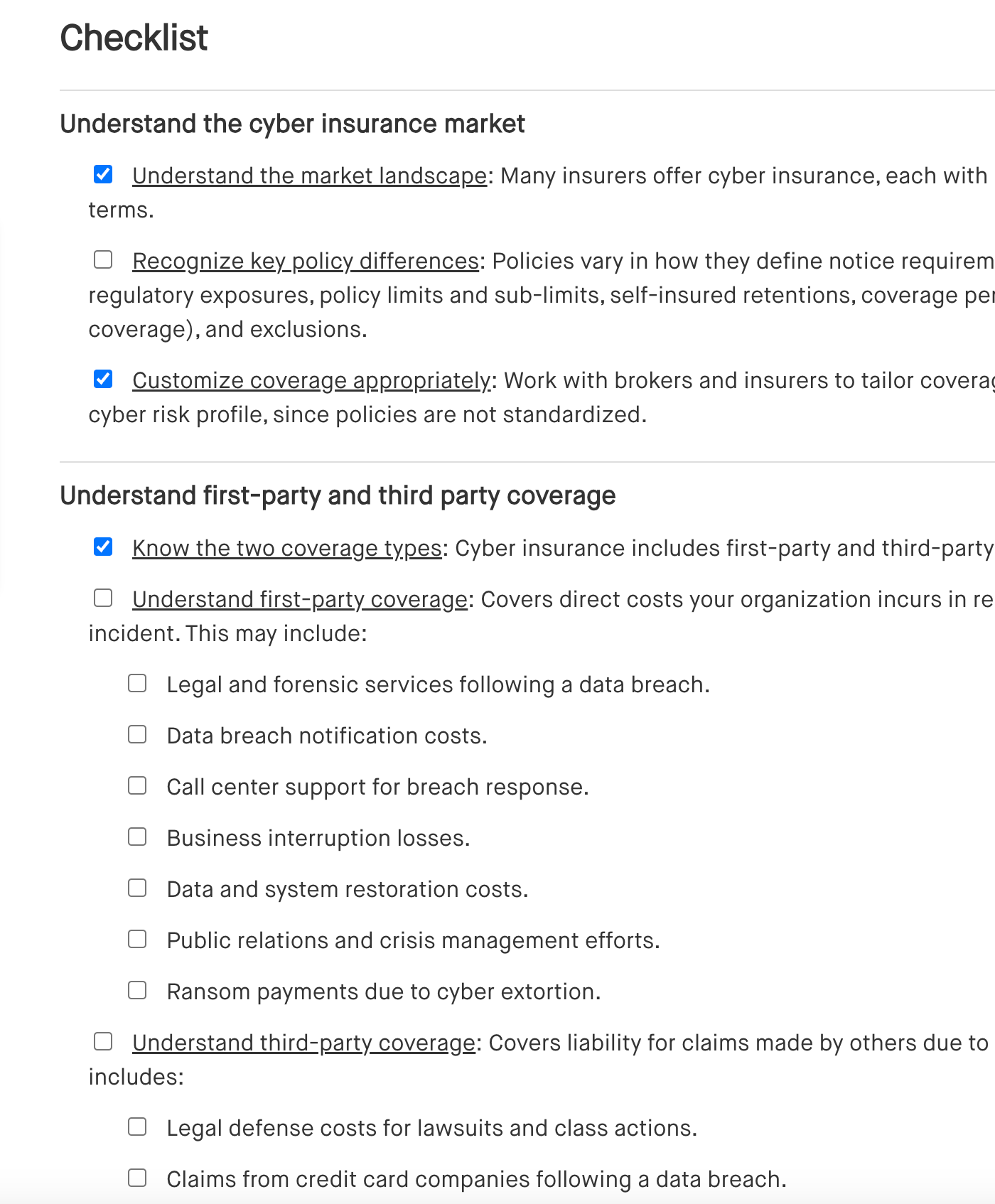
Outlines the steps for obtaining cyber insurance, including assessing risk exposure, reviewing policy options, evaluating coverage limits, and ensuring compliance with the insurer’s requirements.
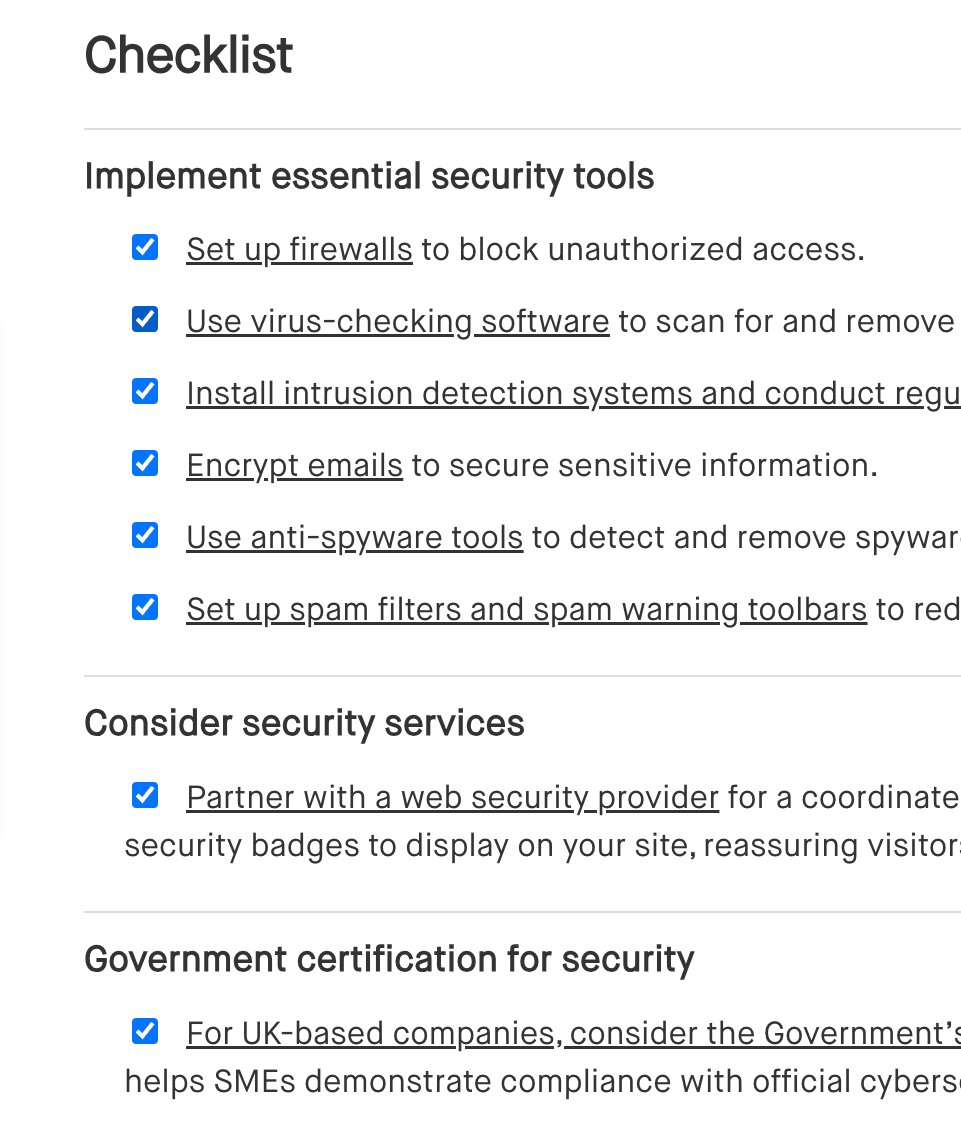
Outlines essential measures to safeguard your website from attacks, focusing on security protocols, regular updates, and proactive threat monitoring.
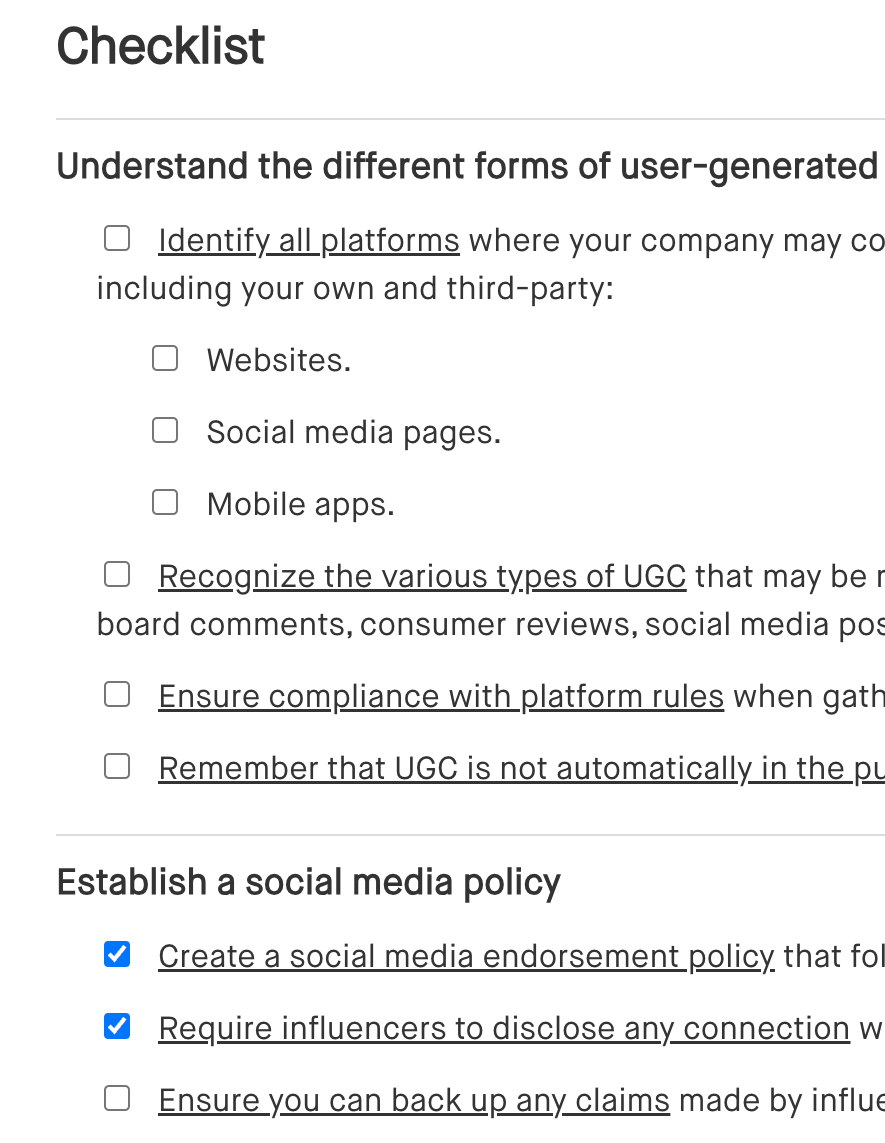
Highlights key legal considerations when dealing with user-generated content, including copyright, consent, and platform liability.