Name, Image, and Likeness Release Form (Texas): Free template
Customize it in Cobrief, send it for signature, and move straight to payment once it's approved.
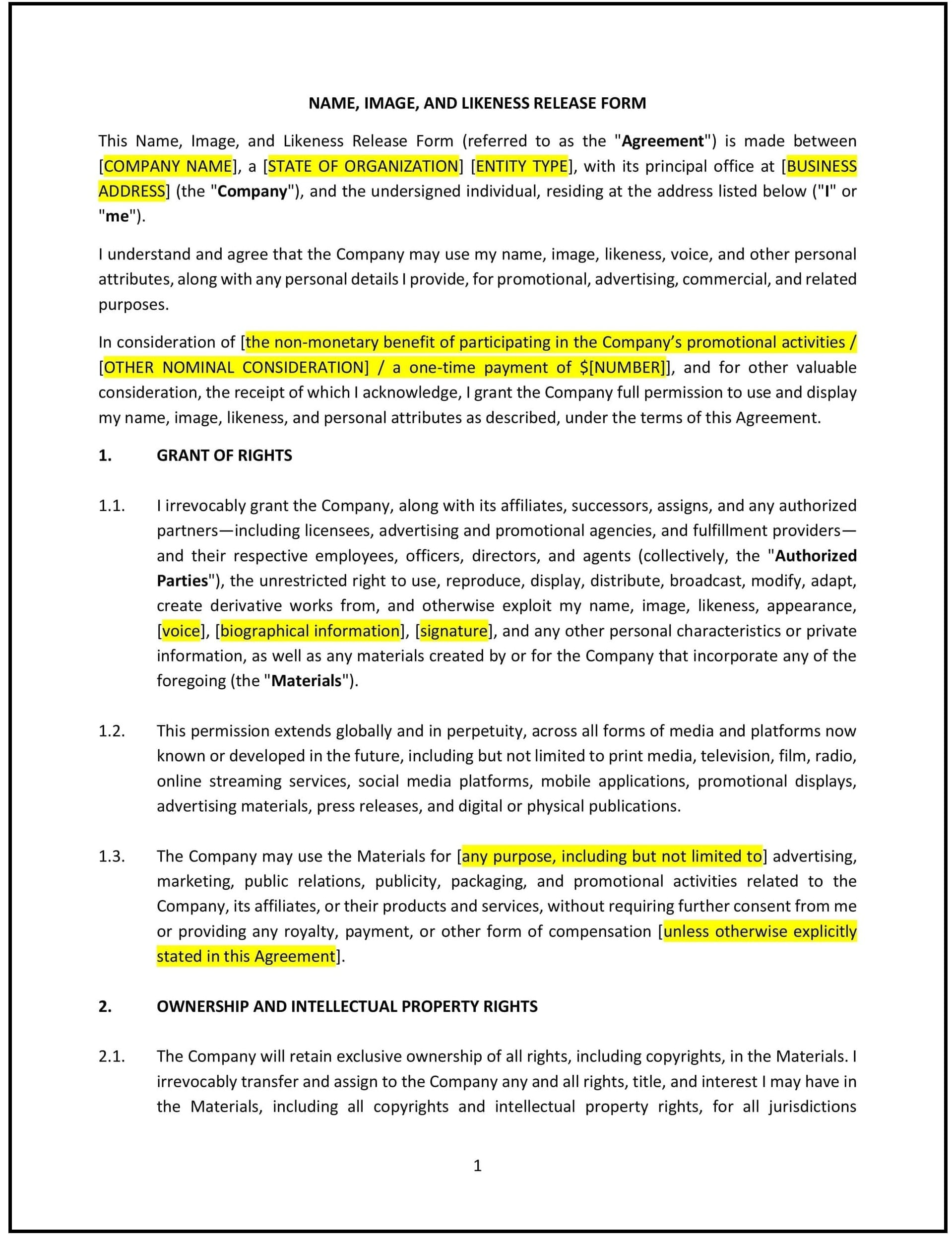
Customize this template for free
TL;DR
A Name, Image, and Likeness Release Form tailored for Texas that allows individuals to grant permission for the use of their personal identifiers in marketing and promotional activities. It ensures compliance with state laws and protects both the individual and the organization from legal issues, making it essential for businesses and marketers working with athletes or public figures.
Name, Image, and Likeness Release Form (Texas)
A Name, Image, and Likeness Release Form is a legal document that grants permission to use an individual’s name, image, likeness, voice, or other personal identifiers for promotional, marketing, or other purposes. In Texas, these forms must comply with state laws regarding consent, privacy, and publicity rights. A well-drafted release form ensures that the party providing consent understands how their personal information will be used and protects the organization using the content from potential legal disputes.
For example, a Dallas-based business might use an athlete’s name and image in a marketing campaign to promote its services. A clear Name, Image, and Likeness Release Form ensures that the individual consents to the use of their personal identifiers and outlines the terms of usage.
Tips for drafting and maintaining a Name, Image, and Likeness Release Form in Texas
- Identify the parties involved: Clearly specify the names and contact information of both the individual granting consent and the organization receiving the release.
- Example: “This Name, Image, and Likeness Release Form is entered into by [Individual Name], residing at [Address], and [Organization Name], located at [Address].”
- Define the purpose of the release: Describe how the name, image, likeness, or other personal identifiers will be used (e.g., websites, social media, print materials, advertisements).
- Example: “The undersigned grants [Organization Name] the right to use their name, image, likeness, and any accompanying content for promotional purposes.”
- Specify contributions: Outline what the individual is providing, such as photos, videos, audio recordings, or written statements.
- Example: “The undersigned agrees to provide their name, image, likeness, and/or voice in the form of [photo/video/audio recording/written statement] for use by [Organization Name].”
- Clarify ownership and usage rights: Specify whether the organization has exclusive or non-exclusive rights to use the content.
- Example: “The undersigned grants [Organization Name] non-exclusive rights to use the content in perpetuity unless otherwise stated.”
- Outline management and editing rights: Define whether the organization can edit or modify the content.
- Example: “The undersigned consents to the editing, alteration, or reproduction of the content for any purpose deemed appropriate by [Organization Name].”
- Include confidentiality clauses (if applicable): Protect sensitive information shared during the process, especially if the release involves proprietary details.
- Example: “The undersigned agrees to keep any proprietary information related to [Organization Name] strictly confidential.”
- Address termination terms: Specify conditions under which the release may be revoked or terminated.
- Example: “This release may be revoked by the undersigned upon written notice, but [Organization Name] may continue using content already published or distributed.”
- Outline governing law and jurisdiction: Ensure the agreement specifies that it is governed by Texas law and identifies the appropriate courts for dispute resolution.
- Example: “This agreement is governed by the laws of the State of Texas. Any disputes arising under this agreement shall be resolved in the courts of [County], Texas.”
- Include signatures: Both parties must sign and date the form to make it legally binding.
- Example: “IN WITNESS WHEREOF, the undersigned has executed this Name, Image, and Likeness Release Form as of the date first written above.”
Frequently asked questions (FAQs)
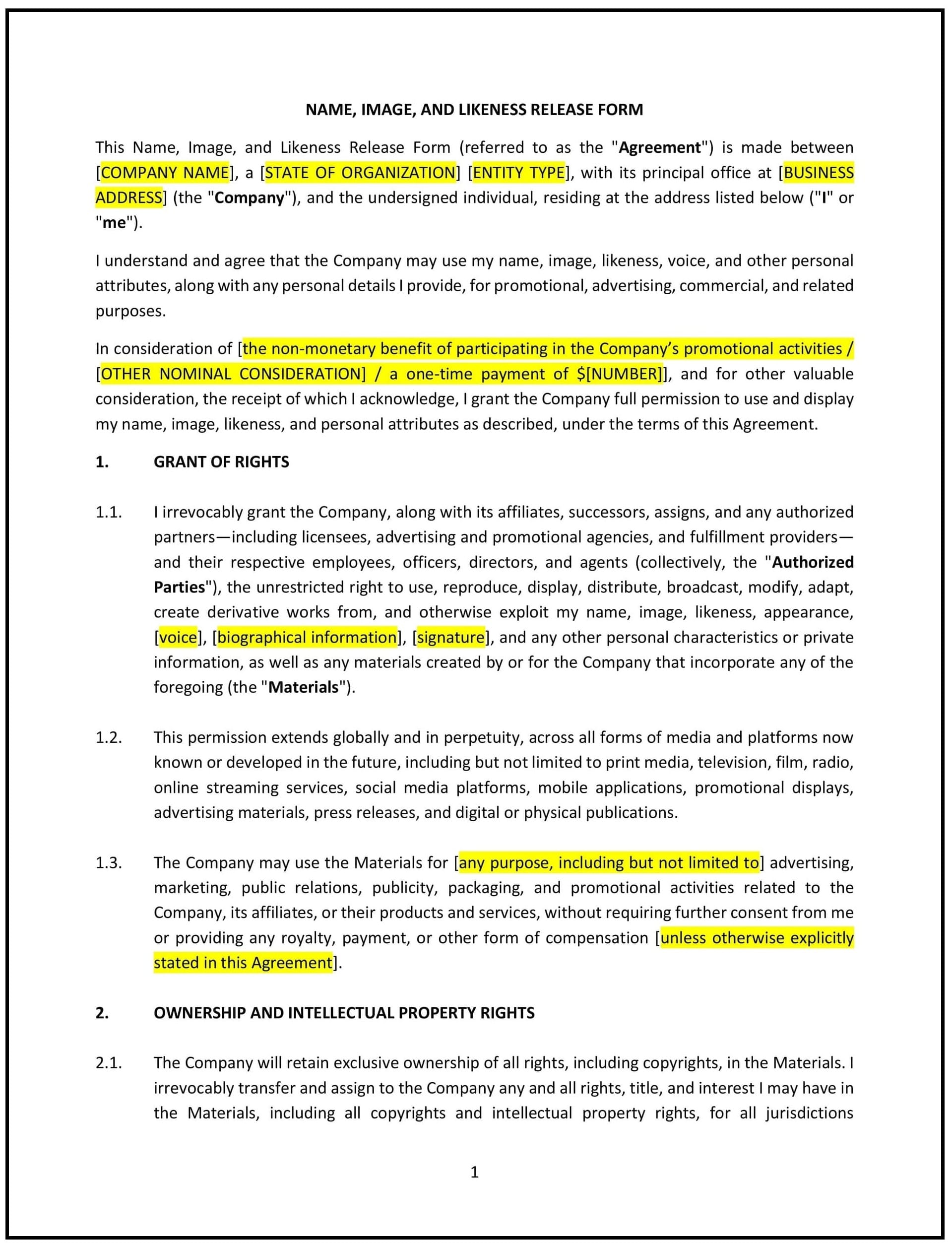
Grants permission to use an individual's name, image, likeness, or voice for promotion, outlining rights, usage, confidentiality, and Tennessee law.
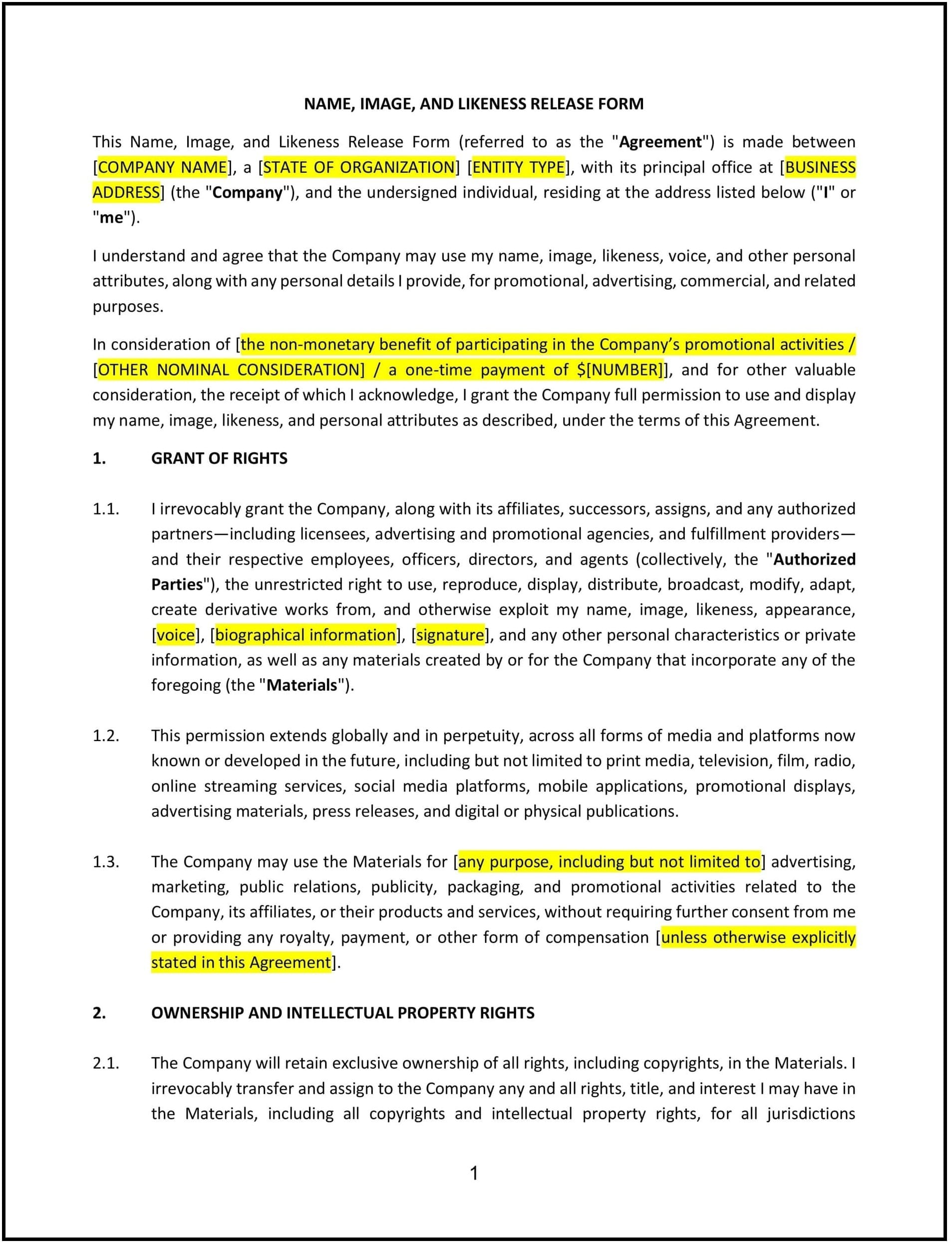
Grants permission to use an individual's name, image, likeness, and voice for promotion, detailing rights, usage, confidentiality, and Louisiana law.
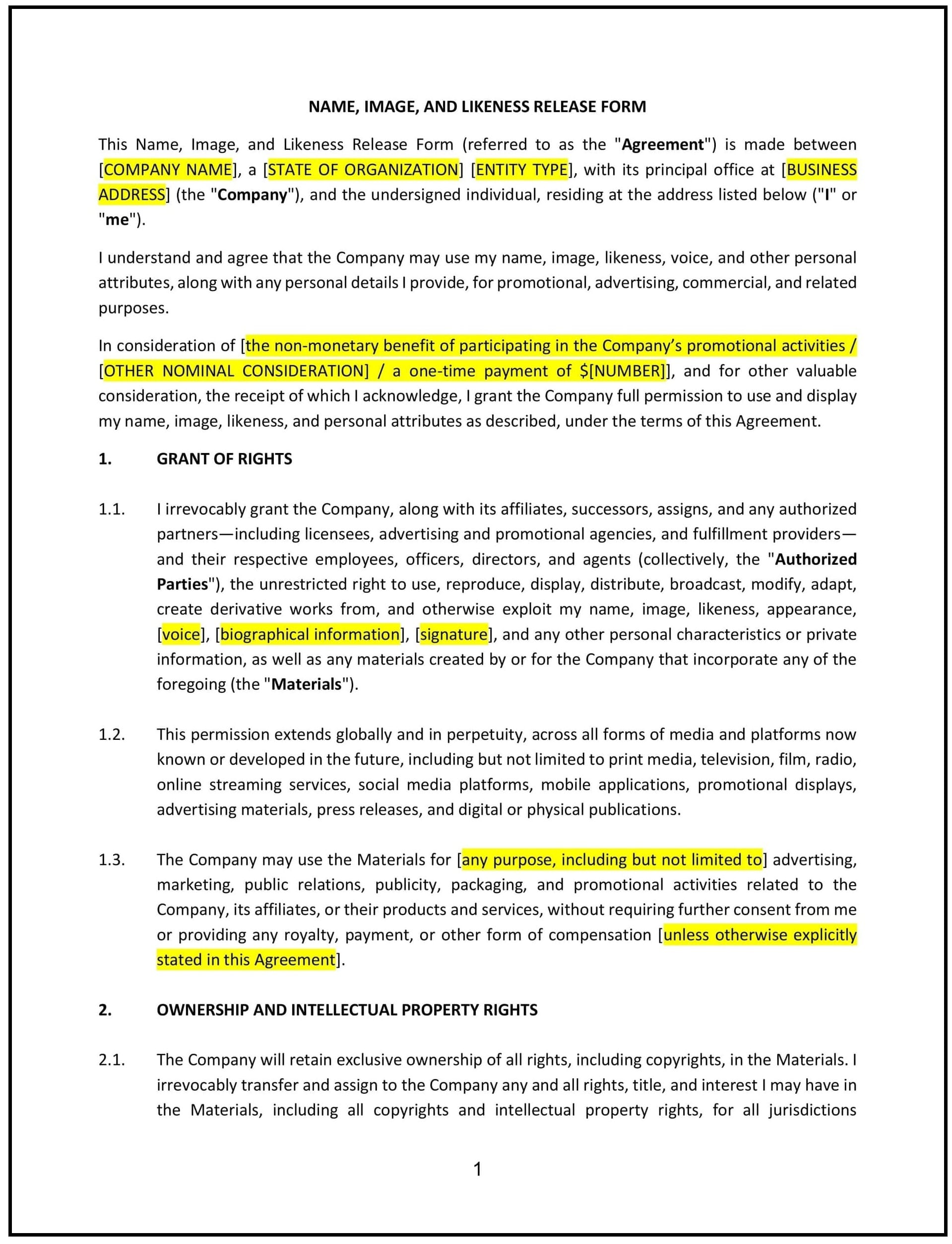
Grants permission to use an individual's name, image, likeness, and voice for promotion, detailing rights, usage, confidentiality, and Arizona law compliance.
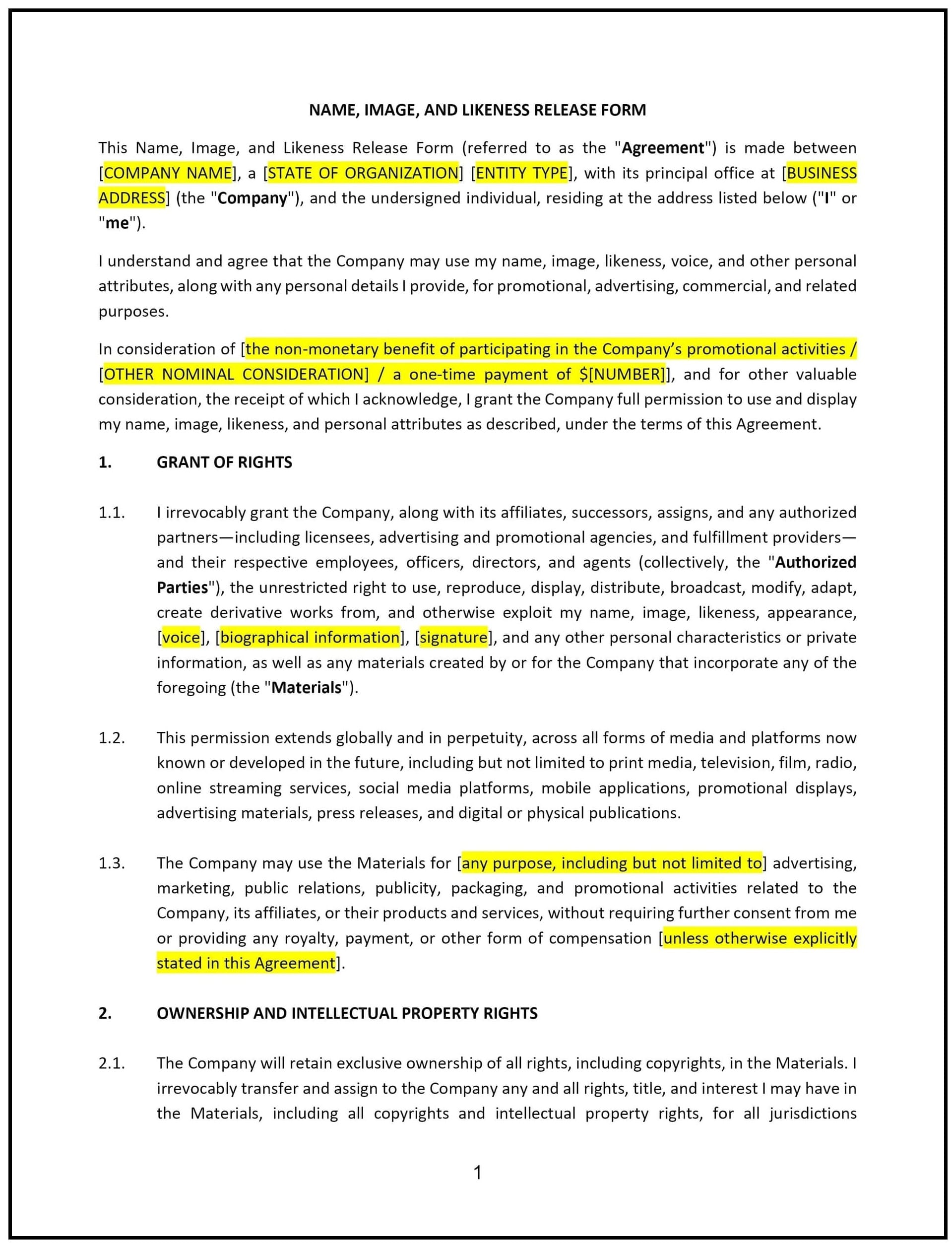
Grants permission to use an individual's name, image, likeness, or voice for promotion, detailing rights, usage, confidentiality, and governing law in Alabama.
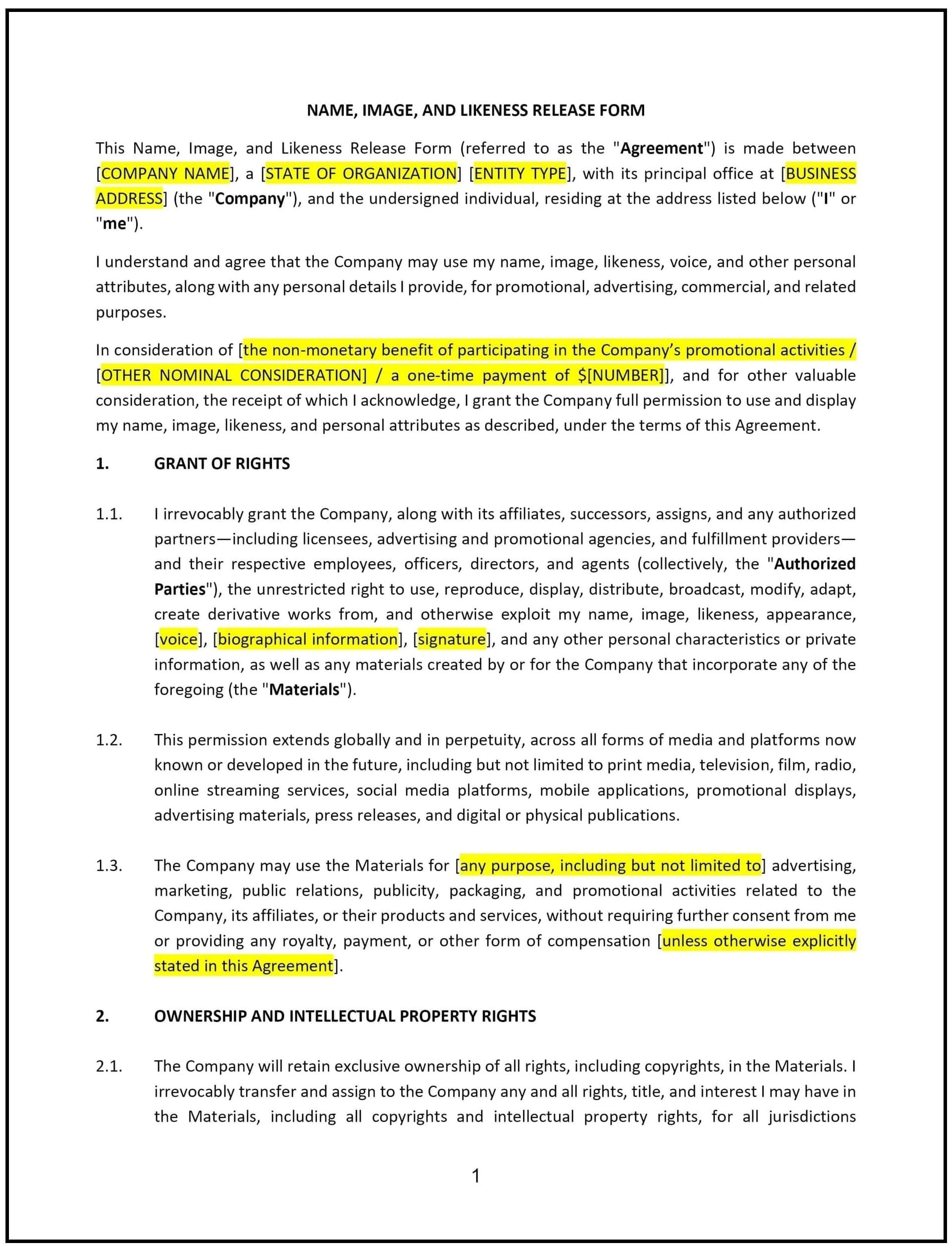
Grants permission to use an individual's name, image, likeness, or voice for promotion, outlining rights, usage, confidentiality, and Alaska law compliance.