Service Level Agreement (SLA) (Tennessee): Free template
Customize it in Cobrief, send it for signature, and move straight to payment once it's approved.
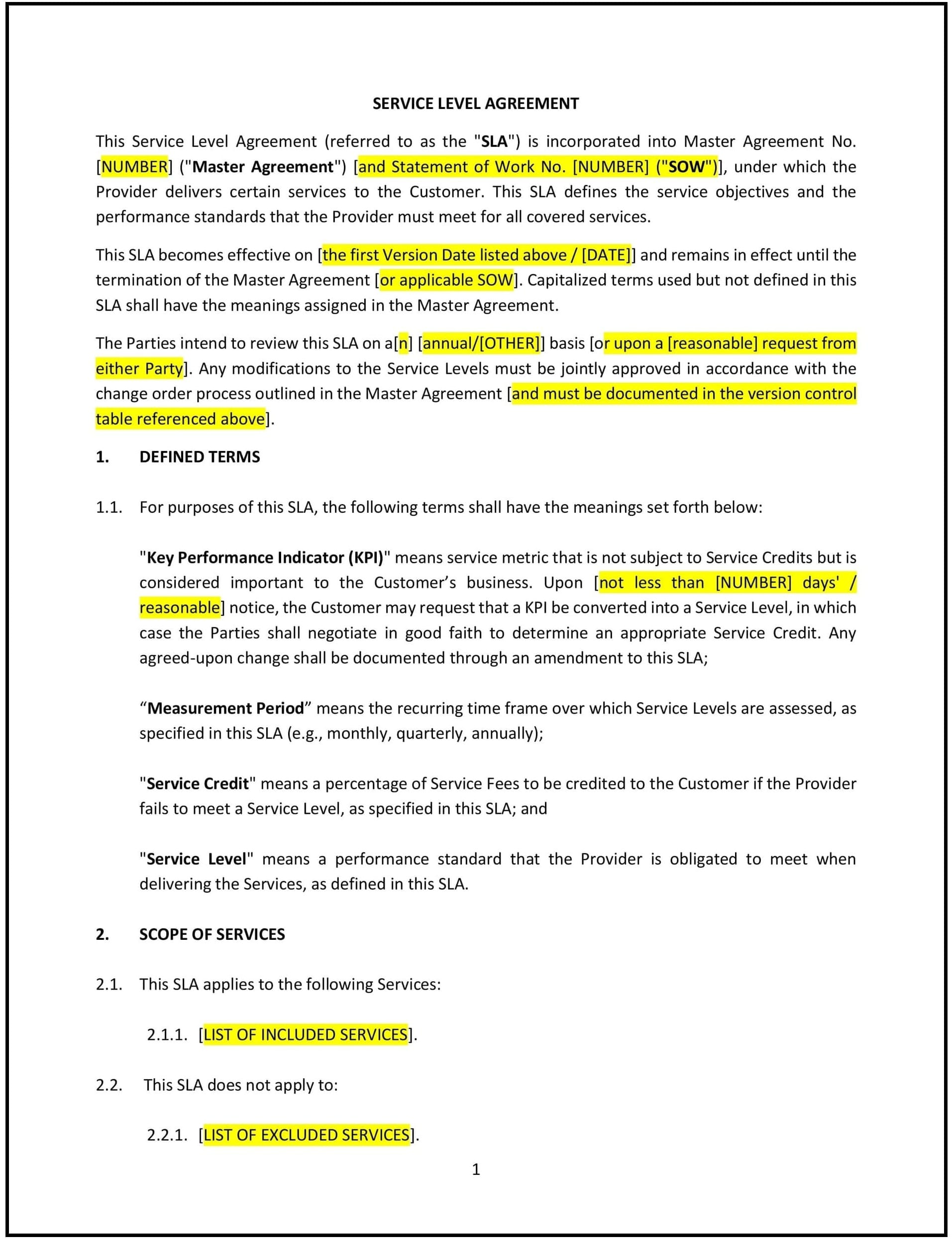
Customize this template for free
TL;DR
A Service Level Agreement (SLA) template tailored for Tennessee, outlining the expectations for service performance, availability, and responsibilities between service providers and clients. It is commonly used in industries like IT and healthcare to prevent disputes and ensure accountability by defining service standards, client obligations, and remedies for underperformance.
Service Level Agreement (SLA) (Tennessee)
A Service Level Agreement (SLA) in Tennessee is a legally binding contract that sets expectations for service performance, availability, and responsibilities between a service provider and a client. It ensures that both parties understand the agreed-upon service standards, response times, and remedies for service failures. SLAs are widely used in industries such as IT services, cloud computing, managed services, consulting, and maintenance contracts.
Tennessee contract law governs SLAs, but businesses operating in regulated industries such as healthcare, finance, and telecommunications must also comply with federal and industry-specific legal requirements. A well-structured SLA helps prevent disputes, promotes accountability, and protects business owners from poor service performance.
Tips for drafting and maintaining a Service Level Agreement in Tennessee
- Clearly define the scope of services, detailing exactly what is included and excluded. This prevents disputes over what the service provider is obligated to deliver.
- Establish measurable performance standards, such as uptime guarantees, response times, and issue resolution deadlines, so both parties know what to expect.
- Outline client responsibilities, including any information, resources, or system access they must provide to help the provider meet the agreed service levels.
- Specify remedies for underperformance, such as service credits, refunds, or the right to terminate the contract. Tennessee law allows businesses to freely negotiate these terms.
- Include a dispute resolution process, specifying whether conflicts will be resolved through Tennessee courts, arbitration, or mediation. Arbitration is often preferred as a faster, cost-effective alternative to litigation.
- Address confidentiality and data security requirements, especially if the service provider handles sensitive information. Federal data protection laws may also apply depending on the nature of the services.
- Review and update the SLA regularly to ensure it remains relevant as business needs, technology, and regulations evolve.
Frequently asked questions (FAQs)
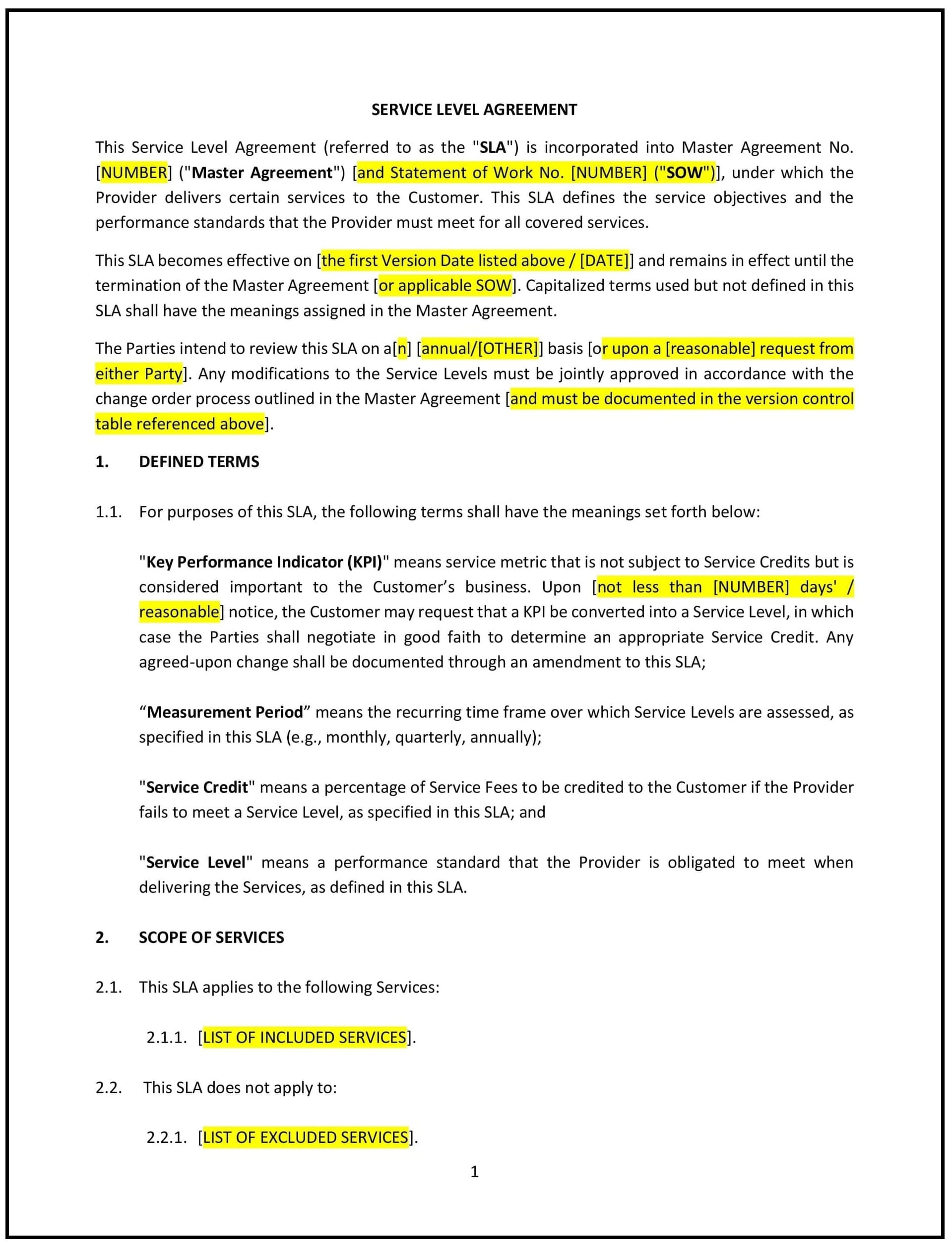
Learn how Texas SLAs set service performance standards, reduce disputes, and ensure accountability. Get tips on drafting and maintaining effective agreements.
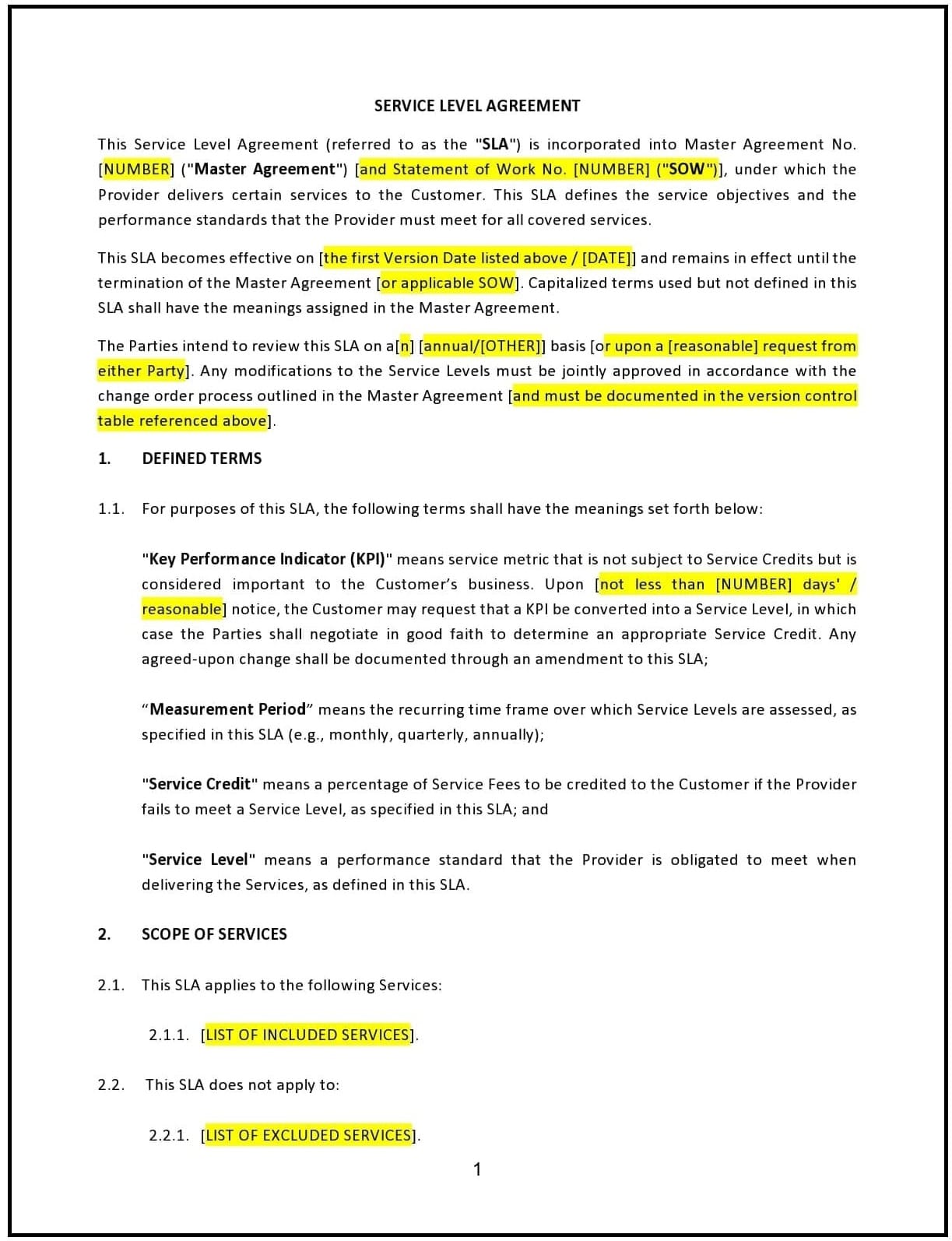
Defines service quality, availability, responsibilities, performance metrics, remedies, and legal compliance for service delivery between providers and clients.
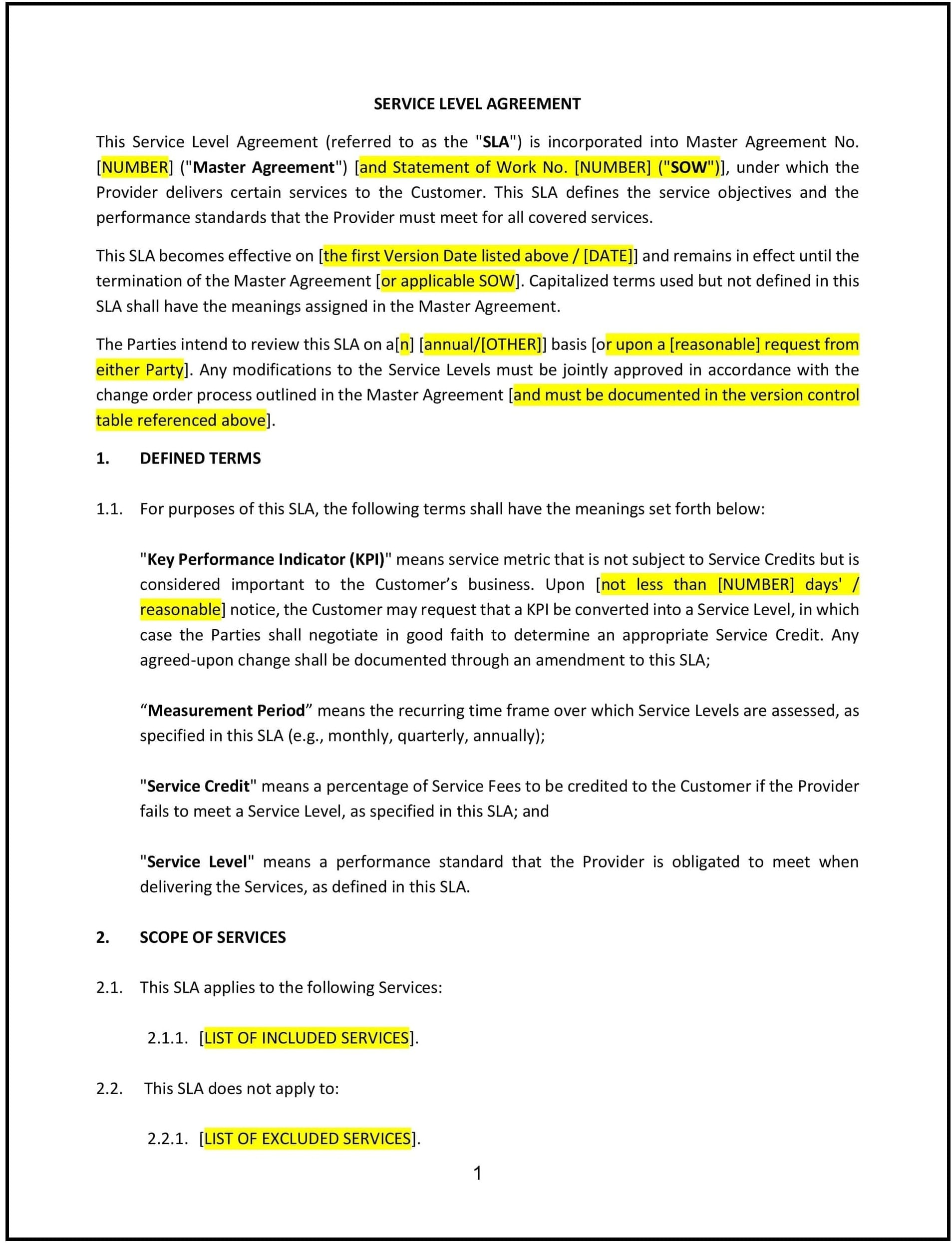
Establishes service expectations between provider and client in Georgia, detailing services, performance metrics, remedies, compliance, and dispute resolution.
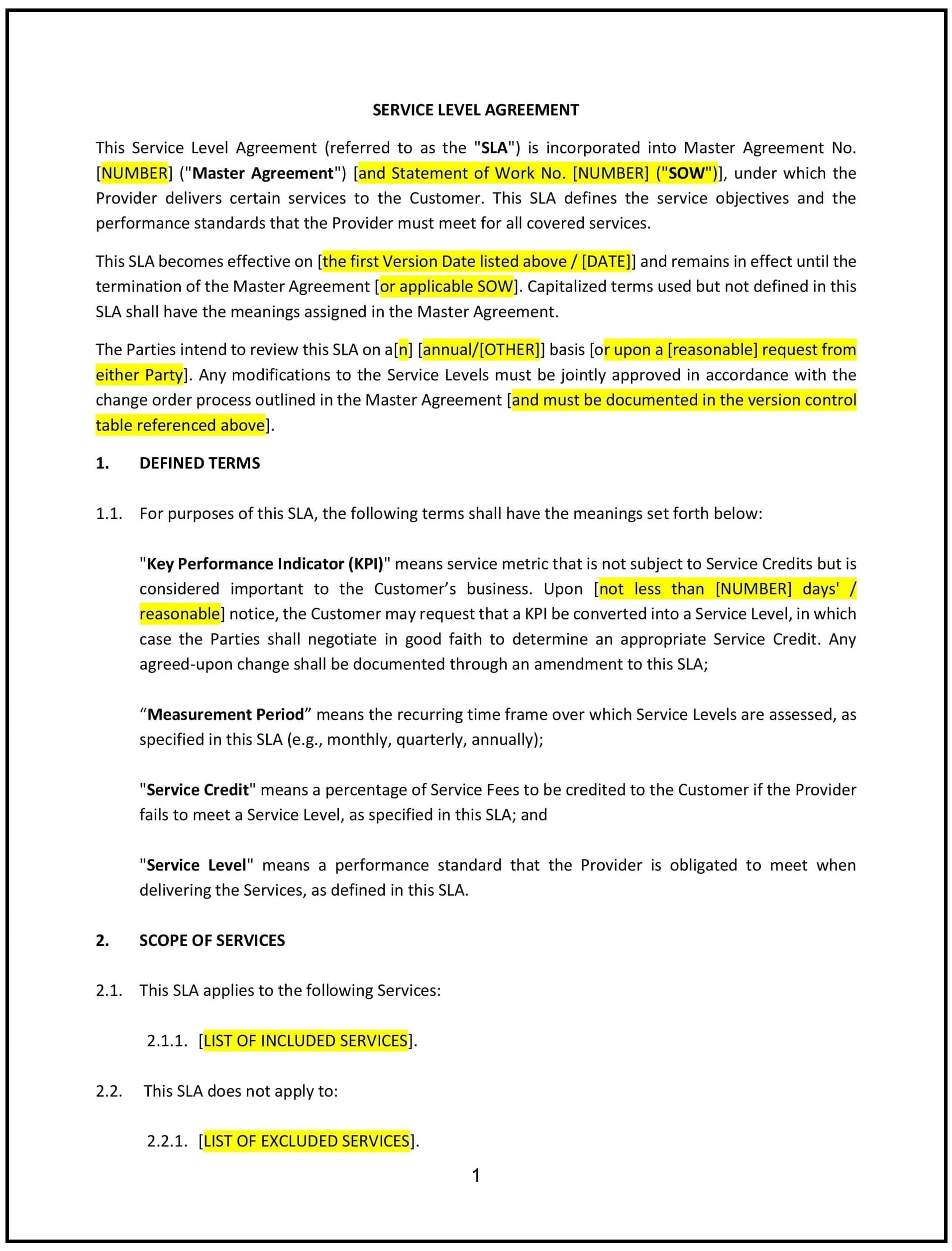
Defines service expectations, performance metrics, remedies, legal compliance, and dispute resolution for Arkansas-based service agreements.
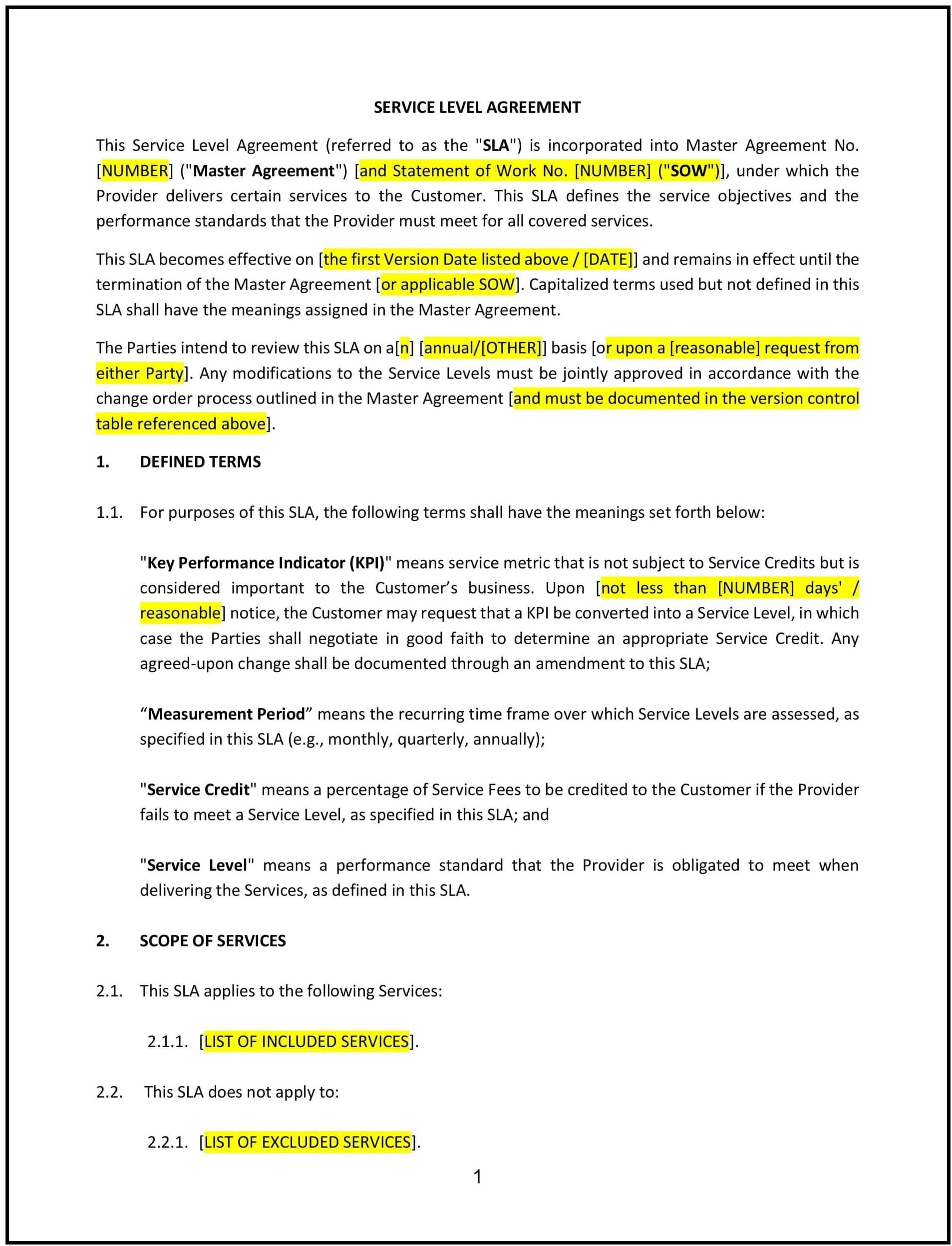
Establishes service expectations, performance metrics, remedies, dispute resolution, and Arizona-specific compliance for service provider and client agreements.