Letter of a change in leadership or organizational structure: Free template
Customize it in Cobrief and see the moment it's opened, signed, or actioned.
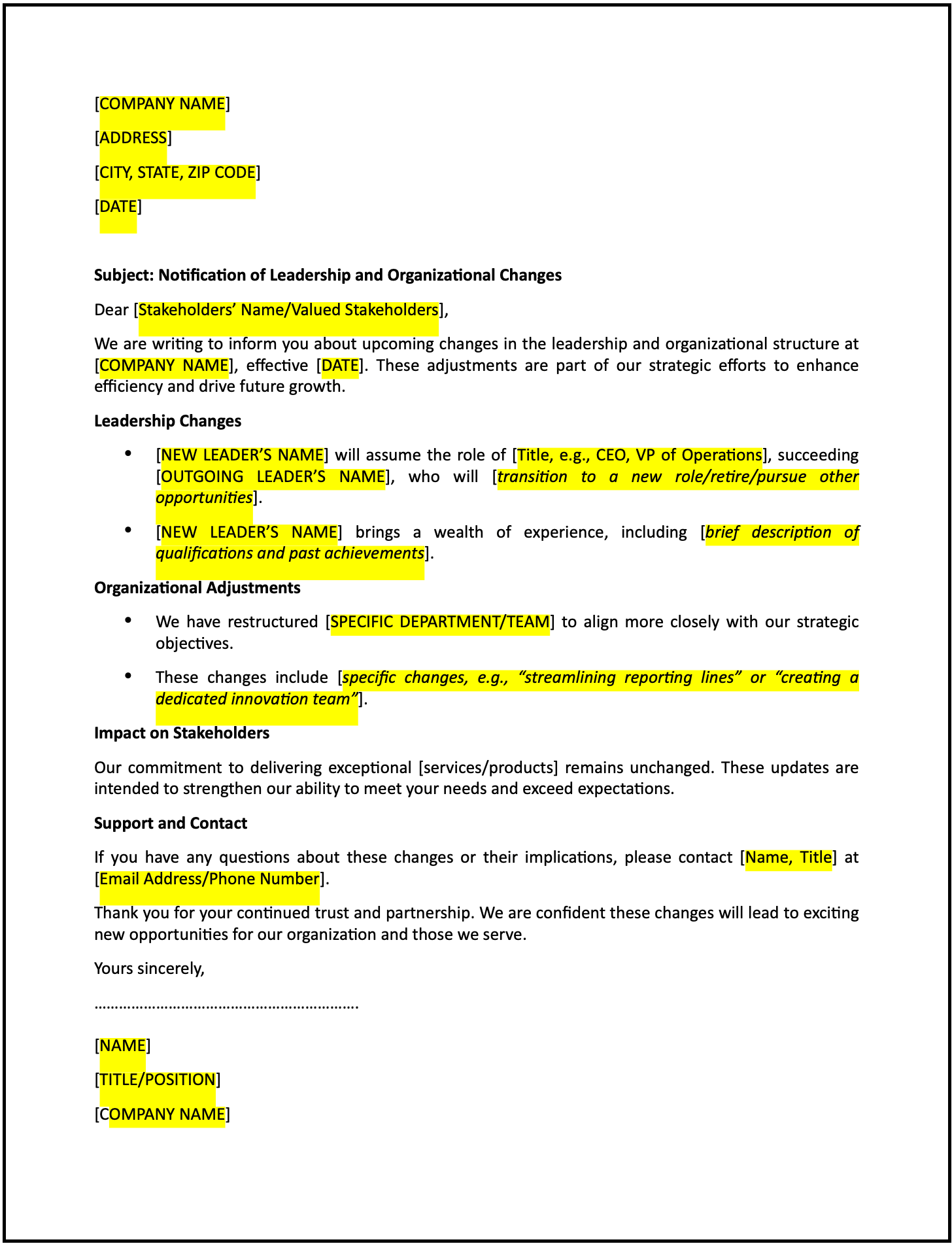
Customize this template for free
TL;DR
A formal letter template for notifying stakeholders about changes in leadership or organizational structure. It outlines the changes, provides context and rationale, and emphasizes the impact on the organization, promoting transparency and stability. Commonly used by HR professionals and executives to communicate significant shifts within a company.
Letter of a change in leadership or organizational structure
A notification letter of a change in leadership or organizational structure is a formal way to inform stakeholders, employees, or other relevant parties about significant changes in the company’s leadership or structure. This letter ensures transparency, explains the rationale, and outlines the impact of the changes.
How to use this letter of a change in leadership or organizational structure
- Open with the purpose: Begin by clearly stating that the letter is to inform recipients about the change in leadership or structure.
- Specify the change: Clearly describe the changes, such as new leadership appointments, promotions, or reorganized teams.
- Provide context: Briefly explain the rationale behind the change, such as strategic growth, market demands, or operational improvements.
- Highlight the impact: Describe how the changes will benefit the organization and any effects stakeholders should be aware of.
- Reaffirm stability: Emphasize the organization’s commitment to continuity, values, and strategic goals.
- Offer support: Provide resources or contacts to address questions or concerns about the changes.
- Maintain a professional tone: Ensure the letter is respectful, transparent, and forward-looking.
- Provide contact information: Include details for recipients to reach out with further inquiries.
Benefits of using a letter of a change in leadership or organizational structure
This letter template ensures a structured and professional way to communicate changes while fostering trust and alignment. Here’s how it helps:
- Promotes transparency: Clearly outlining the changes builds trust and minimizes confusion.
- Reflects professionalism: A well-crafted letter demonstrates respect for stakeholders and employees.
- Encourages engagement: Communicating the benefits of the changes fosters buy-in and alignment with organizational goals.
- Supports continuity: Reassuring recipients about stability and future plans reduces uncertainty.
- Provides documentation: A formal record of the communication is valuable for internal and external purposes.
Tips for writing an effective letter of a change in leadership or organizational structure
- Be specific: Clearly describe the changes, including names, roles, and new reporting structures if applicable.
- Use professional language: Maintain a respectful and forward-looking tone to inspire confidence.
- Highlight the rationale: Briefly explain the reasons for the change to provide context and alignment.
- Include next steps: Mention any actions or updates stakeholders should expect, such as introductory meetings or strategy adjustments.
- Keep it concise: Focus on the key points while ensuring the tone is clear and professional.
Frequently asked questions (FAQs)
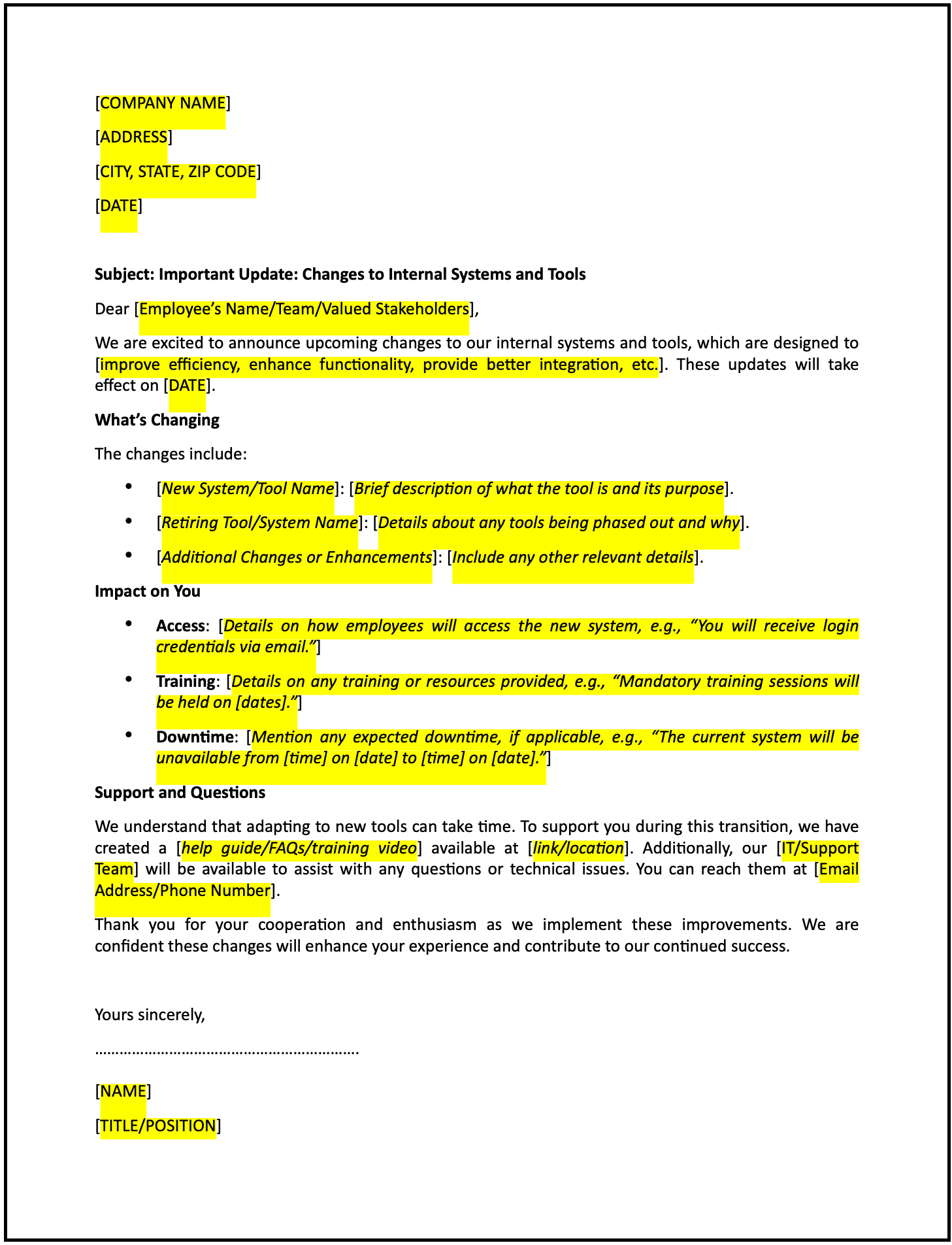
Notifies employees or stakeholders of changes to internal systems and tools, outlining the updates and any actions required to adapt to the new processes.
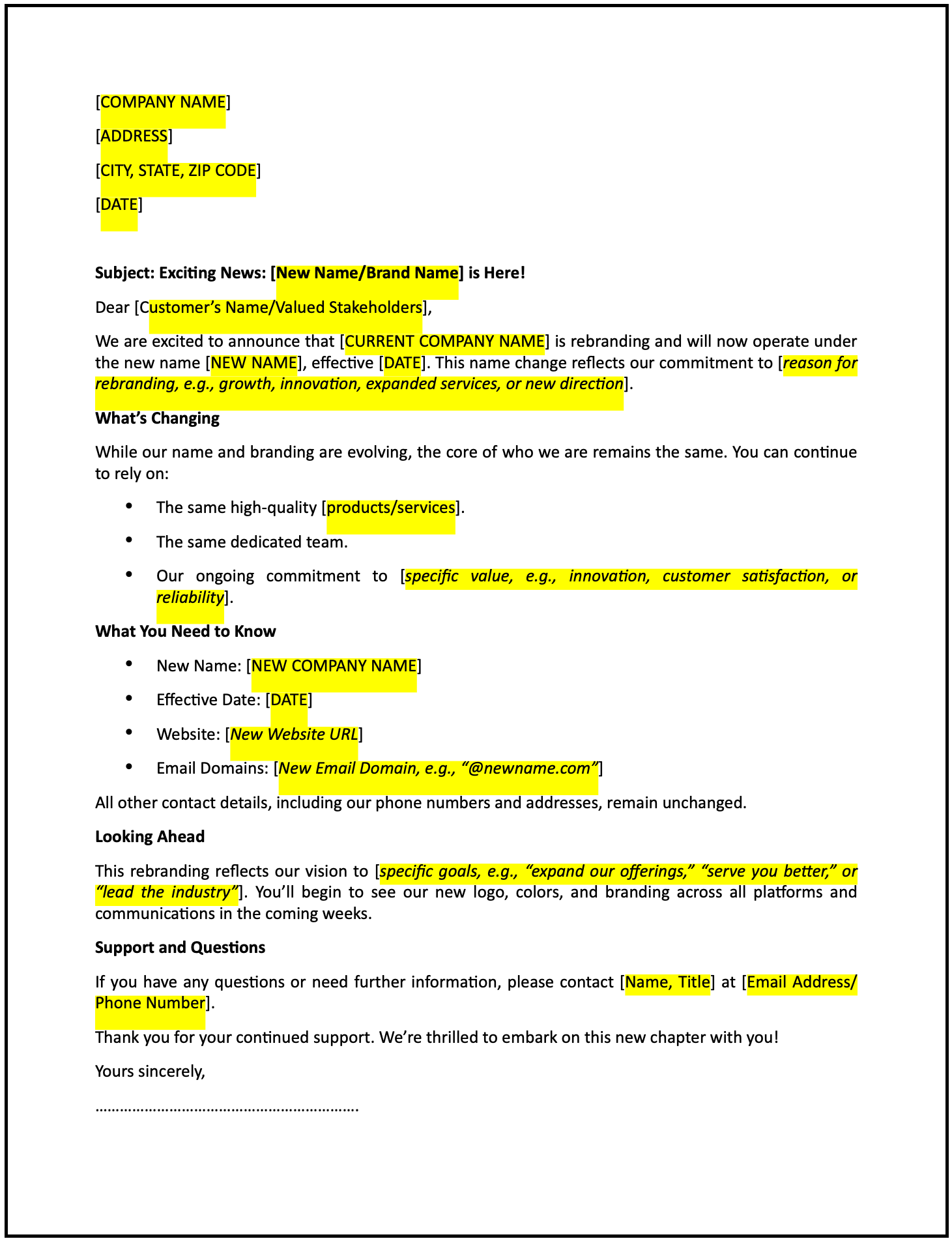
Notifies stakeholders of a rebranding or name change, explaining the reason for the change and what the new brand represents.
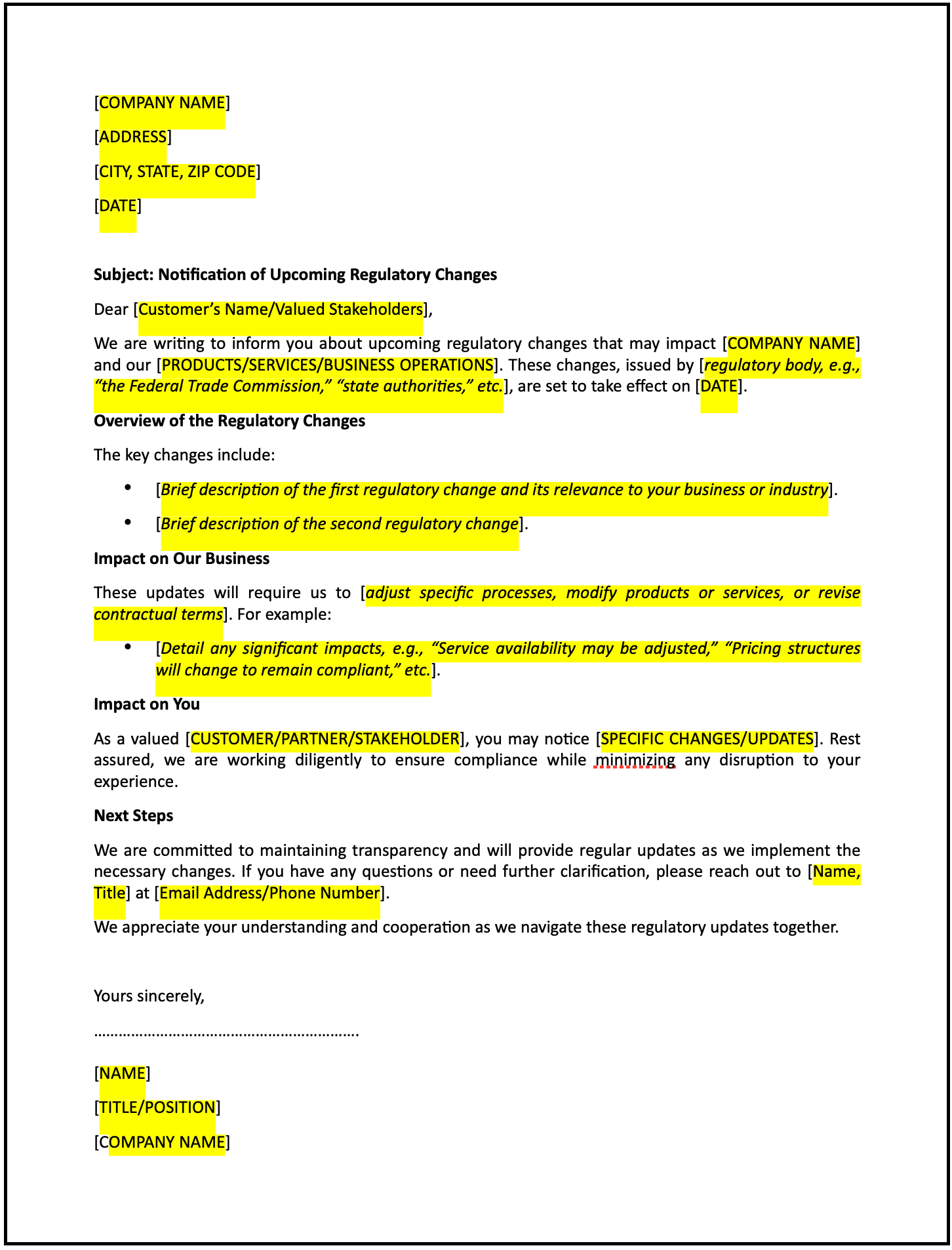
Informs stakeholders of upcoming regulatory changes, explaining how these changes may impact the business and any necessary adjustments.
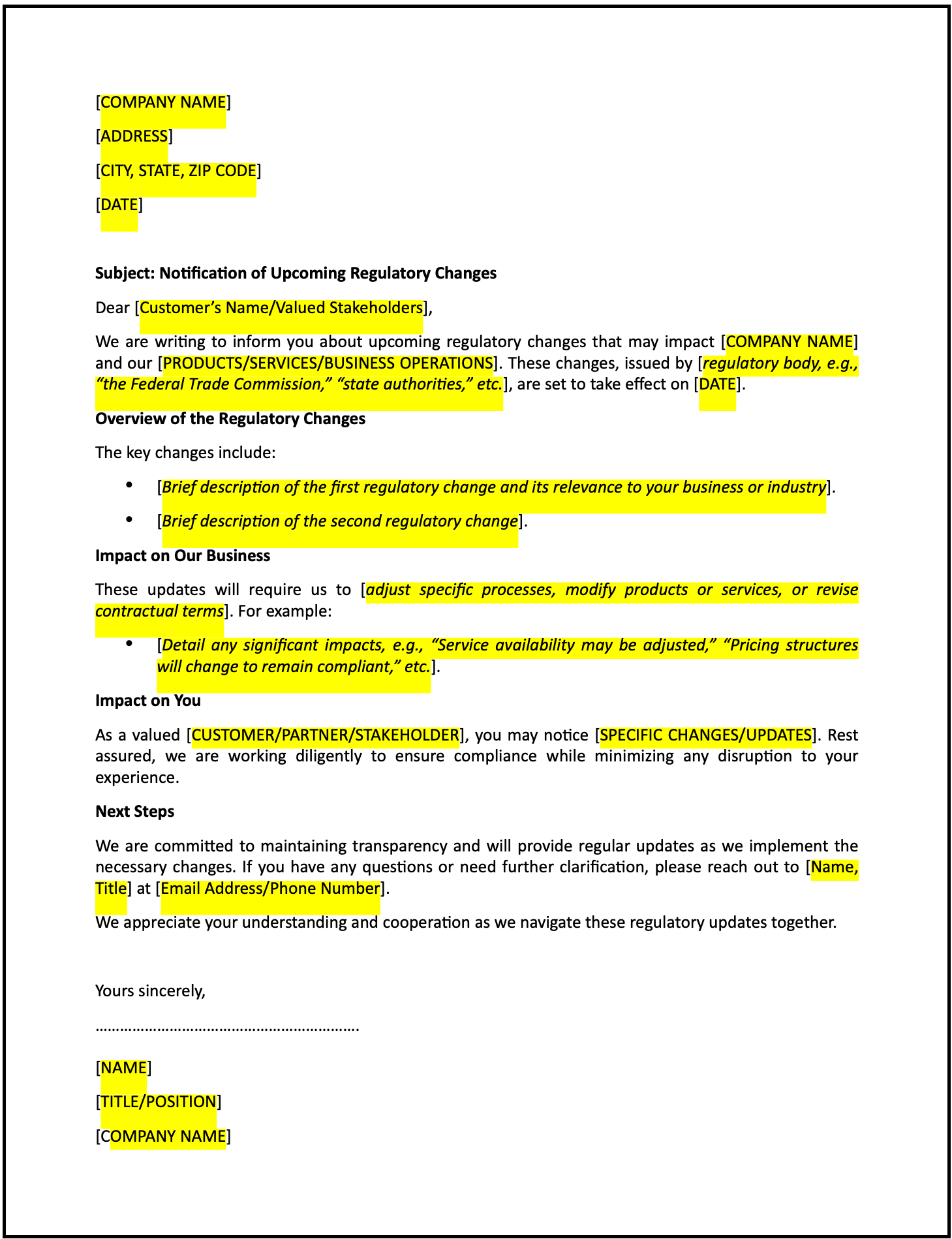
Informs stakeholders of upcoming regulatory changes that may impact the business, explaining the changes and any actions needed to ensure compliance.
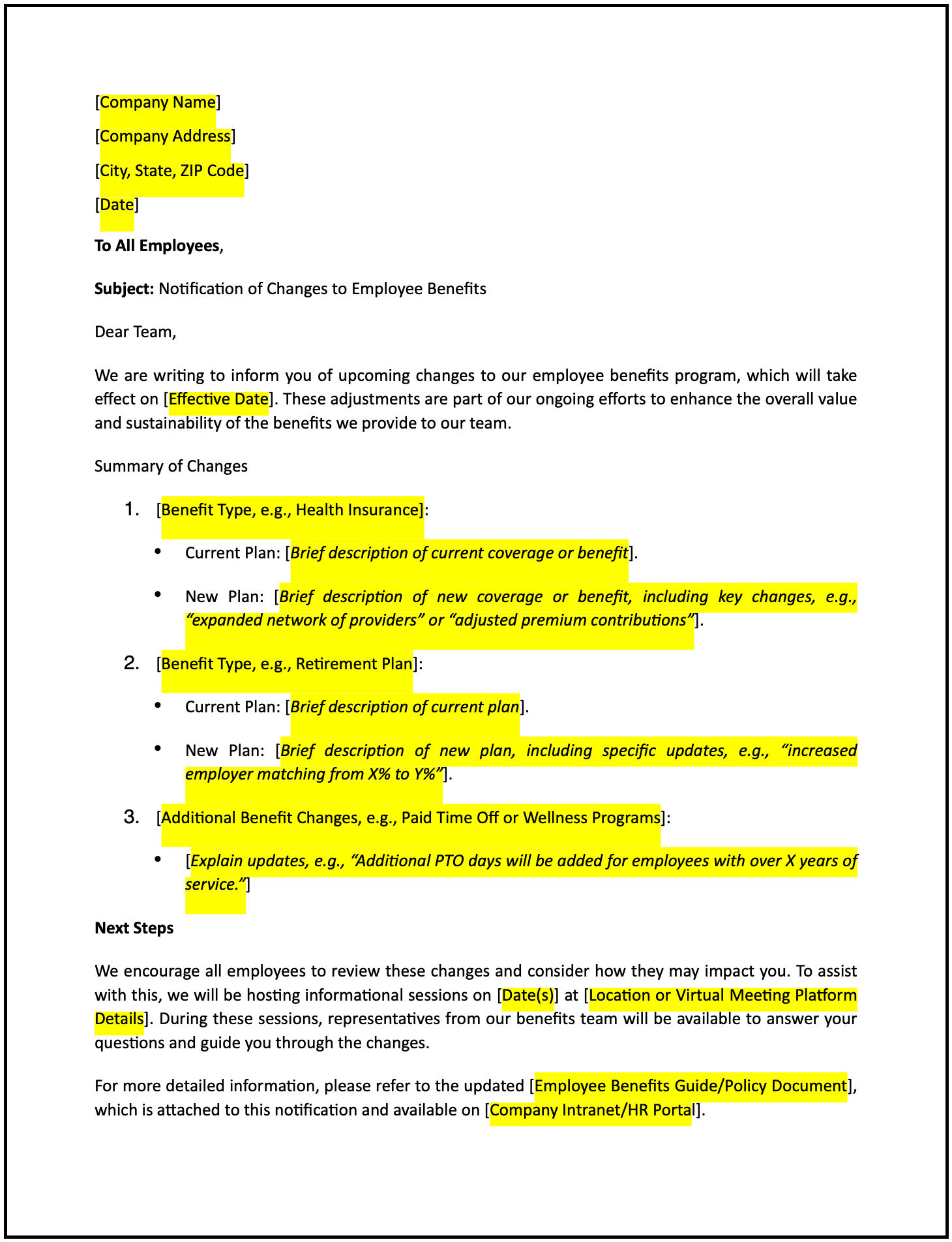
Notifies employees of changes to employee benefits, detailing the new benefits, any adjustments, and the effective date of the changes.