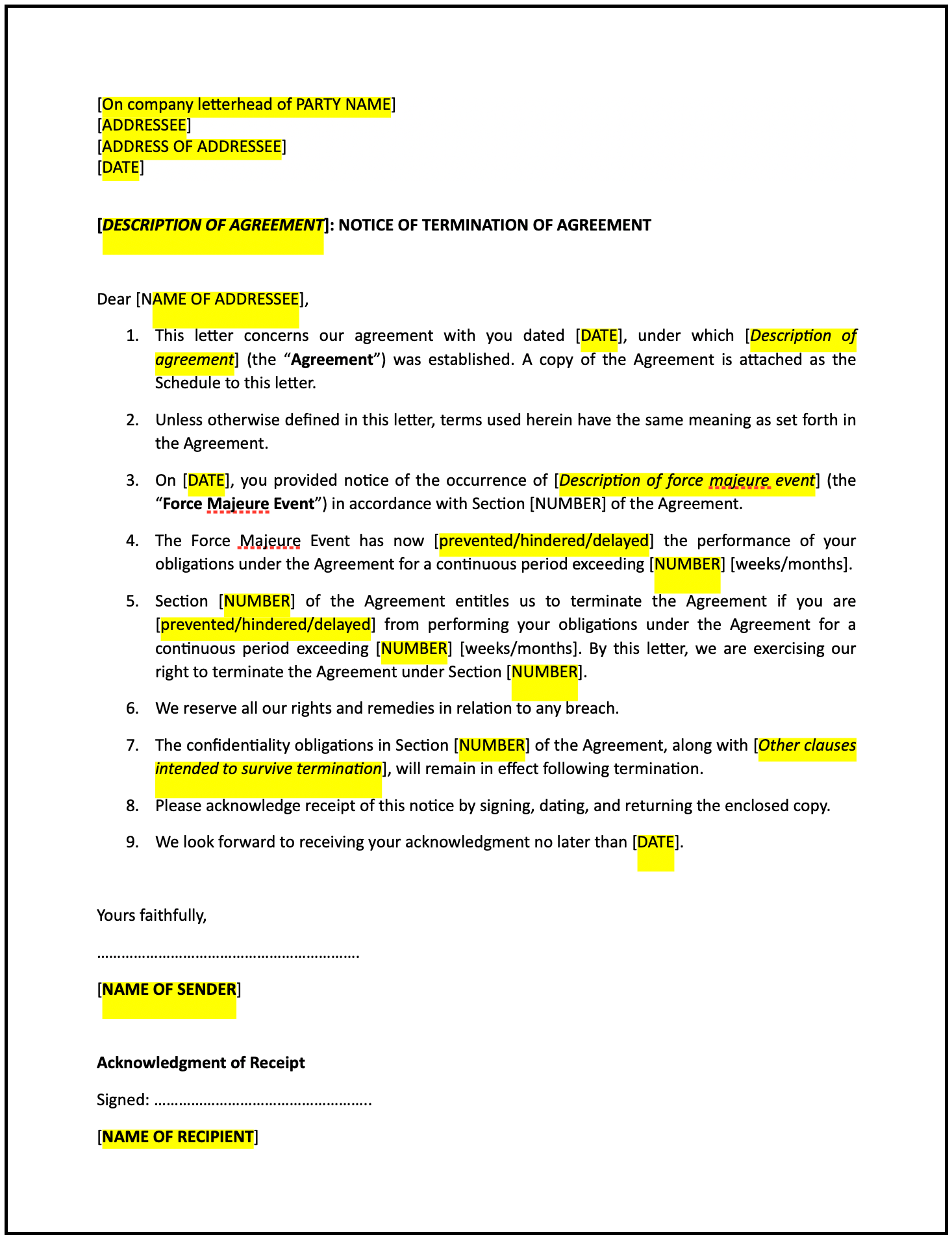
Letter of force majeure event impacting contract: Free template
Notifies the recipient of a force majeure event impacting the contract, explaining the situation, its impact on performance, and the actions being taken to address the issue.
- Letters
Letter of force majeure event impacting contract
When a force majeure event occurs, it can significantly impact a party’s ability to fulfill contractual responsibilities. This letter provides a professional way to notify the other party of the event, explain its effects on the contract, and propose solutions or adjustments to address the situation while maintaining transparency and collaboration.
How to use this letter of force majeure event impacting contract
- Reference the contract: Clearly identify the contract, including its title, reference number, and the parties involved. Reference the specific force majeure clause, if applicable.
- Describe the event: Provide a concise explanation of the force majeure event, including its nature, date of occurrence, and why it qualifies under the force majeure clause.
- Explain the impact: Clearly state how the event affects your ability to fulfill specific contractual obligations. Include timelines, affected deliverables, or actions that are delayed or prevented.
- Propose adjustments: Suggest potential solutions, such as revised deadlines, alternative arrangements, or temporary suspension of specific obligations.
- Maintain a professional tone: Ensure the letter reflects respect and a collaborative approach to addressing the challenges caused by the event.
- Request acknowledgment: Ask the other party to confirm receipt of the letter and provide their input or approval on the proposed adjustments.
Benefits of using a letter of force majeure event impacting contract
This letter template ensures a professional and transparent way to communicate the impact of a force majeure event while maintaining a constructive relationship. Here’s how it helps:
- Maintain transparency: The letter proactively informs the other party of the event and its impact, reducing misunderstandings.
- Provide clarity: Clearly outlining the situation and proposed adjustments ensures all parties remain aligned despite the disruption.
- Demonstrate accountability: Notifying the other party emphasizes your commitment to honoring the contract, even in unforeseen circumstances.
- Facilitate collaboration: Suggesting solutions fosters a collaborative approach to addressing the challenges posed by the force majeure event.
- Document the situation: The letter serves as a formal record of the event and the steps taken to address its impact on the contract.
Tips for writing an effective letter of force majeure event impacting contract
- Be specific: Clearly reference the contract, the force majeure clause, and the obligations affected by the event.
- Provide details: Describe the event and its effects on the contract in clear and concise terms, avoiding overly technical language.
- Propose solutions: Offer actionable suggestions to address the situation, such as revised timelines or temporary adjustments.
- Use professional language: Maintain a respectful and solution-focused tone to preserve the business relationship.
- Keep it concise: Focus on the key points and avoid unnecessary details or commentary.
Frequently asked questions (FAQs)
Similar templates
Where deals go from offer to paid
